
Bolu
- Black Sea Region
About Bolu
The earliest known history of Bolu province, in Türkiye's Black Sea Region, goes back to the 1200s BC. Bolu, which has hosted the Hittites, Alexander the Great, the Persians and the Ottoman State, has over the years also taken on a distinct identity with its own customs and traditions.
Bolu's famous dishes and desserts
Bolu is known in Turkish cooking for its cooks: for centuries the Mengen district has trained masters for palace and mansion kitchens, and today it carries on this tradition with its cookery school and its cookery festival held every year.
Kebabs named after places such as Abant, Yedigöller and Kartalkaya, yayla soup and kabaklı gözleme are among the province's well-known flavours. Buying chocolate, butter and saray helvası on the way back from Bolu is also a tradition.
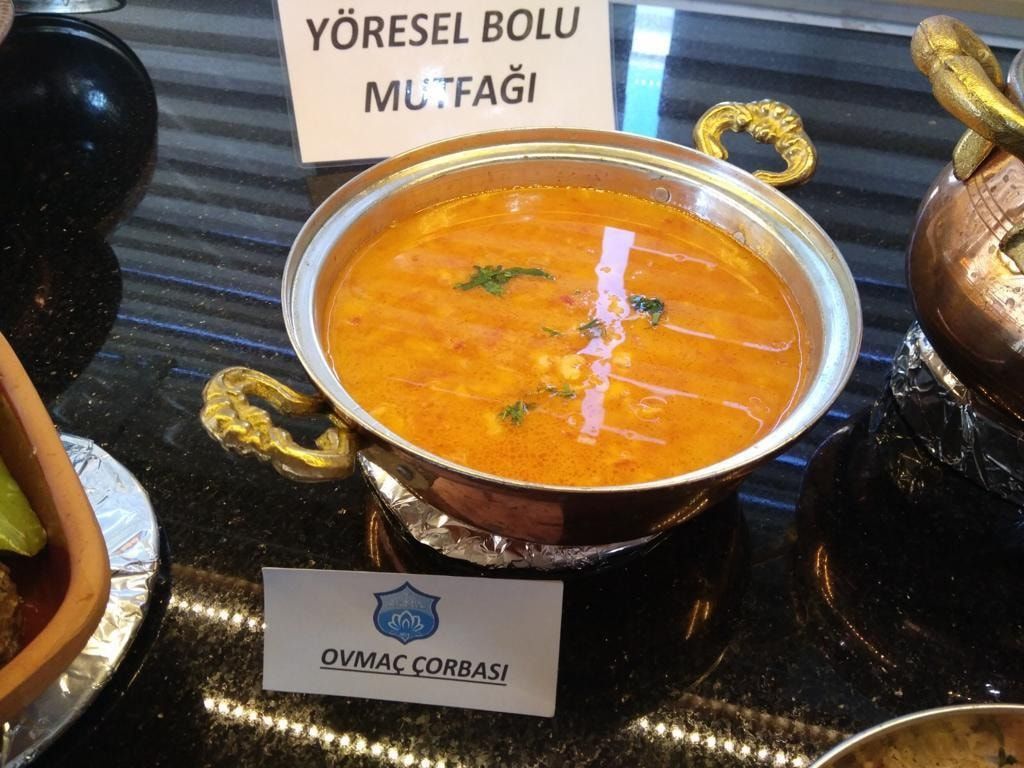
Ovmaç çorbası
Also called oğmaç. A mixture of flour and egg, rubbed between the palms, is added to water with minced meat, onion and tomato paste and cooked.
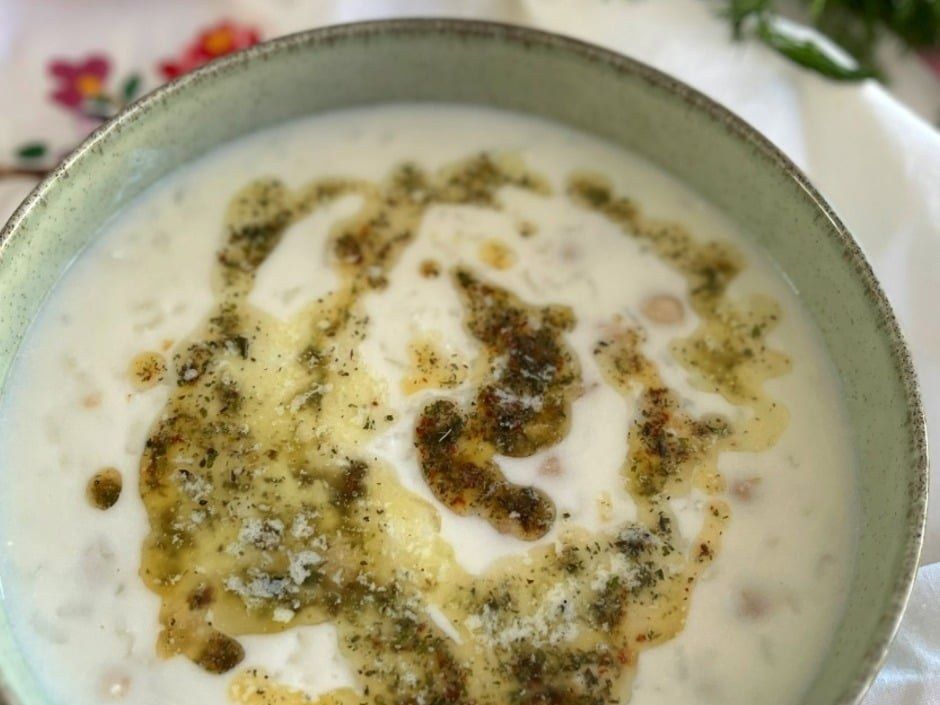
Yayla çorbası
A soup cooked with yoghurt, rice and chickpeas and flavoured with mint in butter.
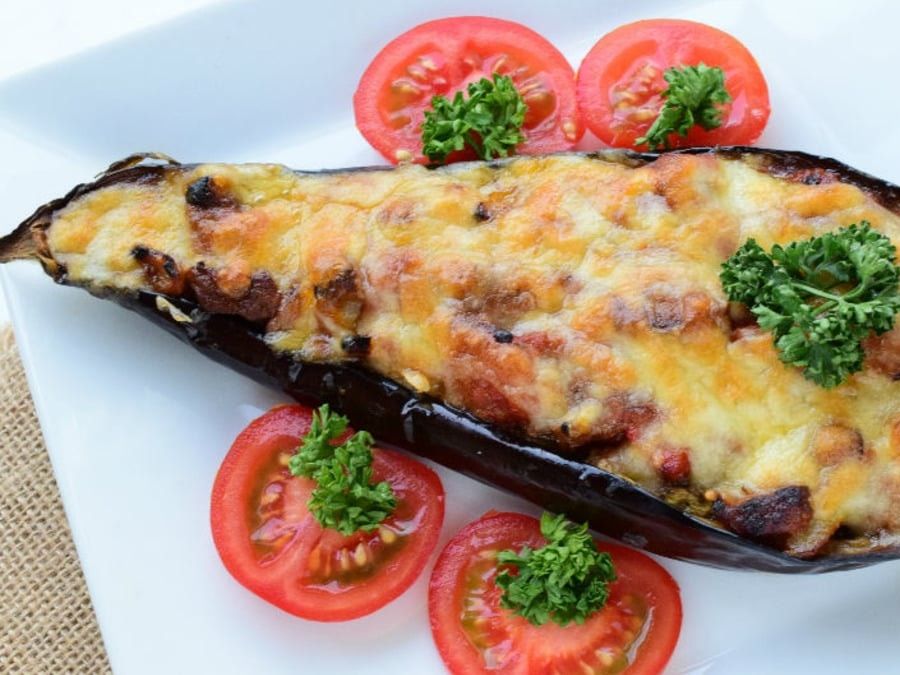
Abant kebabı
A kebab made by putting a meat filling inside a whole roasted aubergine.
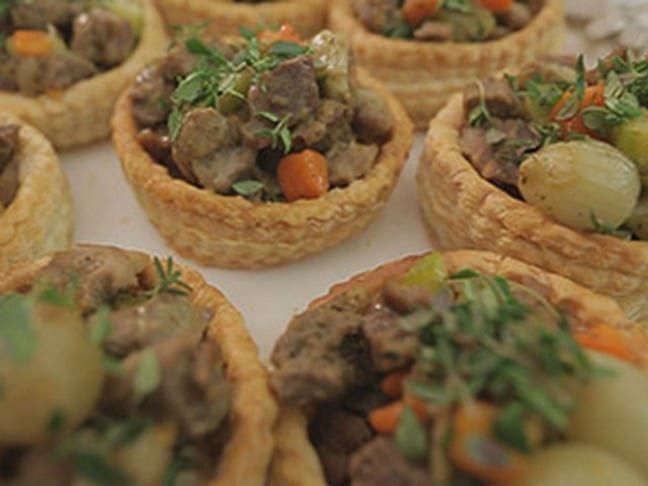
Kartalkaya kebabı
Sautéed lamb is cooked with carrots, courgettes and shallots.
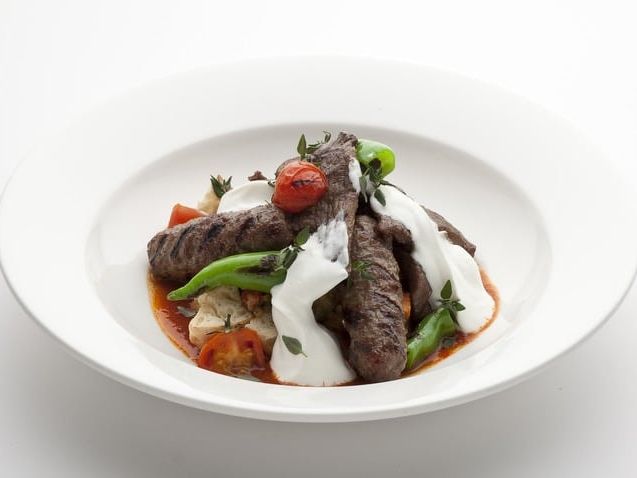
Yedigöller kebabı
A kebab using chicken and lamb together, fried in a pan and cooked with meat stock.
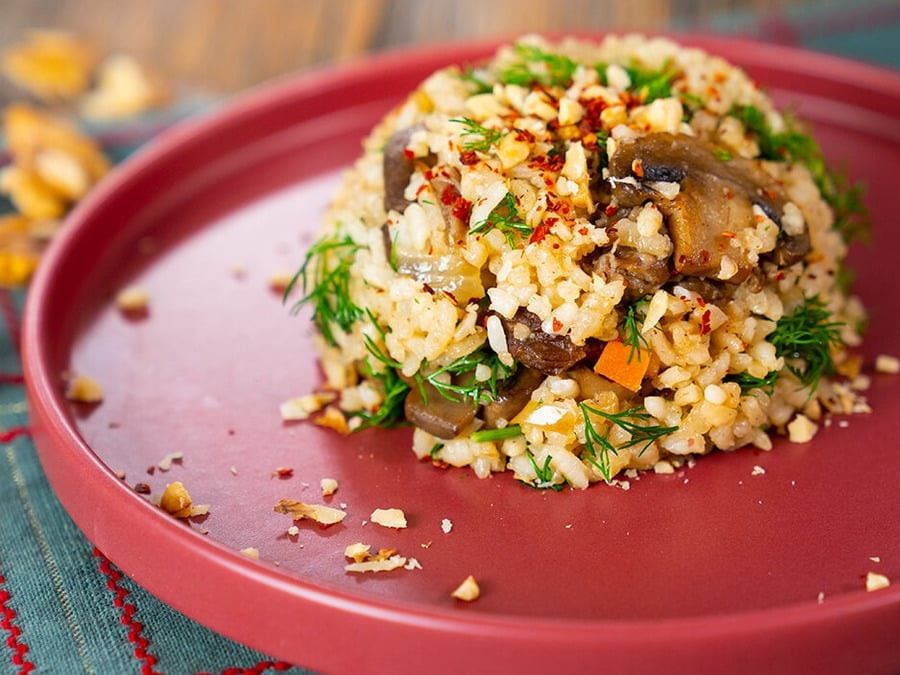
Mengen pilavı
A rich pilaf containing walnuts, lamb, mushrooms, tomatoes and dill.
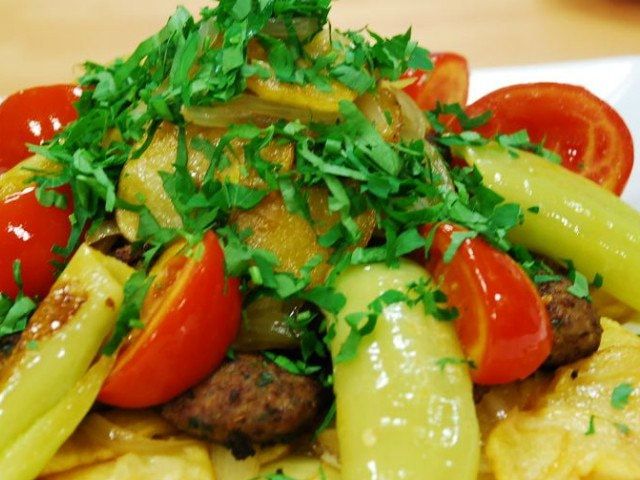
Bolu köftesi
Flat meatballs served with a sauté of potatoes and onions.
Kabaklı gözleme
In Bolu, gözleme made with dark courgette is known as a pastry prepared by women who come together to work in the imece (communal help) tradition. In Mudurnu, grated pumpkin fried with onion is spread between two sheets of yufka and cooked on a sac griddle. Bolu Kabaklı Gözleme and Mudurnu Bal Kabaklı Gözleme are registered with a geographical indication.
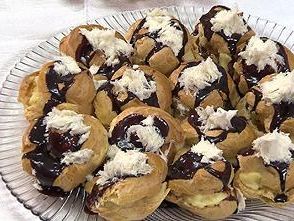
Bolubeyi tatlısı
It is made by filling a dough similar to choux pastry with pastry cream and Mudurnu saray helvası and pouring chocolate over it.
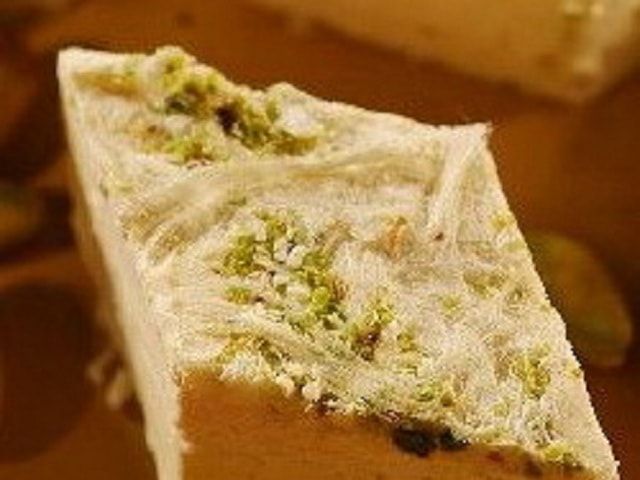
Saray helvası
The well-known helva of Bolu cooking, associated with Mudurnu; it is sprinkled generously with pistachios.
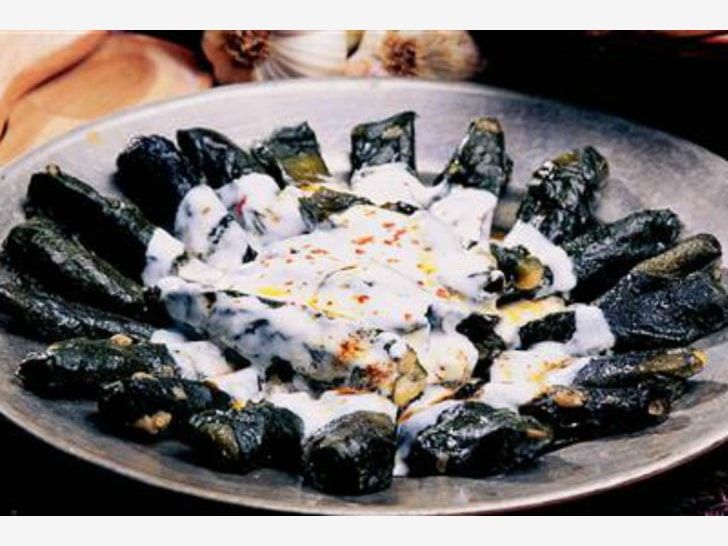
Kaldırık dolması
The leaves of the kaldırık plant are rolled around a filling made with cornmeal and cooked.
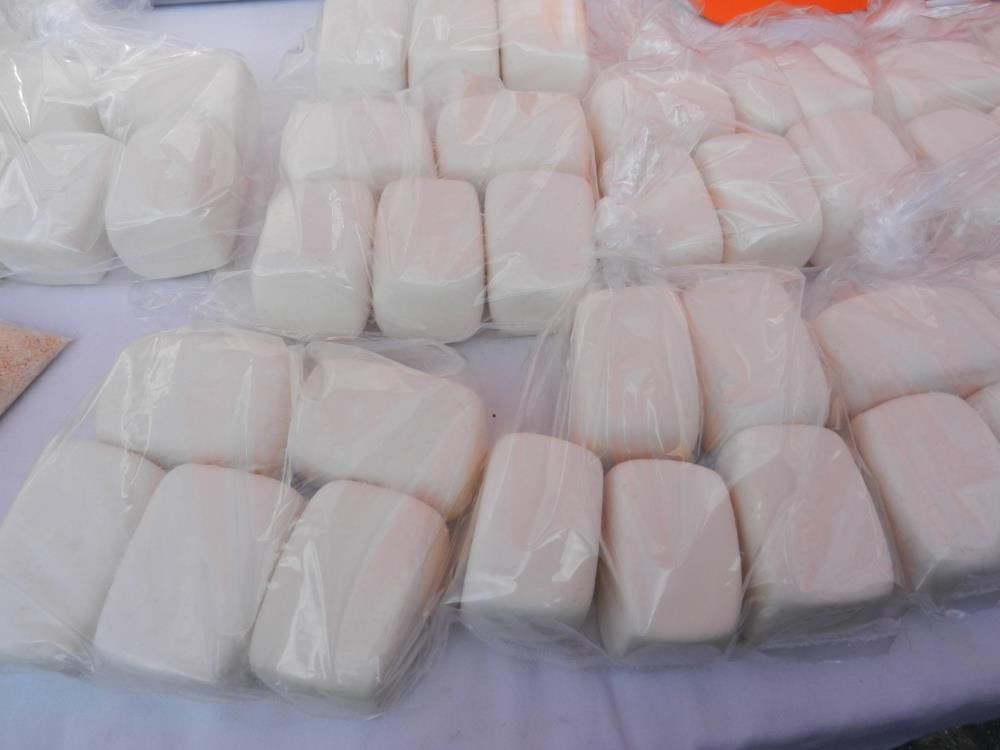
Keş
A hard, salty dairy product made by thoroughly straining strained yoghurt in muslin, pressing it and drying it; in some areas it is also known as kurut. Bolu Keşi and Gerede Keşi are registered with a geographical indication.
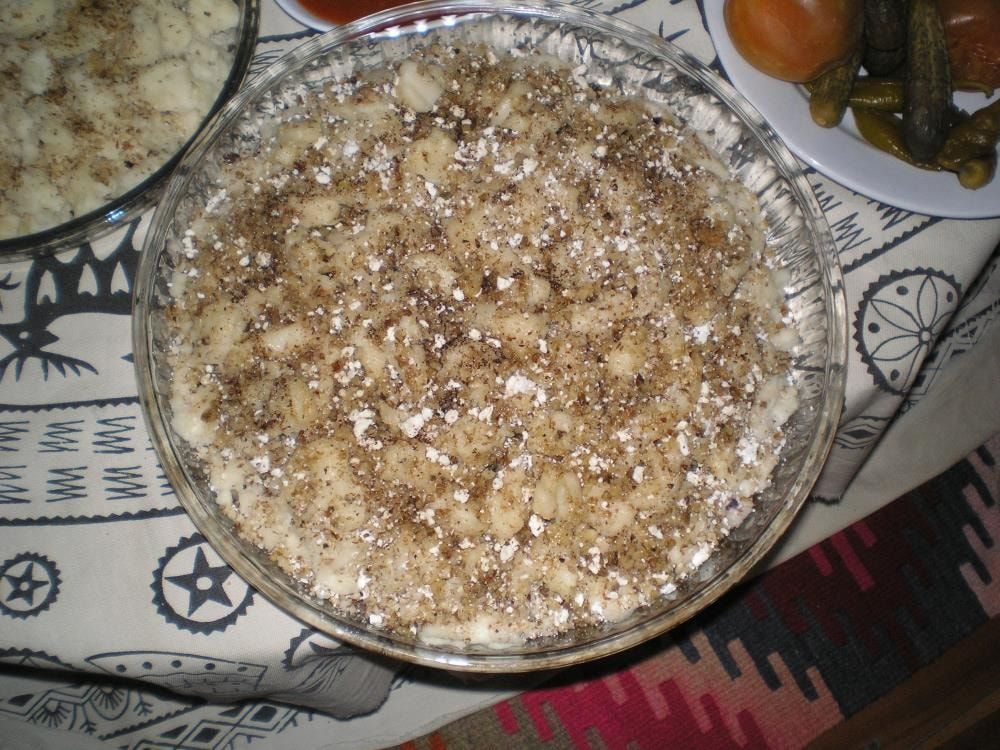
Kedi batmaz
Liver, walnuts or keş fried in butter are placed on a soft dough cooked by adding cornmeal and wheat flour to boiling water. Mengen Kedibatmaz, made for holidays and special days, is registered with a geographical indication.
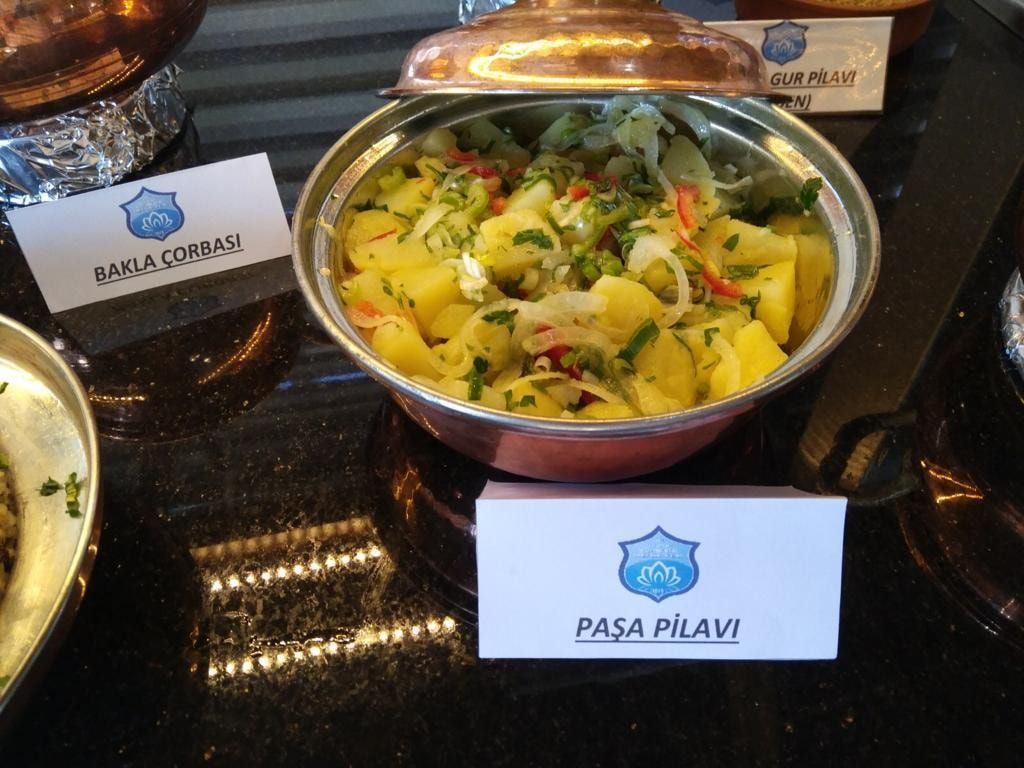
Paşa pilavı
Although it is called pilaf, it contains no rice: it is a salad made with boiled potatoes, eggs, onion, parsley and lemon.


Places to visit in Bolu
If you go to Bolu and come back without seeing the sights, it would be a real shame. Anyone heading to Bolu, which has a great many places to visit and see, should prepare their list in advance. Making a list of where to go and what to see before you set off makes things easy once you get to Bolu. Bolu really is one of the finest cities of our beautiful country. There's almost nothing it doesn't have: hot springs, tombs, mosques, lakes, yaylas (highland pastures) and much more. Here is Bolu and the places to see:
Archaeological sites in Bolu
Akşemsettin Tomb – Göynük
Bolu (Bithynium – Claudiopolis): according to archaeological evidence, the first settlement on the Bolu plain goes back to the 3rd millennium BC. The history of the city of Bithynium–Claudiopolis, founded on the hills in the city centre, goes back to the 7th century BC according to finds from the 1978 excavation at Hisartepe.
Excavations in various years have found pieces thought to belong to the Temple of Antinous and the theatre, as well as coins, vessels, bottles, statues and grave stelae from various periods. These works are now in the Bolu Museum.
Houses of Bolu
Seben rock houses
(Old settlement area) In the villages of Çeltik Deresi, Hoçaş, Kaşbıyıklar and Yuva, which belong to the Seben district and lie very close to each other, rock houses of several storeys are found on the faces of the rock masses rising along deep valleys.
Göynük houses
Göynük, which has been declared an "Urban Conservation Area", is rich in old Turkish houses. The houses here date from the early 20th century. The sitting rooms of some houses have ceilings decorated with various motifs. In front of the houses there are usually courtyards called "hayat".
Mudurnu houses
Mudurnu, declared an Urban Conservation Area, is notable for its old Turkish houses. These houses, which resemble the Göynük houses in their civil architecture and reflect the district's history and culture, have been taken under protection.
Castles of Bolu
Gerede Asar Castle
It is south-east of Örencik village in Gerede. Plenty of Byzantine pottery can be seen on the ground around it, which shows that the castle belongs to the Byzantine period. There is also a north-facing cave on the castle.
Mosques of Bolu
The Büyük Cami (Yıldırım Beyazıt Mosque), Kadı Mosque, Saraçhane Mosque, İmaret Mosque, Ilıca Mosque, Ilıca Mosque, Süleyman Paşa Mosque, Yıldırım Mosque, Kanunî Mosque, Yukarı Tekke Mosque and Eskiçağa Yıldırım Mosque in Bolu are works worth seeing.
Tombs of Bolu
The main ones are the tombs of Tokad-i Hayreddin, Akşemseddin, Ömer Sekkin, Aşağı Tekke, Ümmi Kemal, Kasım Dede and Babahızır.
Hans and hamams of Bolu
Yukarı Taşhan
The Taşhan, in the Büyük Cami neighbourhood of central Bolu, was built in 1804 by Abdullah Ağa.
Orta Hamam
It was built in 1389 by Yıldırım Bayezid (Bayezid I). Built as a double hamam, it has rich decoration inside. It is in the provincial centre.
Tabaklar Hamam
It was built in the 16th century by Tavil Mehmet Pasha. The interior of the two-part hamam is clad in marble.
Sultan Hamam
It was built in the 16th century by Sokullu Mehmet Pasha as a double hamam. It is in the provincial centre.
Süleyman Paşa Hamam
The hamam in the Göynük district was built around 1335 by Gazi Süleyman Pasha.
Yıldırım Beyazıt Hamam
The hamam in the Mudurnu district stands next to the mosque of the same name. It is one of the finest hamams of its period. It was built in 1382. It is one of the most original examples of early Ottoman hamams. The hamam stands out for its portal and its dome transitions.
Yıldırım Hamam
It is in Eski Çağa village in our province's Yeniçağa district. The hamam, built in 1388 in the name of Yıldırım Bayezid, is an architecturally important work.
Aşağı Hamam
The hamam in the Kitirler neighbourhood of the Gerede district was built of rubble stone in the late 14th century.
Protected areas of Bolu
- Yedigöller National Park
- Bolu Fındığı Nature Reserve
- Bolu Akdoğan (Ebe Çamı) Nature Reserve
- Bolu Kökez Nature Reserve
- Bolu Sülüklügöl Nature Reserve
- Lake Abant Nature Park
Hot springs of Bolu
The Bolu hot springs, 5 km from the city centre at Karacasu, are a pleasant resting place surrounded by forest. In this thermal tourism centre three units operate: a thermal hotel with the large spa, the small spa, and a physical therapy and rehabilitation hospital belonging to the Ministry of Health. These naturally fed springs are good for rheumatic diseases, skin, circulatory and heart, respiratory, gynaecological, digestive, kidney and urinary tract, bone and arthritis complaints, and metabolic disorders.
Karacasu Thermal Tourism Centre
Babas hot spring
The waters of this spring, 5 km from Mudurnu, emerge between travertines. There is an 18-bed facility. The spring water gives positive results for metabolic diseases and rheumatic, gynaecological, digestive and kidney complaints.
Sarot hot spring: it lies within the boundaries of Ilıca village, 30 km north-west of Mudurnu. Its temperature is 66 °C. It has been used for more than 1,500 years. There is a historic bathhouse. It belongs to the group of bitter waters. Taken as a drinking cure it is good for urinary tract and kidney complaints, and used for bathing it is good for rheumatic diseases. There is a small guesthouse next to the spring.
Bağlum (Kesenözü) hot spring
The Bağlum springs are in Kesenözü village, 14 km south of the Seben district. The spring water has been used for bathing for centuries. It is known to have positive effects on stomach, gall bladder, respiratory and circulatory disorders. There are guesthouses run by private individuals at the spring.
Çatak hot spring
It is near Himmetoğlu village, in a very beautiful valley between steep slopes 30 km south-east of the Göynük district. The spring is good for complaints such as rheumatism and sciatica. From the remains in the area it is thought to have been used since Roman times.
Lakes of Bolu
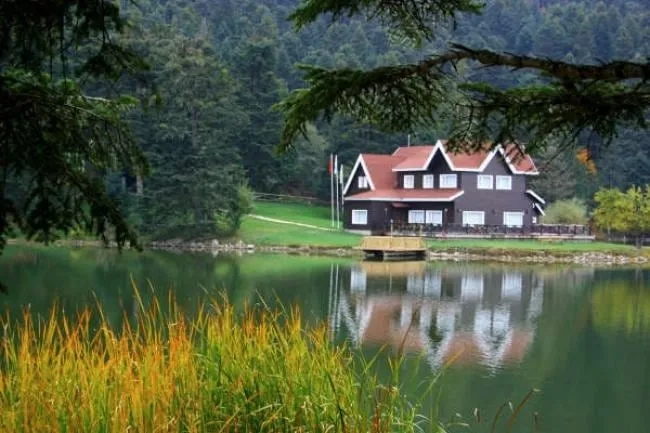
Lake Abant, Bolu
Lake Abant is a natural lake on the Abant Mountains, 34 km south-west of Bolu. It is reached by a 22 km road that branches off at the 203rd km of the Ankara–Istanbul D-100 highway and the TEM motorway. It is 34 km from Bolu, 225 km from Ankara and 258 km from Istanbul. The lake covers 125 hectares and lies 1,325 m above sea level. It is fed by groundwater. Its deepest point is 45 m. Because of the plant richness of the tectonic Lake Abant and its surroundings, and its great potential for outdoor recreation, 1,150 hectares of the area were protected as a "nature park" in 1988. The lakeshore has rich vegetation.
Scots and black pine, beech, oak, poplar, ash, hornbeam, willow and juniper trees, along with rhododendron, tamarisk, hazel, medlar, spindle, hawthorn, butcher's broom, dog rose, bracken, blackberry, strawberry, mint, raspberry, ivy, nettle, horsetail and meadow grasses, make up the main trees and shrubs. The lake edge and the water itself are full of various water plants and water lilies. The Abant trout, an endemic species found in the lake, has entered the literature as "Salmo trutta fario var. abanticus". Anglers can fish for it at certain times of the year by paying a fee.
- In the forests around the lake: hare, fox, jackal, wolf, bear, wild boar, red deer, roe deer, squirrel and weasel;
- Among water birds: wild geese, wild ducks, heron, coot, cormorant and crane;
- Among birds of prey: buzzard, falcon, sparrowhawk and owl;
- Among other birds: lark, redstart, blackbird, nightingale, chaffinch and goldfinch are seen.
The forests of the area offer the ideal habitat for deer. To bring the deer population in this area up to a normal level, a deer breeding station has been set up in a fenced area east of Abant, and natural breeding work is carefully carried on. Some deer are released into the wild every year.
At the lake, which is 7 km round and has its own beauty in every month of the year, picnicking, camping, sport angling, walking, and rides by bicycle, phaeton and horse are must-do activities. The stalls at the park entrance sell foods produced naturally in the area and souvenirs. The Abant Palace Hotel and the Büyük Abant Hotel by the lake are hotels with every kind of comfort and activity. There is also the Göl Gazinosu belonging to the Special Provincial Administration and facilities offering cook-your-own service. The lake can be reached by dolmuş (shared minibus) leaving every two hours from the bus terminal in the city centre.
Lake Seben
Construction of Lake Seben, about 20 km from our district centre and 32 km from central Bolu, began in 2006. The ring road and diversion channel works were carried out in 2010–2011. The lake was completed as part of the lake project of the Special Provincial Administration and our district's Village Services Union.
Our lake, with the greenery around it and the historic cave and rock houses close by, adds a different atmosphere to our province, a paradise of natural beauty. Our lake, on the Bolu–Seben route, is only 22 km from Gölcük, which is important for our country's tourism and full of people escaping the pollution and noise of the big cities.
Gölköy Reservoir
It is 10 km west of Bolu. It was built to irrigate the Bolu plain. Surrounded by forest, it has carp and trout. Because it is close to the city centre and easy to reach, it is very suitable for those who want to picnic and fish with a rod.
Lake Karamurat
The lake, 35 km from Mudurnu, is beside the road to Akyazı and near Karamurat village. It has pike and tench.
Lake Yeniçağa
The lake, on the Bolu–Ankara highway in the Yeniçağa district centre, is a basin lake. Rod fishing is possible on the lake.
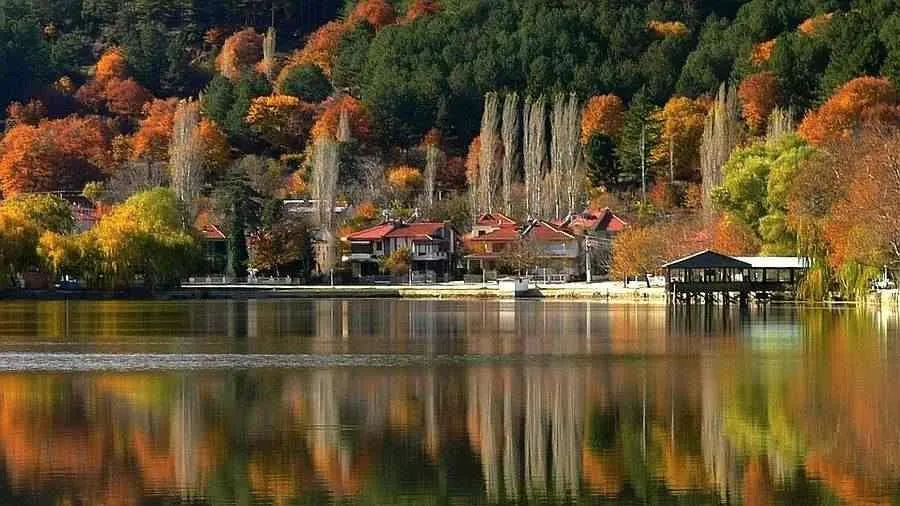
Gölcük
Gölcük, Bolu, is one of those unique places in the world that, once you've been, you'll always want to come back to. Hidden in a valley, Gölcük awaits you with different beauties in every season. It is a rare natural wonder where you can spend your weekends, and one you shouldn't miss when you come to Bolu. GÖLCÜK is 15 minutes from Bolu and 2 hours from Istanbul and Ankara.
Lake Çubuk
It is 11 km north of Göynük. Rod fishing for the carp and trout in Lake Çubuk, with Çubuk village on its shore and surrounded by beautiful pine forests, is permitted.
Lake Sülük
It is 9 km off the Mudurnu–Akyazı road. The lake, 50 km from the Mudurnu district, is within a National Parks protected area. It stands out for its unspoilt nature and rich flora. The lake has Abant trout, rainbow trout and red-spotted (brown) trout.
Lake Sünnet
It is 27 km east of Göynük. The lake, which is exceptionally beautiful, has very tasty bream and trout. Rod fishing for these fish is permitted. At Lake Sünnet there is a facility offering accommodation and food and drink. Around the lake you can picnic, walk, run and cycle.
Karagöl
Karagöl, on the Kıbrıscık–Beypazarı road, is a very deep lake. It is 20 km from Kıbrıscık. You can camp at the lake, which is entirely surrounded by forest. Because of the wild ducks there, it is a haunt of hunters.
Akkaya Gorge
The travertines 10 km south of Bolu, on the Mudurnu road, have a beauty worth seeing as Bolu's own Pamukkale. The mineral water that comes from the white rocks (akkaya) has a distinctive taste and a temperature of 20 °C, and is bottled in modern facilities and sold.
Yaylas of Bolu
Aladağ yaylas
They lie among forests on the mountain slopes 25 km south of Bolu. These yaylas, also ideal for picnics with their lush green flats, offer dazzling beauty along with the Forestry Enterprise facilities, the Aladağ Scout Camp and its pond nearby. The main yaylas, which also have camping facilities, are Değirmenözü, Sarıalan, Gölcük, Ardıçtepe and Üstyaka.
At Yayla
It lies behind the mountains on Bolu's northern side. This yayla, famous for its cherries, is surrounded by orchards. A traditional cherry festival is held every year.
Gerede yaylas
These yaylas, at altitudes of 1,200–1,500 m south of Gerede, are Haşat, Zorpan and the Dörtdivan yaylas on the eastern Köroğlu Mountains.
Kıbrıscık yaylas
They lie on the flat areas of the southern slopes of the Köroğlu Mountains. Belen, Karaköy, Kökez, Bölücekkaya, Karadoğan and Devevira, at an altitude of 1,825 m, are among the most important.
Mengen yaylas
The main yaylas east of the Mengen district are Sarıklı, Soğucak, Mile, Sepetçiler, Çelebioğlu and Çiftçatak.
Mudurnu yaylas
They lie north of the district and south of Lake Abant. The Dedeler, Alpağut, Dodurga and Dağyolu yaylas are the most important.
Göynük yaylas
The most important of the yaylas lined up in a strip between 1,000 and 1,500 m are the Karabey and Kaşıkçı yaylas.
Seben yaylas
The most important of these yaylas, gathered around Kiraz Dağı at an average altitude of 1,400 m, are the Gerenözü and Kızık yaylas.
Kızık Yayla
The houses of Kızık Yayla stand out for their unusual architecture. These houses are built without a single nail, from pine logs joined by interlocking and dovetailing. With stairs built quite high off the ground, wide hearths and their own distinctive furnishings, these houses are quite unusual.
Hunting and fishing in Bolu
Hunting and rod fishing
The forest cover surrounding Bolu on all sides and its rich vegetation mean that a great variety of game is found. In the forests, land animals such as bear, lynx, wild boar, red deer, roe deer, wolf, marten, fox, badger, hare, polecat, weasel, beaver and squirrel, game birds such as partridge, turtle dove, quail, grey partridge, bustard, crane, woodcock and pigeon, and birds of prey such as sparrowhawk, buzzard and eagle are often seen.
Bolu, with its many lakes, is also an ideal area for sport angling. The very tasty trout, carp, bream and silverside in Lake Abant, Gölcük, the Gölköy Dam, Yedigöller and the Aladağ lake can be caught with a rod.
Ski centres: Esentepe
North of Gerede at an altitude of 1,300 m, this is the site of the three-star Esentepe Hotel, with winter sports and skiing. At the hotel, which has a superb view over the whole district, grass skiing is also possible. Esentepe, with its centuries-old pine trees, was given this name ("windy hill") by Atatürk because of the constant wind in the area.
Kartalkaya Ski Centre
Kartalkaya ski centre is in the Western Black Sea Region, 38 km south-east of the centre of Bolu, within the Köroğlu Mountain tourism area. The skiing area lies at altitudes of 1,850–2,200 m. The area has a semi-temperate climate. Kartalkaya Ski Centre and its surroundings are covered with forest.
The prevailing wind is from the west–north-west. It has suitable conditions for alpine skiing, cross-country skiing and ski touring. Skiing is possible for 4 months of the year (15 December–15 April). The average snow depth is 250 cm. Kartalkaya has 3 hotels offering various activities. Kartalkaya's 28 runs total 30 km in length. The 3 hotels in Kartalkaya have a total of 1,760 beds, and there are 11 lifts in all, 2 chairlifts, 6 drag lifts and 3 baby lifts, with a total capacity of 7,000 people an hour.
Paragliding
There are very suitable places for paragliding in the Abant Mountains, and in the summer months tours to Abant are organised for people from the big cities who want to try the sport.
National parks of Bolu
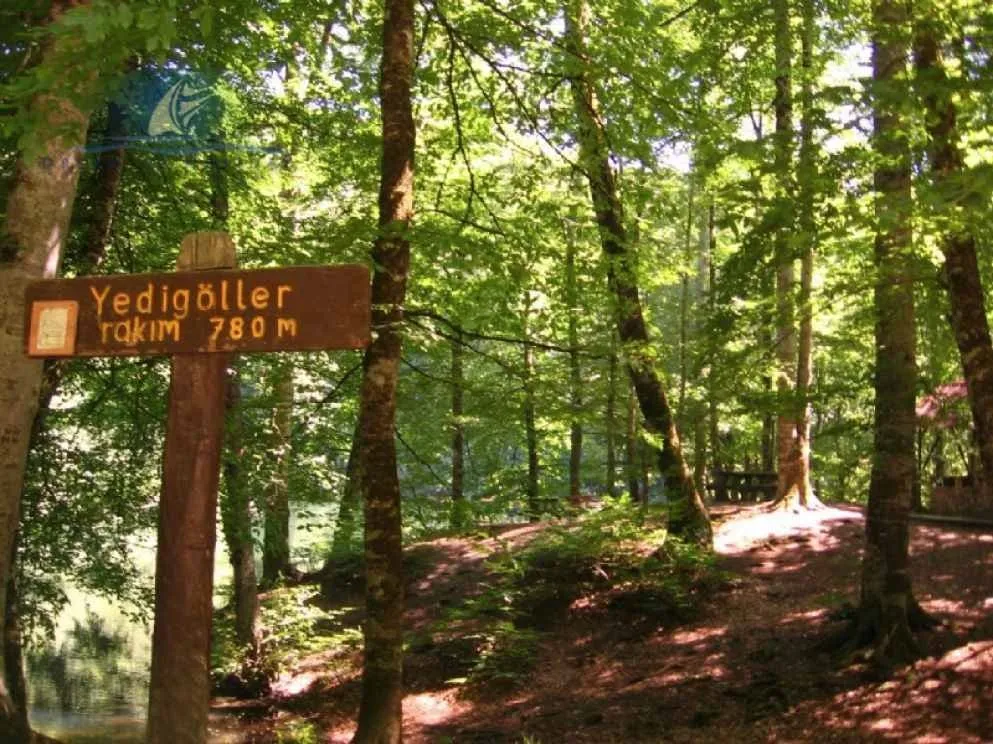
The National Park, in the Western Black Sea Region 42 km north of Bolu and south of Zonguldak, is reached by roads branching north from Yeniçağa, at the 152nd km of the Ankara–Istanbul highway, and from Bolu, at the 190th km. In winter the Bolu–Yedigöller route is closed (by snow), so access is only via Yeniçağa–Mengen–Yazıcık. The 2,019-hectare Yedigöller basin was protected as a national park in 1965. The basin consists of 7 lakes lined up over 1,500 m from north to south, formed when landslides blocked the valleys and connected to each other by surface and underground flows. Remains from the late Byzantine period found at "Köyyeri" in the national park show that the area was a settlement in earlier times.
The national park contains 7 lakes: Büyükgöl, Seringöl, Deringöl, Nazlıgöl, Küçükgöl, İncegöl and Sazlıgöl. These lakes are on two plateaus with a difference in height of 100 m between them. The largest lake on the plateau at an average altitude of 780 m is Büyükgöl. Its deepest point is 15 m. Deringöl, south-east of Büyükgöl, is connected to Büyükgöl by a 20 m flowing stretch. Büyükgöl is used as a brood stock lake for raising live trout at Yedigöller. Our country's first trout breeding station was set up here in 1969. North of Büyükgöl is Seringöl. The largest lake on the plateau 100 m above the other is Nazlıgöl. Because the large amount of water seeping from its bed comes to the surface north-east of the lake and forms a waterfall, it is also called "Şelale Gölü" (Waterfall Lake). Sazlıgöl, İncegöl and Küçükgöl are on the same plateau. In the area, which slopes down from north to south, the highest point is Eğrikiriş Tepesi at 1,488 m and the lowest is Kirazçatı at 465 m.
Yedigöller National Park also has a strong base for scientific study and research. The national park, which contains a large number of plant species, has some of the most beautiful mixed natural forests in our country. The main tree species, beech, hornbeam, oak, alder, maple, elm, aspen, Scots and black pine, fir, hazel, lime and ash, are tall and straight-trunked. There are also declining plant species such as yew. Among wild animals there are bear, wild boar, wolf, fox, marten, squirrel, red deer, roe deer and hare, and among birds wild duck, wild pigeon and partridge. More than 100 bird species have been recorded in the National Park. With these features, Yedigöller National Park is a true nature paradise. Every year from May to September, sport angling is possible at Büyükgöl and Deringöl for a fee.
The lakes have lake trout and rainbow trout. By climbing to the "Kapankaya Viewpoint" in Yedigöller National Park, you can see the lakes and the unique beauty of the landscape. There is also a monumental tree on this route. The deer breeding station in the national park can also be visited. While enjoying recreational activities such as picnicking, resting, photography, sport and camping, among its quiet and peaceful setting, beautiful views, varied terrain, walking trails, waterfalls and slopes adorned with various plants and trees, accommodation is available in 40-bed bungalows belonging to the Ministry of Forestry. Camping with a tent or caravan is also possible in a 1-hectare area. Live trout can be bought for a fee from the fish breeding station beside Deringöl. On average 40,000 fish a year are sold to visitors. The best time to visit the park is between April and November.
Culture and arts in Bolu
Culture and language in Bolu
In our province the spoken and written language is Turkish, in a plain style of expression. Distinctive features of the local accent and dialect can be illustrated by examples such as: niçun gelmeyan, napıyen, oluncası, gelincesi, nem ben, bilmeyonku. The names of days, weeks and months are used as in our official calendar. Only Sunday is "kapalı pazar" or "dernek", and Monday is "Bolu pazarı" (Bolu market) day.
Literature of Bolu
The hymns and poems of YUNUS EMRE, who is known to have shrines in many places in Anatolia, appear in the many cönk (manuscript anthologies) collected in and around Bolu. At wedding ceremonies the bride and groom are even walked several times over a new piece of cloth to Yunus's hymns. In the Gökçesu sub-district of our Mengen district there is a Yunuslar village and a place visited as Yunus's grave. Kemal Ümmi was a Sufi poet who lived in the 15th century. Every year a traditional day of remembrance is held in his name in Tekke village, in Bolu's Sazak area, where he spent much of his life. Our epic hero Köroğlu, known to have lived in the late 16th century, is one of the names that come to mind when Bolu is mentioned. There is also the Köroğlu dance, performed with sword and shield. The Köroğlu statue in the Belediye square in the provincial centre is striking. Aşık Dertli, whose real name was İbrahim, was born in 1772 in Şahnalar village of Yeniçağa and died in Ankara in 1845. The poet Dertli's monumental tomb is in Şahnalar village on the Bolu–Gerede highway. A day of remembrance is held every year. Figani of Gerede and Yağcı Emin of Mudurnu were his apprentices.
Tales of Bolu
The Epic of Advice by Aşık Figani of Gerede
Erenler pendini guşeyle cana
A akil doğru sözü arar demişler
“Men aref” bağını kıldınsa me’va
Senin içün her dem bahar demişler
(Listen, soul, to the counsel of the saints; they say the wise seek the true word; if you have made the garden of "whoever knows himself" your home, they say it is always spring for you.)
Şu kahpe felekten murat alınmaz
Yalancı dünyada ebet kalınmaz
Malı olmıyanın dostu bulunmaz
Çaylar denizlere akar demişler
(No wish is granted by this treacherous fate; no one stays for ever in this false world; one who has no wealth finds no friend; they say streams flow into the seas.)
Çok zaman gün bulut içinde kalmaz.
Derler bunalıp da hiç adam olmaz
Altun yere düşmeyince pul olmaz
Er düştüğü yerden kalkar demişler
(The sun does not stay behind the clouds for long; they say no one becomes a man without hardship; gold is not coin until it falls to the ground; they say a brave man rises from where he fell.)
Figani pendimi yabana atma
Rey senin ister tut,istersen tutma
Eğer arif isen sözü uzatma
Südsüz inek durmaz malar demişler
(Figani says: don't cast my advice aside; the choice is yours, take it or leave it; if you are wise, don't drag out your words; they say a cow without milk won't stand still but just lows.)
The best-known are the Köroğlu legend, epic, folk song and dance. There are also tales about the miracles of figures such as Akşemseddin, Şeyh'ül İmran, whose grave is in Mudurnu, Karaarslan and Ümmi Kemal.
Mani (folk quatrains) of Bolu
İşte geldim büklüm büklüm
Sırtımdaki davul yüküm
İşte geldim hanenize
Selam verdim cümlenize
(Here I come, all bent over, the drum on my back is my load; here I come to your house, and I greet you all.)
**************************************
İncirim var ezilecek
Tülbentlerde süzülecek
Çok bekletme benim ağam
Mahallem var gezilecek
(I have figs to be crushed and strained through muslin; don't keep me waiting long, my lord, I have a neighbourhood to go round.)
**************************************
Çeşme önünde yarim
Boduçmu dolduruyon
Söz verdin de gelmedin
Çocuk mu kandırıyon
(My love at the fountain, are you filling your jug? You gave your word and didn't come; are you fooling a child?)
**************************************
Fındık toplayan gelin
Fındık dalda kalmasın
Eğil bir yol öpeyim
Ahdım yerde kalmasın
(Bride picking hazelnuts, don't leave any on the branch; lean down and let me kiss you once, so my vow isn't left unfulfilled.)
Set sayings of Bolu
- Acıtma arsız edersin,acıktırma hırsız edersin (don't hurt a child or you'll make him shameless, don't leave him hungry or you'll make him a thief)
- Ağızdan burun yakın,kardaştan karın yakın (the nose is closer than the mouth, one's own belly closer than a brother)
- Ağzı eğri olsa da,zengin karısı söylesin (even if her mouth is crooked, let the rich man's wife do the talking)
- Allah dört gözden ayırmasın (may God not part you from your four eyes, i.e. may you keep both your parents)
- Allah kötüler bahtı versin (may God give you the luck of the wicked)
- Bolu’lunun taşınca ayranı,tanımaz bayramı (when the Bolu man's ayran overflows, he forgets all about the holidays)
- Burası Bolu, öyne de olu, böyne de olu (this is Bolu, it can go this way or that way)
- Çok endeleyen ya kele, ya köre (whoever is too choosy ends up with the bald or the blind)
- Dilmi güzel, dilber mi güzel (which is lovelier, the tongue or the beloved?)
- Ekmek elin, su gölün, odun abant’ın (the bread is someone else's, the water the lake's, the wood Abant's)
- Engelsiz döngel yenmiyor (you can't eat medlars without obstacles)
- Evin geniş olacağına elin geniş olsun (better a generous hand than a big house)
- Fukaranın döngeli köhnümez (the poor man's medlar never ripens)
- Kırk gün kıran olmuş, gene de eceli gelen ölmüş (there was plague for forty days, yet only those whose time had come died)
- Sevip dostuna, boşanıp kocana varma (don't go back to a lover you left or a husband you divorced)
- Uşağın hoşafta hakkı olmaz (a servant has no share in the compote)
- Yük altındaki eşek anırmaz (a donkey under a load doesn't bray)
- Allah göynünün muradını versin (may God grant your heart's desire)
Life's turning points in Bolu
When it comes to birth traditions, the first things to consider are the responsibilities the pregnant woman must fulfil. In our area these beliefs are as follows. A pregnant woman may not touch someone else's property without the owner's knowledge, or the child will be born ill-gotten. If she looks at hairy things, the child will be hairy. A mother who wants a hazel-eyed child looks at the moon. A pregnant woman does not eat buffalo cream; if she does, she will give birth early. The child is named on the day it is born. The bed of a woman who has just given birth is kept for seven days. When the child is forty days old, it is taken to the hamam with its mother and relatives. While the baby is being given its fortieth-day bath, it is not shown to its mother. If she sees it, fear will seize the mother and she will fall ill. During the fortieth-day bath, gold is thrown into the water so that the baby will be beautiful. So that the child walks soon, its feet are tied together with a string one Friday and it is taken to the mosque. The first man to come out of the mosque is asked to cut the string; this is called köstek kesme (cutting the hobble).
Because swaddling clothes for girls and boys are prepared before the birth, no distinction is made. However, pink clothes are preferred for girls and blue for boys. People go to see the baby of a woman who has given birth. Relatives and neighbours visit the baby with their gifts, and there the guests are offered lohusa şerbeti (new mother's sherbet). It is made by dissolving a red sugar called "nöbet şekeri" in water. In keeping with the belief known among the people as "Kırk basması, Al basması", the new mother is not left alone in her room for forty days. Whoever sees the child's first tooth receives a gift. A thread is pulled from the clothing of whoever visits the baby and placed in the swaddling. In marriage traditions, the old ways have largely been abandoned. Traditions that continue today are occasional elopement, the live-in son-in-law, süt hakkı (milk money) instead of bride price, making the bride cry on the henna night, civil and religious marriage, the best man and the yenge (bride's attendant), displaying the trousseau, urba görme (viewing the clothes), engagement and wedding. Circumcision and funeral traditions are carried out with religious ceremonies. However, at circumcisions and weddings some families have drums played and köçek dancers perform.
Holidays, ceremonies and celebrations in Bolu
Kurban Bayramı (the Feast of Sacrifice), our religious holiday, is celebrated in line with religious duties. Three months before Ramazan Bayramı, activity starts in every house. Those who wish begin the three months' fast or fast for three days. After the fifteenth of the month of Şaban, cleaning begins. Windows are wiped and laundry is washed. While preparing for Ramadan, neighbouring women get together and roll out yufka. During Ramadan the Quran is read, people go to mukabele (communal Quran recitation), every house first invites the poor and widowed to iftar, and the needy are helped. As well as the iftar cannon and the drum played at sahur, which have become symbols of Ramadan, there is also Ramadan pide. Before iftar, breakfast foods are set out, and soup, pilaf, dolma, a meat dish, compote, dessert and salad are made. It is said that long ago Karagöz shadow plays were performed during Ramadan, and that acrobats and puppets from outside were very popular. On the holy nights (kandil), lokma made from dough is handed out. At sahur, pasta with keş and walnuts is eaten.
Beliefs in Bolu
On Fridays oxen are not yoked and housework is not done. No new handiwork is started on a Tuesday, because "Salı sallanır" (Tuesday drags on). Crops are not sown at the start of the month. When a woman is unwell she does not open her chest and does not touch the pickles, or the pickles will spoil. She does not go to see a baby that is not yet forty days old, or the baby will get jaundice. There are no weddings between the two holidays. Prayers are said during a solar eclipse, and guns are fired during a lunar eclipse. A black cat is considered bad luck. A dog's howling is not taken as a good sign. An owl landing on a house's chimney and hooting means someone in that house will die. If the ribbing is left half-finished when starting a jumper, the work will not grow. A bird dropping on you is a sign that your luck will open up. Rubbish is not thrown outside at night, or the jinn will strike. Chewing gum is not chewed at night, or you will be chewing the flesh of the dead. You do not sit on a doorstep, or you will be slandered. When going to ask for a girl's hand, Thursday evening is preferred so that it will be auspicious. The right shoe is put on first.
Handicrafts and souvenirs of Bolu
The leading handicrafts are needle lace in the Mudurnu district, kaval making in the Kıbrıscık area, copperwork and leatherwork in Gerede, and woodwork in Göynük.
Folk dances of Bolu
Women and men perform the local dances in separate places. Our folk dances are danced by at least two people, and among women the number is no more than six. The dances are performed facing each other and changing direction, in circle and line formations. The dances are individual, and there are no special people such as a leader or someone giving commands. In solo dances such as the çiftetelli, the finest feature is the women's or men's belly and shoulder shaking. In both women's and men's dances, hopping, sliding, jumping and walking are the basic foot movements. In all the dances the arms are bent at the elbow and held still at the sides, or moved up and down in front between waist and shoulder.
In the area, the names of folk songs have also become the names of dances. Almost all the women's dances are performed to folk songs. The song is usually sung by the woman playing the tef (frame drum). Today cassette tapes have taken the place of the tef. At weddings, the old and the young cannot get up to dance at the same time. The Kıbrıscık district in particular is rich in folk dances and costumes.
- Pıt pıt (Men men)
- Atlama (Gazel)
- Düz oyun (Çiftetelli)
- Ah Karadeniz
- Değirmen
- Ziller
- Yemenimin uçları
- Ada Yolu
- Halimem
- Estireyim mi
- Ördek
- Karaköy kaşık
In Bolu, performers called köçek still carry on this tradition today. Köçeks wear women's clothes and dance with their finger cymbals at festivities. The Ördek (duck) dance is one of the most eye-catching dances in our province. In the part that shows the duck sleeping, the dancers will not carry on without being given a tip. Some of the dances performed in our area have a story.
The story of one of these, the Karaköy Sekmesi dance, goes like this:
Every year a shepherd from Karaköy takes the village's animals to the Haymana yayla to graze. When his time is up he returns to the village and falls in love with a girl. He has her family asked for her hand, but the bride price is too high. At this, the village agha calls the shepherd and says he will pay the bride price, but the shepherd must take the agha's sheep to Haymana for a year, fatten them well and bring them back. The shepherd accepts this condition and goes. The time is up but the shepherd has not been able to return. At this, the shepherd's fiancée composes this folk song.
Spectator plays of Bolu
It is said that long ago, especially during Ramadan after iftar, shadow-play screens were set up and Karagöz and puppet shows were performed. However, no masters of this art have been found in our province. They came from other provinces for the shows. At henna nights and weddings, village spectator plays are performed. These plays are the Arab play, şimşelek gelin, the duck, the camel play, hiding the ring, kidnapping the bride and kidnapping the groom.
Nevruz traditions in Bolu
On 21 March, to celebrate the arrival of spring, people go in groups to picnic spots. On this day tombs are also visited and wishes are made. Various entertainments are held in the countryside. Mani are sung, fortunes are drawn and the first flowers of spring are picked. People get up early in the morning; there is a tradition of washing with the first water of Nevruz, and people dress carefully on this day. Eggs dyed with onion skins are cooked and eaten with wishes for plenty and abundance. A fire is lit on a high hill to announce that spring has come. In the Mudurnu district Nevruz is known by names such as "Hep cennet", and in the Göynük district as "Mart Dokuzu".
Hıdrellez traditions in Bolu
6 May, Hıdrellez, is the day the prophets Hızır and İlyas meet on earth. On this day people go on picnics and ride on swings, in the belief that this will cast off their sins. It is thought that if milk is left unfermented overnight, Hızır will come and touch the milk and turn it into yoghurt. If the unfermented milk becomes yoghurt, that yoghurt is used to start yoghurt for a whole year. If the milk becomes yoghurt, a fingerful of it is taken and rubbed on other foods too. Thyme is believed to be healing if picked in the days after Hıdrellez. Generally a place with plenty of water and greenery is chosen for the celebrations. The evening before, a jar is buried at the foot of a rose bush and opened in the morning with mani. No field or garden work is done that day. Those who want a house make a house in their garden, and those who want a baby make a cloth doll. A fire is lit and people jump over it.
History of Bolu
History of Bolu province
The oldest known civilisation in Bolu is the Hittites. After the Hittites, Bolu passed in turn to the Phrygians and the Persians, and then became part of the lands of Alexander the Great, king of Macedonia. After that came Bithynia and the Roman Empire, and then, thanks to the victory at Malazgirt (Manzikert), Turkmens settled in Bolu in the 1080s. Later it came under the rule of the Ottoman State.
In the 1200s BC, like all the Hittite lands, Bolu was in the hands of the Phrygians. In the 6th century BC the Persians took control of the region. In 336 BC Alexander the Great defeated the Persians and took Bolu, like many other parts of Anatolia. When Macedonia collapsed after Alexander's death, the Kingdom of Bithynia was founded in the Bolu area. According to written documents, archaeological remains from that period and historical sources, the people who settled within the bend of the Sakarya and Filyos rivers after the Thracian migrations were known as the "Bithyn". That is why north-western Anatolia, including Bolu, was called "Bithynia". The name of the Bolu plain and its surroundings, called Salonia Campus by the Bithynians, was changed by the Romans to "Claudio Polis".
The name Bolu is also thought to come from "Polis". The city, built on three hills, had inner and outer walls. Remains of these walls can be seen in the Halı Hisarı area north of the city. The Turkmens, who spread west after the victory at Malazgirt in 1071, settled in Bolu three years later. The Seljuk commanders Artuk, Tutuk, Danişmend, Karateki and Saltuk Beys reached the borders of Istanbul under the command of Süleyman Şah. During these raids, Bolu was conquered by Aslahaddin of Khorasan.
The first Ottoman raids on the Bolu area were launched by Osman Gazi. The complete conquest of the Bolu area came in the first years of Orhan Gazi's reign (1324–1326). According to another account, in Ottoman times the area was first called "Bol Uluğ" because there were many Uluğ (great) scholars there, and over time it came to be called "BOLU". Bolu was the scene many times of the war between the princes that began with the death of Yıldırım Bayezid (Bayezid I). Bolu not only stayed outside the areas plundered by Timur after the Battle of Ankara, but also sheltered Çelebi Mehmet (Mehmed I), regarded as the second founder of the Ottoman State, on Kızık Yayla until that danger had passed. After Çelebi Mehmet restored the unity of the Ottoman State, Bolu gained a settled administration.
Between 1324 and 1692 Bolu was a sanjak with 36 kazas (districts). In the 16th century Bolu became one of the second-rank princes' sanjaks. In the reign of Bayezid II, Prince Süleyman (the Magnificent) was appointed here. Between 1683 and 1792 Bolu was governed as a voivodeship. Under Mahmud II it was turned into a mutasarrıflık (1811). After the Tanzimat, Bolu was attached to the eyalet of Kastamonu (1864). In 1909 it was again made a mutasarrıflık.
After the Armistice of Mudros came into force and İzmir was occupied, the first Müdafaa-i Hukuk (Defence of Rights) Society in the Bolu area was organised in Gerede. Bolu was not occupied by the enemy during or after the First World War, but it suffered material damage. At the end of the National Struggle led by Mustafa Kemal Pasha, Bolu completed its period as a mutasarrıflık on 10 October 1923 and became a province.
Atatürk's visit to Bolu
Atatürk's arrival in Bolu on 17 July 1934 has been commemorated every year on the same day since then. Atatürk's visit to Bolu is celebrated with various artistic, cultural and sporting events. Relations between Bolu and Mustafa Kemal Pasha began during the Erzurum Congress. The national congresses in Erzurum on 23 July 1919 and in Sivas on 4 September 1919, and their texts, were sent by telegraph to the Bolu Mutasarrıflık.
As President of the Representative Committee, he sent many instructions from Sivas to Mutasarrıf Ali Haydar Bey and to the Müdafaa-i Hukuk Society. Cutting the link with the Damat Ferit Pasha government was also done at Mustafa Kemal Pasha's request. In addition, the Dertli newspaper and requests about public order were reported to Mustafa Kemal Pasha in Sivas. During the uprising at Akyazı, between Bolu and Adapazarı, the attention of the administrators of İzmit, Adapazarı, Düzce and Bolu was often drawn to it. Talks between Mutasarrıf Ali Haydar and Mustafa Kemal Pasha continued through 1920. The next Mutasarrıf, Halil Bey, also carried on Bolu–Ankara relations carefully and without losing time. In 1921–1922, contact between Bolu and Mustafa Kemal was again kept up through telegraph talks. The news items in the Türkoğlu newspaper read as follows:
"Following the conferral of the title and rank of Gazi and Marshal, the honour-bearing telegram sent by His Excellency in reply to the congratulatory telegram addressed to the Commander-in-Chief Gazi Mustafa Kemal Pasha by the Presidency of the Bolu Youth Union is proudly printed in our columns below:
To the Presidency of the Bolu Youth Union,
I sincerely thank you for your congratulations.
28.09.1921
M. Kemal, President of the Grand National Assembly of Türkiye and Commander-in-Chief
The Epic of Köroğlu
Epic hero and folk poet. His real name is Ali Ruşen. Although there are many different "accounts", there is no definite information about his life. However, the orders written in 1579–1581 to the Beylerbey of Anatolia for Köroğlu's capture, and his revolt against the Bey of Bolu in the same years, give clues to the existence of the epic hero. The poet Köroğlu's koçaklama (heroic poems) and güzelleme (love poems) hold an important place in folk poetry. He is a folk hero who became the subject of a famous epic. There was also a folk poet of this name who lived in the 16th century. But the real Köroğlu, whose historical identity cannot be known, lived in the Bolu area in the 17th century, and his fame later spread throughout Anatolia. He was known as Köroğlu ("son of the blind man") because his father was punished by the Bey of Bolu by having his eyes put out with a hot needle. His rising up against tyranny and protecting the people's rights made him an epic hero.
The 17th century was a time in Ottoman history when organisations not tied to the centre came fully into the open, while beys and governors attached to the palace and the grand vizier could, here and there, act as they pleased and oppress the people.
It was in such a time that Süleyman Bey, the Bey of Bolu, grew furious with one of the grooms who had served him for so many years and ordered his eyes to be put out with a hot needle. The Bey of Bolu was an extremely hard-hearted, cruel man. Although those who were fond of the groom intervened, he would not go back on his word. The poor groom, who had not carried out his order in time, was blinded, put on a scrawny horse and thrown out of the castle.
When the wounded groom found himself on horseback on the road, he leaned to the ear of his horse, which knew his voice very well, and said:
"The world has become a dungeon for me, take me to my village…"
They went a little, they went a long way, over streams and hills and plains, and at last they reached the groom's village. His fifteen-year-old son, seeing his father slumped on horseback coming from afar, understood his suffering like a seventy-year-old saint, ran to lift him down from the horse and brought him to his mother. The groom told them one by one, "This is how it was," and, charging his son to take revenge, gave up his soul there and then. Köroğlu mounted his horse at fifteen. The grey horse given to his father came alive, lost its scrawniness and became a splendid animal. Köroğlu leapt onto his horse and took to the mountains. He girded on a sword. He swore to avenge his father. He had taken the saz of a shepherd he met on the way and hung it behind his saddle. Whoever he met, he would stop his horse, take up his saz and, strumming it, tell of the Bey of Bolu's cruelty. He knew that one day he would come across this cruel man he was searching for everywhere. In time his horse became as swift as the wind. Wherever there was injustice, the villagers would send word to Köroğlu. He would come and put things in order.
One day he had stopped at Çamlıbel. He saw a caravan leader rob and beat a young man among his travellers and throw him over a cliff. With one stroke of his sword he cut off the caravan leader's head. The other men blessed him. The young traveller he pulled out of the cliff said:
"You saved my life, from now on I am your servant and slave." When Köroğlu learned that his name was Ayvaz and that the caravan was carrying goods to the Bey of Bolu, he took Ayvaz with him. They set off together.
Köroğlu and Ayvaz set out to find the cruel Bey of Bolu, who was ravaging the land and extorting the poor villagers. As they approached the city there was a castle. Early one morning they heard a sad song from the castle's battlements. With this song a young girl was tearfully telling that she was the daughter of the Bey of Bolu and that her father had shut her up there just so that she would love no one. Köroğlu took up his saz and told the girl to be patient, that he would rescue her on his way back. When they reached Bolu, people had gathered in a large square. Festivities were being held. Köroğlu changed his clothes and joined the wrestlers. He beat them all one by one. Finally the Bey of Bolu summoned him and said:
"Hey wrestler, who are you? I have made you chief of my guards…" And Köroğlu said, "I am the son of that groom whose eyes you had put out," and drawing his sword he struck off the Bey of Bolu's head before the horrified eyes of everyone, freeing the people from a tyrant. Then he immediately sent Ayvaz to bring the Bey's daughter from the castle. By God's command and the Prophet's word, he married her. From then on, as Bey of Bolu, he treated the people justly. These words of his have passed from mouth to mouth for centuries:
The Köroğlu folk song
Bizden selâm olsun Bolu Beyi’ne
Çıkıp şu dağlara yaslanmalıdır
Ok gıcırtısından, kalkan sesinden
Dağlar sada verip seslenmelidir
(Greetings from us to the Bey of Bolu; one must go up and lean against these mountains; at the creak of arrows and the sound of shields, the mountains must echo and call out.)
Düşman geldi tabur tabur dizildi
Alnımıza kara yazı yazıldı
Tüfek icat oldu mertlik bozuldu
Eğri kılıç kında paslanmalıdır.
(The enemy came and lined up battalion by battalion; a dark fate was written on our brow; the gun was invented and bravery was spoiled; the curved sword must rust in its sheath.)
Benden selam olsun Bolu Beyine
Çıkıp şu dağlara yaslanmalıdır
At kişnemesinden kargı sesinden
Dağlar seda verip seslenmelidir
(Greetings from me to the Bey of Bolu; one must go up and lean against these mountains; at the neighing of horses and the sound of lances, the mountains must echo and call out.)
Düşman geldi tabur tabur dizildi
Alnımıza kara yazı yazıldı
Tüfek icad oldu mertlik bozuldu
Eğri kılıç kında paslanmalıdır
(The enemy came and lined up battalion by battalion; a dark fate was written on our brow; the gun was invented and bravery was spoiled; the curved sword must rust in its sheath.)
Köroğlu düşer mi eski şanından
Ayırır çoğunu er meydanından
Kırat köpüğünden düşman kanından
Çevre dolup şalvar ıslanmalıdır
(Would Köroğlu fall from his old glory? He drives most of them from the field of battle; with Kırat's foam and the enemy's blood, the kerchief must fill and the trousers be soaked.)
Where does the name of Bolu province come from?
It was first called Bithynion, and in the Roman period Claudiopolis. When the Turks took it, they shortened the word Claudiopolis and called it just polis. Later this too changed in popular speech and became Bolu.
Getting to Bolu
Bolu, close to many of the country's big cities, can be reached by road and, using the airports of nearby cities, by air. Bolu has no airport, but tourists coming from distant provinces can land at the airports in Istanbul, Kocaeli and Ankara and reach Bolu by road.
By road:
Reaching Bolu by road, on the Istanbul–Ankara route, is the easiest way. The Bolu Mountain Tunnel has made getting to the city much easier. Bus companies run direct services to Bolu from many cities. Besides the bus, you can also reach the city in your own car on a journey through nature.
Istanbul to Bolu: 262 kilometres, 3 hours 45 minutes
Ankara to Bolu: 191 kilometres, 2 hours 45 minutes
İzmir to Bolu: 595 kilometres, 8 hours 30 minutes
Bursa to Bolu: 273 kilometres, 3 hours 55 minutes
Antalya to Bolu: 690 kilometres, 9 hours 50 minutes
By air:
The nearest airport to Bolu is Kocaeli Cengiz Topel Airport, 145 kilometres away. Istanbul Sabiha Gökçen and Ankara Esenboğa airports are 200 kilometres from the city. After landing at these airports you can reach Bolu by hire car or by bus.
Districts of Bolu
- Dörtdivan
- Gerede
- Göynük
- Kıbrıscık
- Mengen
- Merkez (central district)
- Mudurnu
- Seben
- Yeniçağa
Economy of Bolu
Farming, forestry and livestock long led Bolu's economy; in recent years industry and tourism have also gained importance. Besides cereals, hazelnuts, apples, pears and chestnuts are grown.
More than half the province is covered with forest, and timber and furniture production rely on this wealth. Wide meadows suit livestock, and flower-filled yaylas suit beekeeping. Abant, Yedigöller, Gölcük and the Kartalkaya ski centre make the province a centre of nature and winter tourism all year round.
Sport in Bolu
Bolu's setting in the forest, its high altitude, its humidity and its clean, oxygen-rich air offer an ideal environment not only for its own people but also for athletes who cannot find these conditions in their own regions and for tourists who want to combine sport and tourism. Geographically, the area is ideal for mountain sports, outdoor sports, paragliding, training camps for professional teams, youth camps, and winter and summer sports.
With the features described above and its existing sports facilities, it has significant potential for football tourism. This makes it an ideal training-camp location for Turkish and foreign sports clubs. Every year many Turkish and foreign sports clubs hold camps in our province.
Sports tourism activities and where they take place
Paragliding : Abant area, Çele Tepesi.
Water sports: Aladağ Pond, Lake Yeniçağa.
Mountaineering: Kartalkaya, Köroğlu Mountains, Seben, Çele Tepesi.
Winter sports: Kartalkaya, Arkut Dağı.
Grass skiing: Esentepe.
Roller skiing: Esentepe.
Ornithology (birdwatching): Yedigöller, Abant, Sülüklü Göl, the Yeniçağa lakes.
Sport angling: the Abant, Gölcük, Yedigöller, Sünnet, Çubuk, Sülük, Karamurat, Karagöl and Yeniçağa lakes, and the Gölköy, Aladağ, Saraycık and Çayköy ponds.


Comments
Loading comments…