
Amasya
- Black Sea Region
Amasya's famous dishes and desserts
A slightly different take on “sakala çarpan” soup: Çatal çorba
This delicious soup fills you up so well and makes such a party in your mouth that, take it from us, there will be no room left for the main course. Starring green lentils, cracked wheat and minced meat, it is filling enough to satisfy you with a single bowl thanks to how nourishing and tasty all its ingredients are.
Beauty in simplicity: Helle çorbası
This soup can also be made with lentils instead of rice, and every version is lovely in its own way. Hele çorbası is one of the soups full of the flavour of rice. Using the very best butter is also one of the main things that multiplies its flavour.
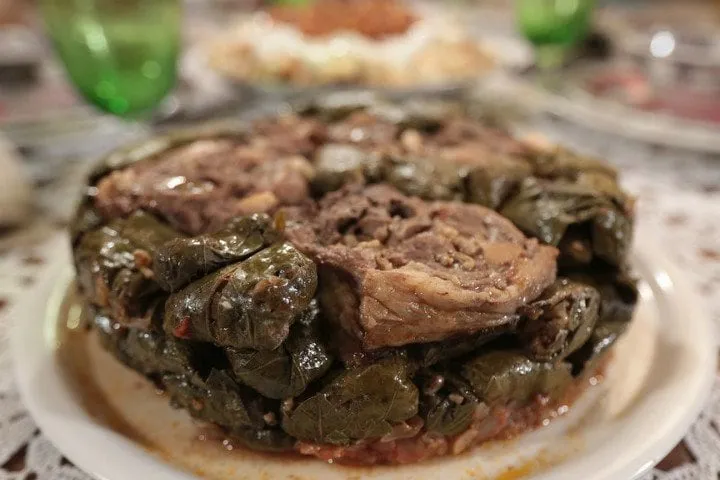
Stuffed leaves like no other: Bakla dolması
If you think that's all, you're wrong, because on top of this beauty, delicious ribs are laid in rows. What follows is happiness and endless flavour. In this recipe it isn't enough for the carefully prepared filling to meet the leaf: broad beans go in too.
For gourmet palates: Mumbar – işkembe
Usually made with sheep's tripe and intestines, this dish has a filling of bulgur and parsley. After a long, labour-intensive preparation it takes the place of honour at the table.
You'll get hooked: Patlıcan çullaması
Bringing together vegetables that suit each other so well, such as aubergine, pepper and parsley, this recipe is one of Amasya's best-known local dishes. Anyone who tastes it once can't give it up; you get hooked on this flavour.
Amasya-style is a treat of its own: Keşkek
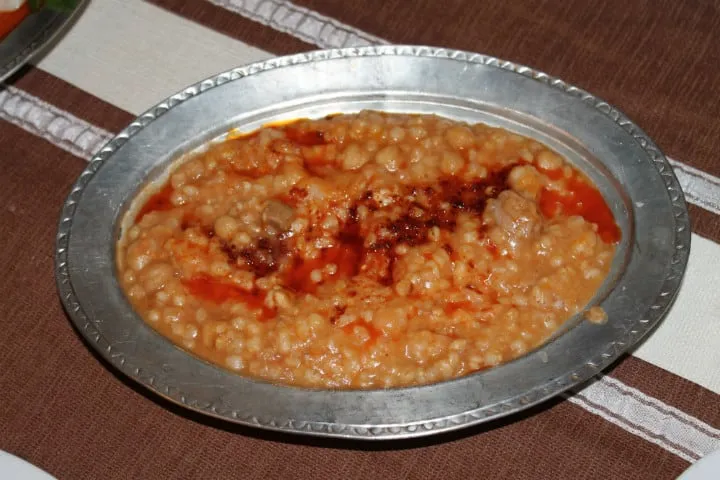
We know that keşkek is made in many regions with small differences. But we say you can't miss trying Amasya-style keşkek. Why? Because as well as leg of mutton with the coarse cracked wheat, this keşkek contains some çemen (fenugreek paste). Once çemen's distinctive flavour comes into play, the keşkek we know practically moves up a class.
You'll want to taste it as soon as you see it: Bat
The intrigue that starts with its name turns to appetite once you learn what's in it. Also important in Tokat's cuisine, this dish brings together crushed walnuts, fine bulgur, lentils, tomato paste and onion, which are then eaten with brined vine leaves for a happy ending.
Quince has never suited a dish so well: Ayva gallesi
The main ingredients of ayva gallesi are quince, chickpeas and meat, generally mutton. Once you taste it, it's impossible to leave Amasya without the recipe. The taste lingers on your palate unbelievably.
Huge flavour from few ingredients: Hasuda
Made of starch, sugar, butter, water and walnuts, this huge flavour from few ingredients is one of the first things you should try as soon as you get to Amasya. Hasuda is a candidate for your new favourite dessert.
The pekmez version is a legend too: Dene hasudası
Dene hasudası, where hasuda's flavour is multiplied by grape molasses (pekmez), can give you a real burst of energy when combined with walnuts. It goes without saying that it warms you up, especially when eaten in cold weather.
We already loved it: Kalburabastı
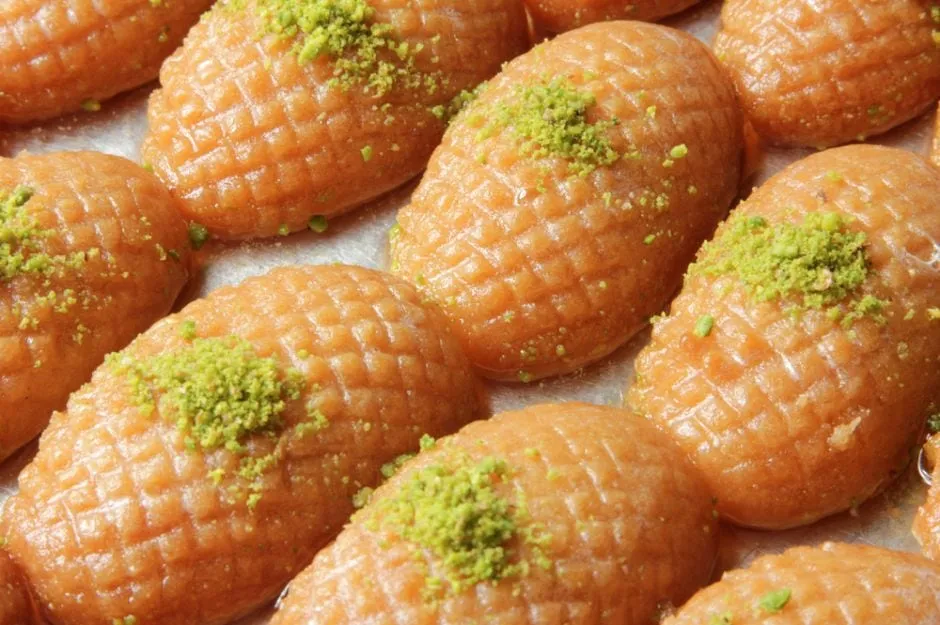
Kalburabastı is one of the desserts we already know well and love. You can't miss trying this lovely syrup-soaked dessert, which steals our hearts with its shape too, in Amasya. If you're passing through Amasya, keep the very best kalburabastı in mind.
Very stylish, very cute: Elma tatlısı (apple dessert)
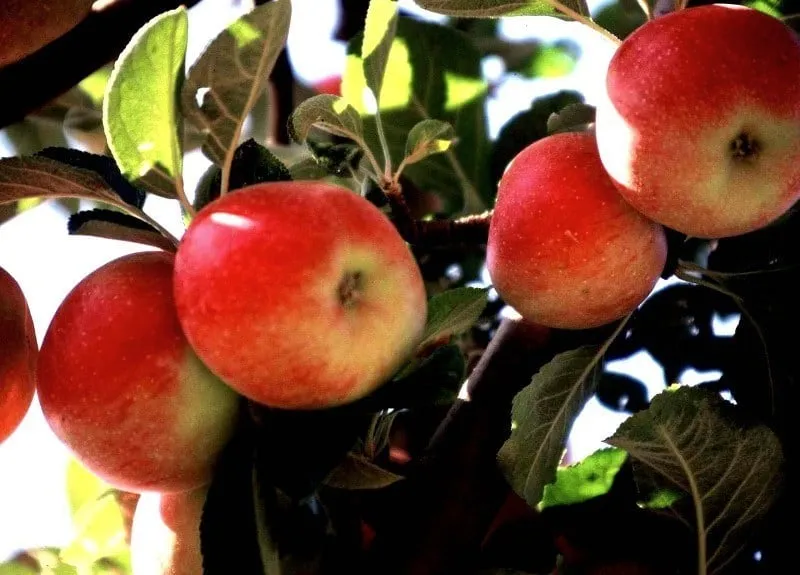
Crunching Amasya's apples, among its most famous products with their wonderful scent and legendary flavour, was already good enough. But you can't miss the dessert version, where they come together with walnuts, cinnamon and all sorts of flavours. In short, don't come back without trying it.
No one can say no to this: Amasya çöreği
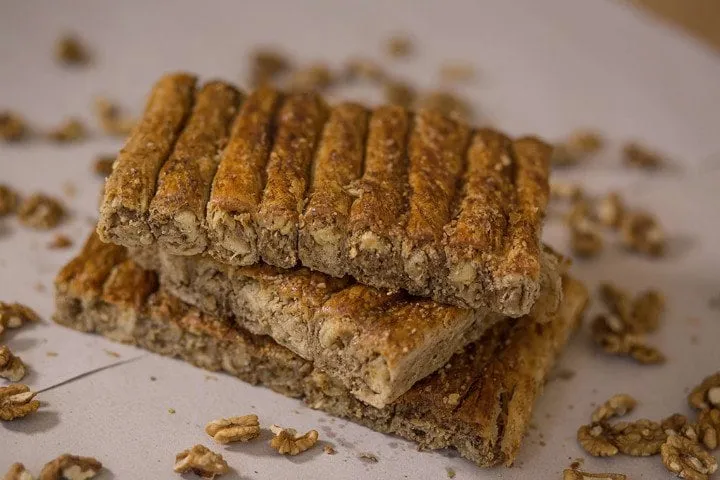
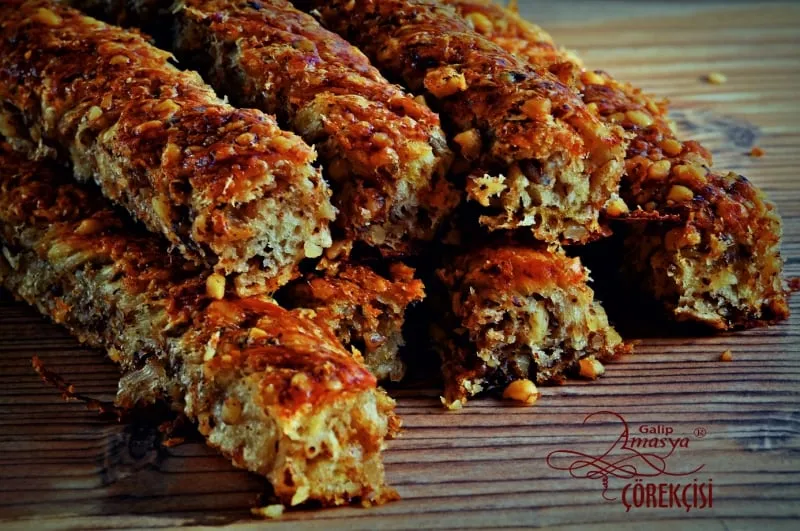
Named after Amasya, Amasya çöreği is one of the most special, most delicious tastes of the city's cuisine. It is made by combining the powers of walnuts and poppy seeds with carefully prepared dough. Once you eat it, you can't give it up.
Note: If you find yourself in Amasya, besides these dishes don't forget to taste its fragrant, delicious apples, ciğer sarması (liver wrapped in caul fat), göbek dolması and kabak kavuklu pilav (pilaf baked in a pumpkin). The city's cuisine is so rich it's impossible to come back without putting on weight. :)
Source: https://yemek.com/amasya-yemekleri/sayfa/12
Places to visit in Amasya
Amasya stands out above all for its natural beauty. Its hot springs and picnic areas are special places well worth a visit. Built in the Yeşilırmak valley at the foot of Mount Harşena, Amasya has raised scholars, artists and poets over a history of more than 7,000 years and was a city where Ottoman princes were educated. One of the most beautiful cities in Anatolia, Amasya is one of the places in our country you must see. Always on travellers' lists, Amasya has a great deal of historic and natural beauty to see.
Museums of Amasya: The museums that shed light on Amasya's history are places you should certainly stop at on your trip. The Amasya Museum, the Hazeranlar Mansion House Museum and the Miniature Amasya Museum are among the museums you can visit.
Mosques of Amasya: There are many historic buildings to see in Amasya, and mosques have an important place among them. The Yörgüç Pasha Mosque, the Bayezid Pasha Mosque, the Gümüşlü Mosque, the Gökmedrese Mosque, the Burmalı Minare (Twisted Minaret) Mosque, the Amasya Fethiye Mosque and the Saraçhane Mosque are among those we recommend.
Madrasas of Amasya: Amasya, one of the most important Ottoman cities, has many madrasas. The Çelebi Mehmet Madrasa and the Haliliye Madrasa are the most visited.
Amasya Castle: Amasya Castle, built on Mount Harşena, is among the buildings we recommend on your trip. Used from the Hellenistic period to the Ottoman period, the castle occupies one of the most strategic positions in the city.
Tombs of the Kings: The rock-cut Tombs of the Kings, on Mount Harşena like Amasya Castle, are among Amasya's most important historic treasures. Only a few of the royal tombs at the foot of the mountain have survived, but don't leave Amasya without seeing this unique beauty.
Natural beauty of Amasya: Amasya's natural beauty is as worth exploring as its historic beauty. If you want to explore nature in Amasya, one of the loveliest cities in Anatolia, Lake Borabay, the Yedi Kuğular (Seven Swans) bird sanctuary, Aynalı Mağara (the Mirrored Cave) and the Terziköy hot spring should be among your first stops.
Mansions of Amasya province
Hazeranlar Mansion
The Hazeranlar Mansion, the most beautiful in the row of riverside houses (Yalı Boyu), is one of the most elegant examples of Ottoman civil architecture. It was built in 1872 by Defterdar (treasurer) Hasan Talat Efendi for his sister Hazeran Hanım. Its other door connects with the courtyard of the Hatuniye Mosque.

The double-leaf door of the selamlık (men's quarters) leads into a low-ceilinged space. There is a room in each of the four corners, and between the rooms are eyvans, extensions of the central hall (sofa). Wooden stairs with plain balustrades connect the western eyvans to the entrance floor. On the upper floors, the sitting rooms and bedrooms, the courtyard, the coffee room, the room with a hearth, the parents' room, the selamlık rooms and the toilet are arranged around the hall.
Castles and rock tombs of Amasya
Amasya Castle
The castle stands on the steep cliffs of Mount Harşena, north of the city and the Yeşilırmak. It has four gates, named Belkıs, Saray, Maydonos and Meydan, and inside the castle there is a well called Cilanbolu, a cistern and a dungeon. There are remains of a stepped underground passage from the 3rd century BC, running from 70 m below the castle down to the Yeşilırmak and the royal tombs, as well as remains of towers and a mosque.
Tombs of the Kings
The five tombs carved into the limestone cliffs that rise like a sheer wall at the foot of Amasya Castle catch the eye at first sight because of their form and position. They were cut free all around from the main rock mass and are connected to the rock by steps. There are 18 rock tombs, large and small, in the valley. According to the famous geographer Strabo (63 BC – AD 5), who was born in Amasya, the rock tombs belong to the kings of Pontus.
Aynalı Mağara (Mirrored Cave, rock tomb)
It is about three kilometres from the city centre, on the road to the town of Ziyaret that branches off right from the Samsun route of the ring road. It is the best worked and most finished of the royal rock tombs. On its vault are depictions of the 12 apostles, 6 on the right and 6 on the left; on the north and south walls are a number of male and female figures; and on the east face is a composition of Jesus, Mary and John.
Ferhat Water Channel
Built in the Hellenistic period to meet the city's water needs, the channel is about 75 cm wide and 18 km long. It was built using a levelling system, by carving channels, digging tunnels and, in some places, building walls.
Madrasas of Amasya
Bimarhane (Darüşşifa, hospital)
It is the only building to survive from the Ilkhanid period. It was built in 1308 in the name of the Ilkhanid ruler Sultan Mehmet Olcaytu (Öljeitü) and his wife Ilduz Hatun. The front façade in particular is artistically valuable. The keystone of the door bears a relief of a kneeling human figure, a feature found only at the Amasya Bimarhane.
Sultan Bayezid II Complex
The complex, built in 1485–86 in the name of Sultan Bayezid II, consists of a mosque, madrasa, soup kitchen (imaret), tomb and ablution fountain. The old plane trees in line with each of the two minarets are thought to be as old as the complex.
Haliliye Madrasa
This building in the centre of the town of Gümüş, in the Gümüşhacıköy district, was built in 1413 by Halil Pasha, beylerbeyi of Çelebi Sultan Mehmed. It is a square madrasa with an enclosed courtyard.
Kapı Ağa Madrasa
It was built in 1488 by Hüseyin Ağa, the Kapı Ağası (chief white eunuch) of Sultan Bayezid II. The octagonal plan seen in Near Eastern and Seljuk funerary monuments was applied for the first time, in terms of function, in this madrasa.
Other madrasas:
- Gökmedrese (1267)
- Çelebi Mehmed Madrasa (1415), Merzifon
- Büyük Ağa Madrasa (1488)
- Küçük Ağa Madrasa (1463–1464)
- Kasım Bey Madrasa, Yolpınar village, Hakala (1463–1464)
Mosques of Amasya
The Burmalı Minare Mosque and the Gökmedrese Mosque are well worth seeing. Amasya's other important mosques are the Gümüşlü Mosque, the Bayezid Pasha Mosque, the Yörgüç Pasha Mosque, the Sofular Abdullah Pasha Mosque, the Şirvanlı (Azeriler) Mosque, the Abide Hatun Mosque and the Halifet Gazi Kümbet.
Gök Medrese Mosque (central district)
The Gökmedrese Mosque, accepted as having been built in Amasya by the Seljuk governor Torumtay (1267), is a three-aisled building extending in depth and covered with domes and vaults. With its cut-stone architecture, mature proportions and simple decoration, it has a dignified, serious style. The mosque's very long entrance section was used as a madrasa.
Burmalı Minare Mosque (central district)
It was built in 1237–1247, in the time of the Seljuk sultan Gıyaseddin Keyhüsrev II, by the vizier Ferruh and his brother, the treasurer Yusuf. Its distinctive features are the classic octagonal Seljuk kümbet (tomb) adjoining the façade to the left of the entrance and its later twisted (burmalı) minaret.
Sultan Bayezid II Complex (central district)
The complex, built in 1485–86 in the name of Sultan Bayezid II, consists of a mosque, madrasa, imaret, tomb and ablution fountain. Built in the last quarter of the 15th century, it is the last developed example of mosque architecture with side spaces (L-plan). The mosque has two minarets. To the west is the madrasa and to the east the imaret and guesthouse. The old plane trees in line with each of the two minarets are thought to be as old as the complex.
Other mosques
- Fethiye Mosque (Byzantine–Danishmendid, 11th century)
- Gümüşlü Mosque (1326)
- Saraçhane Mosque (1372)
- Çilehane Mosque (1413)
- Medreseönü Mosque (1427), Merzifon (Murad II Mosque)
- Yörgüç Mosque (1428)
- Yörgüç Rüstem Pasha Mosque (1429), Gümüş
- Hızırpaşa Mosque (1466)
- Kilari Süleyman Ağa Mosque (1489)
- Bayezid II Complex (1486)
- Mehmet Pasha Mosque (1486)
- Şamlar Ayas Ağa Mosque (1495)
- Sofular Abdullah Pasha Mosque (1502)
- Hatuniye Mosque (1510)
- Pir Mehmet Çelebi Mosque (15th century)
- Temenna Mescidi (1567)
- Sofular Mosque (15th–16th century), Merzifon
- Bozacı Mosque (16th–17th century), Merzifon
- Merzifonlu Kara Mustafa Pasha Mosque (1666)
- Darphane Mosque (18th century), Gümüş
- Maden Mosque (1800), Gümüş
- Azeriler Mosque (1876–1895)
Wooden mosques of Amasya
- Abide Hatun Mosque (1680)
- Eyüp Çelebi Mosque (1725), Merzifon
- Hacı Hasan Mosque (1714), Merzifon
- Çay Mosque (1774)
- Eski Kışlacık Village Mosque (1865)
- Aşağı Baraklı Mosque (1870)
- Kaleköy Mosque (1870)
- Yukarı Baraklı Mosque (1875)
- Ziyaret Mosque (19th century)
- Şıhlar Village Mosque (1924)
- Eliktekke Village Mosque (1928)
- Müftü Mosque (20th century), Gümüşhacıköy
- Kızılca İstasyon Mosque (1956)
Hans, hamams and bazaars of Amasya
Ezine Han
It stands on the left of the road in the town of Ezinepazar, at kilometre 35 of the Amasya–Tokat road. It was built by Mahperi Hatun, wife of the Seljuk sultan Alaeddin Keykubad.
Taşhan
In the Merzifon district, built on a rectangular plan in the architectural style of the 17th century.
Bedesten
In the Merzifon district; rectangular in plan, domed, and surrounded by shops on its outer façades.
Eski Hamam
In the Merzifon district. According to its inscription it was built in 1678.
Amasya's other hamams
- Karsavul Hamam (Roman)
- Yıldız Hamam (13th century)
- Arkut Bey Hamam (13th century)
- Çifte Hamam, Merzifon (1388)
- Hızırpaşa Hamam (15th century)
- Mustafa Bey Hamam (1436)
- Kumacık Hamam (15th century)
- Çukur Hamam (15th century)
- Sinan Pasha Hamam, Uluköy (15th century)
- Kızlar Sarayı Hamam (15th century)
- Gediksaray Hamam (15th century)
- Ziyaret Hamam (15th century)
- Çayüstü Village Hamam, Suluova (15th century)
- Maarif Hamam, Merzifon (16th century)
- Maarif Hamam, Gümüşhacıköy (16th century)
- Paşa Hamam, Merzifon (1677)
- Tuz Pazarı Hamam, Merzifon (1677)
- Ekin Pazarı Hamam, Gümüşhacıköy (1658)
- Eski Hamam, Gümüş (19th century)
Hot springs of Amasya
The Terziköy hot spring is the province's most important. The Gözlek, Hamamözü (Arkut Bey) and Ilısu hot springs are the others.
Terziköy Hot Spring
Location: south of Amasya, outside the municipal and adjoining area.
Access: 30 km from the centre of Amasya.
Water temperature: 37 °C
pH: 6.6
Characteristics: a bicarbonate, calcium and partly carbon dioxide composition.
How it is used: drinking and bathing cures.
Conditions treated: it has a positive effect on rheumatism, stomach and intestinal complaints, kidney and urinary tract complaints, and nutritional disorders.
Accommodation: there is a 90-bed motel.
Picnic and recreation areas of Amasya
The Yedi Kuğular bird sanctuary (Yedikır Dam) is 7 km off the Amasya–Suluova road. With the natural beauty around the reservoir, its walking trail, the State Hydraulic Works (DSİ) social facilities, fish farms and amateur fishing, it is the area's most attractive picnic spot. The lake has become a bird sanctuary that shelters more than 34 bird species, such as swans, wild geese, wild ducks, ruddy shelducks, cormorants and herons.
Lake Borabay: the natural wonder of Lake Borabay and its surroundings, reached by turning left at kilometre 44 of the Amasya–Taşova road and then left again at kilometre 14 of the Taşova–Samsun road, has been declared a tourism centre.
With 9 bungalow-type houses in the woodland, each with 3 beds, a casino-restaurant, camping, picnic areas, nature walks and places to relax, it is a regular stop for Turkish and foreign visitors.
Baraklı Waterfall is in the Taşova district, within the boundaries of the town of Özbaraklı, 30 km from Taşova.
- Birdwatching area
- Yedikır Dam
- Museums and ruins
- Hazeranlar Mansion Ethnography Museum
- Alparslan Museum
- Ruins
- Tombs of the Kings
Culture and arts in Amasya
Amasya is known as the city where Ottoman princes were raised. Sultans such as Mehmed I, Murad II, Mehmed the Conqueror and Selim I (Yavuz Sultan Selim) served here as princes.
The city's museums and monuments are an important part of its cultural life. In the garden of the Amasya Archaeology Museum stands the Sultan Mesud Tomb, known to date from the 12th century. You can also visit the Miniature Amasya Museum, opened in 2010, and the Ferhat and Şirin Lovers' Museum and the Lovers' Museum at the entrance to the city. The Pontic rock tombs are within the city.
The Yalı Boyu view along the Yeşilırmak, the old houses and the Hazeranlar Mansion, built in 1865 next to the Hatuniye Mosque, are the city's familiar sights. The Bayezid II Mosque and the Burmalı Minare Mosque are also among its standout historic buildings.
Culinary heritage is part of the culture too: Amasya Keşkeği and Amasya Çöreği have been registered with geographical indications by the Turkish Patent and Trademark Office.
History of Amasya
History of Amasya province
Amasya, with its long history, is one of our provinces in Türkiye's Black Sea region. Host to many civilisations, Amasya's oldest known history belongs to the Hittites. After the Hittites it came under the Phrygians, then the Cimmerians and Scythians, then Lydia, the Persian Empire, the Hellenes, Pontus and the Roman Empire, and afterwards under Byzantine, Danishmendid, Seljuk, Ilkhanid and Ottoman rule, reaching the present day in this way.
A short history of Amasya
According to archaeological research and finds, the first settlement in Amasya began around 5500 BC and continued without interruption through the Hittite, Phrygian, Cimmerian, Scythian, Lydian, Persian, Hellenic, Pontic, Roman, Byzantine, Danishmendid, Seljuk, Ilkhanid and Ottoman periods.
The Tombs of the Kings, built by the Pontic kings (333 BC – 26 BC), have survived to the present day and are among the city's monuments.
After 700 years under Byzantine rule, Amasya was conquered in 1075 by Melik Ahmet Danişmend Gazi, establishing the first Turkish–Islamic rule in the city.
Amasya was one of the places in Ottoman Anatolia where Turks first made the move to city life. Because genuinely Turkish clans had settled in and around Amasya and because it was well protected, it was considered a suitable place to raise Ottoman princes. For these reasons Prince Çelebi Mehmet, drawing on the strength of the Turkmens of Amasya and its surroundings, restored Anatolian unity, which had broken apart because of Timur. Prince Yıldırım Bayezid, Çelebi Mehmet, Prince Murat (II), Prince Ahmet Çelebi, Prince Mehmet (II), Prince Alâeddin, Prince Bayezid (II), Prince Ahmet, Prince Murat, Prince Mustafa, Prince Bayezid and Prince Murad (III) served as governors in Amasya at various times. In this period many scholars were raised in the city, and with lasting works such as palaces, fountains, madrasas, mosques and tombs, the city took its place in history as a cultural centre.
Amasya, which played important roles throughout history, came to the fore again during the War of Independence, when the plans for the struggle for liberation were prepared in this city.
Where does the name Amasya come from?
Amasya's first known name is “Amaseia”. This name was given by Strabo, known as the world's first geographer. “Amaseia” is the name the people living among the Amazons gave to their queen.
In Antiquity many Anatolian cities are known to have had a founding (KTISTES) god or hero. This mythological founding applies to Amasya too.
From the inscription ERMHC KTICAC THN POLIN (“Hermes, founder of the city”) on an Amasya coin from the reign of the Roman emperor Septimius Severus (AD 193–211), Hermes is accepted as the founding god of the city of Amasya.
After this short explanation, coming to the history of the name Amasya: according to Hittite documents, Amasya's first known name is thought to have been Hakmiş [Khakm(p)is]. This name is thought to have lasted until the Persian conquest of Amasya.
Amasya's name in the period of the Mithridatic kingdom was “Amasseia”. The words AMASSEIA can be clearly seen on Amasya city coins struck especially from the 2nd century BC onwards. The geographer Strabo also uses the word Amaseia for Amasya.
The word Amaseia is linked to ‘Ama’, meaning “mother” and referring especially to the “Mother Goddess”, and its variant ‘Mâ’. From this it can be said that Amaseia means “the city of the Mother Goddess Mâ”. The Mother Goddess Mâ is a goddess of eastern origin whose worship spread after the Persian conquest of Anatolia. She was also the local goddess of the Mithridatic kingdom and Cappadocia. The word Amaseia is a form of the name as pronounced in Persian times, adapted to Hellenic speech.
In the Roman period the name Amaseia was used, without much change, as AMACIAC (Amasia). For example, we see the name AMACIAC on Amasya city coins struck in the reigns of the emperors Septimius Severus, Caracalla and Severus Alexander. The name Amasia is known to have continued unchanged in the Byzantine period too. In the Danishmendid period Amasya was sometimes called Amasiyye and sometimes Şehr-i Haraşna. In the Seljuk, Ilkhanid, Beylik and Ottoman periods the name Amasya came down to the present day without any change.
Getting to Amasya
Amasya is connected by state highway to its neighbouring provinces Samsun, Çorum and Tokat. Its transit route lies on the state highway with control section numbers 100-17, 100-18 and 100-19 (the Europe–Iran international transit highway). There is no settlement in the province without a road, and 90% of village roads are asphalted. There are no transport problems in summer or winter.
An average of 140 intercity coaches use Amasya Bus Terminal every day. Services between Amasya and the neighbouring provinces of Samsun and Çorum run every hour.
BY RAIL
Amasya is on the Sivas–Samsun railway, 261 km from Sivas and 130 km from Samsun. There are 2 main stations (Amasya and Hacıbayram) and 6 stations (Kızılca, Kayabaşı, Eryatağı, Boğazköy, Suluova, Hacıbayram) within the province.
BY AIRAMASYA MERZİFON AIRPORT
AMASYA MERZİFON AIRPORT is in the province's Merzifon district, 46 km from the centre of Amasya.
BY SEAThe nearest seaport to the province is in Samsun, 130 km away.
Districts of Amasya
- Amasya (provincial centre)
- Göynücek
- Gümüşhacıköy
- Hamamözü
- Merzifon
- Suluova
- Taşova
Economy of Amasya
Agriculture leads Amasya's economy, and apples are the first thing that comes to mind with the city. The Amasya misket apple has a geographical indication. Besides apples, beans, chickpeas, lentils, sugar beet and onions are grown.
Industries such as food processing and packaging have grown up around agricultural production. Tourism is also among the city's sources of income.
Amasya is on the route linking Central Anatolia to the port of Samsun and has been connected to Samsun by rail since 1930.
Sport in Amasya
Amasya has teams in various sports, such as football, basketball, volleyball and handball.


Comments
Loading comments…