
Çorum
- Black Sea Region
About Çorum
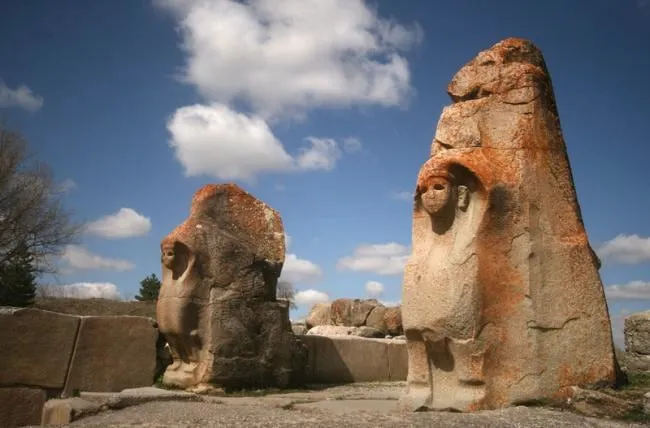
With a deep-rooted history of about 7,000 years, Çorum is home to the oldest known capital of Anatolia, the cradle of civilisations. For thousands of years it hosted some of Anatolia's oldest and most powerful civilisations. An important settlement in many eras, including those of the Hattians and the Hittites, Çorum has drawn the attention of archaeologists since the 1800s. Hattuşa, the Hittite capital, and Alaca Höyük, where finds that shaped our understanding of world history came to light, are Çorum's main archaeological sites. A clay-tablet copy of the Treaty of Kadesh, described as the world's first written treaty, was found in the Hattuşa excavations.
Described in various sources as an open-air museum, Çorum stands out for its natural beauty as well as its historical heritage. The region is very rich in plant and animal species, and its highland pastures (yayla), plains, picnic areas and nature parks are also worth seeing.
Thanks to its unique position linking the Black Sea to Central Anatolia, Çorum has been a centre of great civilisations throughout history, and today, with its advances in many fields, it is a contender to become one of Türkiye's centres of trade and industry. A fast-developing province in sectors such as animal feed, food, clay products, paper, car radiators, machinery, ceramics and steel casting, Çorum carries national weight in foods such as leblebi (roasted chickpeas), rice and eggs, as well as in roof-tile and brick production.
Çorum's famous dishes and desserts
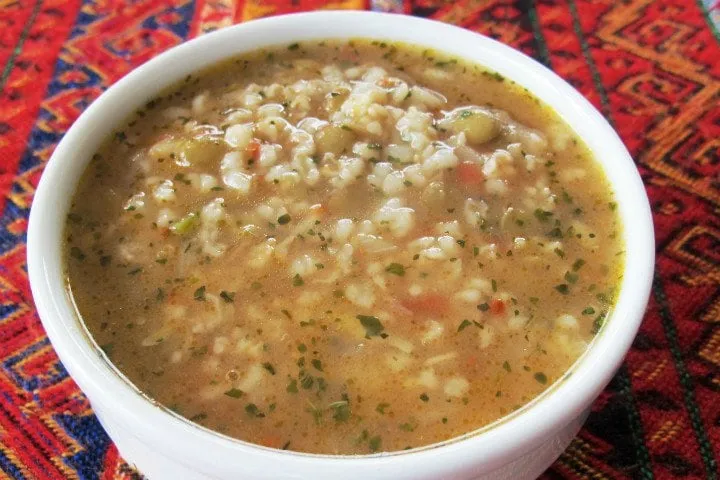
Soup or main course: Çatal aşı
Starring green lentils, this dish is usually eaten as a soup, but it is filling enough that it would be fair to call it a main course. If you ever find yourself in Çorum, don't leave without tasting this delicious soup made with lentils and cracked wheat (yarma).
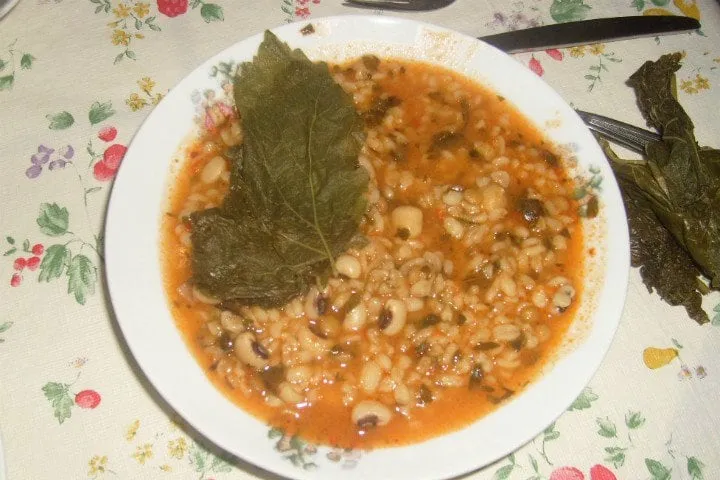
A different experience: Yaprak içi aşı
This time we are talking about a dish that has a bit of everything. Often made in and around Çorum, yaprak içi aşı brings all kinds of ingredients together on one plate, from dried black-eyed beans to chickpeas, lentils and bulgur, and it never lacks a bit of chilli.
One thing that sets it apart is that it is served with vine leaves. Anyone who has only ever known vine leaves as stuffed yaprak sarma should try this unique dish as soon as possible.
If you haven't met it yet, don't waste any time: İskilip dolması
The delicious dolma that made İskilip, one of Çorum's districts, famous everywhere takes real skill to make, which is why it is considered indispensable mainly on special occasions such as weddings.
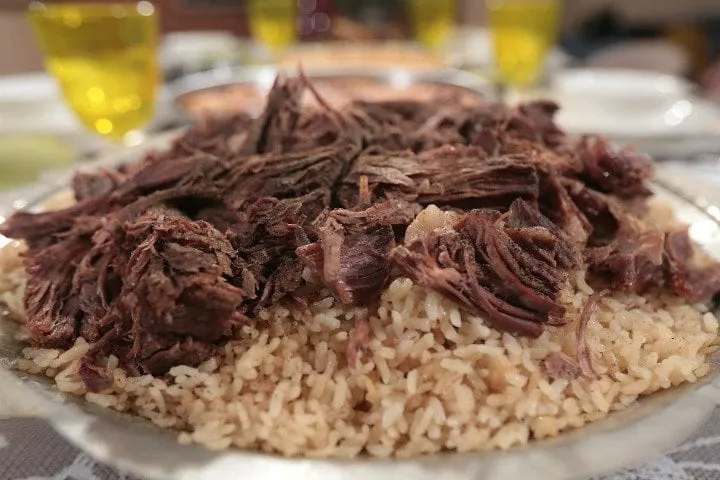
It is prepared in large cauldrons that work almost like a pressure cooker, using Akçeltik rice, meat, meat stock and tail fat or beef suet. Labour-intensive, painstaking and taking at least 15 hours to cook, it repays all the effort from the very first bite. Simply wonderful.
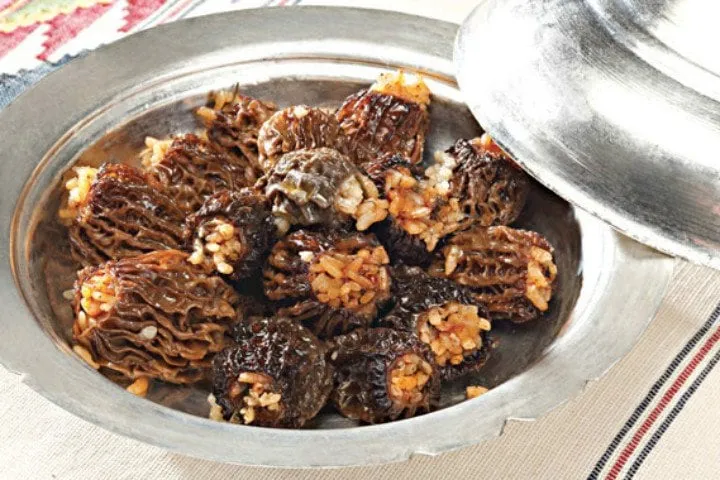
Also called kuzu göbeği: Söbelek dolması
Söbelek dolması is made with a very shapely mushroom that grows in and around Çorum, known as kuzu göbeği or morel. As it is considered a very special local dish, it is served to very special guests.
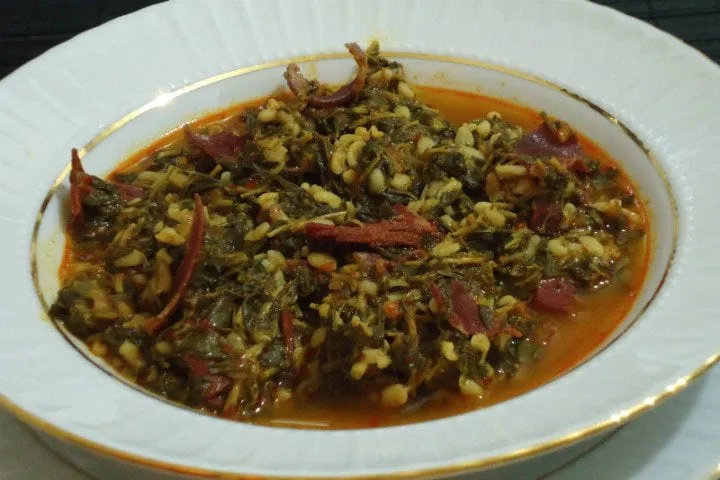
Bring some greens to the table: Pastırmalı madımak
Made with madımak (knotgrass), which grows abundantly in and around Çorum, this dish looks at first like a spinach dish, but the finely chopped pastırma (cured beef) in it makes all the difference. Anyone who sees it has to taste it, and anyone who takes one forkful will never want to stop.
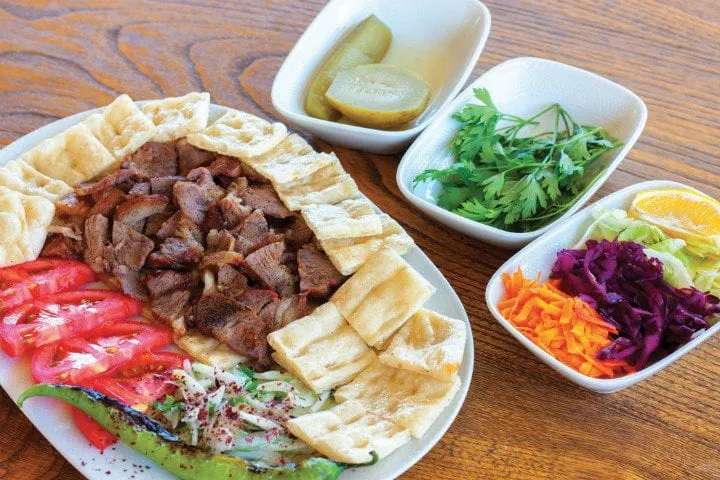
Meat lovers will adore this: Kuzu tandır
Tandır is prepared differently in different regions, and it is a must of Çorum cuisine too. Made especially with lamb and cooked over a low fire for many hours, this is a dish you cannot miss in Çorum, take our word for it.
One of our favourites: Keşkek
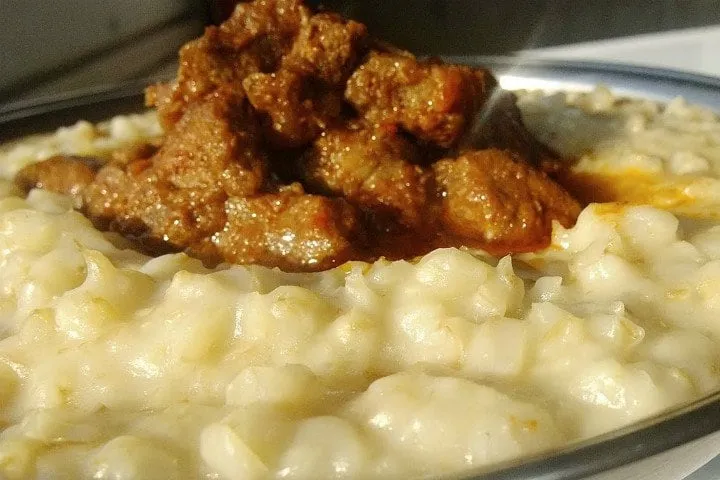
Keşkek is in fact made in many parts of Anatolia, but you still have to taste Çorum's. Why, you ask? The secret is the quality of the mutton.
When the heartiness of cracked wheat meets the protein-rich, nourishing flavour of the meat, how could anyone say no? We certainly never would. :)
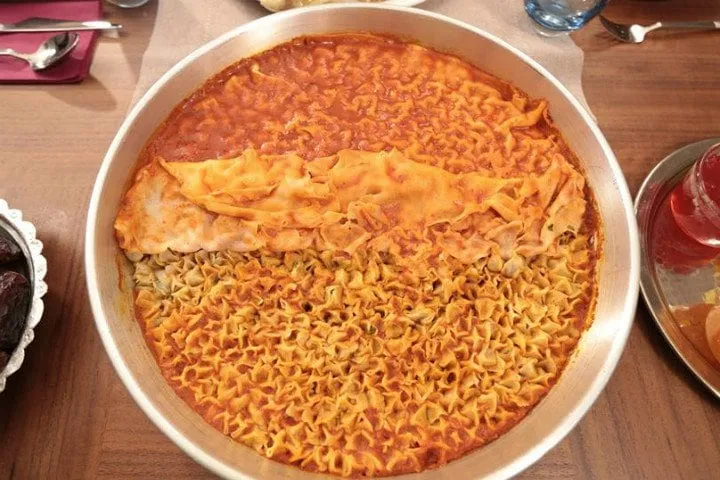
Forget every mantı you know: Çorum mantısı
With a filling of minced veal that takes the flavour to another level, dough carefully prepared and rolled out, and a rich sauce of tomato paste and butter, this mantı (dumplings) may make you forget every mantı you know. Add garlic yoghurt on the side and you're all set.
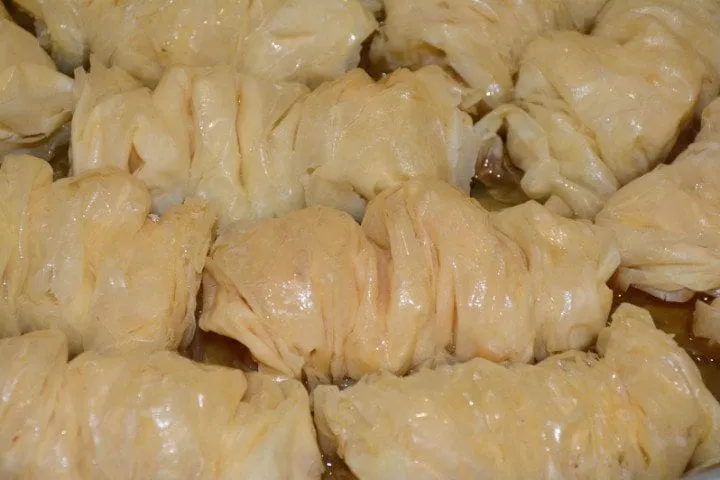
Delicious in every form: Sıkma baklava
Let's agree once and for all that baklava is delicious in every form. Sıkma baklava, made in abundance in Çorum, was not going to be left behind either, and it sets itself apart with its colour and shape.
For one thing, it is baked so that the pastry sheets stay as white as possible, and its shape is something you will want to gaze at for a long time. Add plenty of walnuts and... we couldn't be happier.
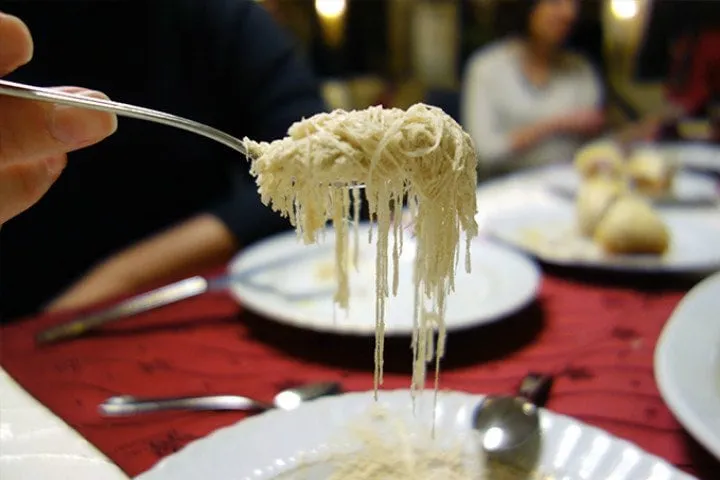
For pişmaniye lovers: Teltel
Made essentially from flour, sugar and water, this dessert resembles pişmaniye (Turkish floss halva), so it is perfect for anyone who loves pişmaniye or enjoys similar flavours. With a single forkful you will feel all the effort that went into making it, we are sure.
You can't leave without buying some: Kargı tulum peyniri
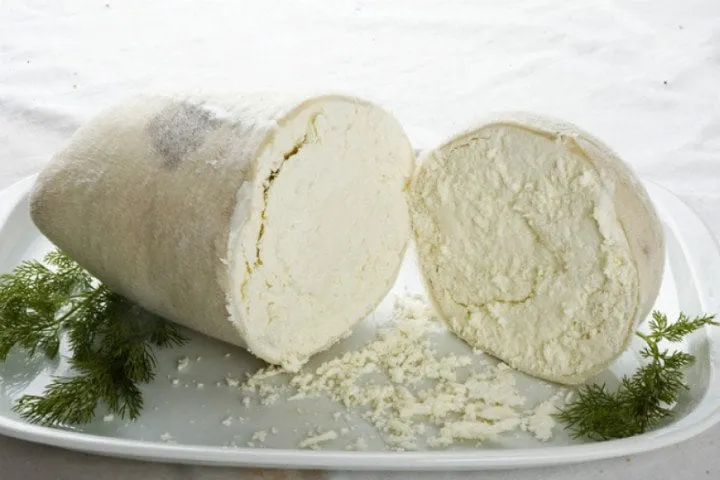
Kargı tulum cheese is a cheese whose name is widely heard and whose taste is well known. Kargı, the place it is named after, is a district of Çorum. Part of the city's deep-rooted culinary culture, its most notable feature is that it takes a great deal of time and effort to make.
The original recipe uses cow's, sheep's and buffalo milk together, and if you want to eat Kargı tulum cheese at its very best, we say make sure you go to Çorum.
Reader bonus: Yırtma aşı
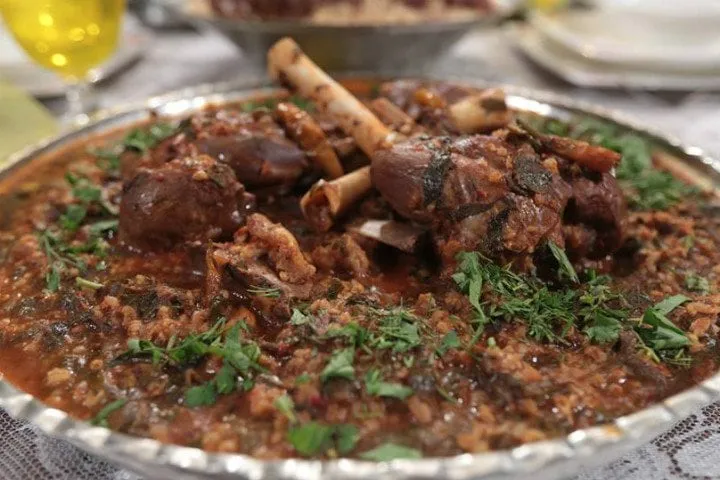
One of Çorum's local dishes, yırtma aşı takes its name from the vine leaves that are torn (yırtma) before use. Thanks to the sourness of the leaves it has a delicious flavour all its own, and you can enrich it with bone-in meat such as lamb shank, or with diced meat.
Source: https://yemek.com/corum-yemekleri/sayfa/12
Places to visit in Çorum
Kargı Yayla (Kargı highland pastures)
These highland pastures lie to the north of Kargı district and have spotlessly clean, lush green countryside and very pure water. The area around this yayla, 140 km from the provincial centre and 26 km from the district centre, is home to other highland pastures as well.
Kybele Relief
This relief in Ortaköy district is the largest of the Cybele reliefs. Dating from the Hellenistic period, it lies within the boundaries of the village of İncesu and was carved into a rock face.
Koyunbaba Bridge
This very imposing bridge in Osmancık district spans the Kızılırmak River. It takes its name from Koyun Baba, one of Anatolia's well-known saints. Construction began in 1484 and was completed in 1489, and the bridge even has its own legend. It has 19 arches and is 250 metres long and 7.5 metres wide.
Çorum Castle
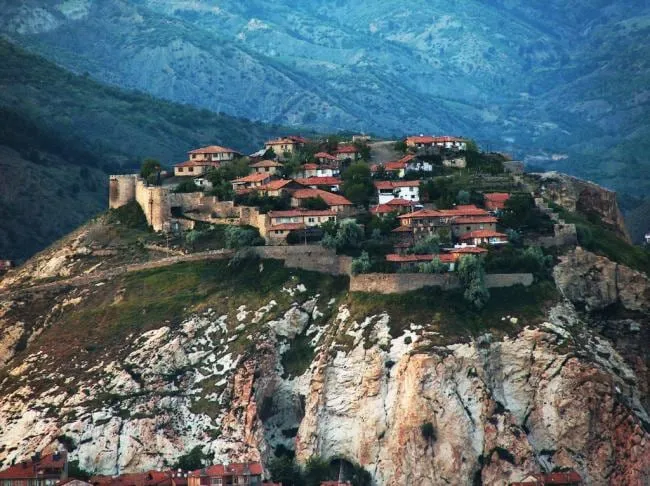
This castle in the city centre is mentioned in Evliya Çelebi's Seyahatname (Book of Travels). It is not known when the castle was built. Written documents, however, point to the year 1577 AD, and this is taken to indicate that it belongs to the Byzantine period. Yet it also shows Seljuk architecture. Evliya Çelebi says the castle was built by Sultan Kılıç Arslan. A mosque and 42 houses inside the castle have survived to the present day.
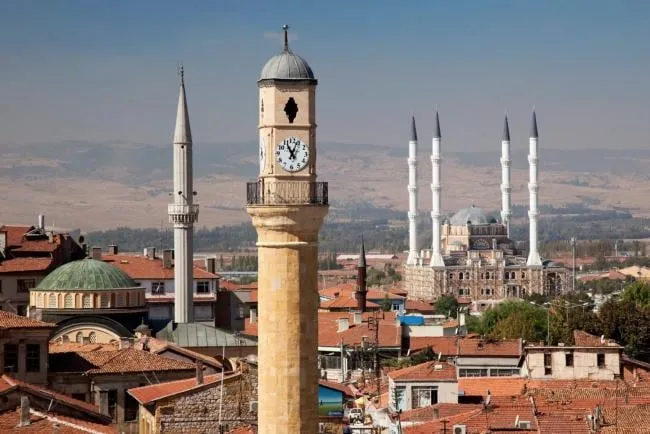
Çorum Ulu Camii (Great Mosque)
Almost every city has an Ulu Cami, and Çorum is no exception: its Great Mosque is a historic building that visitors stop by. Also known as the Murad-ı Rabi Mosque, its construction date is unknown, but it is thought to have been built by Hayrettin Hazır, a freed slave of the Seljuk Sultan Alaeddin Keykubad. This mosque is also mentioned in Evliya Çelebi's Seyahatname.
Çorum Museum
A city's museums are always a must-see, because they tell the city's history best. The museum holds both archaeological and ethnographic collections, with pieces from the Roman, Byzantine, Hittite, Phrygian, Chalcolithic and Early Bronze Age periods. They include coins, ceramics, statues, moulds, seals, vases, vessels and much more.
Alacahöyük Historical National Park
This is a national park where you can best see and learn about Çorum's history. It belongs to Boğazkale district and is 15 km from Alaca district. Visited by large numbers of people, the park contains remains from the Phrygians, Romans, Byzantines and Seljuks. It was declared a national park in 1988. Finds unearthed here are displayed in the Alacahöyük Museum and the Museum of Anatolian Civilisations in Ankara.
Çatak Nature Park
This park, 22 km from the provincial centre, is a picnic area. It has many species of trees and animals, a peaceful atmosphere and a trekking trail for those who want to walk. It is easy to reach, and if you are not in a hurry, spending some time here will be well worth it.
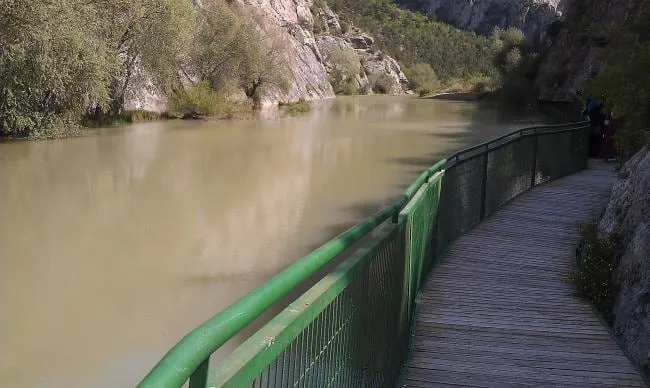
İncesu Canyon
Where almost all of the province's natural beauties meet, this canyon is immersed in nature. It is 12 km long, with the Alan Mountains to its east. Walls from the Hellenistic period run along the canyon. It is an ideal place for camping, walking and photography.
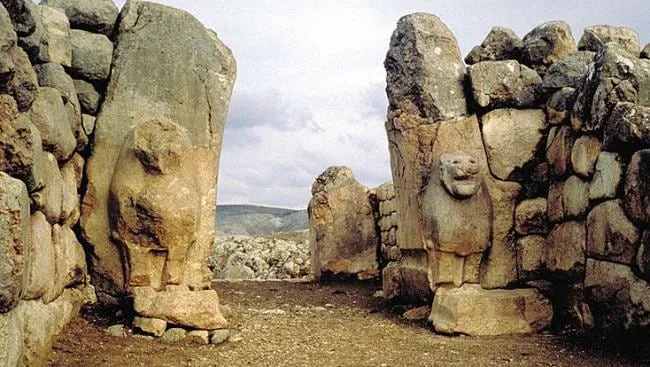
Hattuşaş (Hattusa) ancient city
Capital of the Hittite Empire between the 17th and 13th centuries BC, this site lies near the provincial centre. The ancient city, now called Boğazköy, was first excavated in 1834 by Charles Texier, who also introduced it to the world. It was added to the UNESCO World Heritage List in 1986. Little more needs to be said: in short, if you love history, it is a place you must see.
Other places to see in Çorum
- Alacahöyük Museum
- Çorum Clock Tower
- Veli Paşa Hanı (inn)
- Boğazköy Museum
- Kandiber Castle
- The Hittite Way (Hitit Yolu)
- Abdullah Yayla
- İskilip highland pastures
Culture and arts in Çorum
In Çorum folk culture, the utensils used in the kitchen are generally ranked as follows:
- Çay kazanı (tea cauldron)
- Banma (cauldron)
- Kuzu kazanı (lamb cauldron)
- Küpeli kazan (cauldron with ring handles)
- Culluk kazanı
- Helva kazanı (halva cauldron)
- Keklik kazanı (the smallest pot)
- Kuşane (pot)
Çorum leblebi
Çorum's famous yellow leblebi is made from dried chickpeas. Turning chickpeas into leblebi takes two months of work. With Çorum's famous yellow leblebi, however, things are a little different. In historic shops, the single-roast (tek kavrum) leblebi is poured from sacks into tins and from there into basins. Transferred to an oven brought to the right temperature over a wood fire, the leblebi is put back into sacks after the final roasting and sold still steaming. You can find a leblebi shop on every street corner in the province. The size of the chickpeas grown in this area and the way they turn into leblebi have long earned a well-deserved reputation.
From the sixties onwards, the chickpeas grown in the region were no longer enough for leblebi production, and chickpeas were brought in from other regions. Even so, Çorum leblebi has lost none of its fame. The reason it has kept its lead for years must be the roasting skills handed down from generation to generation. While traditional leblebi production, which gives the chickpeas a special flavour and their golden-yellow colour, continues, modern methods in which bottled gas has replaced wood have also come into use. To make leblebi you first need a roasting hearth made of firebrick, mud brick, a pan and a stirrer. It is also important that the wood used is a kind that does not produce soot.
How it is made: The chickpeas are first sieved and sorted. After the first roasting they are put into sacks while hot and left to rest for two days. After the second roasting they are again rested for two days, then spread out in a dry place and left for 15–20 days. These roasting and resting stages are extremely important for the quality of the leblebi. Before the third roasting the chickpeas are moistened and left in sacks for one day. In the third roasting the skins come off; this is called “tek kavrum leblebi”. Spicy, salted or clove-flavoured varieties are made at this final roasting stage. “Leblebi şekeri” (sugar-coated leblebi) is obtained after a short final roasting. As the production process shows, all this effort and toil is the price of carrying the fame of Çorum leblebi from years past to the present day.
Varieties of leblebi: Two new kinds of leblebi special to Çorum are crunchy leblebi and crunchy peanuts; these two cholesterol-free products are made by coating leblebi and peanuts with soya flour. There are more than twenty varieties, such as Extra leblebi, a special kind for those who want to lose weight and stay in shape, Light leblebi (sugar + soya), mastic leblebi, chocolate leblebi, crunchy leblebi (with soya), spicy leblebi, clove leblebi, salted leblebi, fruit leblebi, sürmeli kırık (split) leblebi, cocoa leblebi and honey leblebi.
Source: http://www.anittahotel.com/corum-yemek-kulturu
History of Çorum
Research has shown that there were human settlements in the Çorum region in the Old Stone Age (Palaeolithic), the New Stone Age (Neolithic) and the 4th phase of the Chalcolithic period. Works from this era have been found at Alacahöyük, Büyük Güllüce, Boğazköy, Eskiyapar and Kuşsaray. Settlement continued without a break from this period onwards. Çorum and its surroundings later came under the rule of the Hittites, Phrygians, Cimmerians, Medes, Persians, Galatians, Romans, Byzantines, Seljuks, Danishmendids, Mongols, Eretnids, Kadı Burhaneddin and the Ottomans.
Çorum is one of the foremost provinces carrying on the indigenous Anatolian cultural tradition built up side by side and layer upon layer by various civilisations over thousands of years. Looking almost like an open-air museum thanks to the richness of its material culture, the Çorum area has attracted European travellers and many Turkish and foreign scholars since the 1830s.
Prehistory
Palaeolithic and Neolithic periods: A small number of stone tools found scattered during archaeological surveys suggest that people may have lived here in the Old Stone Age (Palaeolithic). Some isolated finds show that there was settlement in and around Çorum in the Neolithic, the age in which people moved from hunting and nomadism to settled life.
Chalcolithic period (5500–3000 BC): In the Anatolian Chalcolithic (5500–3000 BC), tools made especially of copper begin to appear alongside stone tools. Archaeological excavations in and around Çorum to date have established that the oldest settlement began in the late phase of the Chalcolithic, around 4000 BC. Architectural remains and material culture from this period have been found in layers at centres such as Alacahöyük, Büyük Gülücek and Kuşsaray.
Early Bronze Age (3200–2000 BC): In the Early Bronze Age (3200–2000 BC), Çorum and its surroundings, like the whole of Anatolia, saw dense settlement. In this period metal vessels, tools and weapons came into wide use alongside earthenware. A feudal structure emerged and small city-states were founded, their cities surrounded by walls.
Alacahöyük was the most important of these centres. Besides its wealth in the Early Bronze Age, Alacahöyük holds an important place in the ancient world for its urban planning and the high level it reached in agriculture and animal husbandry. The horse was domesticated for the first time in this age and at this centre. The people behind this high culture were the Hattians, the indigenous people of Anatolia.
The 13 Early Bronze Age royal tombs found at Alacahöyük, and the vessels, ornaments, weapons, religious sun discs and bull and stag statuettes of gold, silver, electrum and bronze uncovered in them, show the wealth and the high artistic and cultural level of this age, and also tell us about its religious beliefs. Other important centres of this age are Boğazköy, Eskiyapar, Kalınkaya, Kuşsaray, Çöplühöyük and Kültepe Höyük. The high culture and artistic wealth reached in this age laid the ground for the organised states that came later.
Historical periods
Age of the Assyrian trading colonies (1950–1750 BC): The Assyrians, who had founded a great state in northern Mesopotamia, entered into intensive trade with Anatolia, which was rich especially in copper and other metals, in the early 2nd millennium BC, and set up trading centres called karum in 9 different places in Anatolia. One of these was Boğazköy, that is Hattuşaş, known as the “Hattuş Karum”.
Although the art of this age kept local traditions and customs alive, that is, indigenous Hattian art, the merchants from Mesopotamia instilled in the local people the idea of founding a state, which laid the foundations of Hittite art and the Hittite state.
Hittite period (1650–1200 BC): The Hittites, who entered Anatolia from Central Asia and over the Caucasus in the early 2nd millennium BC and at first served as mercenaries alongside the local people, spoke an Indo-European language and belong to the Indo-European (Indo-Germanic) group of peoples.
After the Assyrian merchants were forced to leave Anatolia around 1850 BC, the Hittites began to take political power, and by uniting or eliminating the city-states they laid the foundations of the first organised state in Anatolia.
This first stage after the colony age is known as the Old Hittite period. The first Hittite king known by name is Anitta. The founder of the Hittite state was Labarna (1680 BC), in whose reign the Hittite capital was moved from Neşa to Hattuşaş. When Labarna died in 1600 BC he was succeeded by Hattuşili I, and the state's borders expanded as far as Aleppo. His son Murşili I expanded the borders further by putting an end to the Old Babylonian state. After this king died, internal strife broke out and the state weakened. Telipinu sought to end this strife and the struggles for the throne; after his death in 1550 BC the whole of the ancient Near East sank into darkness until 1450. In the Hittite imperial period, Şuppiluliuma I (1375–1335 BC), one of the kings who came to power after the dark age, expanded the empire's borders with many campaigns in Anatolia and Syria. Murşili II, who became king at a young age in 1335 BC, went from victory to victory, first subduing the Kaska people and then turning west to inflict a heavy defeat on the Arzawans. When he died of plague in 1306, his son Muvattali (Muwatalli) took the throne. Muvattali fought the Battle of Kadesh against the Egyptians, and under Hattuşili III (1275–1250 BC), who took the throne after him, the Treaty of Kadesh was concluded with Egypt on equal terms. Tudhalia IV (1250–1220 BC), one of the last great Hittite kings, focused more on cultural activities: he rebuilt the capital Hattuşaş and built the Yazılıkaya open-air sanctuary 2 km east of Boğazköy, giving it its final form.
The most important cities of this age are centres such as the Hittite capital Boğazköy (Hattuşaş), Alacahöyük, Eskiyapar, Pazarlı, Kuşsaray and Ortaköy.
Phrygian period and after: Around 1200 BC, peoples who came into Anatolia over the straits in the Aegean migrations (the migrations of the Sea Peoples) destroyed the already weakened Hittite state. From then on the Hittites left the Çorum region and passed through the bend of the Kızılırmak to southern Anatolia. Anatolia entered a dark age of 200 years. In the 8th century BC the Phrygians, thought to have arrived with these migrations, founded their own cities on top of the ruined Hittite cities. Boğazköy, Alacahöyük, Eskiyapar and Pazarlı were important Phrygian cities in the Çorum region. The Phrygian state was destroyed by the Cimmerians in the first half of the 6th century BC, but its culture lived on for some time.
After the Cimmerian invasion, Çorum and its surroundings came under the rule of the Medes, who had founded a state in Iran, and then of the Persians from 546 BC until Alexander the Great invaded Anatolia in 330 BC. In 276 BC the Galatians, coming via Thrace, spread into the interior of Anatolia and took this region under their rule. Important Galatian centres in Çorum province are İskilip, Osmancık, Alacahöyük, Boğazköy, Eskiyapar and the village of Avlat. In the time of the Roman emperor Julius Caesar the area passed to the Romans. Çorum was a crossroads for the Romans, who built the first systematic road network in Anatolia: the roads from Ankara to Amasya and Tavium, and from Sinop to Tavium and Zile, branched off at Çorum. When the Roman Empire split in two (AD 395), Çorum remained in the Eastern Roman Empire and later Byzantium, and in this period its name was Yankonia or Nikonya.
Çorum passes to Turkish rule: The victory at Malazgirt (Manzikert) in 1071 opened the gates of Anatolia to the Turks, and Turkish beys continued their conquests with raids deep into Anatolia along many routes. There are two views on the conquest of Çorum and its surroundings. According to the first, Çorum and its surroundings were conquered by Danişment Ahmet Gazi in 1075. The second is that Emir Tutak and Emir Artuk, commanders of the Seljuk Sultan Melikşah, were put in charge of the region after conquering Çorum.
Çorum under the Danishmendid beylik: The Danishmendids, subject to the Anatolian Seljuks, ruled in the area of Sivas, Tokat, Ankara, Çankırı, Kastamonu and Yozgat, including Çorum. The most important events of the Danishmendid beylik are its struggles against the Crusades. The Danishmendid beylik was annexed to the Anatolian Seljuk state by Kılıç Arslan II in 1178.
Çorum under the Anatolian Seljuks: It is known that in the time of Gıyaseddin Keyhüsrev II, Çorum was one of the administrative units known as a serleşkerlik (regional command and sanjak governorship), headed by a commander named Hatirüddün Zekeriya. After the Anatolian Seljuk state was defeated by the Mongols at the Battle of Kösedağ in 1243, unrest broke out in Anatolia; in 1276 Emir Celaleddin, son of Kunduz Bey, defeated the Mongols in Çorum and freed Çorum and Amasya. Çorum's Kunduzhan neighbourhood is named after this bey.
Çorum up to the Ottomans: After the Seljuk state collapsed in 1308, Çorum came under the rule of the Eretnid beylik, one of the beyliks founded in Anatolia, and later of the state of Kadı Burhaneddin Ahmed. While the Ottoman Sultan Yıldırım Bayezid was working to unite Anatolia, in 1398 he took Çorum, Osmancık and İskilip and then Amasya, appointing his son Çelebi Mehmed governor of Amasya.
Çorum under the Ottomans: Çorum remained under Ottoman rule from its conquest by Yıldırım Bayezid in 1398 until the Republic. After the Battle of Ankara, Çelebi Sultan Mehmed, who ruled Amasya under Timur's protection, set up a subaşılık (local military governorship) in Çorum and kept the whole area under Ottoman rule; after reuniting Anatolia in 1413 he appointed his son Murad II governor of Amasya. In this period the Sanjak of Çorum, along with Tokat, Sivas, Canik (Samsun) and Şebinkarahisar, was attached to Amasya.
Source: http://corum.yerelnet.org.tr/il_tarihcesi.php?iladi=%C7ORUM
Getting to Çorum
Çorum can be reached by air or by road. The nearest airport is Amasya Merzifon Airport, 67 kilometres away. From there you can reach Çorum in about an hour by hiring a car or by going to the bus station and taking a bus. For those travelling by bus, many bus companies run services to Çorum from big cities such as Istanbul, Ankara and İzmir. Istanbul to Çorum is 628 kilometres (about 7 hours), Ankara to Çorum 242 kilometres (about 3 hours), İzmir to Çorum 832 kilometres (about 9 and a half hours) and Antalya to Çorum 728 kilometres (about 8 and a half hours). Travellers from the Marmara Region are advised to use the Istanbul–Samsun highway.
Districts of Çorum
- Alaca
- Bayat
- Boğazkale
- Dodurga
- İskilip
- Kargı
- Laçin
- Mecitözü
- Merkez (central district)
- Oğuzlar (Karaören)
- Ortaköy
- Osmancık
- Sungurlu
- Uğurludağ
Economy of Çorum
Çorum is one of the provinces that stand out for their industry; clay products and machinery manufacturing are especially well developed.
In 2019 it exported about 1.54 billion dollars' worth of goods. According to 2013 data, the unemployment rate was 5.9 per cent.
Leblebi is foremost among the products that feature both on the province's table and in its economy; teltel, a dessert made with leblebi flour, is also local to the area. Kargı district is known for its tulum cheese and sırık kebabı (spit kebab).


Comments
Loading comments…