
Karabük
- Black Sea Region
About Karabük
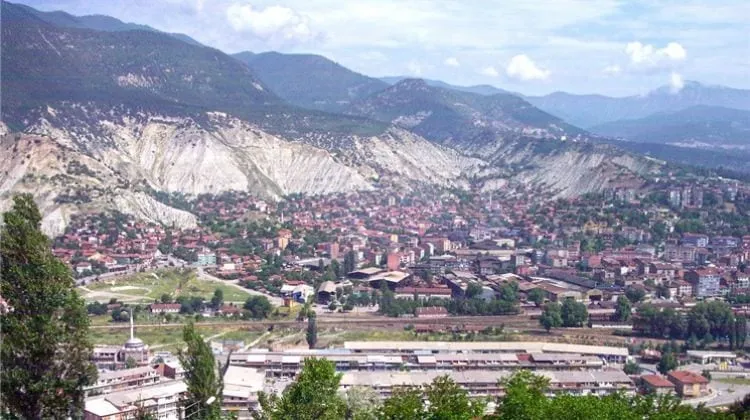
Karabük became Türkiye's 78th province on 6 June 1995, when Zonguldak's districts of Yenice, Eflani and Safranbolu and Çankırı's districts of Ovacık and Eskipazar were brought together. It has 6 districts including the Merkez (central district), 2 towns and 270 villages. Until 1937 Karabük was a 13-neighbourhood village of Öğlebeli, a village of Safranbolu, on the Ankara–Zonguldak railway that opened in 1935. Because rail transport was available and there were coal deposits nearby, it was decided to build an iron and steel works here.
On Atatürk's instructions, İsmet İnönü laid the foundations of the Karabük Iron and Steel Works on 3 April 1937. The steelworks is still one of Karabük's most important sources of livelihood. As the population grew, a municipality was set up in 1939.
Several climate types are found within Karabük's provincial borders; the province's geography and location give rise to many climates in the area. Karabük, which has been home to more than one civilisation, offers many options for those who want to discover something new. When you go to Karabük, be sure to visit its canyons and historic sites. You can visit the İncekaya Canyon and Tokatlı Canyon in Safranbolu district. The Mümtazlar Gezi Evi (house museum), which has the features of Safranbolu architecture, is also among the places you can visit.
Karabük's famous dishes and desserts
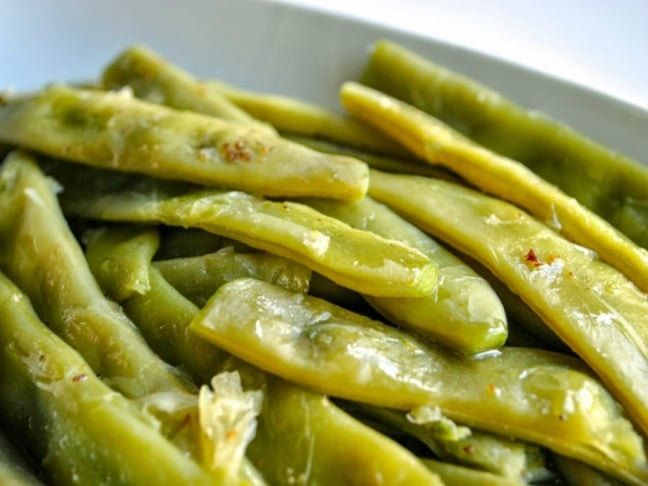
You've never seen green beans like this: Uzun fasulye
Uzun fasulye (long beans) is one of the endlessly delicious dishes often made in Karabük, especially in Safranbolu. Unlike the way we usually make green beans, they are not broken up, which, as you can guess, is where the "uzun" (long) in the name comes from.
The ends are trimmed carefully and the beans are cooked in wide, shallow pans. Some like to add tomato and onion on top. Its hallmark is the sizzling butter poured over it once cooked. This is how this legend gains the power to make even the biggest green-bean sceptic love them.
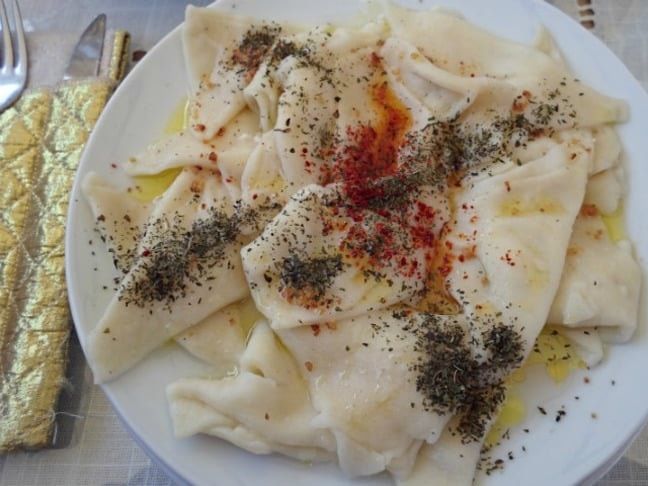
A true labour of love: Perohi (peruhi)
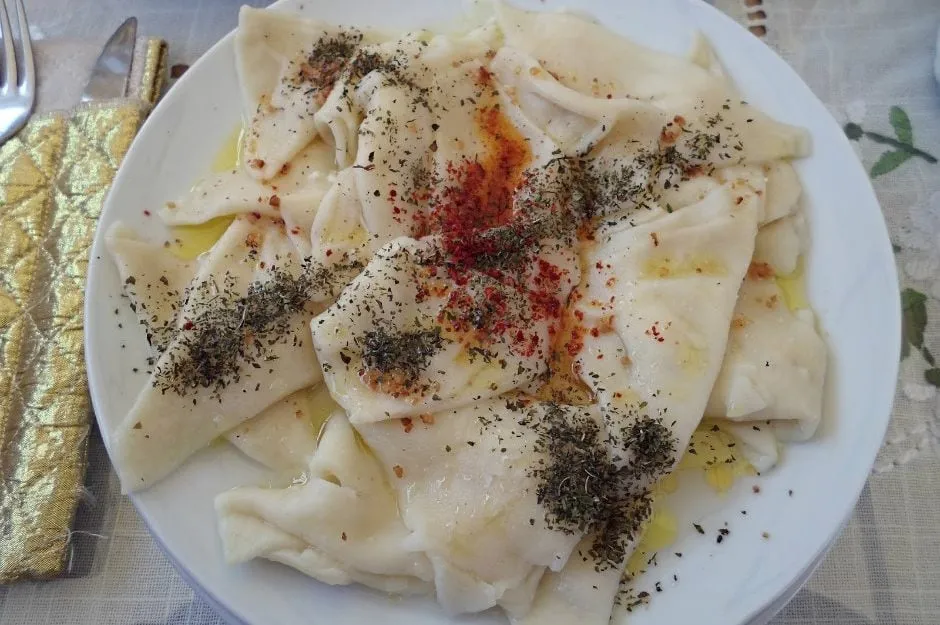
Perohi, also called peruhi or piruhi, is a true labour of love. Known in some places as yoghurt mantı, this delicious dish takes some effort, from making the dough to bringing it to the table. But from the very first bite it shows it was entirely worth the effort.
The dough is rolled out carefully and cut into squares, then filled with strained yoghurt, or with keş, a cheese made by drying strained yoghurt, mixed with mint, and folded into triangles. Then it goes straight into boiling water. Once cooked, it meets butter and becomes a legend of its own. Some use other yoghurts or cheeses instead of strained yoghurt.
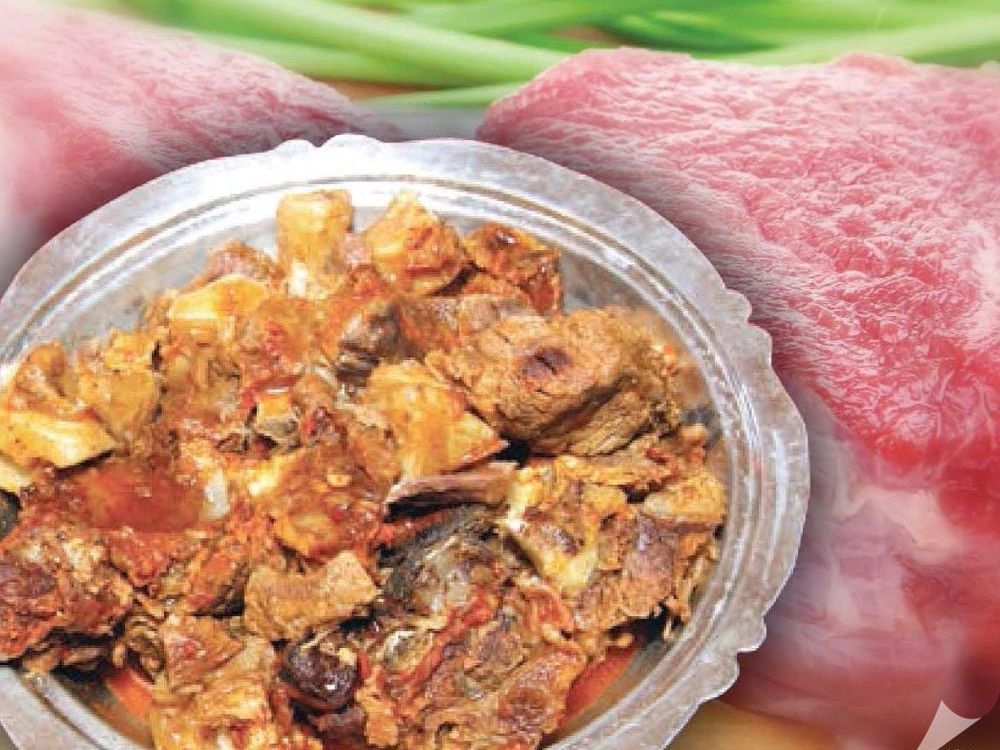
A feast of meat: Bütün et yemeği
Made with bone-in red meat, and especially delicious with lamb, bütün et yemeği (whole meat dish) is one of the finest examples of Karabük cuisine.
The meat is browned well on all sides in butter, then transferred to a pot with a little water, butter and, if you like, tomato paste. You vary the spices to your taste. Once cooked, it becomes a mouth-watering dish.
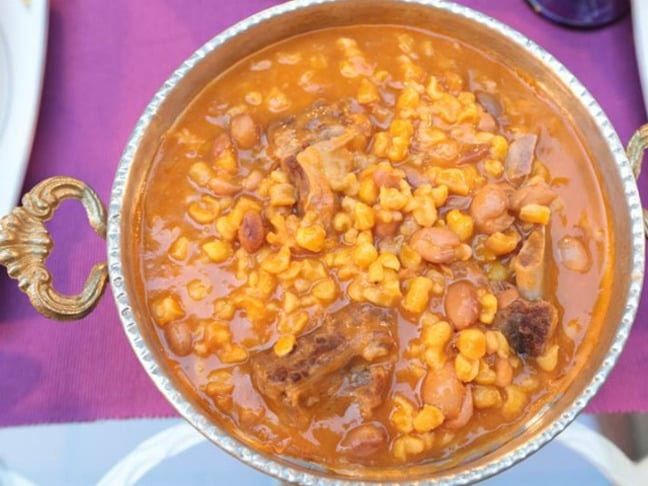
Very different, very tasty: Mısır çorbası
If the word soup only brings to mind fragrant soups drunk before a meal to warm you up, you have not yet met mısır çorbası (corn soup), one of the delicious soups often made in Karabük, especially in Yenice.
It is such a soup that you can eat your fill on it alone, because it is made with plenty of corn and haricot or borlotti beans. Some even add meat. It becomes the star of the table on its own, and you need nothing else to be full.
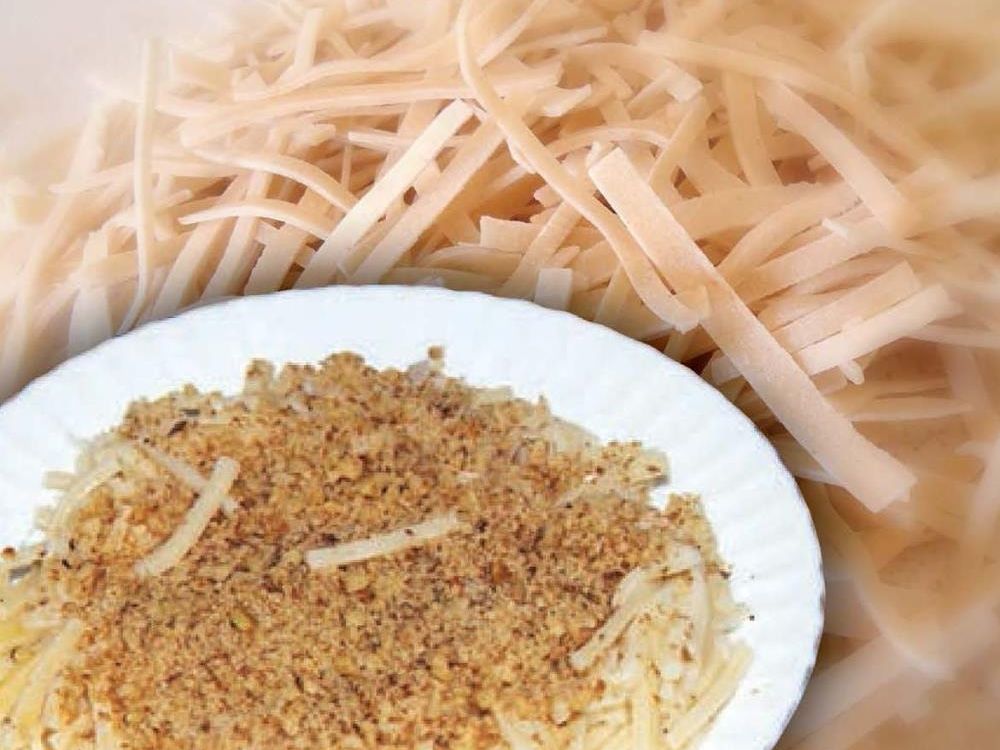
Walnuts suit it so well: Cevizli keşli yayım
Yayım is Karabük's delicious version of what we know as homemade pasta or erişte. It is mostly named after what is added to it after boiling. You can eat it with minced meat or yoghurt, but the best and most famous version is with walnuts and keş (dried yoghurt cheese). It is simply wonderful.
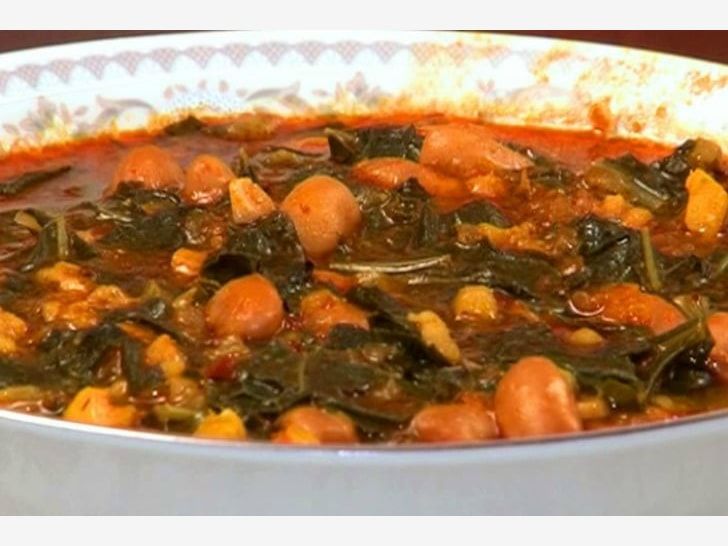
A Black Sea beauty: Karalahana (karamancar) yemeği
Black cabbage (karalahana), a staple of rich Black Sea cuisine, takes the lead role in this dish, joined by cracked corn, dried beans, leeks and squash.
With so many good ingredients in it, this delicious dish is naturally one of the most filling around.
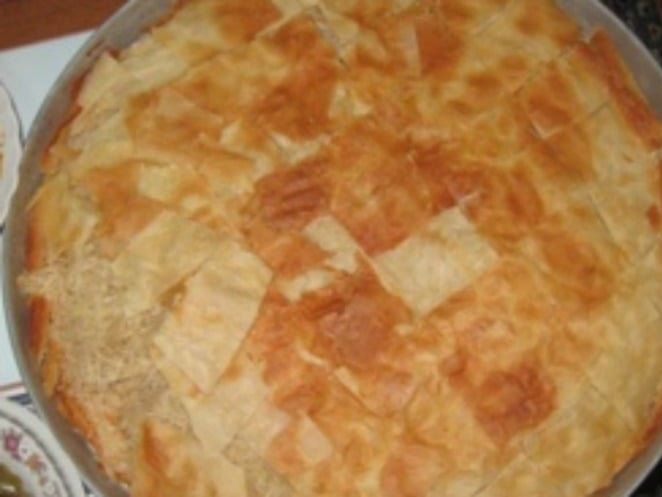
It will make you fall in love with pastry: Çullu börek
Çullu börek is the kind of börek that even has festivals named after it. As for how it's made: first the dough is prepared, then the sheets are carefully rolled out and cooked on a sac (griddle). Two of the cooked sheets are set aside and the rest are cut very finely.
Tradition calls for a copper tray. One of the whole sheets set aside is laid in the tray first, then the finely cut sheets are spread over it and covered again with a whole sheet. Browning it over embers adds to its flavour, and of course butter has the final word. Some enrich it further with cheese or other ingredients.
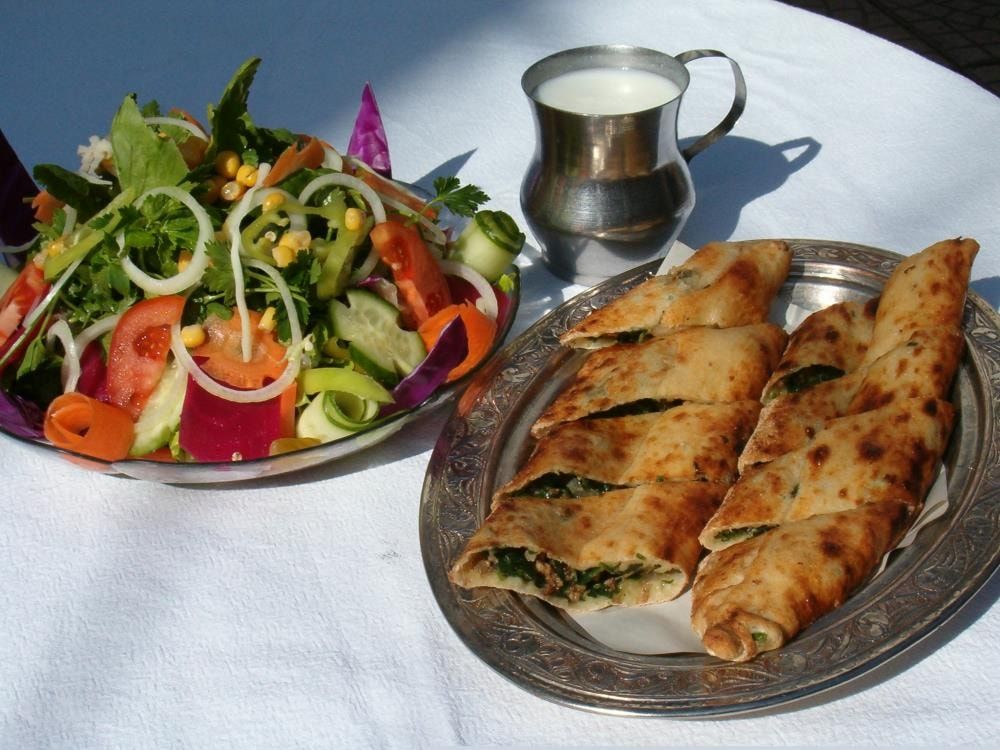
Three in one: Safranbolu bükmesi
We say three in one because this dish appeals to pastry lovers, to those who can't be full without meat, and to those who can't do without vegetables.
The fragrant dough is filled with fried minced meat, spinach and finely chopped onion, and black pepper is never left out. Brushed with butter after baking, it is irresistible, and the smell alone is enough to enchant you. It goes very well with kızılcık şerbeti (cornelian cherry sherbet), also called kiren şerbeti. Enjoy.
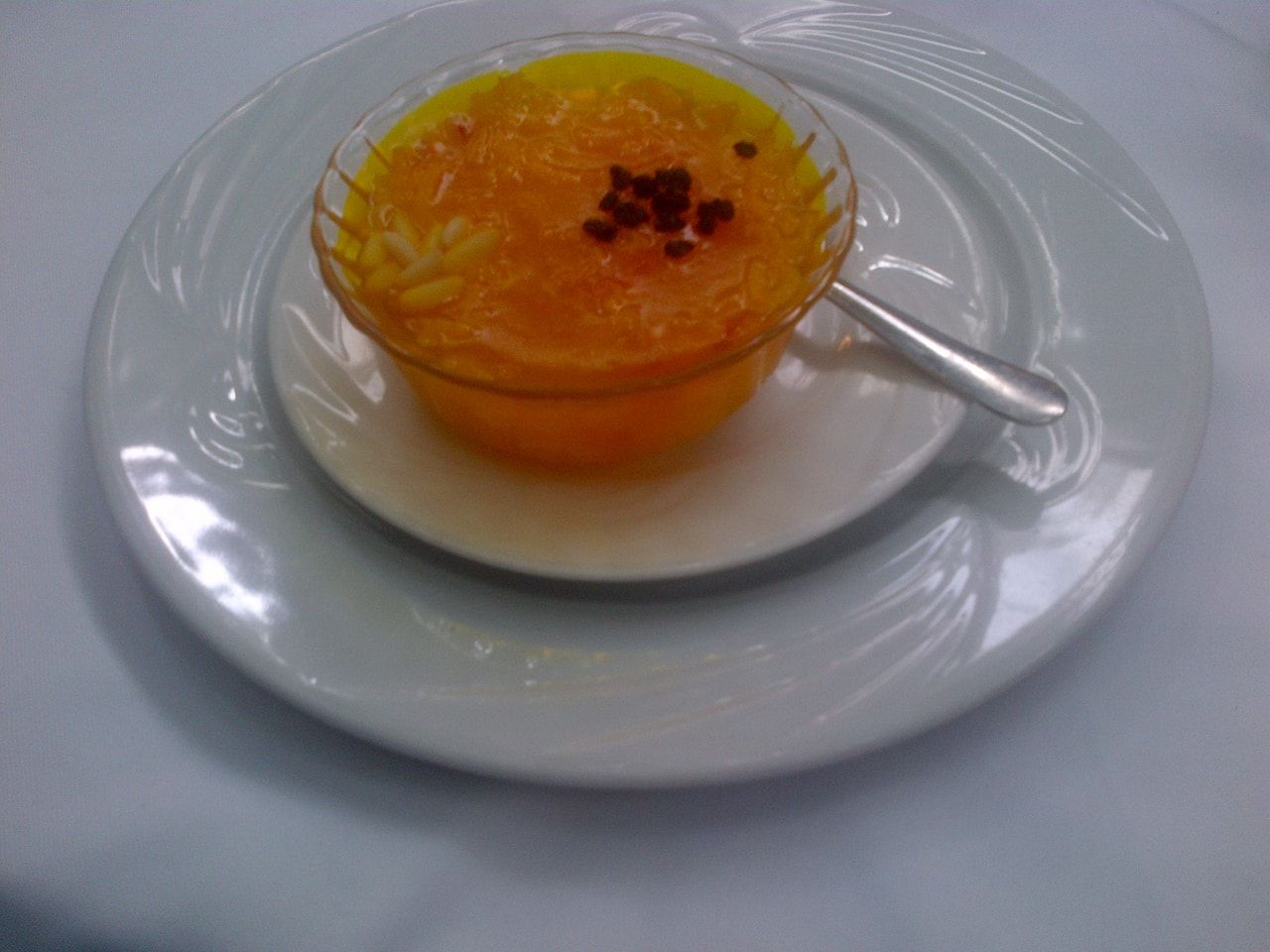
Because saffron: Zerde
Zerde is one of the sweetest ways to enjoy the quality saffron you can find not only in Safranbolu but all over Karabük. Known to have come down to us from the Ottoman palace kitchen, this fragrant dessert is something else with good saffron, so it is best eaten in Karabük.
Saffron, instantly recognisable by its bright yellow colour, meets rice and sugar. This dessert fit for sultans can be enriched with all sorts of ingredients as you like. Anyone who tastes it once can never forget its lovely flavour.
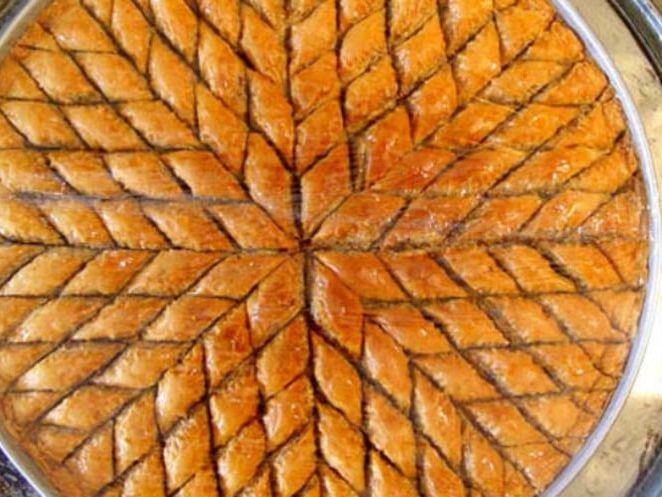
You'll want trays of it: Safranbolu baklavası
Our favourite, most missed kind of baklava is homemade baklava, and Safranbolu baklava is in fact a delicious homemade baklava, since everything in it is made with effort and care.
The pastry sheets have to be rolled out thin, really thin. Starch, as you know, is the secret. After the sheets are rolled out and dried a little, they are layered in the tray and covered with plenty of crushed walnuts, then just as many sheets again go on top. About 40–50 sheets are used, so you can see how much work it takes. And the taste… just describing it makes your mouth water. :)
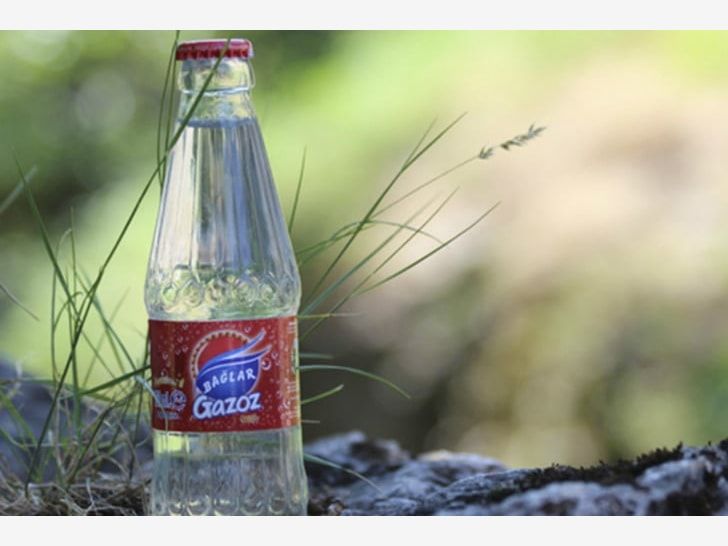
Of course we weren't going to forget it: Bağlar Gazoz
If you find yourself in Karabük, and especially if you are going to Safranbolu, we say don't forget to try Safranbolu's legendary Bağlar Gazoz (fizzy drink), and to stock up plenty in your bag for the journey home.
Source: https://yemek.com/karabuk-yemekleri/sayfa/11


Places to visit in Karabük
Canyons: İncekaya Canyon in Safranbolu district is one of the spots that attract great interest from Turkish and foreign tourists. It has a viewing terrace from which you can look out over the surroundings, and the terrace is made of glass… The İncekaya Aqueduct, which you will see as you walk through the canyon, is a historic structure hidden in nature… The aqueduct was built by İzzet Mehmet Pasha, who served as grand vizier under Sultan Selim III. Another canyon whose spell you will fall under is Tokatlı Canyon… Also within Safranbolu, Tokatlı Canyon shows nature at its most beautiful. Like İncekaya Canyon, it has a viewing terrace, and you will also see cave cafés in Tokatlı Canyon.
Historic buildings: Having been settled by many civilisations, Karabük is among our cities where many historic works have survived intact. In Karabük you can first visit the 300-year-old Sipahioğlu Konağı (mansion), a three-storey building with the features of Safranbolu architecture. Your next stop could be the Mümtazlar Gezi Evi, also in Safranbolu. The house, which bears the traces of Safranbolu architecture, now serves as a museum; it was built in 1888 by Müderris (professor) Ziya Efendi. Another of Karabük's historic buildings is the Köprülü Mehmet Paşa Mosque. Within Safranbolu, the mosque dates back to 1662 and takes its name from its founder. Easy to reach, the Köprülü Mehmet Paşa Mosque can be added to your list.
Yenice forests: With 15 walking routes and 7 cycling routes, the Yenice forests are among the city's most beautiful areas. You can go there in any season. Offering a journey through greenery, the forest has waterfalls and flowers of every colour, and in autumn you will find yellowed leaves. You should definitely include the Yenice forests among the places to visit in Karabük.
Yörük Köyü: Protected since 1997, Yörük Köyü (Yörük village) is one of the places that everyone who comes to Karabük stops at. Notable for its historic houses, the village belongs to Safranbolu district and is about 20 kilometres from the district centre. The oldest house in the village is 450 years old… Walking through its narrow streets, you will feel as if you are in a huge open-air museum.
Bulak Cave: Karabük is home to one of Türkiye's most important cave formations. Bulak Cave is visited by travellers especially in spring and summer. The cave has three levels, with a stream on the lowest, and the stream keeps flowing in every season. Research has been carried out in Bulak Cave, where you will see different formations on each level, and no substances harmful to human health have been found. You should definitely include the cave on your Karabük list.
Hadrianapolis ancient city: Dated to the Roman period, the ancient city of Hadrianapolis is in Eskipazar district. With its rich historic remains, it is about 3 kilometres from the district centre. This journey, on which you will see churches, rock tombs, storerooms, cisterns and walls, will be one of the trips in Karabük that impress you most.
Places to visit in Karabük: historic sites
İncekaya Canyon
İncekaya Canyon is one of the striking canyons of Safranbolu, Karabük.
Attracting great interest from foreign as well as Turkish tourists, the area stands out for the İncekaya Aqueduct as well as its nature. Recently a viewing terrace was built at the canyon to boost tourism. From the glass terrace you can instantly take in the full beauty of İncekaya Canyon, which is made up of steep, deep slopes.
You can add this part of Safranbolu to your list and spend pleasant, peaceful hours here.
Çitdere Nature Conservation Area
Part of Türkiye's rich natural heritage, the Çitdere Nature Conservation Area covers a large area of 721.5 hectares.
Within Karabük's Yenice district, the area is home to many tree species… Besides pine, cedar, Istranca oak (a tree species rarely found in the world), hornbeam, elm, beech, black pine and many other trees, Çitdere has a great variety of animals: deer, roe deer, wolves, martens, lynx, bears, yavşan and wild cats are seen here…
Walks and tours are organised in the Çitdere Nature Conservation Area, which attracts great interest from researchers as well as tourists.
Sipahioğlu Konağı
The Sipahioğlu Konağı in Safranbolu's Yörük Köyü has a history of 300 years. The same family has lived in the mansion for 8 generations, but its second and third floors have been turned into a museum.
In this house with Safranbolu architecture, the master of the house used to live on the top floor. Part of the guest room on the second floor looks like a wooden wall; when you slide the wood aside, the guest bathroom appears. Each window of the mansion was built so that it cannot see the others.
You can also see some of the finest examples of wood carving in the mansion. With its stone walls, the inside stays cool in summer.
Divided into haremlik (private quarters) and selamlık (reception quarters), the Sipahioğlu Konağı is not to be missed.
Mümtazlar Gezi Evi
One of the finest examples of Safranbolu's traditional architecture, the Mümtazlar Gezi Evi was built in 1888 by Ziya Efendi, a mufti and müderris.
With the features of Ottoman Turkish architecture, the three-storey house has separate haremlik and selamlık sections and three entrances. Today it is open to visitors as a museum.
Köprülü Mehmet Paşa Mosque
The Köprülü Mehmet Paşa Mosque in Safranbolu, Karabük, has a mystical appeal, both for its history and for its exterior architecture and interior decoration.
The mosque was built in 1662 at the request of the Grand Vizier Köprülü Mehmed Pasha. It is very easy to reach, inside the Safranbolu market in the Çeşme neighbourhood. One of the important examples of 17th-century architecture, the mosque has been restored twice to date.
As you walk among Safranbolu's historic houses, you can add the Köprülü Mehmet Paşa Mosque to your route.
Tokatlı Canyon
Tokatlı Canyon is one of the places where, amid Safranbolu's historic monuments, you can find peace and enjoy nature.
Formed where 3 canyons meet, the area is being opened up to tourism through recent works. A glass terrace has been built at the canyon; at 80 metres high, it lets visitors take in the canyon view with ease. Work has also begun on cave cafés and a waterfall.
Safranbolu, on the UNESCO World Heritage List, has an important place in tourism, and Tokatlı Canyon, where visitors to the area can easily come and enjoy natural beauty, awaits you with its captivating views.
Yörük Köyü
Yörük Köyü in Safranbolu, Karabük, with its old houses and historic buildings worth seeing, has become one of the most visited spots of recent times.
In Yörük Köyü, which is like Safranbolu in miniature, the oldest mansion is 450 years old and is called the “Onbaşıgil Evi”. The village was taken under protection in 1997 and declared a conservation area. Yörük Köyü is 20 kilometres from Safranbolu.
The moment you enter the village, a huge open-air museum awaits you. Journeying through the long history hidden in the walls of the houses will make a deep impression on you. Yörük Köyü is visited frequently these days, especially in spring and autumn.
Photographing the historic fabric of its 93 registered houses will be among the best moments of your trip. After Yörük Köyü, which is very close to Safranbolu, you can visit Bulak Cave, the İncekaya Aqueduct and the Katır Yolu (Mule Road).
Katır Yolu (Mule Road)
Safranbolu, inscribed on the World Heritage List, is one of Karabük's most developed districts and one that reveals its history. There will be many places to discover on your Safranbolu trip: the İncekaya Aqueduct, Bulak Cave, Hıdırlık Hill in Safranbolu, the historic houses…
Safranbolu is also known to trekkers for the historic Katır Yolu. The Katır Yolu between Safranbolu and Eflani is 33 kilometres in all. The fountains, stone arch bridges and canyons along this historic road, a good choice especially in autumn, reveal its history. On the Katır Yolu, where you see a different natural beauty and historic treasure with every step, you will experience everything to the full.
The most impressive crossing on the route is the Malagöz Bridge over the Kirpe Canyon. On your holiday in Safranbolu, home to many civilisations, you can leave all your negative energy on the Katır Yolu and feel renewed with every step.
İncekaya Aqueduct
Forming a small part of Karabük's beauties, the İncekaya Aqueduct was built by İzzet Mehmet Pasha, grand vizier to Sultan Selim III.
Safranbolu, which is very rich in water, reflects this in its architecture too, with pools and sebils (fountains) built inside houses and in their courtyards.
The İncekaya Aqueduct, 116 metres long, is a magnificent structure of 6 round arches. Built of dressed and rubble stone, this important work is well worth seeing and visiting. If you are planning a trip to Safranbolu, be sure to add the İncekaya Aqueduct to your route, and of course don't forget to visit the famous Bulak Cave afterwards.
Bulak Cave
Bulak Cave in Safranbolu district, Karabük, is one of Türkiye's most important caves.
Dating back 65–200 million years, it has three levels. On the lowest is a stream that flows in every season, and the water that emerges here is used as drinking water in Safranbolu. The middle level is 1,200 metres long, and its dripstones, stalactites, stalagmites and columns of different colours are impressive; the middle level is the most magnificent. The spring entrance where the water emerges is on the last level.
Bulak Cave, the most researched and well developed for tourism, has been found to contain no substances harmful to human health. A must-see, the cave is flooded with visitors every year. If you want to make a different kind of journey, Bulak Cave will keep you company with its fascinating appearance and win your admiration with the natural beauty it has created over the ages.
Hadrianapolis ancient city
According to research, the ancient city of Hadrianapolis in Karabük's Eskipazar district is a settlement founded in the 4th century, in the Roman period.
Only 3 kilometres from the district centre, the ancient city is an important one that has preserved rich remains to the present day. Besides features found in no other ancient city, it is known that many more remains have yet to come to light.
Hadrianapolis, with column capitals, walls, churches, rock tombs, tear bottles, storerooms and cisterns, had a mint for striking coins that is mentioned in history books, but its location has not been found. Still impressive with its fascinating mosaics, columns and frescoes, Hadrianapolis is an incredibly beautiful place for a historical visit. Be one of those who discover this little-known ancient city.
Eskipazar
Eskipazar, within Karabük province, is a settlement that was home to many civilisations in antiquity. Still preserving the unique beauty of the Black Sea climate, Eskipazar continues to be lived in, with its deep-rooted past.
The district offers many options and is one of the unspoilt places where you can do sports, with nature trails and camping areas. Eskipazar has also been taken under protection by UNESCO on the World Heritage List. Excavations have found many remains, and the ancient city of Hadrianapolis came to light here. The church of this ancient city, with its strong Byzantine influence, has on its floor figures of the four holy rivers of paradise, seen only here in Anatolia, which makes it even more important.
The Anıtkabir, where the remains of the Great Leader Mustafa Kemal Atatürk lie, was also built with marble from the yellow travertine quarry in Eskipazar. One of the most special places to choose for a cultural and historical trip, Eskipazar also borders the Yenice forests. This little-known area actually holds many historic remains and cultural features. You will be thrilled when you see Eskipazar's mysterious surroundings and natural beauty up close. Be one of those who discover its many surprising details, and act now to take the first step on this mysterious journey. You definitely won't regret it.
Yenice forests
The Yenice forests, one of Türkiye's beauties, are within Karabük's provincial borders. The municipality has done work in the forests, which can be visited in any season: there are 5 camping, 15 walking and 7 cycling routes.
There are very many animal and plant species, and on your walk you may come across the footprints of gazelles and deer.
Especially in autumn the forest pulls on a multicoloured cover, and you can climb to the very top to see this magnificent view. With its waterfalls and roses it looks even richer. The forest is large, but don't let that scare you: there are signposts to keep you from getting lost. You can add the Yenice forests, definitely worth seeing, to your plans and spend a pleasant time amid the greenery.
Bulak Mencilis Cave, Safranbolu
Bulak Mencilis Cave, within the village of Bulak 8 km from Safranbolu, is 6,042 m long. Visitors can currently see 400 m of it.
With its stalactites, stalagmites, columns and walls, the cave is rich enough to be well worth seeing.
On your Safranbolu trip, I recommend you see this natural wonder, which you reach first through the historic mansions and then along a lush green road.
Safranbolu City History Museum
Opened in 2006, the museum is housed in a historic mansion and holds all kinds of historical information, documents and objects relating to Safranbolu.
Yemeniciler Arasta, Safranbolu
The Yemeniciler Çarşısı Arastası (the arcade of the yemeni-makers, traditional leather slippers) is a historic place you must see in Safranbolu. These markets, which used to serve as today's shopping centres, are being restored and kept standing because of the interest they attract in tourist places like Safranbolu.
With small shops selling souvenirs special to Safranbolu, restaurants, coffee houses and workshops where a few crafts that are fading from memory are still practised, the market is a place Turkish and foreign tourists enjoy strolling until the evening, summer and winter.
If you have started your Safranbolu trip, you should visit this place, where you can buy model mansions, small handmade wooden souvenirs and Safranbolu lokum (Turkish delight) as mementoes of Safranbolu, and take a short trip into history.
Karabük Iron and Steel Industry Museum
The Karabük Iron and Steel Industry Museum, opened to visitors in 1984, displays materials and pictures related to iron and steel.
Hıdırlık Hill, Safranbolu
If you are coming to Safranbolu from the Kastamonu side, Hıdırlık Tepesi is the high hill on your right at the entrance to the town.
What makes it important is that from here you get an unobstructed bird's-eye view of Safranbolu's captivating historic mansions and the cobbled streets they stand on.
Source: http://www.gezilebilecekyerler.com/karabukte-gezilecek-yerler/
Culture and arts in Karabük
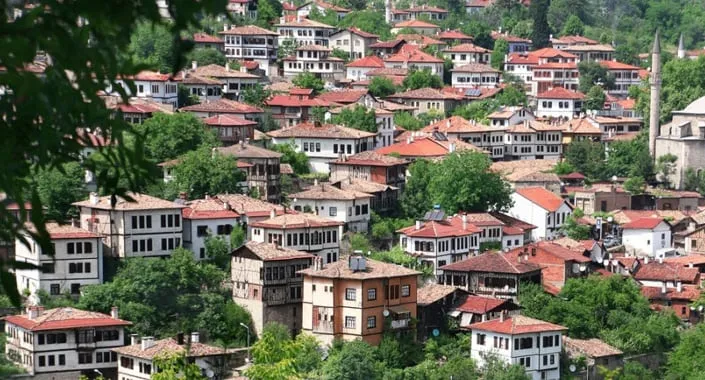
Safranbolu is at the heart of Karabük's cultural life. With its Ottoman-era mansions, mosques, hamams and the Cinci Hanı (inn), Safranbolu was added to the UNESCO World Heritage List in 1994. Its timber and mud-brick mansions are counted among the best-preserved examples of Turkish domestic architecture.
Traditional crafts live on in the market: leatherwork and handmade yemeni slippers in the Yemeniciler Arasta, and wrought-iron work in the blacksmiths' market.
Safranbolu hosts the International Golden Saffron Documentary Film Festival every year; the festival grew out of the path opened by “Safranbolu'da Zaman” (Time in Safranbolu), a documentary that promoted the town. Karabük's city centre, meanwhile, took shape as a workers' town that grew with people from other provinces who came to work at the steelworks, whose foundations were laid in 1937.
History of Karabük
Karabük is a province today, but until recently it was a small settlement of the village of Öğlebeli, belonging to Safranbolu. It was a small station on the Ankara–Zonguldak railway.
Everything changed with the steelworks. The foundations of the Karabük Iron and Steel Works, Türkiye's first iron and steel plant, were laid on 3 April 1937, and the works opened on 1 June 1939. Karabük became a municipality on 31 December 1938.
The sub-district (bucak) centre was moved to Karabük in 1940, and on 3 March 1953 the town became a district of Zonguldak. On 6 June 1995, Karabük was established as Türkiye's 78th province by bringing together the districts of Ovacık and Eskipazar from Çankırı and Eflani, Safranbolu and Yenice from Zonguldak.
Getting to Karabük
Karabük can be reached by air or by road. The nearest airport is Ankara Esenboğa Airport, 240 kilometres away. From Ankara you can continue to Karabük by hiring a car or by going to the bus station and taking a bus. For those who prefer the bus, many bus companies run services to Karabük from big cities such as Istanbul, Ankara and İzmir.
Districts of Karabük
- Merkez (central district)
- Eflani
- Eskipazar
- Ovacık
- Safranbolu
- Yenice
Economy of Karabük
Of our province, 65.5% is forest and 22.4% farmland. Of the 11,090 hectares of irrigable land, irrigated farming is carried out on 2,579.76 hectares, while dry farming covers 89,976.91 hectares. About 57,782.65 hectares of farmland are sown and 35,237.35 hectares are left fallow. In our province, where agricultural potential is low, greenhouse growing has begun to develop, especially on valley floors, as far as the climate allows.
Forestry
About 65.48% of our province is covered by forest. Despite this, manufacturing based on forest products is not well developed.
Karabük's forest resources
Total forest area: 271,403 ha
High forest: 237,878.5 ha
Coppice: 33,524.5 ha
High forest growing stock: 35,555,780 m³
Coppice growing stock: 515,831 m³
Area afforested: 13,754 ha
Saplings planted: 2,739,000
Tending work: 1,899 ha
Forest products
Logs: 106,329 m³
Mine props: 4,646 m³
Telegraph poles: 553 m³
Industrial wood: 9,601 m³
Pulpwood: 44,657 m³
Fibre and chip wood: 11,589 m³
Firewood: 26,490 m³
Construction wood: 148,153 m³
Industry
Industry has developed alongside the iron and steel sector. The Iron and Steel Works, of great importance to every sector of the provincial economy, reached high employment figures from its founding: 3,120 people were employed in 1941 and 14,755 in 1977, and the works currently has 4,111 staff. The more than 45 small and medium-sized iron and steel plants set up by the private sector in Karabük also account for a significant share of employment.
Kardemir made a profit for 2 years after it was privatised in 1992. After a period of crisis caused by fluctuations in the national economy, Kardemir has overcome these difficulties and turned to new investments. It is still the locomotive of Karabük's economy. The iron and steel works are the most important factor in Karabük's socio-economic structure, and the element that has shaped Karabük's past and present.
Another important feature of the city's socio-economic development is the textile and clothing sector. Compared with other Anatolian cities, Karabük has also made a great leap in this field, and all the goods produced are exported.
Apart from this, revenue from forest products is very high, because 60% of the land and all of our villages have the status of forest villages. The economy of our districts depends mostly on the forest. Safranbolu is also developing through culture and tourism, and home guesthouses have grown considerably. Our province also takes its share of cultural tourism.
Source: http://www.karabukozelidare.gov.tr/ekonomik-yapi


Comments
Loading comments…