
Samsun
- Black Sea Region
About Samsun
Samsun, on Türkiye's Black Sea coast, is the most populous province in the region, with 1,269,989 people. Located at the heart of the Central Black Sea, the city is the most developed in the Black Sea Region. A major port city, Samsun takes in the Kızılırmak and Yeşilırmak rivers, which have created large farming areas. Besides agriculture, livestock and industry, which form the basis of its economy, it has also come to the fore in recent years for tourism.
Samsun's famous dishes and desserts
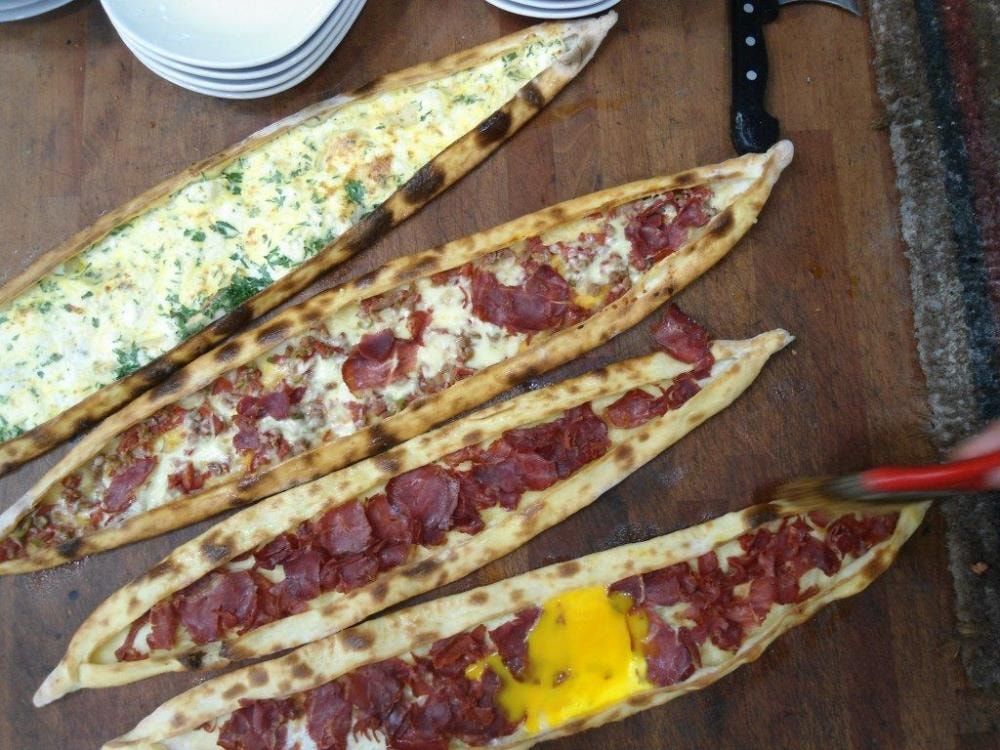
Samsun pidesi
In Samsun, the districts of Bafra, Terme and Çarşamba each have a pide named after them: Bafra Pidesi is crisp, Çarşamba Pidesi is soft, and Terme Pidesi is known for its onions. These pides are registered with geographical indications.
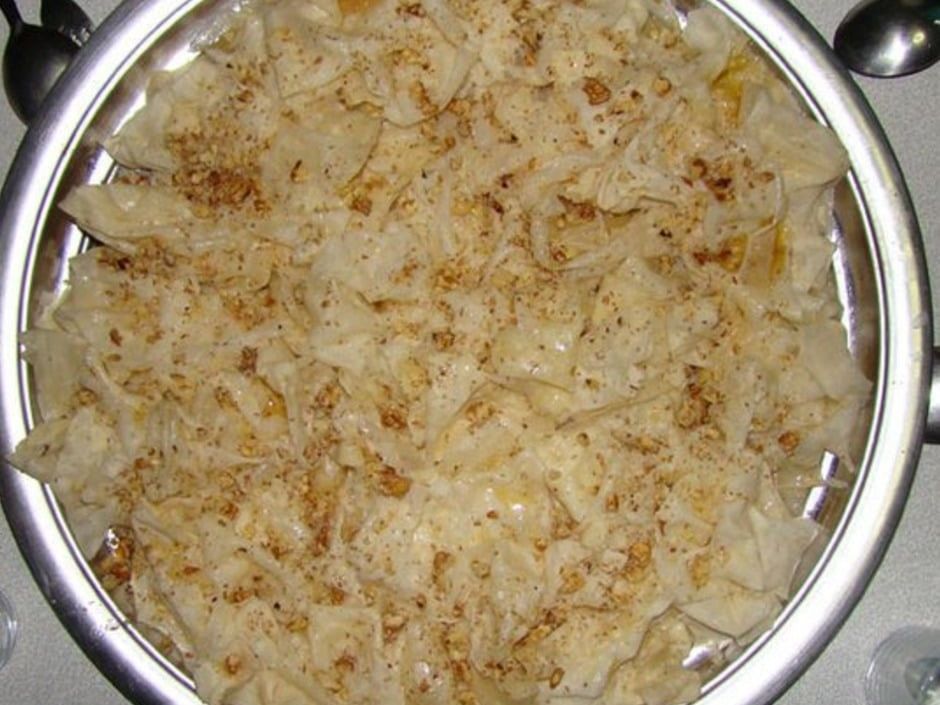
Tirit
Made by soaking bread in meat or poultry stock and topping it with meat; goose, chicken and duck hold an important place in Samsun cuisine.
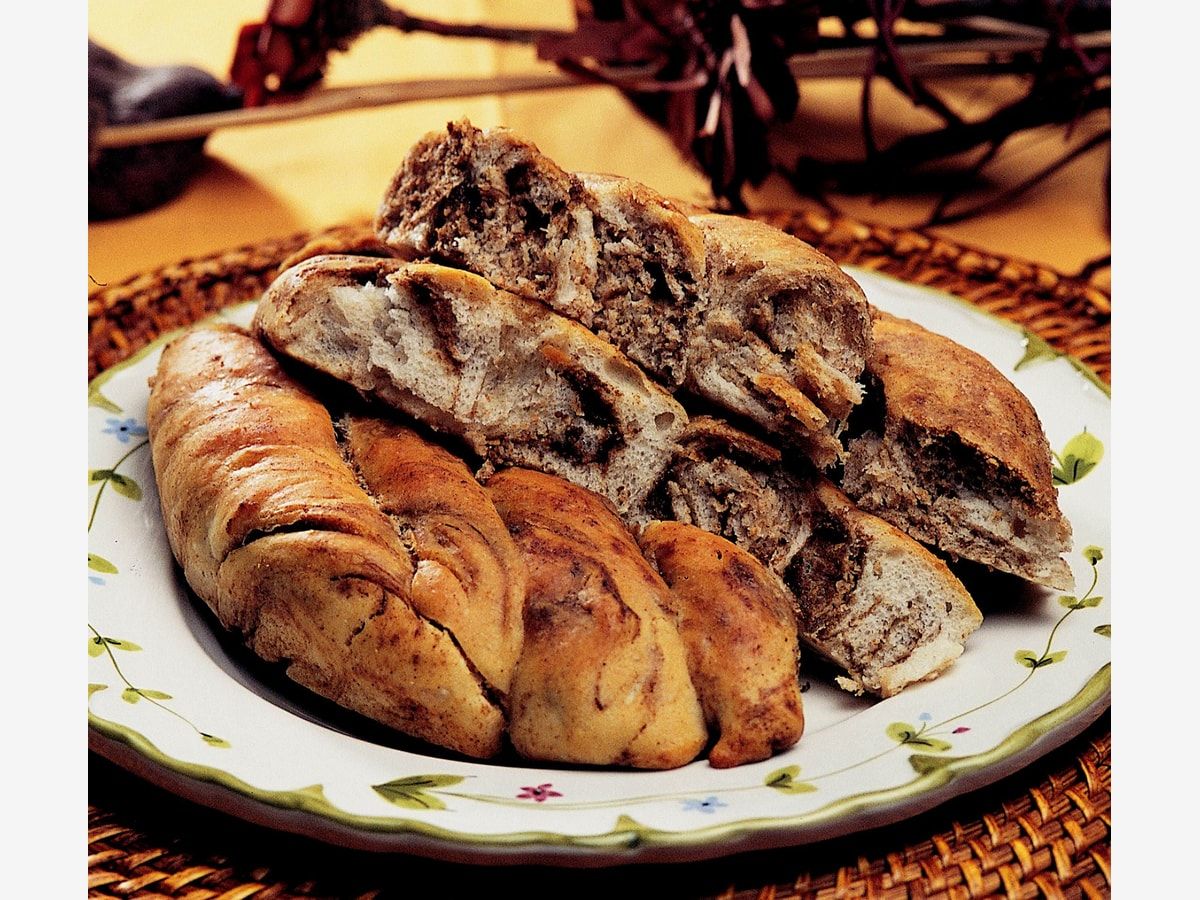
Haşhaşlı çörek (poppy-seed bun)
A bun made by spreading poppy-seed paste between layers of dough.
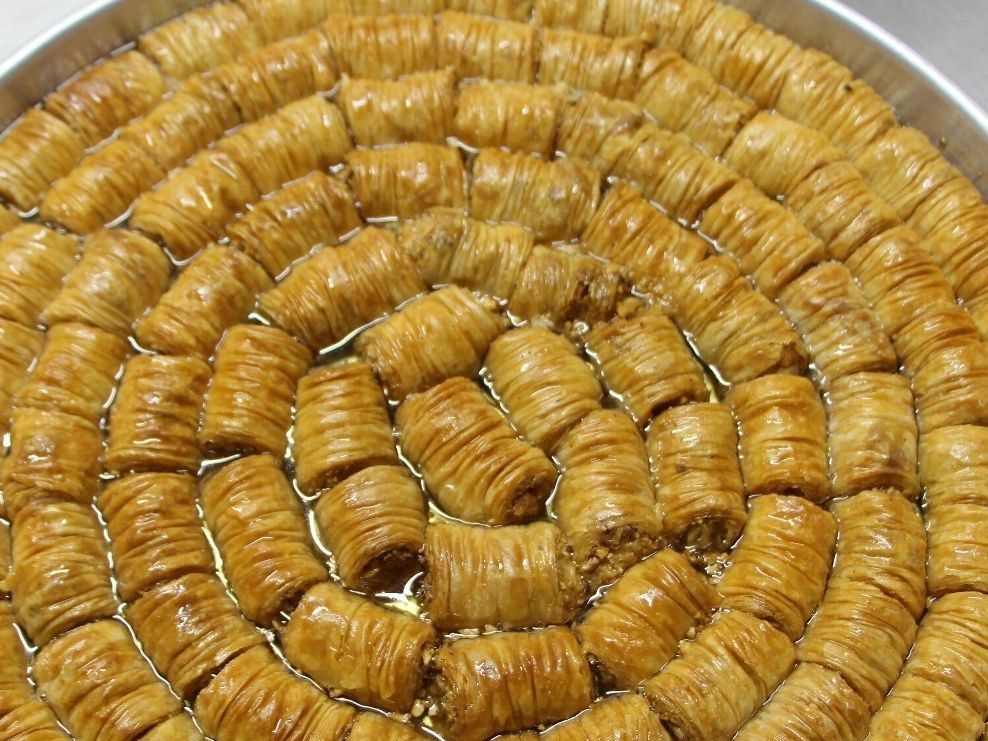
Kocakarı gerdanı
A syrup-soaked dessert made with hazelnuts.


Places to visit in Samsun
One of the Black Sea's important tourism centres, Samsun invites travellers on a delightful journey of discovery with its natural beauty, clean beaches, healing hot springs and historic buildings…
With one of the longest stretches of Black Sea coastline, clean beaches and sea, and a rich culture and history, Samsun is of great importance for tourism. If you too have decided to discover this lovely Black Sea city, take a look at our list of places to visit in Samsun…
Museums: In Samsun, which has a very special place in the history of the Republic, you can begin your trip with its museums. In Samsun, where the struggle of the War of Independence began, we recommend you make sure to see the Samsun Archaeology and Ethnography Museum, the Bandırma Steamship and the Gazi Museum.
Historic buildings: The most interesting of Samsun's historic buildings are its mosques. The Samsun Great Mosque, Gökgöl Mosque, Sivrikese Mosque, Göğceli Mosque and Taşkale Mosque are the most visited by tourists. You can also add the historic Fazıl Ahmet Paşa Madrasa and the Mater Dolorosa Catholic Church to your list.
Archaeological sites: If you are a traveller interested in archaeology, we recommend Samsun's ancient sites: Amisos Hill, the Lerdüge tumuli, İkiztepe mound and Dündartepe mound are among them.
Natural beauty: Samsun is a typical Black Sea city with plenty of natural beauty. Among its unrivalled natural sights, Lake Ladik, the Akalan Waterfalls, the Kabaceviz Waterfalls, the Tekkeköy Caves and the Kızılırmak Delta Bird Paradise are well worth seeing.
If you are in Samsun in summer, we also recommend Geyikkoşan Beach for enjoying the sea; Hamamayağı and Ladik hot springs for shaking off stress and fatigue and for a healing holiday; Ladik Akdağ Ski Centre if you visit in winter and are interested in winter sports; and Yakakent and Alaçam for watching a magnificent sunset and having a pleasant meal by the sea.
Places to visit in Samsun: historic sites
Yakakent
With its unique coast and nature, Yakakent district is one of Samsun's pearls. Local people call Yakakent "Gümenez".
Yakakent (Gümenez) beach: With forest on one side and coast on the other, Yakakent is all the lovelier for its beaches, restaurants, hotels, cafeterias and souvenir shops. On the beach you can find small kiosks making katmer and gözleme and places serving samovar tea. Yakakent harbour has a beauty of its own. From Yakakent, on the border with Sinop, central Sinop looks like an island in the middle of the sea.
When you go to Yakakent, you will see unique natural beauty as you head from the harbour towards Sinop. If you start your Samsun trip from the Sinop side, don't leave without visiting Yakakent.
Geyikkoşan Beach
Geyikkoşan Beach is one of the most beautiful beaches on the Black Sea. Showing off Samsun's clean sea, it is also a picnic area.
Geyikkoşan Beach is in Alaçam district, 78 kilometres from the city centre. A place to cool off in the waters of the Black Sea on your Samsun trip, it has a wide stretch of sand and a beach, with accommodation along the shore. If you like, you can stay at one of the hotels at Geyikkoşan for a long holiday and have a relaxing break in Samsun's countryside.
During your holiday you can also visit the Fazıl Ahmet Paşa Madrasa, the Kabaceviz Waterfalls and the Akalan Waterfalls, among the city's important sights.
Lake Ladik
Lake Ladik is one of the features that beautify Samsun's landscape. Covering 870 hectares, it has small islets.
The lake has been declared a protected site (SİT), and building around it is not permitted. The mountain and forest views around the lake create a restful atmosphere. As the lake has fish such as tahta balığı, pike and freshwater perch, it has an important place in angling tourism. Sailing races and windsurfing are also possible on Lake Ladik.
The lake, in Ladik, Samsun, will be one of the most peaceful trips you make in the city. Whether for a different adventure or just to relax, you should definitely visit Lake Ladik.
Akalan Waterfalls
The Akalan Waterfalls in Bafra, Samsun, are within the boundaries of the village of Akalan, whose name they share.
They consist of 18 waterfalls large and small, and with the beauty of their surroundings they open the doors of a different world to visitors.
The falls drop from a height of 15 metres. Amid the rich vegetation around them you can picnic and do outdoor sports…
You can spend pleasant, relaxing time at the Akalan Waterfalls and get your fill of nature on your Samsun holiday.
Kabaceviz Waterfalls
One of Samsun's natural wonders, the Kabaceviz Waterfalls are about 32 kilometres from the provincial centre and only 22 kilometres from Tekkeköy district.
The Kabaceviz Waterfalls come in three stages. The area has an important place in tourism because you can go mountaineering, trekking and on photo safaris here, and there are also places to picnic.
The best time to visit the Kabaceviz Waterfalls is between May and October. If you are passing through Samsun then, you should definitely visit them.
If you go to the Kabaceviz Waterfalls with friends you can go trekking, or if you are with your family you can crown your day with a lovely picnic.
Hamamayağı Hot Spring
Hamamayağı Hot Spring is an important spot for Samsun's tourism.
With facilities and picnic areas around the springs, the area is frequently visited, especially in summer. Not only local people but also tourists coming to the city show great interest in it.
Hamamayağı Hot Spring is 13 kilometres from Ladik district. Its waters are very rich in minerals; it is even said to be one of the most important hot springs in the world. The mineral waters are said to heal rheumatism, nervous disorders, neuritis and neuralgia.
Hamamayağı Hot Spring in Samsun's Ladik district awaits you with its facilities and picnic areas.
Fazıl Ahmet Paşa Madrasa
Among Samsun's historic places, the Fazıl Ahmet Paşa Madrasa, with architecture that has defied the years, draws tourists every year.
The madrasa is in Yenimahalle in Vezirköprü district. It was built in 1661 by Fazıl Ahmed Pasha, after whom it is named. The madrasa was used for many different purposes until 1664. Today it serves as a public library, which holds many Persian and Arabic manuscripts.
As you tour Samsun's historic and natural beauties, don't forget to see the history of the Fazıl Ahmet Paşa Madrasa up close. The Mater Dolorosa Catholic Church, the Samsun Great Mosque and the Gökgöl Mosque also await your visit.
Mater Dolorosa Catholic Church
The Mater Dolorosa Catholic Church is one of Samsun's distinctive places of worship.
Serving the Catholic community, the church was built by Murad V because 8 priests of Italian origin who had migrated from Georgia in 1845, along with Catholic citizens, lived here. At that time 30% of Samsun's population was Christian.
The priests first built a school for children in the area and called on nuns to help. Murad V, the Ottoman sultan at the time, supported Christians and Muslims living together, and for this reason ordered a church to be built in the area where Christians also lived. The church was completed in 1885 and began to serve.
With its magnificent architecture, the Mater Dolorosa Catholic Church continues to attract great interest from tourists today. You should definitely visit it on your Samsun trip.
Gökgöl Mosque
In the village of Akyazı, within Asarcık in Samsun, is one of the finest examples of Turkish woodwork: the Gökgöl Mosque…
Set in a green garden, the Gökgöl Mosque was repaired in 1870 according to its inscription. Built entirely of wood, its double-leaf wooden doors and all its other details are well worth seeing. While you are in Asarcık, don't miss the chance to see its magnificent architecture.
You can also add the Göğceli Mosque and the Samsun Great Mosque to your list and visit the city's places of worship.
Sivrikese Mosque
Amid the countryside of Havza, Samsun, the Sivrikese Mosque still shows its historic reality. This place of worship in the village of Sivrikese, whose name it shares, was built in 1903.
Built by the master builder Todor Usta at the request of Ali Osman Ağa, the mosque is made of irregular cut stone. Its most striking detail is its minbar, carved from walnut wood. You can include the Sivrikese Mosque in your trip to Havza.
Göğceli Mosque
The Göğceli Mosque, with its charming architecture, is in Samsun's Çarşamba district.
The mosque stands in the Göğceli quarter, which shares its name, in the Hasanpaşa neighbourhood. It was built in 1206, but it is not known by whom. The mosque is among the finest examples of timber architecture. The single-storey building was made using strong woods such as elm and ash. The Göğceli Mosque is built entirely of wood and was repaired in 1335.
It is also one of the rare timber buildings to have stayed sound for some 800 years. On your trip to Çarşamba you can see the architectural textures of the Göğceli Mosque up close.
Samsun Great Mosque

The Great Mosque (Büyük Camii) is Samsun's largest place of worship. It was first built in 1300 by Hıdır Bey.
Because it was built of wood, it was completely destroyed by fire in 1869. It was rebuilt in 1884 by Hacı Ali Efendi of Batumi. The mosque is in the Kale neighbourhood in the city centre.
Its architecture shows that it was built of yellow cut stone. It has two minarets, and the plant motifs inside the dome are among its striking details. We say the Samsun Great Mosque should definitely be among your stops in the city centre.
With its strong mystical appeal, the Samsun Great Mosque will win your admiration as much for its interior decoration as for its exterior architecture.
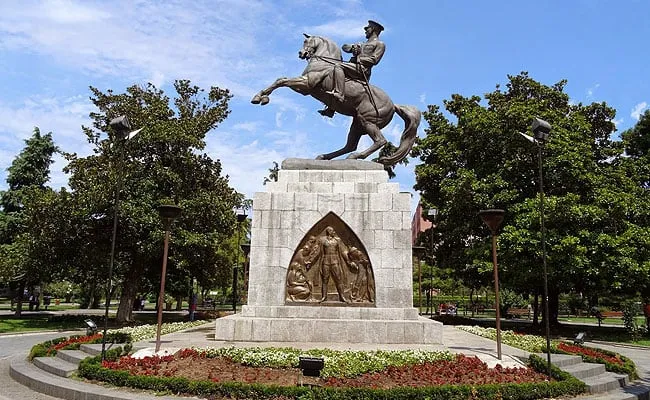
İlk Adım Anıtı (First Step Monument) – Samsun Atatürk Monument
The statue of Atatürk at the pier on Atatürk Boulevard in Samsun is one of the city's symbols.
The İlk Adım (First Step) statue, in front of the pier where Atatürk disembarked from the Bandırma Steamship on 19 May 1919, was made for the 100th anniversary of Atatürk's birth.
Marking the place where Atatürk first set foot when he came to Samsun in the early years of the National Struggle, the monument was designed and made by the architect Seçkin Viter.
While walking around the city centre you can visit the İlk Adım Monument and take photographs to remember it.
Samsun Archaeology and Ethnography Museum
The Samsun Archaeology and Ethnography Museum is one of the city's most worth-visiting places, and tourists coming to Samsun always include it in their visits.
Construction of the museum began in 1976 and it opened in 1981. It has the city's richest collections, foremost among them the Amisos treasure.
The works displayed include grave stelae, reliefs, a bronze statue, bowls and pots, and grave goods of solid gold.
The ethnographic pieces include bindallı (embroidered velvet dresses), cepken (short jackets), peşkir (towels), watch pouches and kitchenware. On your visit you will enjoy a journey among local objects that introduce you to the city and works from different periods of history.
The museum is inside the fairground in the provincial centre, so it is easy to reach.
Lerdüge tumuli
If you are planning to go to Samsun soon, on this page we will tell you about one of the city's historic places, the Lerdüge tumuli.
The Lerdüge tumuli are within the boundaries of the village of Lerdüge, whose name they share, 21 kilometres from Havza. Excavations were carried out here in 1946, and the finds are now displayed in the Museum of Anatolian Civilisations in Ankara. Gold ornaments were also found in the Lerdüge tumuli, one of Samsun's ancient settlement areas.
You can include this area in your Samsun route and enjoy a fun journey through history. And if you are coming by car, you can easily visit İkiztepe mound, the Tekkeköy Caves, Amisos Hill and Dündartepe mound in Samsun as well.
Kaledoruğu mound
Kaledoruğu mound in Kavak, Samsun, is one of the city's ancient settlements.
About 40 kilometres from the provincial centre, the mound is also known as Kavak mound. Archaeological excavations were carried out here in 1940–1942 and uncovered Early Bronze Age finds, including fluted vessels, daggers and the remains of a fortress.
Kaledoruğu mound overlooks the Kavak plain and lies right on the Samsun–Havza–Amasya road. It offers a pleasant enough journey to earn a place among your historical trips in Samsun.
İkiztepe mound, the Tekkeköy Caves and Dündartepe mound, among the city's oldest settlements, should also be on your list.
İkiztepe mound
With its ancient settlements, Samsun has been the field of work of many archaeologists, and these ancient living areas have drawn great interest from tourists for many years.
Dündartepe mound and the Tekkeköy Caves are foremost among these archaeological sites. On this page we will tell you about İkiztepe mound. The mound is only 7 kilometres from Bafra district. Archaeological excavations have shown that it was a settlement in the Early Bronze Age and the early Hittite period.
Although the mound is in fact four hills, it looks like two from a distance, hence the name İkiztepe ("twin hills"). Finds include a necropolis, ornaments, weapons, earthenware, bone needles, metal tools and jugs.
Tekkeköy Caves
About 14 kilometres from the centre of Samsun, the Tekkeköy Caves are one of the city's easily reached historic places.
The caves are 1 kilometre from the centre of Tekkeköy district, whose name they share. The first archaeological excavations in the caves took place in 1941, led by Prof. Dr Kılıç Kökten.
The caves formed naturally and were later carved out and enlarged. Excavations here have uncovered remains from the Palaeolithic, Mesolithic and Bronze Age. The tools found show that the people who lived here lived mainly by hunting and gathering.
On your Samsun trip you can visit and photograph the Tekkeköy Caves. Dündartepe mound and Amisos Hill should also be on your list.
Dündartepe mound
Dündartepe mound, where the first archaeological excavations took place in 1940–1941, is only 3 kilometres from the centre of Samsun.
If you are planning a nice trip to this green Black Sea city, Dündartepe mound should definitely be on your route. The mound is also called Öksürük Tepe. Excavations have uncovered seals, figurines, bone spindle whorls, weapons and metal finds.
As you journey through Samsun's history, you should definitely visit this ancient settlement set amid natural beauty.
Gazi Museum
The building of the Gazi Museum in Samsun was first run as a hotel. Built in 1902 by Jean Lonnis Mantika, the hotel was called the Mantika Palas.
Gazi Mustafa Kemal stayed at this hotel on his visits to Samsun, and the building was later given to him as a gift. After Atatürk's death it passed to Makbule Hanım. It was then bought by Samsun Municipality and served as the building of the Cumhuriyet Halk Fırkası (Republican People's Party). In 1940 it opened to visitors as the Gazi Museum. Exhibits include the original of the Tenth Anniversary Speech, photographs and documents relating to Atatürk, his travel bag and a model of the Bandırma Steamship.
On your Samsun trip you can take a short journey into the past among the historic collections of the Gazi Museum. During your trip, don't forget to go up Amisos Hill and enjoy looking over the city from above.
Amisos Hill
Amisos Hill, 4 kilometres from the centre of Samsun, is at a spot called Baruthane.
Amisos Hill is one of the places Turkish and foreign tourists are most curious about. Going up by cable car makes the trip even more appealing. Amisos, reached after a climb, reveals a vast and captivating view. With the sea at your feet and greenery all around, pleasant moments are guaranteed… Taking lots of photographs and capturing colourful shots on Amisos Hill will make your time even more enjoyable. There is also a café on the hill. Walking on the wooden path on the seaward side, leaving the crowds of the city far behind… Amisos Hill awaits you for an unforgettable day. Don't forget to visit Samsun's other tourist sights too.
Bandırma Steamship Museum
Construction of the faithful replica of the Bandırma steamship, opened to visitors as a museum ship in 2003, began in 2000. The ship is important for bringing Mustafa Kemal Atatürk and his companions to Samsun on 19 May 1919.
Ladik Akdağ Ski Centre, Samsun
The ground at Ladik Akdağ Ski Centre has a surface like no other, which lets skiers ski much more comfortably and safely and keeps the snow on the surface much longer.
Ladik Akdağ Ski Centre has 6 runs, ranging from 1,600 to 3,500 metres in length, and a 1,365-metre chairlift. Very popular for skiing in recent years, it draws great interest from nearby provinces such as Çorum, Amasya and Tokat.
Source: http://www.gezilebilecekyerler.com/samsunda-gezilecek-yerler/
Culture and arts in Samsun
SAMSUN CUSTOMS AND TRADITIONS
In Samsun, especially in the villages, great importance is given to customs and traditions. Foremost among those that live on are weddings, funerals and religious holidays (bayram), which are observed with great care.
At both weddings and funerals, everything is done in unity and solidarity. For example, all the women help with the food for a wedding: they gather at the wedding house a few days beforehand and roll out the pastry for desserts together. Once the dishes and desserts are made, they are offered to the guests. At the groom's house drums are played or the Qur'an is recited, and at the bride's house the saz is played. The groom's side takes a henna tray to the bride's house. The village girls gather around the bride, sing henna songs to her and try to make her cry. Food is served on the henna night, and so the night ends. Around noon the next day the groom is brought before the wedding party and gifts of jewellery are pinned on. Then they go to fetch the bride, who is taken to the groom's house, and the hands of the elders are kissed. As the bride arrives at the house she is given a Qur'an, bread, water and a glass; as she enters she pours out the water and breaks the glass. In the morning the duvak (veil) ceremony is held and the wedding ends.
At funerals, the sala (call announcing a death) is given after the death. The deceased is washed, shrouded and taken to the mosque, where the funeral prayer is performed. After the burial, Yasin is recited. No food is cooked in the house of the deceased on the first night; neighbours and relatives bring food. The Qur'an is recited on the first night. After the fortieth day, a mevlit is recited. During this period, people visit the house to offer condolences.
At the bayrams, graves are visited the day before. On the first day of the bayram the village men go to the mosque for the bayram prayer, and on leaving the mosque they kiss the elders' hands. At Ramazan Bayramı a meal is eaten on returning home. People put on clean bayram clothes, kiss the hands of the village elders and exchange greetings. Children are given sweets, chocolate, handkerchiefs and money. At Kurban Bayramı the sacrificial animal is slaughtered on returning from the mosque, a meal is eaten and the bayram is celebrated.
SAMSUN TRADITIONAL DRESS
Men's dress: Men wore a shirt called içlik, aba (woollen) breeches or English-style riding breeches, and an aba jacket. On their feet they wore patterned or plain knitted wool socks and pointed çakır (rawhide sandals), later rubber shoes or pointed, high-heeled lace-up shoes or aceska. A woollen sash was wound around the waist. In rural areas hand-knitted woollen hats called ‘kalabalık', kalpaks or eight- or twelve-panel caps and waistcoats are worn. Even today, in almost every district of our province except the central one, you can still see people wearing aba jackets, pointed high-heeled shoes and eight- or twelve-panel caps.
Women's dress: Women wore an undershirt of sile cloth, a velvet cepken (jacket) embroidered with metallic thread, sire satin şalvar (baggy trousers) beneath, and a velvet üç etek (three-skirted robe) embroidered with metallic thread covering the whole body. Over the üç etek went a cloth apron, peştamal or shawl, and around the waist a fine knitted wool belt or a silver belt. A sequinned yaşmak (head scarf) was tied on the head, a beşibirlik (five-in-one gold coin) was worn, and on the feet embroidered or plain wool socks and çarık (rawhide sandals). Women's dress of this kind has been carried down to the present especially in the village of Tahtaköprü in our Vezirköprü district.
SAMSUN LOCAL DISHES
Keşkek and tirit lead Samsun cuisine. Besides black cabbage, yoghurt soup and corn soup, yazı pancarı and the dessert Kocakarı Gerdanı are also famous. Breads particular to the area are made in the villages, and the fame of Samsun pide has spread all over the world. Corn, cabbage and dried beans are prominent in Samsun's diet.
Dishes with meat, rice and dough are common. Poultry such as goose, chicken and duck holds an important place in the traditional diet. Plants such as lorgon, kırçan, kaldırayak, madımak and nünük are made into fried dishes or soups.
Local dishes include Tir (goose yufka), Yer Pancarı (Yazı Pancarı), Mısır Çorbası (corn soup), Yoğurtlu Çorba (yoghurt soup), Mercimekli Bulgur Pilavı (bulgur pilaf with lentils), Keşkek, Karalahana Çorbası (black cabbage soup), Hamsili Ekmek (anchovy bread), Hamsili Pilav (İli Pilav), Oymaağaç Kebabı, Halukça and Kocakarı Gerdanı (Burma).
SAMSUN FOLK DANCES AND FOLKLORE
Samsun lies where the Eastern and Western Black Sea meet, and its very ancient civilisation and its highly changeable make-up, owing to migrations in the 19th and early 20th centuries, give it a varied culture.
Research has been carried out in Samsun on marriage, folk cuisine, folk medicine, folk veterinary practice, circumcision customs, lullabies, dishes, winter preparations and foods, birth, tongue-twisters, death, kani, gelin ağlatma (making the bride cry), riddles, proverbs, legends, tales, folk drama, beliefs, the folk calendar and weather lore, vernacular architecture, handicrafts, folk dances and dress, and added to the archive of the Ministry of Culture's General Directorate of Research and Development of Folk Cultures.
Some of the dances of the Samsun area are performed holding hands, holding hands with elbows linked, or with hands on shoulders, and there are also dances performed face to face without holding hands. Figures include crouching, clapping, crossing steps, heel or toe tapping, and turning. The dances are usually performed by the dancers moving around within a set area; a few are danced in a straight line (for example the alafranga dance). A circle is never formed. The dances generally begin slowly and speed up in later parts. In some dances the dancers let out shouts (Sarhoş barı and kaba ceviz). Karşılama-type dances commonly feature a shoulder-shaking figure, and men's shoulder-shaking is heavier and more upright than women's.
In terms of folk dances, Samsun is one of our country's transition zones. Balkan immigrants who settled in the region after the founding of the Republic brought the hora and karşılama. Migration from the Eastern Black Sea made varieties of horon widespread. Semah, the religious dances of our Alevi citizens in areas such as Ladik district, can also be found in Samsun. As you can see, dances of all three different characters of Turkish folk dance can be found in Samsun.
Alaçam: Sarıkız, Tombul gelin, Samsun sallaması dances. Bafra: Sarıkız ikileme, Demirağa, Zirto, Kabadayı, Kasap, Samsun horonu, Tombul gelin, Rumeli dik horonu, Köroğlu, Kızlar havası. Çarşamba: Çarşamba çiftetellisi, Çarşamba düz oyun havası, Çarşamba karşılaması, Sağır perde, Anadolu çiftetellisi, Karaçalı, Kasap, Kaba ceviz, Alafranga, Gürcü horonu. Salıpazarı: Üçlü horon. Terme: Üçlü horon, Gürcü horonu, Horon kurma. Ladik: Üç ayak, Makinalı, Tamzara, Hoşbilezik, Temurağa, Sarhoşbarı, Sarıkız, Oduncular, Ağam ben yandım, Yelleme, Ladik horonu, Ladik semahı. Vezirköprü: Sarıkız, Oduncular.
KNOWN FOR:
Tobacco production, the Çarşamba and Bafra delta plains, the Havza and Ladik hot springs, the Atatürk Monument, Bafra pide
Source: https://www.umiforum.org/il-ilce-koylerimiz/10974-samsun-gelenek-ve-gorenekleri.html
History of Samsun
Settlement in Samsun is traced back to 60,000 BC through a layer in the Tekkeköy Caves. The region's earliest known people were the Kaskians; the city later came under the rule of the Hittites, Persians, Macedonia, Pontus, Rome and Byzantium, and then became a Genoese colony.
Samsun joined the Ottoman lands under Bayezid I in 1398. It suffered a great fire in 1869 and was bombarded by the Russian fleet in 1915 and 1916.
The best-known day in the city's history is 19 May 1919, when Mustafa Kemal arrived in Samsun. The city gained provincial status in 1923, and in 1926 the province of Canik was renamed Samsun.
Getting to Samsun
You can reach Samsun from most parts of Türkiye by air, road and rail.
By air:
Many cities in Türkiye have direct flights to Samsun Çarşamba Airport. The airport is 19 km from the city centre, and transport into the city is by taxi and shuttle bus.
By road:
Samsun, whose bus terminal is in the city centre, is very easy to reach by road. A meeting point of road connections, the city is also very convenient for visitors coming by car.
By rail:
Samsun's railway station is in the city centre, and there are Samsun–Sivas and Samsun–Amasya rail connections for those who want to come by train.
Districts of Samsun
- Alaçam
- Asarcık
- Atakum
- Ayvacık
- Bafra
- Canik
- Çarşamba
- Havza
- İlkadım
- Kavak
- Ladik
- Ondokuzmayıs (Ballıca)
- Salıpazarı
- Tekkeköy
- Terme
- Vezirköprü
- Yakakent
Economy of Samsun
In the early years of the Republic, Samsun's economy was based on agriculture and livestock; about 47% of the land is still used for farming. Today most economic activity is in trade and industry.
Samsun is a port city and a logistics centre serving a wide hinterland. The source mentions rail links to seven provinces, four state highways and direct flights to various cities.
According to 2021 data, its nominal gross domestic product was over 74.8 billion lira, ranking the province 19th.


Comments
Loading comments…