
Aksaray
- Central Anatolia Region
About Aksaray
Aksaray, in the Central Anatolia Region north-west of Niğde, east of Konya and south-east of Ankara, covers an area of 7,626 square kilometres.
The city’s name appears as Kurşura in Hittite tablets and as Garsaura in antiquity. Rebuilt in the time of King Archelaus of Cappadocia, it took the name Archelais, meaning “city of Archelaus” (as with Caesarea – Kayseri, or Heraclea – Ereğli).
With the arrival of the Turks in Anatolia, its name was adapted to Turkish and it began to be called Aksaray. Some Ottoman archives also record it as Aksara. It is one of the rare cities to have kept its historical name for about a thousand years. Although a story circulates among the people, and in Evliya Çelebi’s Seyahatname, that it takes its name from the White Palace (Ak Saray) built by Kılıç Arslan II, there is no official or historical basis for this.
Aksaray's famous dishes and desserts
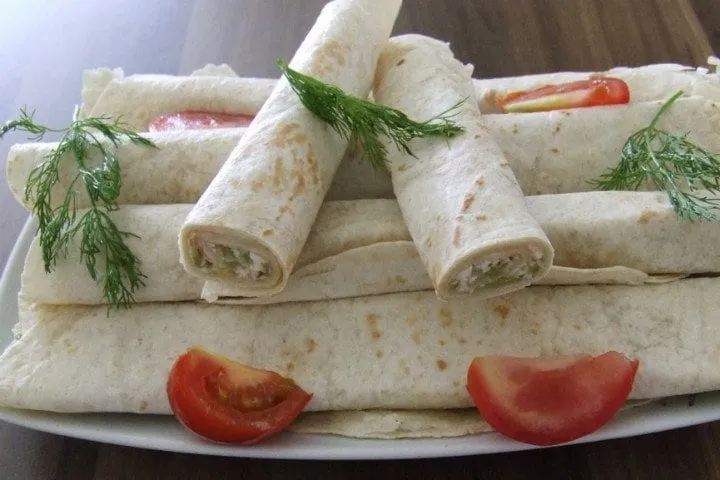
Strong enough to save the day on its own: Sıkma
Sıkma, often made in other regions too, is in fact a fixture of Aksaray cuisine. It is made by filling fragrant hand-rolled lavash mainly with butter, fresh çökelek curd cheese and cheese, and you are free to enrich the filling. Peppers and parsley suit it especially well, if we may say so.
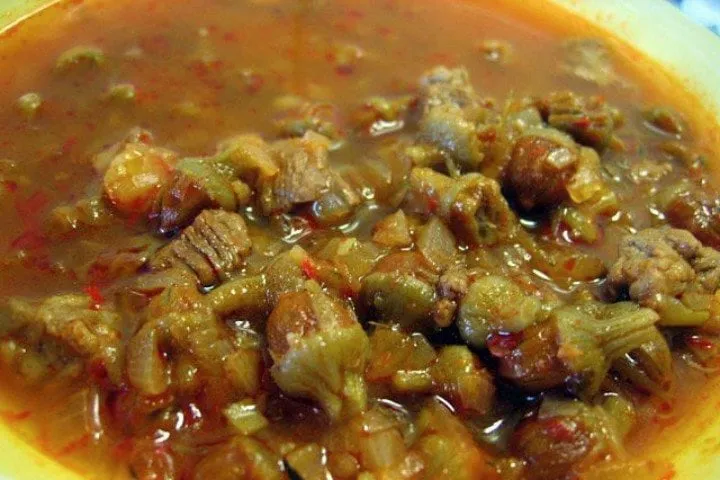
Much more than a soup: Bamya çorbası (okra soup)
Okra soup will surprise anyone who thinks soup is just a warming starter, with how filling and nourishing it is.
That is because it has not only the distinctive taste of okra but also the flavour of fragrant diced lamb. After just one bowl of this soup, neither your eyes nor your stomach will be looking for a main course.
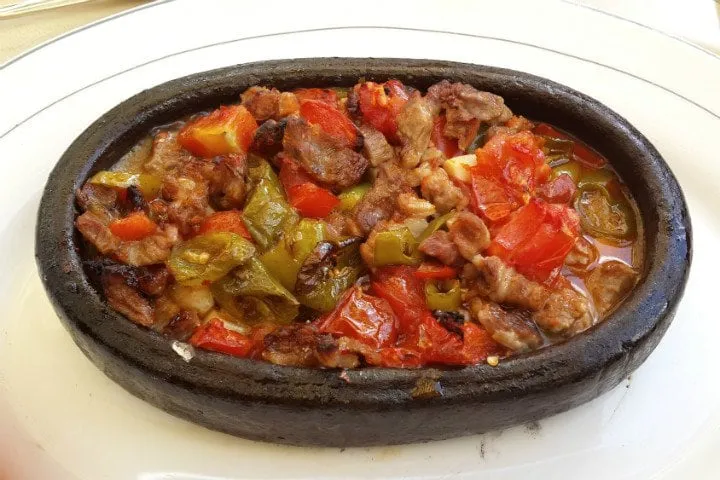
For meat lovers: Aksaray tava
This dish, which bears the city’s name, will become a new favourite of meat lovers, because it is full of lamb flavoured with tomatoes, peppers, garlic and bay leaves.
Its essential ingredient is tail fat. The best is cooked in an earthenware pot over oak wood. In short, a dish that makes your mouth water and whets your appetite just describing it.
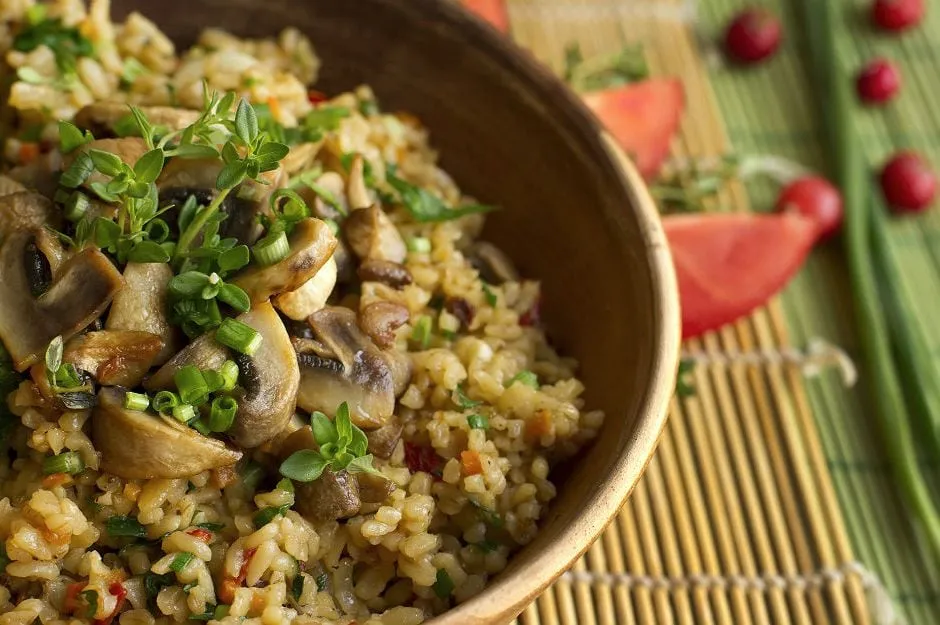
No meal without pilaf: Mantarlı bulgur pilavı (bulgur pilaf with mushrooms)
For us, pilaf is one of the essentials in the kitchen, and of course it is no different in Aksaray cuisine. There is, for example, a different and delicious bulgur pilaf whose flavour is legendary.
If you have never thought of combining bulgur and mushrooms, you should try it right away, because this hallmark of Aksaray cuisine is ready to become one of your favourite tastes.
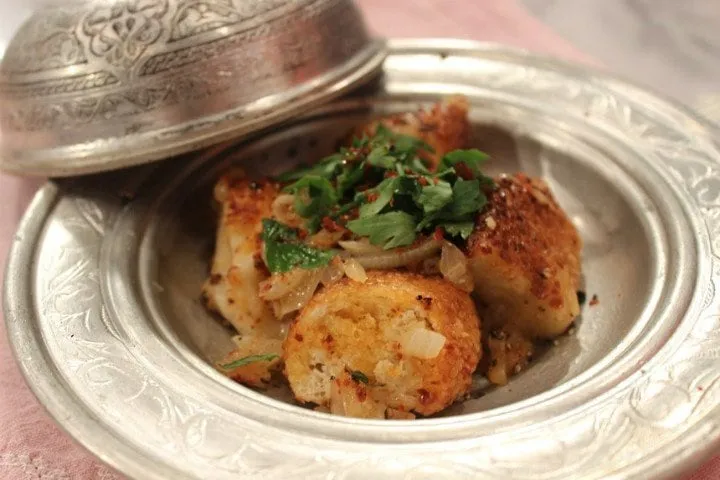
Making the most of stale bread: Papara
Papara is the tastiest and most practical way to use up stale, dried bread. The bread meets a special sauce made by frying onion and tomato paste in oil and crowned with çökelek or cheese, and its wonderful taste stays on the palate for a long time; we stand by that claim.
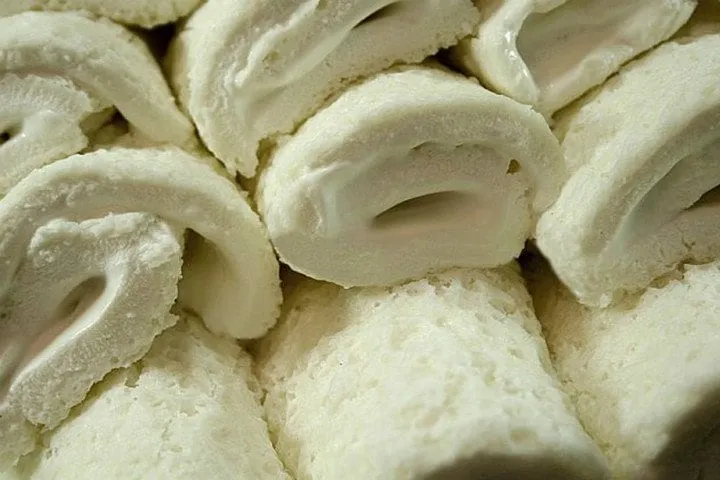
Clotted cream at its best: Çiğleme
This local Aksaray dish, made with four simple ingredients, flour, water, fresh kaymak (clotted cream) and salt, is in fact a dough of flour and water filled with kaymak inside and out. It isn’t very hard to make, but to eat the best one you need to stop by Aksaray. :)
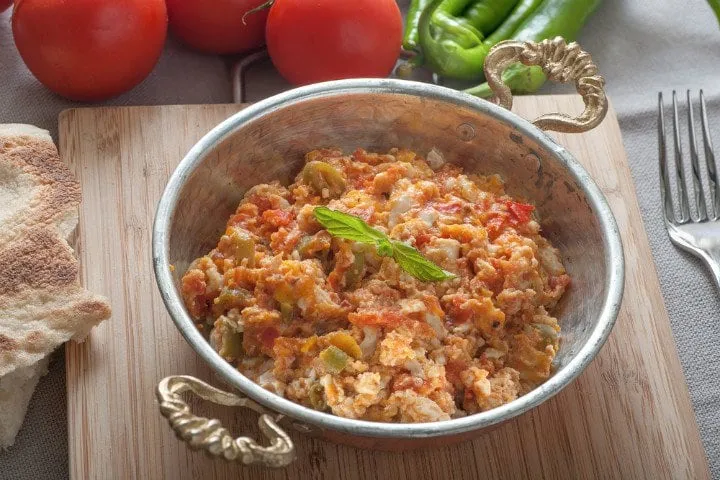
Menemen lovers will adore it: Karıştırma
Fried onion meets tomato paste, tomatoes and green peppers, seasoned with salt and black pepper. When this well-cooked mixture is blended with beaten eggs containing about two spoonfuls of flour, you can’t get enough of it. Spread over dried bread at the end, it makes you want to eat your fingers along with the food.
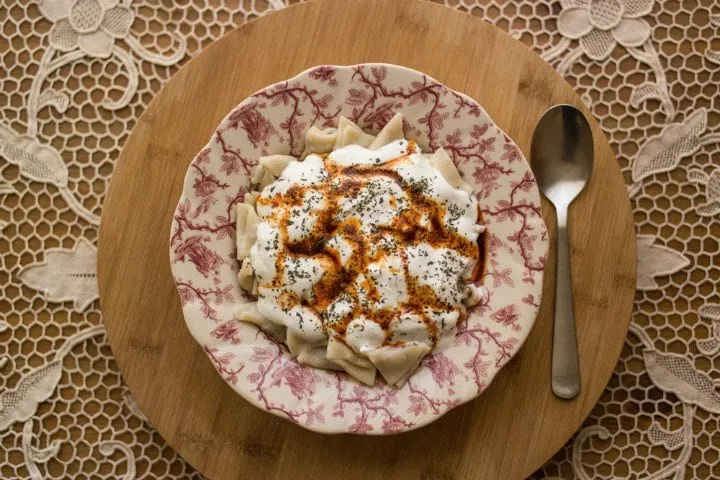
Every kind of mantı is a treat: Dolma mantı
Mantı, one of our favourite dishes, is also a staple of Aksaray cuisine. Carefully rolled sheets of dough are cut into large diamonds, filled, folded and boiled in water. With garlic yoghurt and sauce, it is eaten by the plateful.
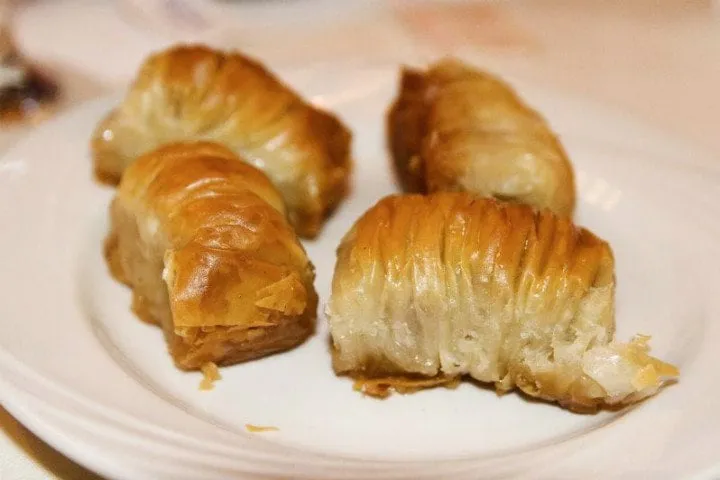
Oh, how lovely you are: Sarığı burma (katmer)
In Aksaray, famous for its fragrant hand-rolled yufka, the value of this loveliest of pastries is well understood, as in this treat known as sarığı burma or katmer. The yufka, fried golden as a pomegranate, becomes a legendary taste when it meets its syrup, called kestirme.
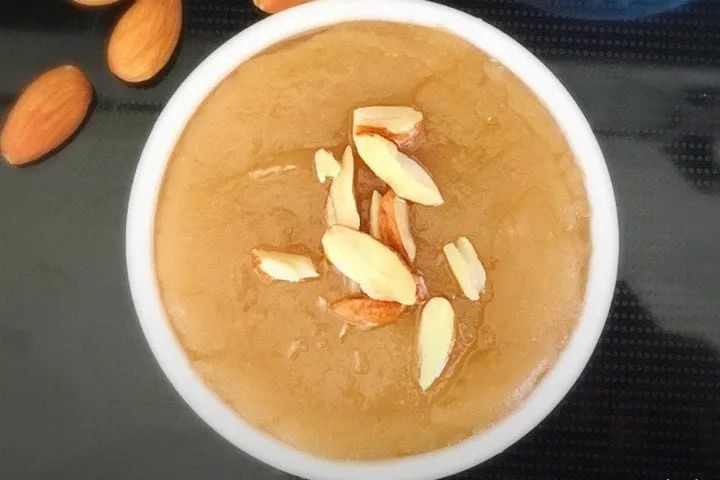
Flour helva taken to the next level: Dolaz
Notable for its likeness to flour helva, dolaz begins its journey with flour toasted until golden, which then meets milk and is cooked until smooth and the consistency of a milk pudding. Fragrant butter poured over it before serving takes it up a level.
Another Aksaray dish, pelte, is made much like dolaz, but the pekmez (grape molasses) in it gives it a completely different taste; we couldn’t leave it unmentioned.
Source: https://yemek.com/aksaray-yemekleri/sayfa/10
Places to visit in Aksaray
Aksaray has many mosques, tombs, hot springs and churches to see. The main ones are:
Sultan Hanı, Çatalhöyük (in the Çumra district of Konya), the Great Mosque (Ulu Cami, the Karamanoğlu Mosque, central district), the Eğri Minare (Crooked Minaret, also called the Kızıl Minare, central district), Şeyh Hamid-i Veli (Somuncu Baba), the Kaya Mosque (Güzelyurt), the Tomb of Selime Sultan (Selime village), the Kilise Mosque (Church of St Gregory) (Güzelyurt), the Church of St Anargyros (Güzelyurt), the Sivişli Church (Güzelyurt), Selime Cathedral (Selime), the Kale Monastery Church (Selime), the Yüksek Church (central district), the Kızıl Church (Sivrihisar), the Pürenli Seki Church (Ihlara), the Kokar Church (Ihlara), the Eğritas Church (Ihlara), the Sümbüllü Church (Ihlara), the Yılanlı Church (Ihlara), the Church of St George (Kırkdamaltı Church, Belisırma), the Bahattin Samanlığı Church (Belisırma), the Direkli Church (Belisırma), the Ala Church (Belisırma), the Karagedik Church (Belisırma) and the Ziga hot springs (Güzelyurt)
Selime Cathedral and fairy chimneys

Selime, a small town in Güzelyurt, lies at the end of the Ihlara Valley. A favourite stop for tourists coming to Cappadocia, Selime’s churches, caravan road and monastery wrap the area in a mystical atmosphere. The cathedral and fairy chimneys in Selime will be the first beauties you see. In the old days, because of the market held in Selime, caravans came to the area and camels were taken up into the middle part of the cathedral. The cathedral and monastery were built so that arriving caravans could rest and worship. The monastery was also important as a place where the clergy of the region were trained, and the churches carved into the rocks here are mostly examples of Byzantine art. With its shelters, refuges, churches and tombs carved and worked into the fairy chimneys, Selime is a town that should be included on any trip to Aksaray. To make a long journey and have an enjoyable time, you should add the town of Selime to your route. Selime Cathedral and its fairy chimneys will take you away from the time you live in for a while.
Ziga hot springs, Aksaray

The Ziga hot springs, within the boundaries of Yaprakhisar village in Güzelyurt, are one of the riches of the Ihlara Valley. They are 30 kilometres from the centre of Aksaray and 18 kilometres from Güzelyurt. The area around the springs has been declared a protected zone by decision of the Council of Ministers, and no new building is allowed; only the existing facilities are there. The spring water is 47 degrees and rich in minerals. Good for eye, metabolic and gynaecological complaints and rheumatism, the Ziga hot springs have great potential for visitors. If you decide to go, you should book at the local accommodation in advance, or it may be hard to find a place.
Church of St Gregory, Aksaray

The Church of St Gregory in Aksaray’s Güzelyurt district is known to have been built in AD 385. Its location in the Aşağı neighbourhood of the district centre makes it easy to reach. The church’s dome is octagonal and sits in the middle of the worship space. Because the building was enlarged with additions over time, it has moved away from its original form. The Church of St Gregory was converted into a mosque in the Ottoman period and is now called the Kilise Camii (Church Mosque). The building, which came down to us in ruins, has been repaired by the General Directorate of Foundations. You can include this building, which has witnessed Güzelyurt’s history, on your route, then make short trips to Belisırma village, the Kırkdamaltı Church and the countless historic places of the Ihlara Valley.
Kırkdamaltı Church, Aksaray

The Kırkdamaltı Church in Belisırma village, in the Güzelyurt district, was built between 1283 and 1295. According to its inscription it was built by a Georgian princess named Tamara, and its other name is the Church of St George. The church is hexagonal in plan and its interior is covered with frescoes; the Ascension of Christ, the Crucifixion and the Dormition of the Virgin are among the scenes depicted on the walls. Today the church’s apse has collapsed, and there are graves on the ground floor and in the niches. Belisırma village, in the middle of the Ihlara Valley, will show you different eras from start to finish with the Kırkdamaltı Church and its many remains.
Aşıklı Höyük, Aksaray

Aşıklı Höyük, which holds a place in the history of the Cappadocia region, is in Kızılkaya village, 25 kilometres from Aksaray. On the bank of the Melendiz river, the mound is only 4.5 kilometres from the Ihlara Valley, which offers those visiting it other places to explore. Aşıklı Höyük is known to have a history of 10,000 years and is thought to be the oldest settlement in the Cappadocia region. Research has shown that when the first settlements appeared on the mound, people had settled down and were farming. Traces of surgery found on two skulls in the area are also very important for the history of medicine: they show that the first brain operation in history took place in this region. The skull is now displayed in the Aksaray Museum.
On the days you visit Aşıklı Höyük, you can include the monasteries, churches and caves of the nearby Ihlara Valley and spend long but equally enjoyable hours.
Karagedik Church, Aksaray
The Karagedik Church in Aksaray was built on a hill leaning against a steep rock. In its structure it resembles the Çanlı Church, and it is also known as St Hermolaos. There is no certain information about the Karagedik Church, but study has shown that it was built in the 11th century. Although the frescoes inside are damaged, they are still worth seeing and show traces of Byzantine art. One of Aksaray’s places waiting to be discovered, the Karagedik Church will make a lovely trip for you. The Ağaçaltı Church, the Sümbüllü Church, Acemhöyük and the Pürenli Seki Church, which add to the city’s historic atmosphere, can also be part of your trips.
Çanlı Church, Aksaray
In Aksaray, where you can see places of worship of many faiths as well as natural beauty, you should especially include the Ihlara Valley in your visits, because there you will witness the wonderful harmony of natural beauty and historic sites. In the valley, many churches with deep-rooted histories will take you on short journeys to the past. Let us tell you a little about the Çanlı Church here, and you can add it to this lovely journey. The Çanlı Church is 11 kilometres from the centre of Aksaray, within the boundaries of Akhisar village; although its frescoes are damaged, they are still striking. We can say these frescoes are a good reason to visit. After the Çanlı Church you can fit many historic places into your days in Aksaray; the Sümbüllü Church, the Ağaçaltı Church and the Ala Church are just a few of the places near the Çanlı Church.
Ağaçaltı Church, Aksaray
The Ağaçaltı Church is in the Ihlara Valley, which offers both Aksaray’s natural beauty and its historic sites together. The real entrance of the church, located at the valley’s entrance stairs, is underground; the present entrance is in the part known as the second floor. Although most of the paintings inside have faded, they are still worth seeing, with many Christian depictions. The construction date of the Ağaçaltı Church is not known exactly; it is only thought to have been built between the 9th and 11th centuries. Though in ruins, the church is still visited, and you can include it on your Ihlara Valley trip.
Sümbüllü Church, Aksaray
Among the unique buildings of the Ihlara Valley, the Sümbüllü Church draws its visitors into a historic atmosphere. The Sümbüllü Church, within Aksaray’s boundaries, is thought to have belonged to a monastery. Little is known about it, but it is thought to have been built between the 11th and 12th centuries. Among the details worth seeing are its frescoes: scenes from the Gospels, the Virgin between Michael and Gabriel, the Dormition of the Virgin and depictions of saints have survived in good condition. Don’t forget to visit the Sümbüllü Church on your Ihlara Valley trip. You can also add the Ala Church and the Yılanlı Church, among the valley’s most visited places, to your list.
Acemhöyük, Aksaray
One of Aksaray’s historic sites, Acemhöyük is among the places you can explore thanks to its closeness to the city centre and easy access.
The site is in Yeşilova village, 18 kilometres from the provincial centre, and its first settlement dates from the Early Bronze Age. Archaeological excavations at Acemhöyük have uncovered seals, beads, gold ornaments, bowls, pots, ivory works, figurines and houses.
Today’s excavations are carried out by Ankara University. Acemhöyük is one of the places tourists coming to Aksaray visit.
You can find out about the city’s other sights on our pages on the Pürenli Seki Church, the Eğri Minare, the Ala Church, the Zinciriye Madrasa and Çatalhöyük (Konya).
Pürenli Seki Church, Aksaray
Touring every corner of the Cappadocia region is a special thrill. In Aksaray, where every corner reflects a different history, we invite you to the Pürenli Seki Church. One of the city’s oldest buildings, the Pürenli Seki Church has four sections. There are graves in the floor of the narthex, and the frescoes inside are dated to the 10th–12th centuries. The prophecy of the Prophets, the Virgin and bishops, and various scenes from the Gospels painted on its walls still keep their appeal. During your days in Aksaray you can visit the Pürenli Seki Church and witness its impressive frescoes on a long journey through history.
Eğri Minare (Crooked Minaret), Aksaray
The Eğri Minare in central Aksaray is one of the city’s sights. It is thought to have been built between 1221 and 1236. It takes its name from its leaning form, and because it is built of red brick it is also called the Kızıl Minare (Red Minaret). The minaret was built in the 13th century by Sultan Keyhüsrev I, father of Alaeddin Keykubad; the mosque beside it was built later. Reminiscent of the Leaning Tower of Pisa, the Eğri Minare draws tourists’ interest and could be one of your stops in Aksaray. On your trip, don’t forget to visit the beauties of the Cappadocia region too. We especially recommend adding the many churches of the Ihlara Valley, Belisırma village and the Zinciriye Madrasa to your list.
Ala Church, Aksaray
The Ala Church is one of the historic sites of the Ihlara Valley. Dating from the early period of Christianity, it was carved into the rock and has small entrances and windows. The church, within Aksaray province, is one of the first stops for those exploring Cappadocia. Its frescoes are impressive, with the Nativity, the Last Supper, the communion of St Mary of Egypt and depictions of saints. You can add the Ala Church to your Cappadocia explorations and enrich your journey through history with its eye-catching frescoes. The Bahattin Samanlığı Church, Güvercinkayası, Çatalhöyük (Konya) and the ancient city of Nora are just a few of the other must-see places in the city that can take their place on your routes. A trip to Aksaray full of discoveries awaits you.
Zinciriye Medresesi (Zinciriye Madrasa), Aksaray
Built in the 15th century by İbrahim Bey of the Karamanids, the Zinciriye Madrasa is in the central district and very easy to reach. Located in the Zincirli neighbourhood, the madrasa draws great interest from tourists coming to the city. Welcoming its guests with its grand architecture, it was built of cut stone and brick. Restored from time to time, it has kept its soundness to the present day, and Seljuk-style floral motifs can be seen above the iwans. The Zinciriye Madrasa continued to function as a madrasa until the early 20th century. You can include it among the places you visit in Aksaray, and after the madrasa, which is easy to reach, you can go on discovering new places in the city. You can look at our pages on the Bahattin Samanlığı Church in Belisırma village, Güvercinkayası, the ancient city of Nora, the Aksaray Museum and the Güzelyurt houses to find new places to add to your list.
Bahattin Samanlığı Church, Aksaray
The Bahattin Samanlığı Church in Belisırma village, Aksaray, is one of the countless historic monuments of the Cappadocia region. Its construction date is not known exactly but is thought to be between the 10th and 11th centuries. The church has a single nave and an apse, and its frescoes have survived well. They depict scenes from the life of Christ, Gabriel and Peter, as well as the Three Magi, the Nativity, Joseph’s dream and the Crucifixion. The Bahattin Samanlığı Church, impressive for its frescoes, is 50 metres from the Direkli Church. The area was lived in until the 1950s, and the church got its name, “Bahattin’s Hayloft Church”, after a local man named Bahattin used it as a hayloft. You can add this church to your Ihlara Valley trip and go on discovering different places on an enjoyable Cappadocian journey.
Güvercinkayası, Aksaray
Güvercinkayası, which has survived from the Chalcolithic to the present, is in Aksaray province within the boundaries of Çatalsu village. It is one of the places tourists coming to Cappadocia visit and is an important mound that sheds light on Anatolian history.
Güvercinkayası was built on a high rock mass by the Mamasın reservoir. Archaeological excavations have been carried out, and research has shown it to be the oldest and first settlement in the area described as a fortified town. Animal bones were uncovered in the excavations. Don’t forget to include Güvercinkayası on your trip to discover Aksaray and witness the traces of a deep-rooted history.
If you want short information about the city’s sights, you can click our pages on the Güzelyurt houses, the ancient city of Nora, Çatalhöyük (Konya) and the Monastery Valley.
Güzelyurt houses, Aksaray
The Güzelyurt houses of Aksaray are still well worth seeing for their architecture and solidity. If you travel to Aksaray, you will be sure to have the chance to see and study them. The Güzelyurt houses were first lived in by Greeks. After the War of Independence the Greeks emigrated to Greece, and Turks from Greece came to Güzelyurt and lived in these houses. The Turks looked after the houses’ architecture and made sure they survived in good condition to the present day. Now brought into Cappadocian tourism, the Güzelyurt houses are visited by thousands of tourists every year. The houses are 28 kilometres from the centre of Aksaray and easy to reach. The construction date of each house in the area is written on its door, revealing its long history. If you have the chance to discover Aksaray’s historic riches on an enjoyable trip, we recommend including the Güzelyurt houses.
Aksaray Müzesi (Aksaray Museum)
The Aksaray Museum, open to visitors in the Zinciriye Madrasa built in the Karamanid period, was attached to a Museum Directorate in 1985. Serving as a museum ever since, it has gathered works from the Neolithic, Chalcolithic, Phrygian, Classical, Roman, Hellenistic and Byzantine periods. It also presents a collection of clothing, kilims, carpets, socks, coins and weapons gathered from around Aksaray. With its rich collection, the Aksaray Museum is ready to present its remarkable finds and its own historic beauty.
Nora Antik Kenti (Ancient City of Nora), Aksaray
The ancient city of Nora, 30 kilometres from Aksaray, lies at the foot of Hasandağı. Used as an important military centre, the city kept its importance in the Roman and Byzantine periods. It has many church remains, most of them Byzantine. Various frescoes, churches, an acropolis and a small castle are among the surviving structures, but there is no basilica. One of Aksaray’s historic sites, Nora is especially worth seeing for its frescoes. Adding this ancient city when you plan a trip will give you a lovely time.
Sultan Hanı, Aksaray
Built in 1229 by the Seljuk sultan Alaeddin Keykubad, this han remains the largest han in Anatolia. It is in Aksaray. Its entrance gate, in which you can easily see touches of Byzantine architecture, is very grand. To the right of the entrance of the Sultan Hanı there is a small market area, and in the middle there is a masjid. While you are in Aksaray, the Obruk Hanı is another must-see; like the Sultanhanı, it is one of the famous caravanserais of Aksaray.
Çatalhöyük (Konya)
Records relating to Hasandağı and Aksaray are found here. Çatalhöyük is not in Aksaray but in the Çumra district of Konya, about 10 km east of Çumra; from Aksaray you reach it via Konya.
Here we can find traces of the way of life of Anatolian civilisation in the Neolithic, in 7000–6000 BC. One of the most interesting works is an incised picture depicting Hasandağı erupting lava.
Settlements in and around Aksaray were inhabited in the Neolithic, so pottery from this period is found in nearby villages (Böget and Koçaş). It is one of the leading historic and natural sights you must see while in Aksaray.
Manastır Vadisi (Monastery Valley), Aksaray
Güzelyurt, where Christianity spread into Anatolia, where the foundations of Orthodox thought were laid and where monastic life emerged, holds a very important place in history. The Monastery Valley was the area of Güzelyurt most densely inhabited by Christians. Along the 4.5-kilometre valley there are nearly 50 churches and monasteries. Along the valley, which starts at the lower part of the district and runs to Sivrihisar village, the historic remains and works are truly beautiful and well worth seeing.
Source: http://www.gezilebilecekyerler.com/aksarayda-gezilecek-yerler/
Culture and arts in Aksaray
HALAY
Halays are mostly danced at village weddings. They are danced to davul and zurna, and also to the saz and darbuka.
The halays known in our Aksaray are:
a) Üç ayak
b) Karşılama
c) Zonklama
Our most widespread halays (üç ayak halays):
- Allılar
- Selime Sektirmesi
- Yılan Akmış Kamışa
- Osman Abim Evde mi
Among the spoon dances:
- Karabiberim
- Kesik Çayır (İnce Çayır)
- Tombili
- Kaynanalar
- Yaban elleri
Of these, “Kaynanalar” (“Mothers-in-law”), danced by women facing each other, goes like this:
The women split into two equal groups, leaving two steps between them. The music plays (the rhythm kept with a frame drum or spoons), and the brides or girls facing each other sing the song in rhythm, spoons in hand, hands on hips: “Çarşıda hedik kaynana” (“Boiled wheat in the market, mother-in-law”) – the right arm is raised to shoulder height – “Dişleri gedik kaynana” (“Gap-toothed mother-in-law”) – the left arm is raised to shoulder height – “Oğlun çerez getirmiş sensiz yedik kaynana” (“Your son brought snacks and we ate them without you, mother-in-law”). The arm movements are repeated.
Al sana nispet kaynana
Yas mı tuttun sen bana
Ettiğinden sen utan
Yar mı bulunmaz bana
(Take that, mother-in-law, / did you go into mourning over me? / Be ashamed of what you did – / as if I couldn’t find a love!)
With these words, they turn to the left on the left foot to the rhythm of the spoons, and this is repeated. When moving on to the second verse, they return to the starting position and repeat the same figures for the new verse.
KÖÇEKÇE
This is the dance of people who, mostly at village weddings and with a group of performers called “abdal” brought in for pay from certain places, put on women’s clothes, wear finger cymbals, belly-dance and trace figures facing each other. Those who dance it are called köçek.
These dances are performed at weddings, engagements, henna nights, and at zamak and oturak gatherings. The local instruments (saz, cümbüş, ud, spoons, dümbelek, tongs, frame drum, güğüm jug and so on) mean the harmony of song and rhythm and the union of spoons and figures.
In these spoon dances the figures may vary for women and men, and at times according to the area and the setting.
For example:
At old weddings, women gathered and celebrated separately, and men gathered and celebrated elsewhere. The men’s celebrations took place in places such as the zamak room, the bath-house and oturak gatherings.
The women’s celebrations took place in the wedding hall and the henna-burning place, and their content was different too.
On the afternoon of the wedding day, at the invitation of the best man (güveybaşı), the men went to the town bath. There, to local instruments, they sat on the central heated stone and were served rakı. The instruments played and the well-known dances were danced. They washed and came out. In the cooling room the music and drinks continued. When they had cooled off, they dressed and all went together to the zamak room.
This is where the real invitation, hospitality and service began. The best meze-making women of the time prepared meze.
They set them out on trays and tables, with enough bottles on every tray and table. The instruments and musicians had a table of their own. They played, sang and danced.
Selected from these dances, the most often danced are:
- Yaban elleri
- Şerif Hanım
- Saffet Efendi
- Kesik Çayır (İnce Çayır)
- Karabiber
- Konyalı
- Süpürgesi Yoncadan
- Kara Kara Kazanlar (Sıra Sıra Kazanlar)
- Çek deveci develerin engine
- Lamba da şişesiz yanmaz mı?
- İlimon yar Amman
THE EPIC OF GENÇ OSMAN
Genç Osman of Aksaray, Commander of the Brave
''Bağdat’ın kapısın Genç Osman açtı,
Gören kâfirlerin tebdili şaştı.
Kelle koltuğunda üç gün savaştı,
Şehitlere serdar oldu Genç Osman.''
(Genç Osman opened the gate of Baghdad; / the infidels who saw him were thrown into confusion. / He fought three days with his head under his arm; / Genç Osman became commander of the martyrs.)
So says Âşık Kul Mustafa, the brave Kul Mustafa, who went into battle with Genç Osman, held him to his breast like a son and was his sword master.
The year is 1621. In the village of Dorikini in Aksaray a brave boy is born, and they name him Osman. He loses his father before he is ten and is raised by his widowed mother. The people of Aksaray love wrestling, and Osman wrestles with boys his age, shoots arrows, swings a sword and punches marble, until he grows up as tough as nails. Boys his age now shy away from wrestling him.
The year is 1638. Sultan Murad IV, as brave as Osman himself, comes to Aksaray with the imperial army and leads the Friday prayer himself. He announces to the people of Aksaray that anyone who wants to join the imperial army should come and enlist! Young men pour in like an avalanche. Murad IV is delighted at the sight and thanks the people of Aksaray.
Meanwhile Genç Osman applies to enlist too, but is turned away because he is too young. The army, quickly gathered, sets off towards Baghdad.
Genç Osman secretly slips into the army. As they near Baghdad, the sultan wants to inspect the army and sees a youth with not even a moustache among the troops.
— What is your name?
— Osman, my lord.
— Why did you join the army? You don’t even have a moustache. With us, no one is taken into the army unless a comb will stay in his moustache, do you hear?
— I hear, my lord.
— Well then, why did you join? Go back to your mother’s arms, child!
Those words stung Genç Osman of Aksaray. Turning to the sultan, he said:
— Will you give me your comb?
— Angrily, the sultan gave him his comb.
Osman took the comb and pressed it with both hands into his upper lip. Blood ran, and he turned to the sultan:
— There, now a comb stays in my moustache too. Can I join the army now?
Murad IV, the man said to be so harsh, sat down and wept aloud, and said to Osman:
— Your name shall be Genç (Young) Osman, and I make you commander of the vanguard warriors. Go and have your name written down by the tutor, and give me the comb; I will keep it all my life. Go now, and may your holy war be blessed, my brave son.
A week later, on a Friday morning, Genç Osman, at the head of the vanguard, swinging his sword like lightning, slipped into the fortress of Baghdad. “Strike on, my brave ones!” The brave ones strike and cut down the enemy, and cut them down again. The gates of Baghdad cannot withstand such fighting and open to the Turkish army. Genç Osman seizes the sacred banner and plants it on the highest point of the fortress of Baghdad. As he does, five or six arrows strike him and he collapses where he stands, recites the declaration of faith and dies on the spot. Kayıkçı Kul Mustafa comes running, and what do they see but Genç Osman’s young head, hacked by the treacherous enemy. Kayıkçı Kul Mustafa sits down and composes the famous epic of Genç Osman. When Murad hears that Genç Osman has died, he grieves and speaks the words that went down in history: “I wish I had not conquered a fortress like Baghdad, and my Genç Osman had not died.”
Such a brave man was born in Aksaray and fell as a martyr in Baghdad, and so his epic song has lived on in Aksaray. It is surely right that someone from Aksaray gave it to TRT 700 years later.
İptida (evvela) Bağdad’a sefer olanda
Atladı hendeği geçti geçti Genç Osman
Vuruldu sancaktar kaptı sancağı
İletti bedene dikti Genç Osman
(When first the campaign to Baghdad began, / Genç Osman leapt the moat and crossed it; / the standard-bearer was struck, he seized the banner, / carried it to the rampart and planted it, Genç Osman.)
Eğerleyin kıratımın ikisin
Fethedeyim düşmanların hepisin
Sabah namazında Bağdat Kapısın
Allah Allah deyip açtı Genç Osman
(Saddle both my grey horses, / let me conquer all the enemies; / at the dawn prayer, crying “Allah, Allah”, / Genç Osman opened the gate of Baghdad.)
Sultan Murat eydür gelsin göreyim
Nasıl yiğitmiş ben de bileyim
Vezirlik isterse üç tuğ vereyim
Kılıcından al kan saçtı Genç Osman
(Sultan Murad says: let him come, let me see him, / let me know what kind of hero he is; / if he wants to be vizier, I’ll give him three horsetails; / red blood sprayed from the sword of Genç Osman.)
Kul Mustafa karakolda gezerken
Gülle kurşun yağmur gibi yağarken
Yıkılası Bağdat seni döğerken
Şehitlere serdar oldu Genç Osman
(As Kul Mustafa walked the guard post, / as cannonballs and bullets fell like rain, / as he battered you, cursed Baghdad, / Genç Osman became commander of the martyrs.)
History of Aksaray
Aksaray’s oldest known name is Garsaura, from the Hittite period. Archelaus, the last king of Cappadocia, refounded the city and named it Archelais; in the time of the Roman emperor Claudius it became a Roman colony under the name Colonia Archelais.
After the division of Rome the city passed to Byzantine rule, fell to the Seljuks from 1078 and became one of the important cities of the Anatolian Seljuk State. In 1170 Kılıç Arslan II had the city rebuilt. The name Aksaray is said to come from the palace he built here.
In the late Middle Ages the city changed hands for a time between the Karamanids and the Eretnid Beylik. It came under Ottoman rule in 1399, returned to the Karamanids after the Battle of Ankara in 1402, and from 1468 became Ottoman territory for good. In this period many people from Aksaray were settled in Istanbul, and that is how the Aksaray quarter in Fatih was born.
In the Republican era, a law of 14 December 1920 made Aksaray a separate liva (sub-province). In 1933 its provincial status was abolished and it became a district of Niğde. In 1989, with Law No. 3578, it became a province again.
Getting to Aksaray
Aksaray can be reached by road from anywhere in Türkiye. The most common way to get to Aksaray is by bus, with many services from neighbouring provinces and above all from the big cities.
Those who want to fly can use the nearest airport, Nevşehir Kapadokya, or Kayseri Airport, a little further away. From both airports there are shuttle services, taxis and buses to Aksaray.
Those driving to Aksaray can find the best route with the help of a map. From Istanbul, take the Istanbul–Gebze–Sakarya–Düzce–Bolu–Ankara–Aksaray route. Getting there from Ankara is very easy and short: from central Ankara, follow the Gölbaşı–Şereflikoçhisar–Aksaray route. From İzmir, take the İzmir–Uşak–Afyonkarahisar–Konya–Aksaray route. From Kayseri, follow the Kayseri–Avanos–Nevşehir–Aksaray route. From Antalya, you can take the Antalya–Side (Kızılağaç)–Akseki–Yarpuz–Seydişehir–Konya–Aksaray route.
Distances from some provinces to Aksaray are as follows:
* Istanbul – Aksaray: 690 km, about 7.5 hours.
* Ankara – Aksaray: 242 km, about 3 hours.
* İzmir – Aksaray: 686 km, about 8 hours.
* Kayseri – Aksaray: 158 km, about 2 hours.
* Antalya – Aksaray: 458 km, about 5 hours 40 minutes.
Districts of Aksaray
- Ağaçören
- Eskil
- Gülağaç
- Güzelyurt
- Merkez (central district)
- Ortaköy
- Sarıyahşi
Economy of Aksaray
Aksaray’s economy rests on farming and livestock, and most working people make their living from them. Wheat is the most widespread crop; barley, sugar beet, maize, potatoes, onions, beans and grapes are also grown.
Among traditional crafts, carpet and kilim weaving has also been part of the local economy. The province has industrial businesses too, and the nearby Ihlara Valley and Cappadocia’s other sights bring visitors to the city.


Comments
Loading comments…