
Eskişehir
- Central Anatolia Region
About Eskişehir
A beautiful city that lives its past yet stays just as new... It is the homeland of Yunus Emre and the legacy of Nasreddin Hoca... You really must experience the deep-rooted history of a city that witnessed both the founding of the Ottoman state and the liberation of the nation. Let's set out together to discover a city that has ranked near the top of Türkiye's most liveable cities in recent years.
Eskişehir bears historic traces from every period, from antiquity to the Seljuk period and from the Ottoman period to the Republic. As a city that carries its past into the future while always modernising, it is considered unique in Türkiye. In the 14th century BC the Hittites founded a state centred on the city here; later, in the 12th century BC, the Phrygians crossed into Anatolia and settled in Eskişehir under the name Dorylaion. The Midas Monument, also called Yazılıkaya, near the Han district, is one of the important works left from the Phrygian settlement of the region. The city also came under Persian and Byzantine rule. In the Seljuk period it took the name “Sultanönü” and then passed into Ottoman lands. Eskişehir is also important for the Republican era: three of the battles of the War of Independence took place here. All the experience of the centuries is reflected in the city, so there are many historic places to visit. The legendary Silk Road also passed through Eskişehir, and the remains of caravanserais and hans built along the route are thought to lie in villages around the city. For this reason some villages, thought to be ruin sites (ören), were given names such as Değişören and Örenköy.
Eskişehir's famous dishes and desserts
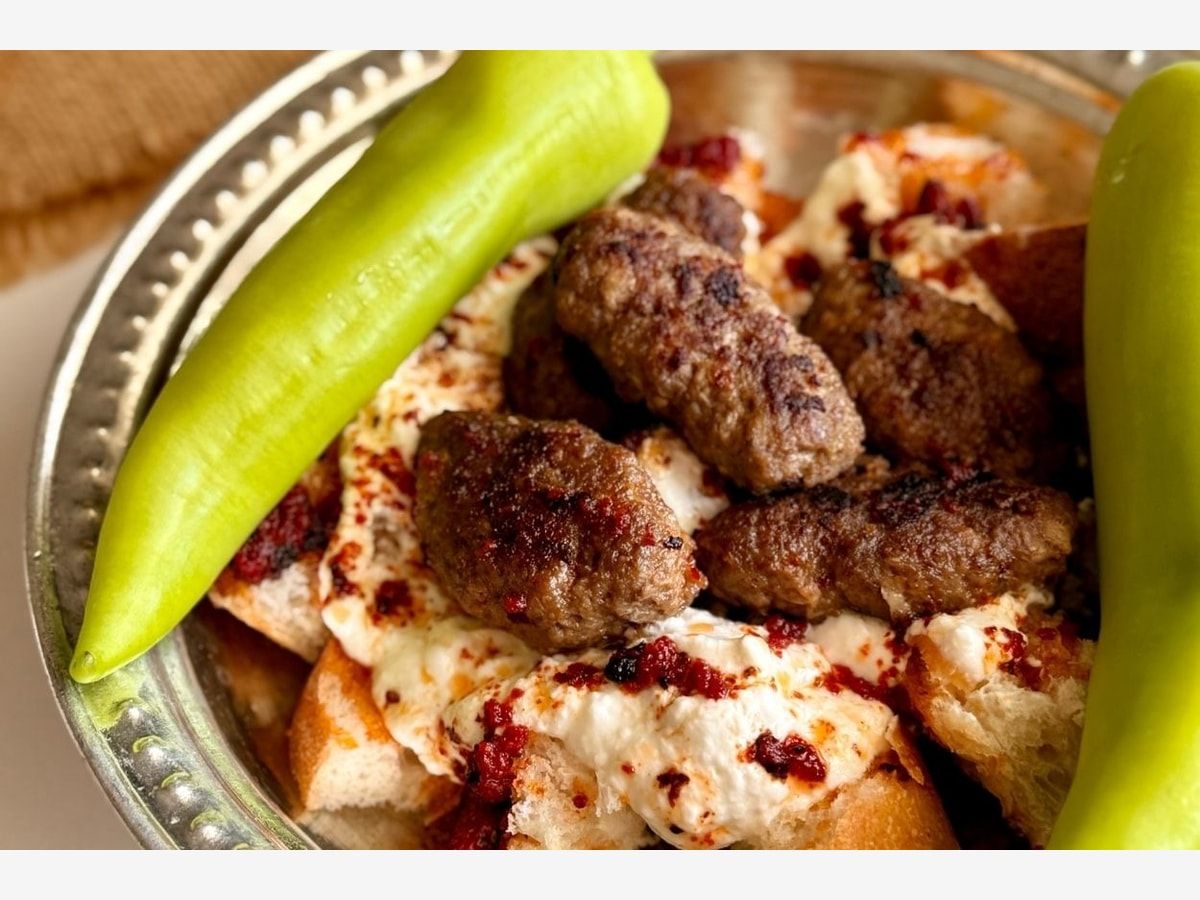
Balaban köfte
Squares of pide are soaked in bone broth and topped with köfte, tomato sauce, yogurt and butter.
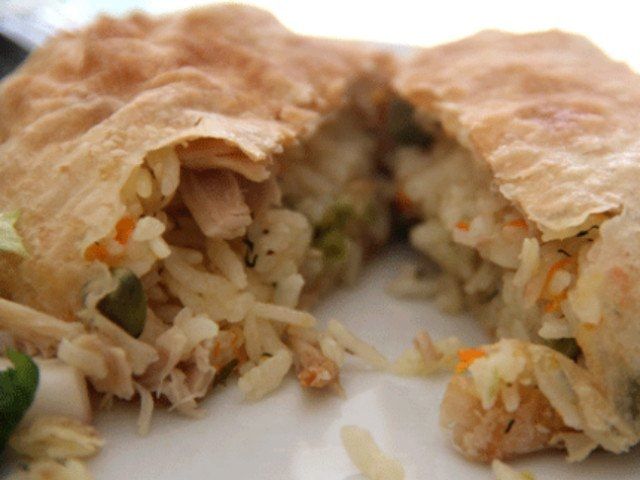
Yufkalı büryan
Boiled, shredded chicken is prepared with rice and spices and baked between sheets of yufka (thin flatbread).
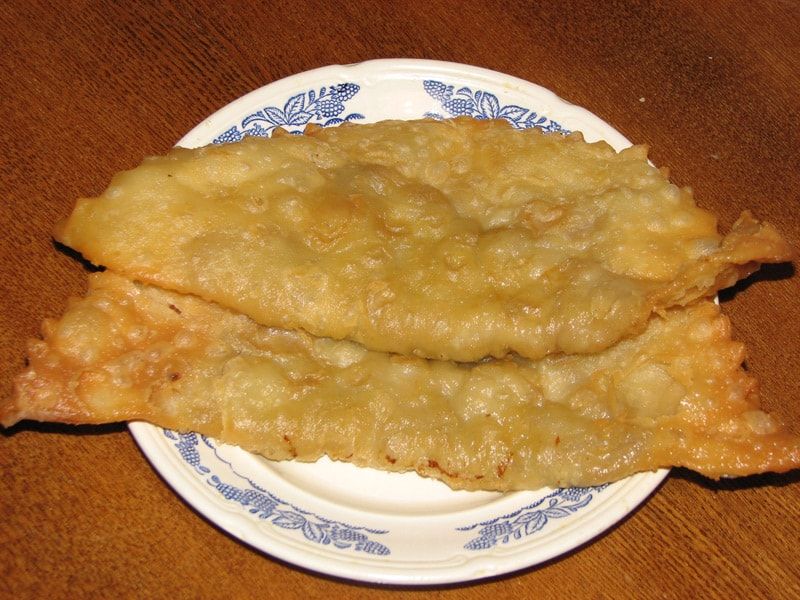
Çibörek
A dish counted among the böreks of Eskişehir cuisine: a fried half-moon pastry brought by the Crimean Tatars, often spelled çiğ börek.
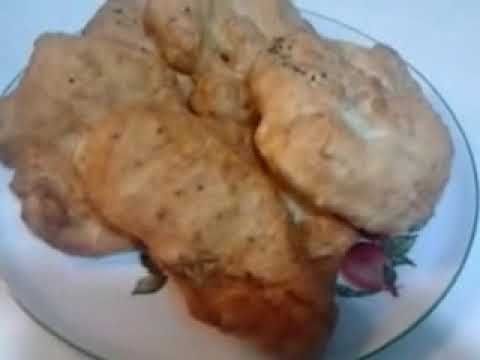
Eskişehir kıygaşa, a serving still from a cooking video
Kıygaşa
A fried dough similar to pişi, with nigella seeds in the dough.
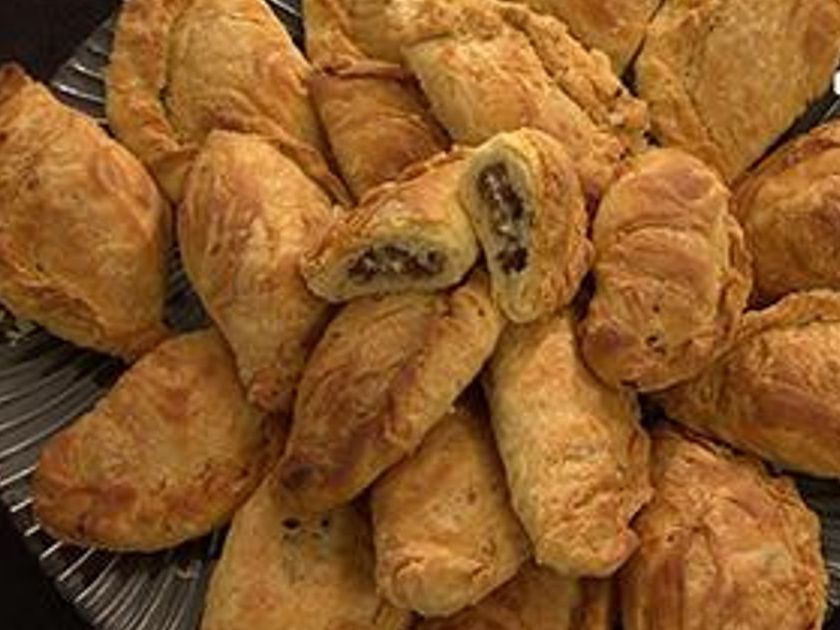
Kavurma börek
Counted among Eskişehir's kinds of börek.
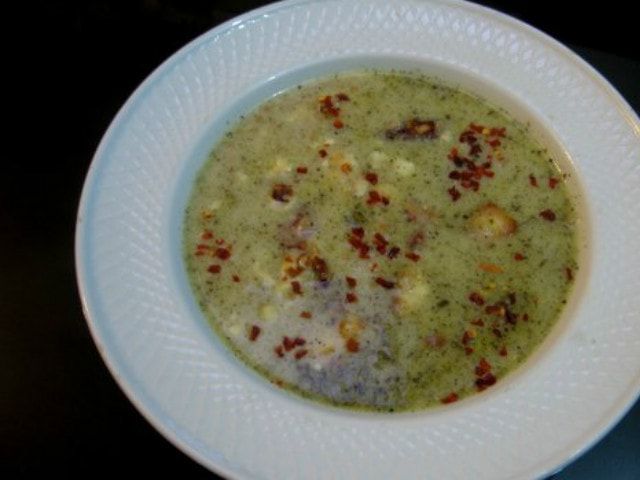
Göceli tarhana
Counted among Eskişehir's kinds of tarhana.
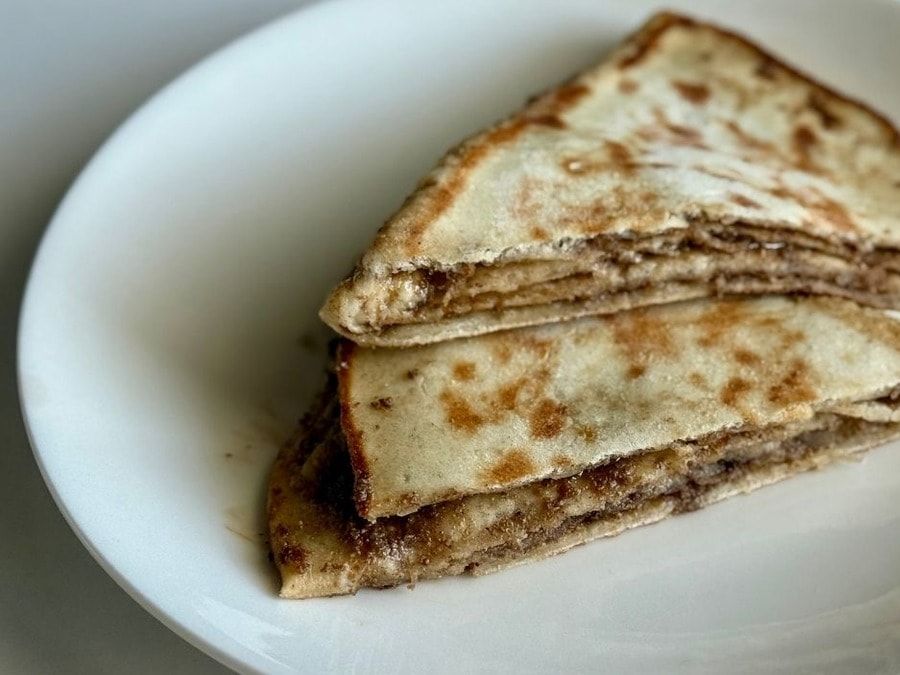
Haşhaşlı gözleme (poppy-seed gözleme)
A gözleme cooked with poppy-seed paste spread between layers of yufka.
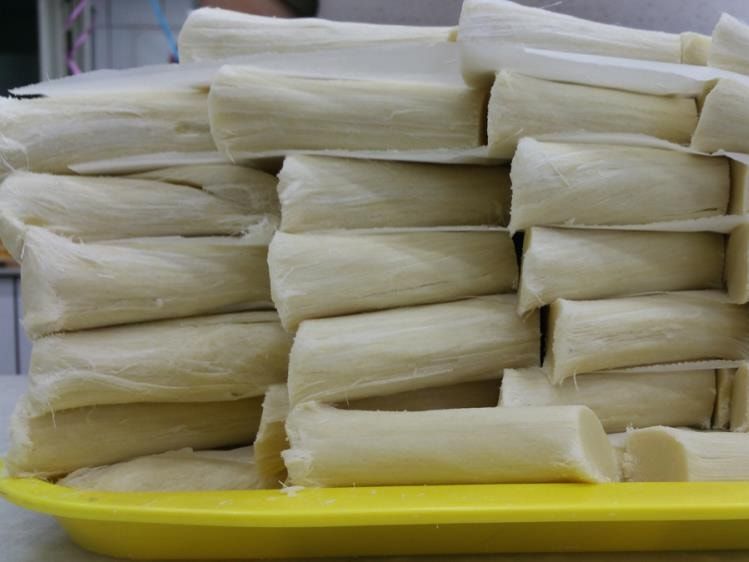
Met helvası
Known as one of the province's distinctive flavours.
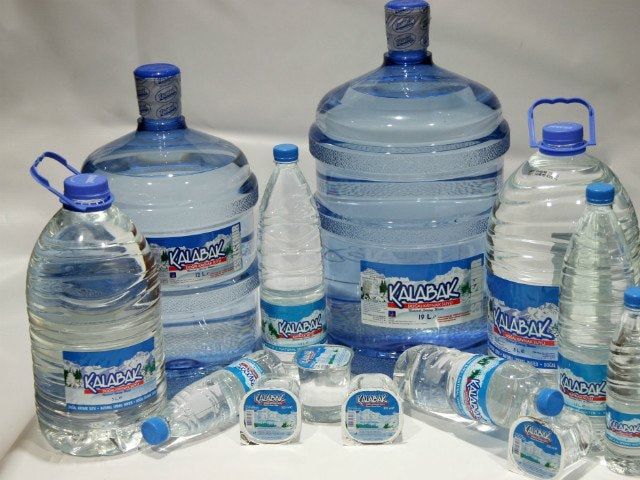
Kalabak suyu (Kalabak water)
Drinking water from Eskişehir's Kalabak spring; it is said to have been brought to the city in Atatürk's time.


Places to visit in Eskişehir
Porsuk stream and Adalar, Eskişehir

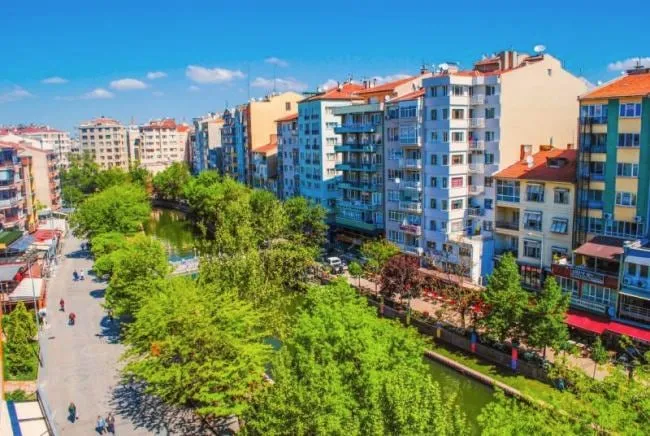
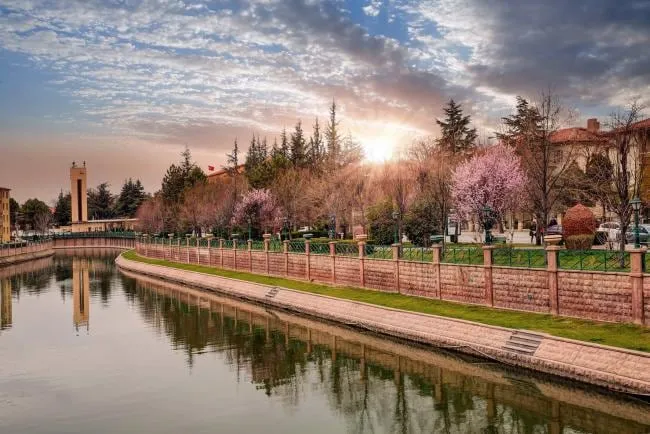
The Porsuk stream, one of Eskişehir's symbols, and the equally popular residential area of Adalar are perhaps the first places to see. The Porsuk is the longest tributary of the Sakarya River, 450 km long in total. It is fed by the Kızıltaş Suyu and the Bayatçık stream, the two strongest streams in the region. The part of the Porsuk near the city centre is called Adalar (the Islands). Both townspeople and domestic and foreign tourists visit this area in large numbers. The municipality organises many activities here, above all gondola rides, so you can experience Venice here.
Odunpazarı houses, Eskişehir
Without doubt, one of Eskişehir's symbols is the Odunpazarı houses. These houses have entered the World Cultural Heritage list. People still live in them. The area, where the houses have been restored by the municipality without spoiling their original character, also has many important historic buildings. Walking the streets of these houses will stir different feelings in you. It is very easy to get there.
Kurşunlu Mosque and Complex, Eskişehir
Work on this külliye (mosque complex) began in 1517 and took 8 years. It was built by Çoban Mustafa Paşa and is in the area of the Odunpazarı houses. The mosque and complex in the Odunpazarı district are both magnificent and very quiet. The complex has an imaret (public kitchen), a soup kitchen, a caravanserai, a şadırvan (ablution fountain), a mosque, a primary school, a medrese and a tabhane (hospice). These parts are used for different purposes today; the mosque is still used for worship.
Sazova Park, Eskişehir
This park, added to Eskişehir in recent years and quickly popular, has many fun sections, the most popular being the Fairy Tale Castle and the Pirate Ship. Built on a total area of 400,000 square metres, its official name is the Sazova Science, Culture and Art Park. Its sections include the Fairy Tale Pavilion, the Space House, the Underwater World, an amphitheatre, the Science Experiment Centre and the Pirate Ship. You can also tour the park on a free train. Our advice is to visit every section of the park.
Sabancı Space House and Science Experiment Centre, Eskişehir
This centre inside Sazova Park is the park's most visited place. Closed on Mondays, with weekend tickets selling out, this space centre attracts both children and adults. Don't leave the park without visiting it.
Kentpark, Eskişehir

The city's other big park is Kentpark. Although there is no sea, it has artificial pools and beaches, as well as cafés, walking paths and restaurants. The pool here is very popular. There is also a pond in the park, which makes a magnificent sight when it freezes in winter. There are also places in the park serving a spread breakfast. It is right next to the bus station, so it is easy to reach.
Wax Museum, Eskişehir
In this museum you will see wax figures of many famous people, from athletes to politicians. It first opened to visitors on 19 May 2013, and its full name is the Yılmaz Büyükerşen Wax Sculpture Museum. There is no other like it in our country. The figures are almost as good as the real thing. Metropolitan Mayor Prof. Dr. Yılmaz Büyükerşen donated 160 wax figures to the museum. Among the figures you will see are Atatürk and his comrades in arms, Atatürk's family, Ottoman sultans, presidents, Orhan Gencebay, Kemal Sunal, İbrahim Tatlıses, Barış Manço, Adile Naşit, Alparslan, Seyit Battal Gazi, Nasreddin Hoca and Yunus Emre.
Eti Underwater World, Eskişehir

It is inside Sazova Park and has sea creatures brought from all over the world. This underwater world, opened through a partnership between the metropolitan municipality and ETİ, took 2.5 years to build. It opened in January 2014 and covers 3,200 square metres in total, 2,350 of which is a giant aquarium. It has 2,150 fish of 84 different species. Don't leave without visiting it.
Haller Youth Centre, Eskişehir
This two-storey centre, formerly a fruit and vegetable market and now turned into a tourist venue, has theatre and billiard halls and cafés upstairs, and places to have a drink and chat downstairs.
Hamams of Eskişehir
Most of the hamams in Eskişehir, which has a long hamam culture, are historic buildings in Ottoman style. Restorations have stayed faithful to the original architecture. There are many hamams both in the city centre and in the districts, including:
- Ferah Termal Hamamı
- Bahçeli Şengül Hamamı
- Demirkazık Termal
- Has Termal
- Ak Camii
- Alçık Hamamı
Reşadiye Mosque, Eskişehir
This historic mosque, next to the Taşbaşı Bazaar, was built between 1969 and 1978. One of the city's important historic buildings, it is also one of its largest mosques. It is in Ottoman style, and inside are the names of the Prophet and the 4 caliphs.
Şelale Park, Eskişehir

This park in the Odunpazarı district is artificial and built on the highest part of the city. The 40,000-hectare park is very popular, especially in summer. It also has exercise equipment, a walking path, an artificial windmill, a Don Quixote statue and many other attractions.
Japanese Garden, Eskişehir
The garden, opened in 2010, is built on a philosophy. Opened through the joint work of the Japanese–Turkish Cultural Exchange Association and the Metropolitan Municipality, it is based on the principles of being a miniature of nature, expressing beings and ideas through symbols, and fitting in with its surroundings. Built on 22 dönüm (about 2.2 hectares), the garden has a pond, bridges, green areas, footpaths, a waterfall, an amphitheatre, many trees and verandas.
Şehr-i Aşk Island, Eskişehir
This artificial island on the Porsuk stream opened in 2010 and made a big splash at home and abroad. One of the city's symbols, it is very popular, especially in summer. There are also logs where you can write your names with your loved one. It is one of the sights you must see.
Regülatör picnic area, Eskişehir
This park in the Odunpazarı district is one of the most important parks in the district and the city. It opened in 2012 and has become a favourite of children and adults alike. Right beside the Porsuk stream, it covers 125 dönüm (about 12.5 hectares).
Musaözü Pond, Eskişehir
This area, whose name is the Musaözü Dam, has become a picnic spot for local people. It is very popular, especially in summer, and has many kinds of trees. It is also popular with anglers, the main catch being carp. You can't miss this 50-hectare natural beauty.
Other places to see in Eskişehir
- Aviation Museum, Eskişehir
- TCDD (Railway) Museum, Eskişehir
- City Theatres, Eskişehir
- Çukur Çarşı (bazaar), Eskişehir
- Nasreddin Hoca House, Eskişehir
- Atlıhan Bazaar, Eskişehir
- Doktorlar Avenue, Eskişehir
- Devrim Car, Eskişehir
- Meerschaum Museum, Eskişehir
- Museum of Contemporary Glass Art, Eskişehir
- Ottoman House, Eskişehir
- İki Eylül Avenue, Eskişehir
- Taşbaşı, Eskişehir
- Hamamyolu Avenue, Eskişehir
- Eti Archaeology Museum, Eskişehir
- Museum of Republican History, Eskişehir
- Cartoon Museum, Eskişehir
- Alaaddin Mosque, Eskişehir
- Espark shopping centre, Eskişehir
- Tomb of Şeyh Edebali, Eskişehir
- Esnaf Sarayı (Tradesmen's Palace), Eskişehir
- Tomb of Seyyid Battal Gazi, Eskişehir
- Tomb of Yunus Emre, Eskişehir
- Midas Monument, Eskişehir
- Pessinus ancient city, Eskişehir
- Küllüoba mound, Eskişehir
- Doğanlı Castle, Eskişehir
- Gerdekkaya Tomb, Eskişehir
- Areyastis Monument, Eskişehir
- Asar Castle, Eskişehir
- Solon's Tomb, Eskişehir
- Kocakızlar Tumulus, Alpu, Eskişehir
Culture and arts in Eskişehir
MEERSCHAUM (LÜLETAŞI)
In this section, prepared to introduce meerschaum, one of Eskişehir's most important symbols, you can find a great deal of information about it.
ODUNPAZARI HOUSES
Eskişehir's Odunpazarı quarter is built on the hills in the south of the city. Preserving examples of Ottoman civil architecture, the quarter has survived to the present as a whole, with its winding roads, dead-end streets and terraced houses with carved wooden decoration and bay windows, keeping its customs, practices and traditions.
Odunpazarı has religious and social buildings, public buildings and commercial buildings. The Kurşunlu Mosque and Complex was built as a külliye by Çoban Mustafa Paşa in 1525. The Akoğlan Mosque, the Müftü Mosque, the Tiryakizade Hasan Paşa Mosque, the Sivrioğlu Mosque and the Tomb of Şeyh Şehabettin are the most important religious buildings. Foremost among the public buildings are Atatürk High School, the Museum of Republican History (the former military recruitment office) and Mal Hatun Primary School, which have the style and structural features of the First National Architecture Movement. The Odunpazarı quarter has been registered and protected as the “Odunpazarı Historic and Urban Protected Area”.
The Odunpazarı houses are generally of two types. In the first, the entrance is from the street and the garden is at the back. The second type has the garden in front with the house inside it, built on 1, 2 or 3 floors. The houses generally consist of a sofa (central hall) with rooms around it. In multi-storey houses the ground floor is given over to services such as the kitchen and storage, and life goes on upstairs. The corner room on the front façade, with windows on two sides, is larger and more important.
The rooms usually have built-in divans in front of the windows. At least one wall is made up of cupboards that show the finest woodwork. The walls also have shelves and niches for everyday items. The sofa, linking the floors, is also the largest space in the house. There is a space called the selamlık for receiving guests. With their harem and selamlık sections, the houses resemble a double house.
The houses show great skill and taste in their wide eaves, doors, windows, brackets, ceilings, cupboards and other woodwork, and the finest examples of painted decoration and carving can be seen in them. Wood, mud brick and rubble stone were used as building materials. The roofs are generally covered with pantiles.
POTTERY In the village of Sorkun, 12 km from Mihalıççık, everyone works in pottery. Because they use methods from centuries ago, they are the subject of research from all over the world.
Source: http://www.eskisehirliyiz.biz
History of Eskişehir
Eskişehir's known history goes back to the Phrygians. When the Phrygians settled in the region, the city was named Dorylaion; the city's current name (“old city”) is also thought to come from the ruins of this ancient city. In the following centuries the region was held in turn by the Lydians, Persians, Macedonians and Romans, then came under Byzantine rule.
The city passed to the Anatolian Seljuks in 1074, was known in that period as Sultanönü, and was the scene of Crusades. In 1289 the Anatolian Seljuks gave the city to Osman Gazi; though it later fell for a time to the Karamanids, it rejoined the Ottoman lands under Murad I.
The arrival of the railway revived trade. In the War of Independence years Eskişehir was an important centre: British forces occupied the station on 23 January 1919, and the occupation ended on 20 March 1920. In 1921 two battles were fought at nearby İnönü. The city, occupied by the Greek army, was liberated on 2 September 1922 after the Great Offensive.
Getting to Eskişehir
Eskişehir's main road link is the Istanbul–Eskişehir–Ankara state highway. Every part of Eskişehir can be reached because the city is at the centre of the rail network. It is 264 km from Ankara and 375 km from Haydarpaşa Station. Eskişehir can also be reached by bus from all over Türkiye. There is no airport in Eskişehir. If you want to fly, you can fly to Ankara and then take the high-speed train to Eskişehir.
Districts of Eskişehir
- Alpu
- Beylikova
- Çifteler
- Günyüzü
- Han
- İnönü
- Mahmudiye
- Mihalgazi
- Mihalıççık
- Odunpazarı
- Sarıcakaya
- Seyitgazi
- Sivrihisar
- Tepebaşı
Economy of Eskişehir
With the growth of industry in recent years, Eskişehir has developed rapidly in socio-economic life, as research has confirmed. In the “Human Development Report” prepared by the United Nations Development Programme, Eskişehir ranked 3rd for human development and liveability. Most recently, according to the results of the “Inter-Provincial Competitiveness Index” by the International Competitiveness Research Institute (URAK), Eskişehir was found to be the 6th most competitive of 81 provinces. In the human capital and quality of life index, one heading of this study, Eskişehir ranked 3rd in Türkiye.
Eskişehir is one of the provinces with the highest urban and living quality and, after Istanbul and Ankara, the country's two leading cities, sets an example for other Anatolian cities with its modern, orderly urbanisation. With an urbanisation rate of 86%, Eskişehir is one of our country's leading provinces in urbanisation. Eskişehir's share of Türkiye's GNP is 1.2 per cent, and per capita national income in the province was 9,000 dollars according to 2008 data.
Eskişehir also stands apart from other Anatolian cities in its social and cultural infrastructure. The city has 33 cinema screens and Opera, Municipal and University Theatres. Every year Eskişehir enjoys an intense artistic programme with the International Eskişehir Festival, featuring events in every field of art such as classical music, theatre and jazz, and the International Film Days. Eskişehir is also one of Türkiye's safest provinces.
Thanks to the advantages of its geographical position, Eskişehir has throughout history been Anatolia's gateway to the west. Its location at the junction of railways and roads, developments in farming and industry, and rich underground resources have made Eskişehir an important centre of industry and trade. Industry has without doubt played the largest part in the dynamism of Eskişehir's economic life in recent years. The rapid growth of the urban population relative to the rural population, the skilled workforce, closeness to markets, suitable energy and raw material resources and adequate infrastructure investment for industry have allowed the region's industry to grow steadily. Looking at the sectors' shares of the provincial economy, services come first with 60%, followed by industry with 30% and farming with 10%.
Source: http://www.eso.org.tr/index.php?page=content/eskisehir&id=2


Comments
Loading comments…