
Ankara
- Central Anatolia Region
About Ankara
Ankara, the capital of Türkiye, is one of the country's most important cities. Ankara, which is also one of Türkiye's largest provinces, lies geographically almost exactly in the centre of Türkiye. Ankara has an area of 30,715 km². Its telephone area code is 312 and its licence-plate code is 06.
Ankara lies largely in the Central Anatolia Region, except for its northern parts, which are in the Western Black Sea Region. By area it is the country's third-largest province. It is bordered by the provinces of Bolu, Çankırı, Kırıkkale, Kırşehir, Aksaray, Konya and Eskişehir.
After Ankara was declared the capital, the city developed rapidly, and in parallel the province has become Türkiye's second most populous today. Although half the land of the province, whose economy in the early years of the Republic of Türkiye was based on farming and livestock, is still used for farming, only 3% of its population lives in villages and 70% in the provincial centre. Economic activity rests largely on trade and industry, while the weight of farming and livestock is steadily declining. Both public and private investment in and around Ankara have encouraged large-scale migration from other provinces.
Since the founding of the Republic, its population has grown twice as fast as the country's population. About three-quarters of the population works in what can be described as the service sector, such as civil service, transport and communications and trade; a quarter works in industry and 2% in farming. Industry is concentrated especially in the textile, food and construction sectors. Today most investment is in the defence, metal and engine sectors. In Ankara, the province with the largest number of universities in Türkiye, the proportion of people with a university degree is also twice the national average. This educated population provides the workforce that technology-based investment needs. The province's transport infrastructure is centred on the capital; from here other cities in Türkiye can be reached by motorway, rail and air.
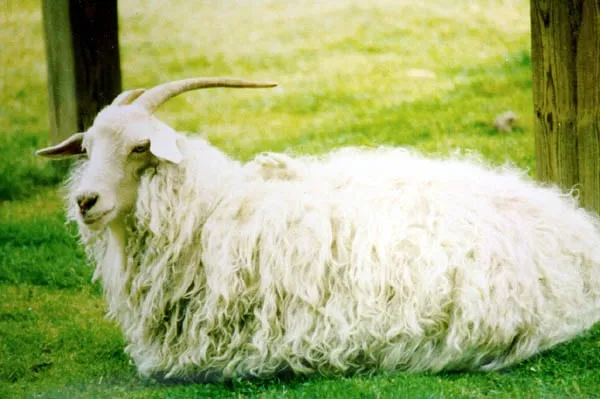
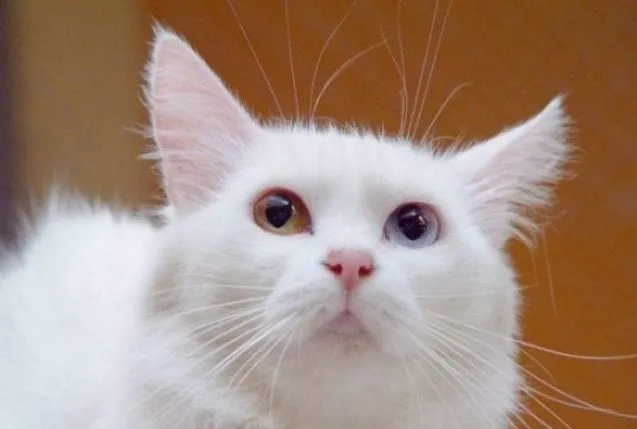
The area of Ankara province has been home to many civilisations from prehistory to the present day. The Hittites, Phrygians, Lydians, Persians, Galatians, Romans, Byzantines, Seljuks, Ottomans and finally the Republic of Türkiye have held the province's lands. The city of Ankara, capital of the Tectosages and of the Republic of Türkiye, and Gordion, capital of the Phrygians, lie within the province. The Battle of Ankara, in which Bayezid I was defeated by Timur, was fought near Çubuk, and the Battle of Sakarya, the turning point of the War of Independence, was fought near Polatlı. Most of the province, except its northern parts in the Western Black Sea Region, lies in the Central Anatolia Region and has a continental climate. Outside the cities, most of the province consists of plateaus covered with cereal fields. Natural beauty spots in various parts of the province have been protected and opened for rest and recreation. The rabbit, goat and cat that bear the province's name are known worldwide, while its pears, crocuses, the local dish Ankara tava and the mineral waters of Kızılcahamam are known throughout the country.
Ankara's famous dishes and desserts
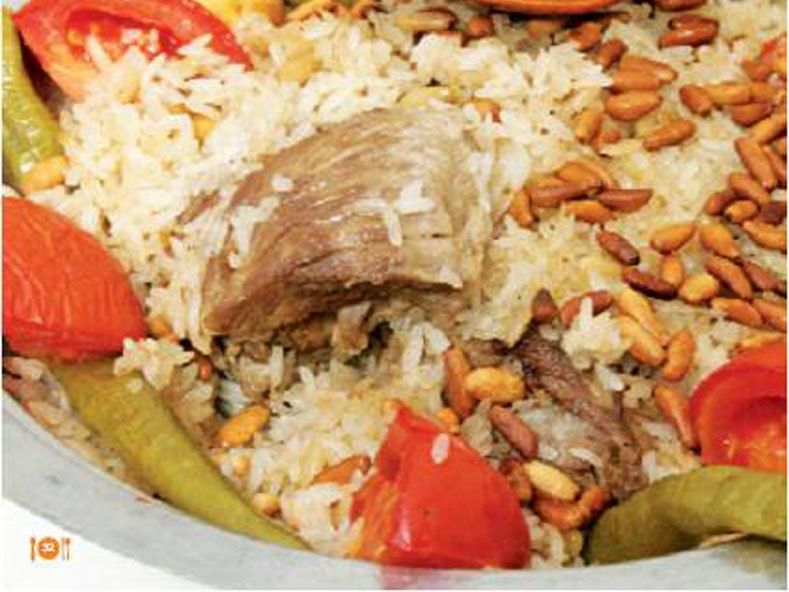
Ankara tava
This is the first dish that comes to mind when Ankara cooking is mentioned. Even the people of Ankara are divided on how it should be made. In some areas the pilaf is made from rice, in others from orzo (arpa şehriye). The other question is whether the meat should be ribs on the bone or diced meat.
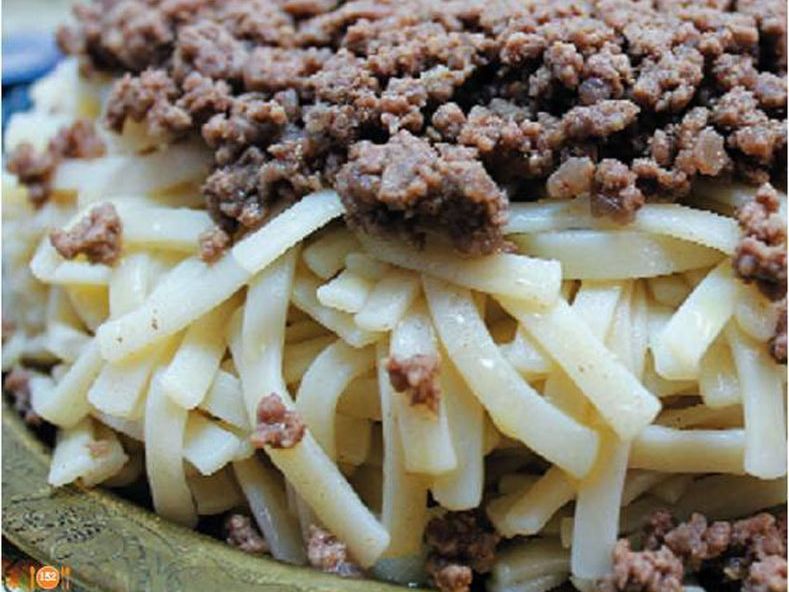
Öllüğün körü
It is made by topping erişte (home-made noodles) with fried minced meat. Add a bowl of yoghurt on the side and you're in heaven.
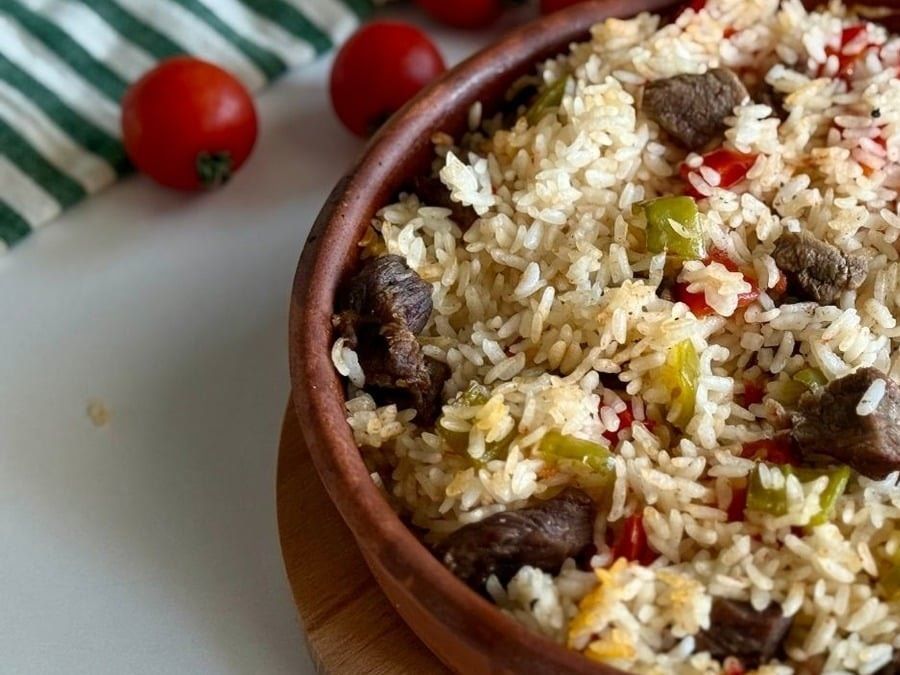
Beypazarı güveci
A dish of meat and vegetables cooked slowly in an earthenware pot in the oven; it is one of the well-known flavours of Beypazarı cooking.
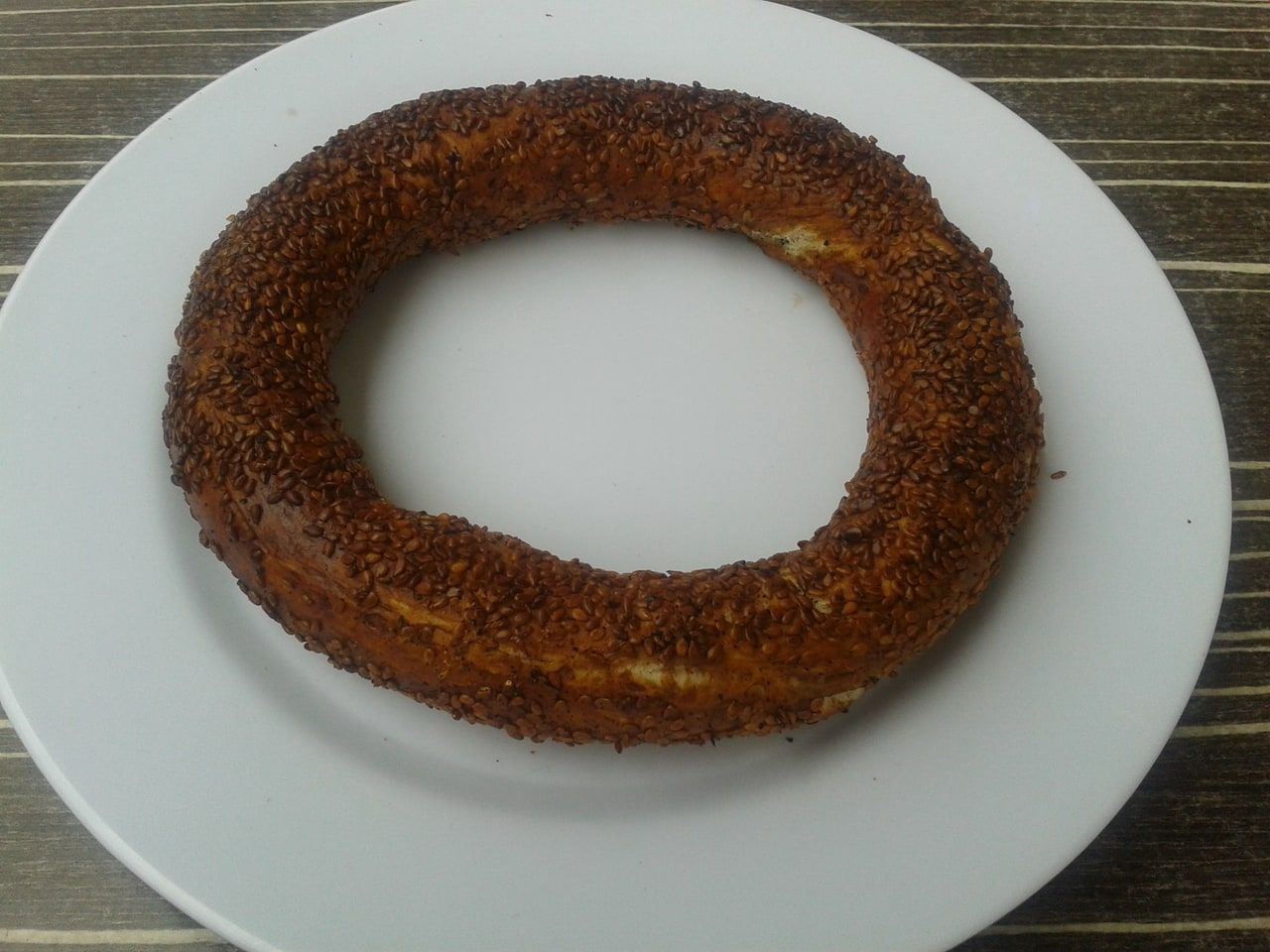
Ankara simidi
Let the people of İzmir call it gevrek all they like, Ankara's simit is something else. Eat it warm in the morning and you get that toasted flavour. It is not golden like the simit in Istanbul or İzmir but plain brown, because it is made with real pekmez (grape molasses) and dipped in real pekmez. With tea on the side. Bliss.
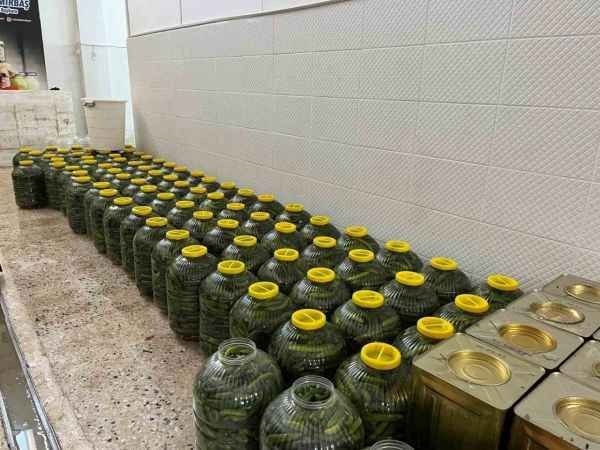
Çubuk turşusu
This is not your usual gherkin pickle. The cucumbers here are different. Compared with gherkins that look like plump sausages, Çubuk pickle is made with a different variety of cucumber that tapers from one end to the other. It can be eaten with almost any meal.
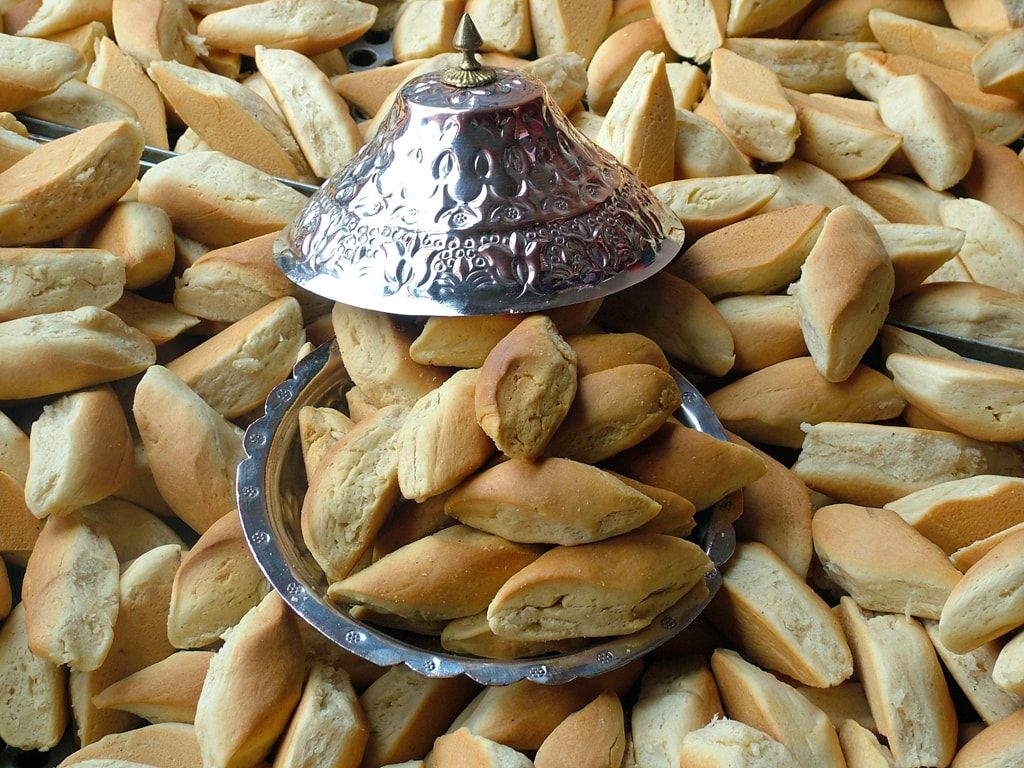
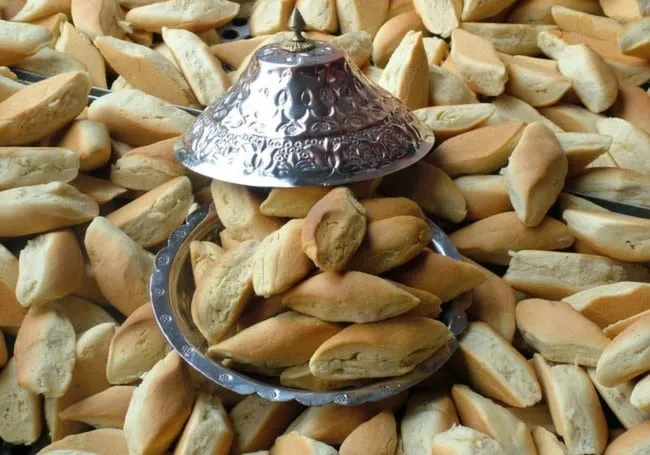
Beypazarı kurusu
The dough, baked until quite hard, contains plenty of butter and a little cinnamon. It is dipped in tea or coffee, eaten spread with Nutella, goes well with cheese, and is always a favourite when fresh and crunchy.
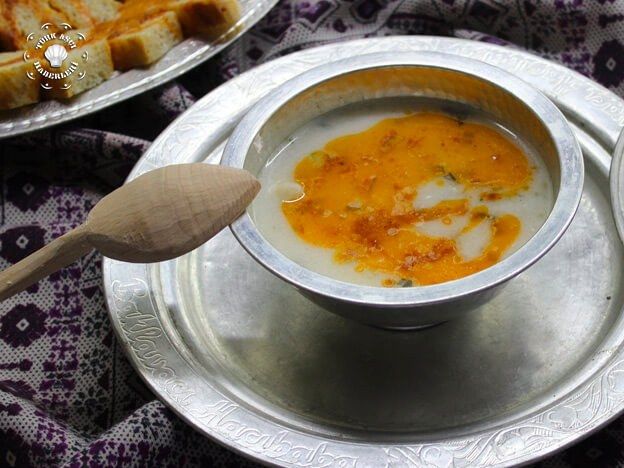
İnceğiz çorbası
A soup dominated by boiled chickpeas, wheat and lamb, which once you drink it you'll want to drink again: inceğiz soup. Sizzling butter poured on top is highly recommended. Break bread into it and dip, or finish a bowl spoon by spoon and ask for another.
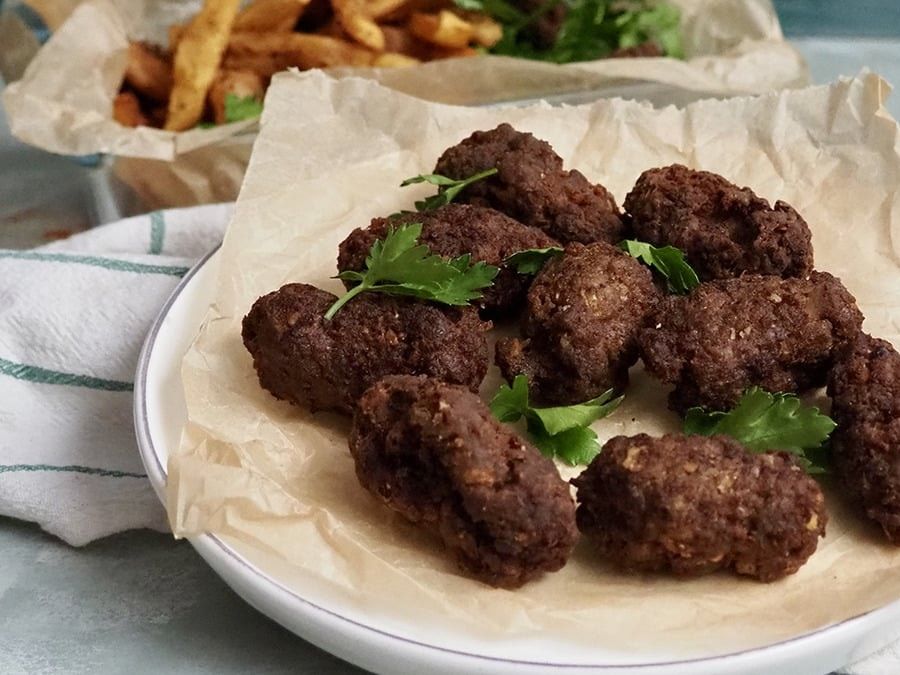
Kuru köfte
It is the finest form of mum's meatballs. With potatoes on the side, it's irresistible. You can put it in bread and take it with you, making friend and foe alike hungry. It is that good.
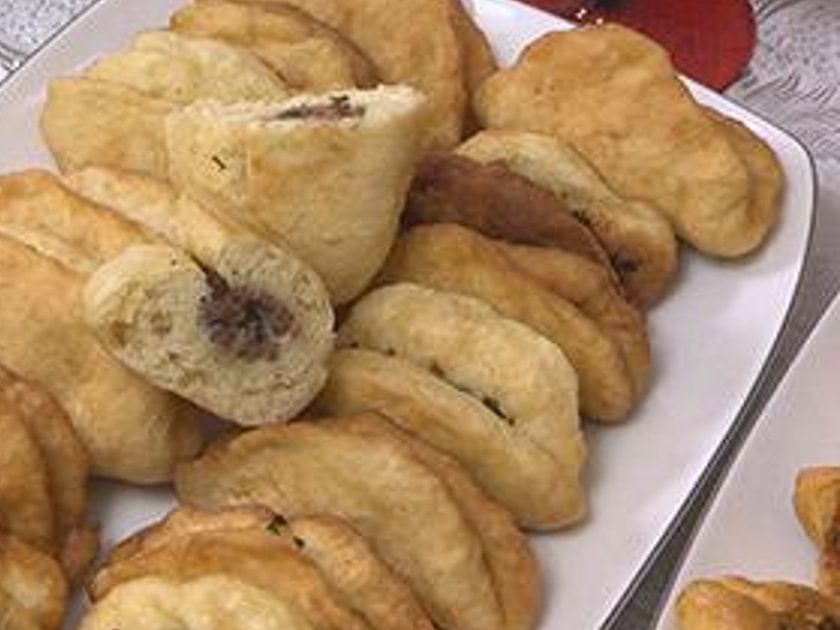
Entekke böreği
We could call it Ankara's minced-meat börek. Minced meat is added to a yeast dough, which is closed in the shape of a Kavala biscuit. Fried golden in hot oil, the entekke börek go first onto the plate and then into the stomach as they cook.
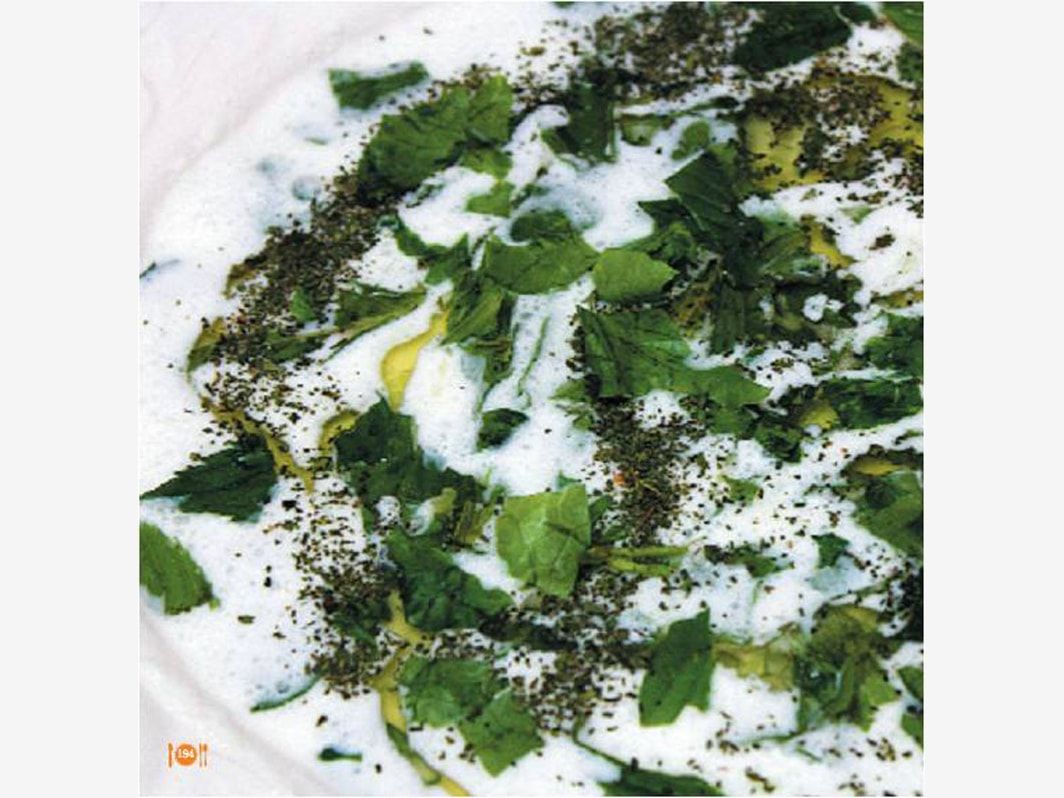
Yemlik cacığı
Yemlik cacığı is made from a herb that belongs to the wild-plant family but is not wild to us at all. Gathering yemlik sometimes means plunging into the fields. You can eat it dipped in salt, but it is best mixed with yoghurt as cacık.
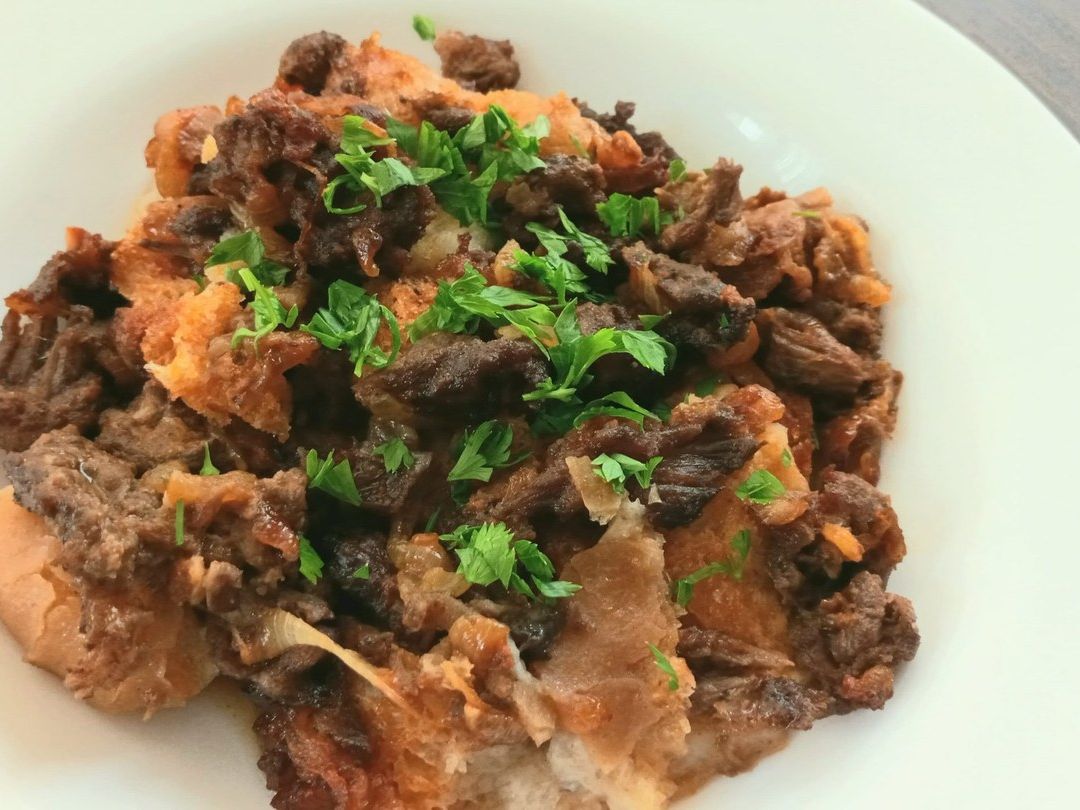
Tamtak tiridi made with fresh çemen and shredded meat
Tamtak tiridi
Ankara's Tamtak tiridi is made by flavouring toasted bread with meat stock and çemen (fenugreek paste). Besides the recipe in which minced meat with çemen is placed on the bread, there is a version made with tandır bread and shredded meat.
Source: Yemek Tarifi Perisi · Recipe check
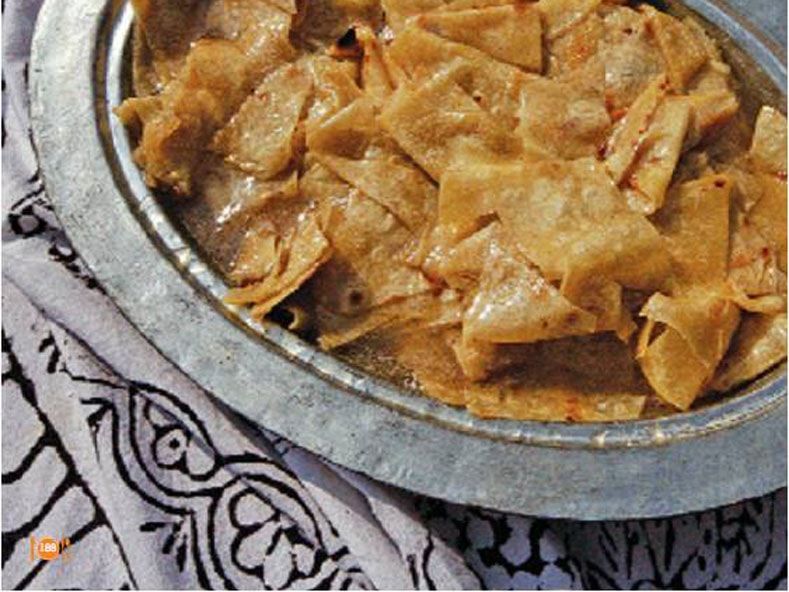
Şibit tatlısı
It is made by cooking dough rolled out as thin as yufka on a sac griddle, cutting it into baklava shapes and pouring syrup over it. It is also called şebit tatlısı. Şebit means yufka. It really is that simple and that good.
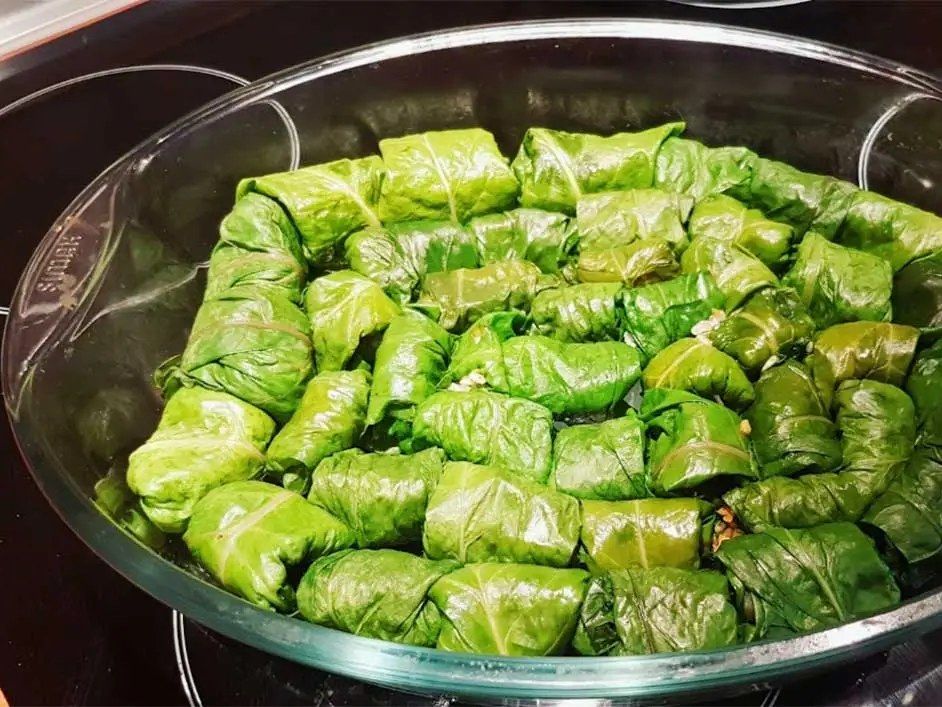
Efelek sarması
Efelek is Ankara's word for the herb we know as labada (patience dock). The efelek leaves, filled with their stuffing, are carefully arranged in a pot. Don't forget the yemlik cacığı on the side. They also make soup from efelek. So it becomes possible to feed a whole clan with a single herb.
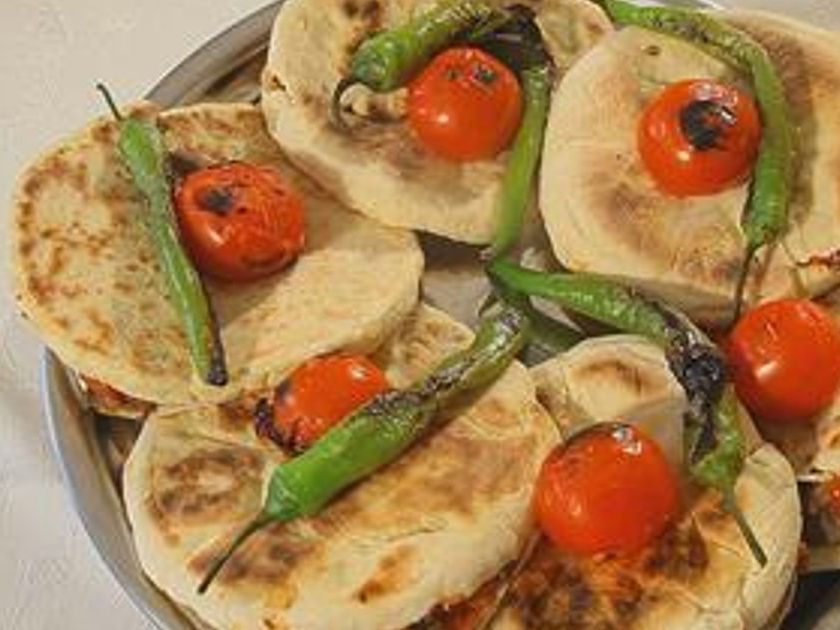
Bazlama kebabı
The meat filling tucked inside plump bazlama, the bazlama soaking up the juices of the meat, the pleasure you feel the moment you bite into the soft bazlama. That is what flavour means in Ankara.


Places to visit in Ankara
MUSEUM OF ANATOLIAN CIVILISATIONS
This museum was founded in 1921 as a sign of the importance Mustafa Kemal Atatürk attached to the states founded in Anatolia before Türkiye. After large-scale restoration work in 1938–1968 and 2010–2014, the museum reopened its doors to visitors. Today the Museum of Anatolian Civilizations, which ranks among the world's leading museums with its unique collections, displays Anatolian archaeology in chronological order from the Palaeolithic to the present day. The museum is in Altındağ, south of Ankara Castle. In the Museum of Anatolian Civilizations, which won the "European Museum of the Year" award in 1997, the Çatalhöyük town plan, thought to have been drawn in 6200 BC, is on display. This map still holds the distinction of being the oldest map drawn in human history. The museum is open every day of the week from 08:30 to 16:00.
1920 ASSEMBLY / WAR OF INDEPENDENCE MUSEUM
The assembly opened in Ankara to direct the national struggle that began under Mustafa Kemal's leadership on 19 May 1919 is the assembly that founded modern Türkiye. Because of the change from a two-chamber to a one-chamber system, it has not been used since 1981. However, it can be visited every day of the year except the first day of religious holidays. The Republic Museum displays photographs reflecting the War of Independence and the period of Türkiye's first three presidents, the presidents' personal belongings, and the decisions and laws passed in the assembly at that time. The building reflects the architecture of its time with its wooden ceiling decoration featuring Seljuk and Ottoman motifs, its arches, eaves and tiled sections. The museum can be visited with the Müzekart, which any Turkish or foreign tourist can obtain.
GRAND NATIONAL ASSEMBLY OF TÜRKİYE
The Republic of Türkiye's current assembly works in the third assembly building in the Republic's history, and since 1981 only this building has been used as the assembly building. The other buildings are now visited only as museums. The assembly building, whose construction was begun in 1938 by the world-famous Austrian architect Clemens Holzmeister, covers an area of about 500,000 m². On 23 April, National Sovereignty Day, a reception hosted by the Speaker is held in this assembly every year to celebrate Türkiye's independence and the sovereignty of the nation. Tourist groups can visit the assembly with a guide only on Mondays, Fridays and Saturdays, between 10:00 and 16:00. Visits must be notified at least two days in advance. The "public day", normally held every Saturday, has been cancelled until the restoration of the "reception hall", which was badly damaged on 15 July 2016, is completed.
ATAKULE
Atakule is a 125 m observation tower in the Çankaya district. From the terrace at the very top you can view the whole city in 360 degrees, and you can also eat at the restaurant there. Beneath Atakule, one of Ankara's iconic buildings, there is also a shopping centre. Although it was Ankara's first shopping centre, it is no longer in use because so many popular shopping centres have opened in Türkiye recently. Built for the 66th anniversary of the Republic and opened to visitors in October 1989, Atakule is dedicated to Mustafa Kemal Atatürk, founder of the Republic of Türkiye. The observation terrace is open every day from 09:30 to 22:00.
ANKARA CASTLE
Ankara Castle, thought to have been built by the Persians in the 7th century AD, passed in turn to the Romans, Byzantium, the Seljuks after they entered Anatolia, the Crusader army and the Ottomans. The castle took its present form in 1832 as a result of the renovation and extension work of İbrahim Pasha, son of Mehmed Ali Pasha, Governor of Egypt. From the castle, surrounded by walls 16 metres high, you can take in the whole view of Ankara. The inscription on the north-west part of Ankara Castle, which has 42 towers in all, shows that this part was built by the Seljuks. Evliya Çelebi, who came to Ankara in 1640, describes the city of Ankara and life in it in detail in his travel book, but gives priority to Ankara Castle.
ETHNOGRAPHY MUSEUM
The Ethnography Museum is known as the place where Mustafa Kemal Atatürk's body was kept from 1938 to 1953. The museum was built on Namazgâh Hill in Ankara. It is known that in the Seljuk period people came up to this hill for the holiday prayers and prayers for rain. More than 1,200 works are displayed in this museum, keeping alive the history of the Turkish presence in Anatolia. The museum, built on an area of 854 m², was designed by Arif Hikmet Koyunoğlu, a Republican-era architect who was also an expert on Anatolian history. The Ethnography Museum, which can be visited every day of the year except the first day of religious holidays, is open from 08:30 to 17:00 between 31 October and 14 April and from 08:30 to 19:00 between 13 April and 30 October.
ANITKABİR
Construction of Anıtkabir, which holds the tomb of Mustafa Kemal Atatürk, leader of the War of Independence and founder of modern Türkiye, was completed in 1953. Construction of Anıtkabir began after Atatürk's death in 1938, and until it was finished his body was kept in the Ethnography Museum. Since 1953 Anıtkabir has been open free of charge every day to everyone, Turkish or foreign, who wants to visit Atatürk's tomb. In the courtyard of Anıtkabir there is another, small tomb, made out of proportion to the size of the main building. This tomb belongs to İsmet İnönü, the second President of the Republic of Türkiye and Atatürk's comrade-in-arms. When you go to Anıtkabir you can also visit the War of Independence Museum free of charge and, if you like, write your thoughts and feelings in the visitors' book there. After the museum you can shop at the souvenir shop. Atatürk's actual grave is in a special room inside Anıtkabir, which visitors may not enter.
HACI BAYRAM MOSQUE AND TEMPLE OF AUGUSTUS
The Hacı Bayram Mosque and the Temple of Augustus in Ankara's Ulus quarter are of great importance to the city because they stand side by side. Besides representing friendship between all faiths, they are like a summary of Ankara's long past and have witnessed history. The Hacı Bayram Mosque is thought to have been built in 1427. Including its courtyard, up to 6,000 people can pray at the same time in the whole area of the mosque. The Temple of Augustus is thought to have been built in 25 BC by the Phrygians and dedicated to the god Men. Later, however, the monument was renovated by the Romans and dedicated to the Roman Emperor Augustus. Excavations carried out in 1930 by Dr Hamit Zübeyr Koşay revealed the temple's entire architectural plan.
ANKARA HOUSES
These are the houses seen in the city's old quarters, especially in the Kaleiçi area of Altındağ. The few Ankara Houses that survive from the 17th, 18th and 19th centuries are mostly two-storey buildings made largely of wood and mudbrick. The servants' rooms are on the ground floor around the courtyard, and the rooms where the owner lived are on the first floor. Usually an outside staircase, open on one side, leads up to a covered, columned terrace open on all four sides, called the "seyregah". The rooms open onto the street through the seyregah and windows. The guest, gathering and bedrooms are on the second floor. Geometric, rumi and hatai decoration can be seen on the ceilings, ceiling roses, doors and other parts of the houses. Today some of the houses are used for tourism.
ANKARA MUSEUM OF PAINTING AND SCULPTURE
The museum building was built by Arif Hikmet Koyunoğlu on Namazgâh Hill in 1927. The museum, which opened after restoration in 1980, holds Osman Hamdi Bey's The Arms Dealer, V. Vereshchagin's At the Tomb of Timur and Fausto Zonaro's Portrait of a Young Girl. Some works by artists who took part in the State Painting and Sculpture Exhibitions, held from 1939 onwards in the Republican era to spread the visual arts among the public and support artists, were added to the museum's collection. The museum houses Fine Arts Galleries, a restoration workshop, an Oriental Hall and a concert and theatre hall. Its stage, which has an orchestra pit, is suitable for operetta performances.
Culture and arts in Ankara
Museums
Most of the museums in Ankara province lie within the boundaries of the city centre. There are 53 museums in the province, run by various institutions.
Important objects from the War of Independence and the founding years of the Republic can be found in Ankara's museums. The War of Independence Museum in the building of the First Grand National Assembly, the Atatürk and War of Independence Museum at Anıtkabir, the Republic Museum in the building of the Second Grand National Assembly and the State Cemetery Museum are the main historical museums. In addition, the homes of İsmet İnönü and Mehmet Akif Ersoy have become museums. Because Ankara is the capital, Türkiye's first major museums (such as the Ethnography Museum and the State Museum of Painting and Sculpture) were naturally set up in Ankara. Various state institutions have also set up their museums here because they are based in the capital, such as the Ziraat Bankası Museum and the Turkish Aeronautical Association Museum. New museums founded in recent years, such as the METU Science and Technology Museum, the Feza Gürsey Science Centre and the Çengelhan Rahmi Koç Museum, are enriching Ankara's choice of museums.
The Museum of Anatolian Civilisations, chosen as "European Museum of the Year" in 1997, ranks tenth in Türkiye and first in Ankara by number of visitors. The museum displays Anatolia's archaeological treasures from the Palaeolithic to the present day.
The most important museum outside the city of Ankara is the Gordion Museum in Polatlı, where King Midas's tumulus is also found. This museum displays archaeological finds from the Bronze Age and the Phrygian period discovered in the area.
Archaeological sites and historic remains
There are many archaeological sites in the province. The valuable finds discovered there are displayed in the Museum of Anatolian Civilisations and the METU Science and Technology Museum, and the structures are kept open to visitors.
Works from the Stone and Bronze Ages are found at the Ahlatlıbel, Etiyokuşu, Karaoğlan and Koçumbeli mounds. Among the various Hittite remains are the Balıkhisar, Ballıkuyumcu, Bitik, Karaoğlan and Külhöyük mounds and the Gâvurkale rock carvings.
Ankara Castle was built in Galatian times and used by various civilisations in the following centuries.
There are important Roman remains in the capital. The Roman Baths were built in the 3rd century by the Roman Emperor Caracalla, son of Septimius Severus, in honour of Asclepius, god of health. The Temple of Augustus, built in the 2nd century BC for the Phrygian god Men, collapsed over time. The temple whose remains survive today was built by King Pylaemenes, son of Amyntas, the last ruler of Galatia, as a token of loyalty to the Roman Emperor Caesar Divi Filius Augustus. The Column of Julian was erected in 362 in honour of the visit to Ankara of the Roman Emperor Julian. Outside the capital, Kalecik Castle in Kalecik dates from Roman times. The caves at Güdül, carved into a mountain, are a multi-storey settlement where the early Christians hid from the Romans.
There are many works from the Seljuks and Ottomans in Ankara province. The Akköprü, a Seljuk structure in the Yenimahalle district, was built in the time of the Anatolian Seljuk Sultan Alaeddin Keykubad I. The Alaaddin Mosque stands inside Ankara Castle and is dated 1178. The Arslanhane (Ahi Şerafettin) Mosque in Samanpazarı was built at the beginning of the 13th century.
Important works from the Ottoman period include the 15th-century Hacı Bayram Mosque, the Karacabey Mosque and the Kurşunlu Han caravanserai. The historic houses in Ankara Kaleiçi, Beypazarı, Ayaş and Güdül, which show the architectural features of the late Ottoman period, have been placed under protection.
Music
The main stringed instrument of the traditional folk music of the Ankara region is the bağlama; the main wind instruments are various types of düdük and kaval, and the main percussion instruments are the davul (drum) and the def (frame drum).
There are various folk-music traditions depending on the social setting:
Divan. It is played on a stringed instrument called the divan sazı, with no other instruments. An older man who plays the saz well, called the "efe başı", sits in the middle, and the less experienced players form a circle around him. The efe başı leads the group, and after him everyone played in turn. A feature of the divans was that they were played in a Sufi atmosphere; edifying, cautionary türkü were sung and dances were performed. Then came Kırat, Muhabbet tunes, Zil tunes, dance tunes, and Bozlak and Ağıt. At the end of the divans there was a Cezayir tune. Of these, the Kırat are türkü telling the story of a heroic horse. Bozlaks are heartfelt, delicate songs. Feelings such as love, death, rebellion and sorrow are sung improvised, without metre. Ağıts (laments) deal with sad and painful subjects. Depending on the kind of gathering, there would also be Muhabbet or Oturak. Muhabbet was played at gatherings of older people with drink. Between saz pieces the oldest in the group would speak, telling old stories and anecdotes. Oturaks are held mostly by young men and bachelors. Women hired for money serve drinks and meze, and when the dance tunes begin the women come out and dance.
Dance
Zeybeks are dances built on the theme of bravery and manliness. They are danced to the saz and have a slow melody. They are danced by at least two people. What matters in zeybek dances is matching the gestures and figures to the characteristic mood and melody of the dance. That is, stance, swagger and pose bring out the showiness of the zeybek. The main zeybek dances are the Ankara zeybeği, the mendil zeybeği, the Karaşar zeybeği, the Seymen zeybeği, the Seymen alayı and the Yağcıoğlu zeybeği. Ankara folk dances are studied in two groups, zeybeks and düz oyunlar (plain dances):
The Ankara düz oyunları, danced to dance tunes, have a different harmony and a soft rhythm. The sound of the saz is sometimes lively, sometimes emotional and sometimes exuberant. The figures of the plain dances are adorned with footwork and are very similar to one another. All are danced in groups to the saz. The best known of these dances are misket, fidayda (hüdayda), mor koyun, yandım şeker, name gelin, sabahî, yıldız, çarşamba and the Arap oyunu.
Cuisine
In old Ankara houses the kitchen, also called aşhane or ayşene, was the largest part of the house. Besides a hearth called the çork and a tandır, the kitchen had a two-storey pantry called the müsandere. Firewood was stacked in a corner of the kitchen for burning. Meals were usually eaten in the kitchen at a cloth spread on the floor. Kitchen utensils also had names particular to the area. For example, a barrel was called bodu, a tablecloth boğ, a knife eğri, a rolling pin oklağaç, a shelf terek and a tray tıngır.
Although modern kitchens and names have become widespread today, many dishes and desserts particular to old Ankara cooking are still kept alive. According to a 2008 study, with 93 local dishes, desserts and drinks, Ankara province has the third-richest cuisine after Gaziantep and Elazığ. Among them are soups such as dutmaç and miyane; dishes and pastries such as Ankara tavası, alabörtme, calla, ilişkik, sızgıç, siyel, siyer, bici, pıtpıt pilavı, mucirim köftesi, tohma, şirden dolması, papaç, yalkı, carcıran, göter, kaile, topaç, cızlama and öllüğün körü; desserts such as karga beyni, köyter, omaç, perçem, tiltil helvası, zerdali boranası and the 80-layer baklava of the Beypazarı area; and breads such as bazlamacın, gizleme, çerpit, kartalaç, kömbe, kete, saçkıran, şerit and yarımca.
Festivals
There are many festivals in the province that have become traditional. The most important of them is the Beypazarı Festival. Its full name is the International Historic Houses, Handicrafts, Carrot and Güveç Festival. Several cities from Türkiye and around the world take part. The festival is held every year in October.
Another festival in the province is the Culture and Water Festival held in the Kızılcahamam district. This festival, which has become a tradition, is held every year in August.
History of Ankara
As is well known, Ankara is a city built around the Ankara Stream, which bears the same name. Streams and rivers such as the İncesu, the Bent Deresi and the Çubuk Su meet near the city. In other words, this well-watered area is suitable for living (for farming and livestock). Although the plain in question is smaller than the plains on which other Anatolian cities were founded, it was opened to settlement very early because it lies in a place that is easy to defend. Ankara's landforms are dominated by plateaus between 1,000 m and 1,200 m high, deeply cut by valleys, and by ridges and hills a few hundred metres higher above them.
The narrow valley of the Bent Deresi, by separating the hill on which Ankara Castle stands today from the steep edge of the plateau overlooking the plain, created an easily defended site; the city, always in the same place in the Hittite, Phrygian and Galatian periods, did not change its location in the Seljuk and Ottoman periods either. In today's Ankara, too, which always played the role of a castle town in the past, the castle rising from the plain immediately catches the eye. The discovery of tools from the Palaeolithic (Old Stone Age) in archaeological excavations in and around Ankara shows that the city's past goes back long before written history. The first settlement in the area is thought to have been founded in the period of the Hittites, who achieved the first political unity in Anatolia. In the 8th century BC Ankara and its surroundings passed to the Phrygians; in the 8th century BC the Phrygians became dependent on the Lydians, and after the Lydian king was defeated by the Persians in 547 BC, Persian rule began.
Ankara, on the Royal Road running between Sardis in western Anatolia and Susa in Iran, became an important staging post and trading centre in the Persian period, and Alexander, who ended Persian rule in Anatolia, stayed in Ankara on his way to his great Eastern Campaign. Ankara, the centre of the Galatians from the 3rd century BC, joined the Roman Empire in the 2nd century BC and became an important military centre. The city, which began to spread from the hill towards the plain in Galatian times and in the Roman period had its walls repaired and temples, baths and a hippodrome built (of these works, the Temple of Augustus and part of the Roman Baths survive today), withdrew from the foot of the hill to the castle in the Byzantine period (395–1073), was surrounded by a thick outer wall and took on the appearance of a true medieval city. In the years after the Seljuks won the victory at Malazgirt in 1071 and entered Anatolia, Ankara changed hands several times between the Byzantines and the Seljuks. In the Seljuk period the city of Ankara was surrounded by thick walls and kept its military importance, but because it lay off the main routes it had lost its commercial importance. (The Seljuk works in Ankara are not as many or as important as those in Konya, Sivas and Kayseri; the main works surviving from that period include the Alaaddin Mosque and the Akköprü over the Çubuk Stream.)
Ankara, which passed to the Ilkhanids in 1304, remained under their rule for 40 years. (It is said that between the Seljuk and Ottoman periods the city was governed by the Ahis, who had extensive lands and powers in Anatolia.) It first passed to the Ottomans in the time of Orhan Bey (1356); after changing hands for a short time, it was taken again by Murad I (1360). When the battle fought on the Çubuk plain in 1402 between Bayezid I and Timur ended in Ottoman defeat, Ankara too changed hands for a while among the Ottoman princes during their struggles for the throne; finally, with Mehmed I's accession to the Ottoman throne (1413), Ankara became a sanjak of the Anatolian provinces. During the Celali revolts of the 18th century, because all the rebels marching on Istanbul wanted first to take Ankara Castle, Ankara Castle was always kept strong, even though it was far from the border. In the 17th and 18th centuries Ankara was a city with a developed local industry, with good cereals and fruit grown on the surrounding plains and good livestock (sheep, goats, horses) raised on its pastures.
Fabrics made by processing the hair of Ankara goats into mohair in Ankara and the surrounding towns were sold to Egypt and Europe via Istanbul and İzmir. But at the beginning of the 19th century, because of the development of industry in Europe, the mohair industry in Ankara began to decline; hand looms decreased, and the mohair goats lost their former value through neglect. Ankara, in whose economy the mohair industry played an important role, declined badly in the 19th century, partly because of these setbacks and partly because of the spread of malaria and fires, and turned into a small town. After the Balkan War, when the loss of the Rumelian lands brought the country's western borders very close to Istanbul, moving the seat of government to Central Anatolia was discussed, but the city of Ankara was not considered for it. Atatürk, however, who directed the War of Independence from Ankara, made the city that had supported him in the darkest days of the war the capital on 13 October 1923.
Ankara after the founding of the Republic of Türkiye
Ankara, which became the capital of the Republic of Türkiye in 1923, developed rapidly. While empty plots in the old quarters filled with buildings, new quarters were also founded. The marshes were drained and the danger of malaria was removed. The Çubuk Dam was built to meet the city's water needs. The look of the city was changed by planting trees along the avenues, on old fire sites and in parks. The population, put at 57,800 in a trial count in 1926, rose to 74,553 in the 1927 general census. In 1945 it passed 200,000 (227,000). This growth in population also enlarged the city's area, and the city, which in its early years stood on the hill with the castle and in the 19th century was surrounded by a wall, spread over the plain and reached the hills on the far side of it. As a result of excessive concentration of population because it was the seat of government, the outskirts of the city also quickly filled with gecekondu (squatter houses). Today the city of Ankara has spread far beyond its old area in every direction and covers a wide area. The old part consists of two sections: Kaleiçi, on Hisar hill, and the neighbourhoods inside the plain walls, now gone, which spread from the middle of this hill towards the plain. Although old Ankara has multi-storey buildings and squares along the avenues opened in recent years, there are also narrow, winding streets with small mudbrick houses.
The historic buildings are also in this old part of the city (the Temple of Augustus; the remains of the Roman Baths; mosques from the Ottoman period). Ankara Castle consists of an inner castle covering the high part of the hill and an outer castle surrounding it. The area between the outer and inner castle walls and the area enclosed by the inner castle are covered with old houses lined up along narrow streets. (These houses, which give Ankara a special look, were built by filling the gaps in a wooden frame with mudbrick; their walls are whitewashed with lime.) But in recent years most of them have been demolished; the neighbourhoods outside the castle have grown rapidly, and multi-storey buildings have risen along widened or newly opened roads and squares. Ankara, which before the Republic spread only around Kaletepe, began to develop with the Republic. New buildings were put up along the avenues opening onto today's Ulus square, which was then the city's business centre (the old Grand National Assembly; the Ankara Palas). The period between 1930 and 1940 was Ankara's period of expansion. Following the plan made by H. Jansen, the city overflowed the green belt (vineyards and gardens) around Kaletepe. While Ankara's neighbourhoods outside the castle were enlarged by opening avenues, Yenişehir was founded in the south.
The city soon expanded towards Cebeci and Maltepe. Ministries and embassies were set up in the areas stretching towards Çankaya. The growth of the city, whose population was 157,000 in the 1940 census, slowed during the difficult years of the Second World War, but a second belt took shape around the city (this second belt ran over the Gazi Education Institute, the Atatürk Forest Farm and the Military Academy to Dikmen and Çankaya, and Anıtkabir was later built on it). In Ankara, whose population rose to 288,000 in 1950, the business centre shifted from Ulus to Yenişehir; the city expanded towards Maltepe and the first parts of Bahçelievler were built. Between 1950 and 1960 the second green belt was also crossed and the city's area grew further. New quarters were founded (Yenimahalle, Aydınlıkevler, Gazi Mahallesi, Anıttepe), and permanent settlements were built on the site of the old vineyards. Between 1960 and 1970 an intensive building programme began, and Kavaklıdere, Çankaya and Ayrancı became crowded. New quarters such as Karşıyaka and Demetevler were added to Yenimahalle, and the gaps between this area and the Atatürk Forest Farm filled quickly. The city's population, which rose to 902,000 in 1965, passed 1 million for the first time in 1970 (1,236,000), and reached 1,877,755 in 1980 and 2,235,035 in 1985.
Where does the name Ankara come from?
The city's name has changed very little from ancient times to the present. It is not known under what name the city was founded in the Hittite period (it has been suggested that it was founded on the site of the Hittite city of Ankuva, but the evidence for this is not sufficient). On the other hand, its name is known to have been Ankyra in the Phrygian period. It is suggested that this name derives from "anker", meaning "ship's anchor", and that the Phrygian king Midas founded the city where he found a ship's anchor and gave it this name. But some historians also suggest that the Galatians founded the city and that, in a war with the Egyptians, they took the anchors of the Egyptian ships they captured as spoils of victory, and, inspired by this, named their city Ankyra. In the Roman period the ship's anchor was used as the city's emblem, and the anchor symbol was struck on coins and medals. Some Turkish-Islamic sources from more recent periods state that the city's name was Engürü, from the Persian word engür (grape). There are also those who suggest that the city was named Angara because Ankara Castle was built by the people through "angarya" (forced labour). Today's name Ankara is a more or less altered form of the various names used since very ancient times.
Chronology of Ankara
- 8th–7th c. BC Phrygians
- 7th c. BC–547 BC Lydians
- 547–331 BC Persians
- 331–278 BC Hellenistic period
- 278–189 BC Galatians
- 189 BC–AD 395 Romans
- 395–1073 Byzantine period
- 1073 The Seljuks take Ankara
- 1101 The Crusader armies enter Ankara
- ? The Seljuks take the city a second time
- 1127 The Danishmendids take the city from the Seljuks
- 1143 The city passes to the Seljuks for the third time
- 1202 Muhiddin Mesud establishes his rule
- 1204 Rükneddin Süleyman takes the city
- 1304 The city passes to the Ilkhanids
- 1344 Ahi rule is established
- 1354 Süleyman Pasha annexes the city to Ottoman lands
- 1362 End of Ankara's limited independence
- 1402 Battle of Ankara
- 1413 Ankara becomes a sanjak of the Anatolia Eyalet
- 1595 Ankara begins to be affected by the Celali revolts
- 1832 Occupation of Ankara by Mehmed Ali Pasha
- 1864 Ankara becomes a provincial capital
- 1873 Famine
- 1892 The railway reaches Ankara
- 1919 After the Armistice of Mudros, a detachment of the French and British occupation forces arrives in Ankara
- 27 December 1919 Mustafa Kemal and his companions arrive in Ankara
- 6 April 1920 Anadolu Agency founded
- 23 April 1920 Grand National Assembly opens
- 7 October 1920 The Official Gazette (Ceride-i Resmiye) begins publication
- 20 January 1921 The first Constitution (Teşkilat-ı Esasiye Kanunu) adopted by the Assembly
- 12 March 1921 The İstiklal Marşı (national anthem) adopted
- 31 July 1922 The Independence Tribunals set up
- 1 November 1922 The caliphate and sultanate separated and the sultanate abolished
- 13 October 1923 Ankara becomes the capital
- 29 October 1923 The Republic proclaimed and Mustafa Kemal elected first President
- 16 February 1924 The caliphate abolished
- 20 April 1924 The 1924 Constitution adopted
- 26 August 1924 İş Bankası founded
- 16 February 1925 The Aeronautical Society (Tayyare Cemiyeti, later THK) founded
- 5 May 1925 Work begins on the Atatürk Forest Farm
- 1 September 1925 The 1st Medical Congress meets
- 19 October 1925 Ankara Medical Faculty opens
- 5 November 1925 Ankara School of Law opens (becomes a faculty in 1931)
- 11 September 1926 Ankara automatic telephone exchange opens
- 24 November 1927 The Victory Monument in Ulus Square unveiled
- 18 July 1930 The Ethnography Museum opens
- 10 April 1931 The Turkish Hearths (Türk Ocakları) closed
- 12 April 1931 The Turkish Historical Research Society founded
- 3 October 1931 Central Bank of the Republic of Türkiye opens
- 19 February 1932 The People's House (Halkevi) opens
- 2 July 1932 1st Turkish History Congress meets
- 12 July 1932 Turkish Language Research Society founded
- 30 October 1933 Higher Agricultural Institute opens
- 4 March 1934 Ankara Radio begins broadcasting
- 1 November 1934 The Security Monument unveiled
- 25 May 1935 1st Turkish Press Congress meets
- 23 October 1935 Etibank opens
- 24 October 1935 1st Congress of Municipalities meets
- 9 January 1936 Faculty of Language, History and Geography opens
- 3 November 1936 Çubuk Dam opens
- 15 December 1936 Ankara Stadium opens
- 29 October 1937 Ankara Railway Station opens
- 20 November 1938 Atatürk's body brought to Ankara
- 21 November 1938 Atatürk's body placed in its temporary tomb in the Ethnography Museum
- 19 May 1943 Gençlik Parkı (Youth Park) opens
- 9 October 1944 Foundation stone of Anıtkabir laid
- 7 January 1946 Democrat Party founded
- 15 August 1948 National Library opens
- 30 October 1951 Hittite Hall of the Archaeology Museum opens
- 10 November 1953 Atatürk's body laid in Anıtkabir
- 27 May 1960 The army takes over the government
- 9 July 1961 Constitution approved by referendum
- 12 March 1971 The army takes over the government
- 12 September 1980 The army takes over the government
- 1983 Ankara becomes a metropolitan city
- 1987 Kocatepe Mosque opens
- 16 September 1988 Natural gas first used in Ankara
- 16 February 1989 Ice Skating Palace opens
- November 1989 Atakule opens
- 27 December 1992 Altınpark opens
- 10 September 1994 AŞTİ (intercity bus terminal) opens
- 30 August 1996 Ankaray light rail goes into service
- 13 September 1996 Dikmen Valley opens
- 27 September 1997 Tatlar Wastewater Treatment Plant goes into service
- 28 December 1997 Ankara Metro goes into service
- 29 October 1998 ASKİ Sports Hall opens
- 5 July 2003 Göksu Park opens
- 30 August 2003 Harikalar Diyarı (Wonderland park) opens
Getting to Ankara
Which means of transport you choose to get to Ankara depends on which city in Türkiye you are coming from. If you are in the Central Anatolia Region, you can reach Ankara quickly by car or intercity bus. The Istanbul–Ankara journey, which takes 5.5 hours by car, has been cut to 4 hours by the high-speed train from Pendik station. From Eskişehir, too, you can reach Ankara in 1.5 hours by YHT (high-speed train). For those coming to Ankara from other regions of Türkiye, flying is the best option in terms of time. Tourists from abroad may need to take a connecting flight via Istanbul, depending on the city they are in.
Districts of Ankara
The districts of Ankara:
1-Akyurt
2-Altındağ
3- Ayaş
4-Bala
5-Beypazarı
6-Çamlıdere
7-Çankaya
8-Çubuk
9-Elmadağ
10-Etimesgut
11-Evren
12-Gölbaşı
13-Güdül
14-Haymana
15- Kalecik
16-Kazan
17- Keçiören
18-Kızılcahamam
19-Mamak
20- Nallıhan
21- Polatlı
22-Pursaklar
23- Sincan
24- Şereflikoçhisar
25-Yenimahalle
Economy of Ankara
Three-quarters of Ankara's population works in the service sector, and this sector has the largest share of the province's gross product. The reason the sector is so developed is that there is not enough large industry to provide jobs for the population arriving through migration.
The province accounts for 9% of Türkiye's gross national product. 12% of the country's total tax revenue and 12.3% of its budget revenue are collected here, while the province's share of the national budget is 6.4%. In 2006 Ankara contributed 16.5 billion TL to budget tax revenue and 21.1 billion TL to total budget revenue, and received 11.3 billion TL from the budget. As of 2001, 45% of the share of gross domestic product falling to Ankara came from trade, 23% from transport and communications and 14% from government services.
Industry
In Ankara province the private sector's share of value added is over 85%. The province's industry consists mainly of small and medium-sized businesses. Forty per cent of them produce in machinery and metal, for which the large firms producing defence equipment and vehicles create demand, followed by the food and textile industries. In terms of output, the most important sectors are food (sugar, flour, pasta, milk, drinks), vehicles, machinery (agricultural machinery, vehicles, tractors), military equipment, cement and textiles (woollen fabrics, knitwear, ready-made clothing). Agricultural chemicals, furniture, confectionery and printing are also important. Ankara leads Türkiye in the defence industry, software and electronics.
About 3,500 companies are registered with the Ankara Chamber of Industry (ASO). With 48 of Türkiye's 500 largest companies members of the ASO, Ankara was considered Türkiye's 2nd industrial centre after Istanbul in 2009.
Most of Ankara's industrial output takes place in Sincan, Akyurt, Çubuk and the İvedik and Middle East Industry and Trade Centre (OSTİM) Organised Industrial Zones near the city centre. OSTİM is Türkiye's largest area of small and medium-sized industrial production.
According to a 2009 study by the Centre for Economics and Foreign Policy Studies (EDAM), Ankara is the most competitive province. Among the sub-indices that make up the "competitiveness" index, Ankara ranked first in the human capital, creative capital and social capital indices. Factors such as the high number of universities and academic staff and patent and similar applications put Ankara first in Türkiye in the creative capital index in particular.
Farming, livestock and forestry
Across Ankara province, 60% of the land is used for farming, a rate well above the Turkish average. The most important field crops are wheat, barley and sugar beet. Other important products are melons, watermelons, tomatoes, carrots, pears, apples, sour cherries and grapes. About 24% of the fields are sown with wheat, 23% with barley and the rest with other crops. Polatlı, as Türkiye's second-largest "granary", has one of the most active grain exchanges.
In terms of altitude and pasture, Ankara is better suited to raising sheep and goats. Livestock, once important in the province's economy, is steadily losing its place. Sheep (Akkaraman and Karaman breeds) and cattle are raised in the province. Poultry farming is also significant. The number of mohair goats, known as Angora goats, is below one-tenth of their number in the 1970s, and breeders are now paid to protect them.
Ankara is not very rich in forest. According to 2007 data, 13% of the province is covered by forest, with degraded forest making up 7% of its area and normal forest 6%. There is no significant forestry output. However, a significant woodworking sector, covering fields such as furniture making and upholstery, has developed on a national scale.
Energy
In Nallıhan, the Çayırhan Thermal Power Plant generates electricity by burning lignite (634 MW), and the Esenboğa thermal power plant by burning fuel oil (54 MW). In addition, the Sarıyar Dam (160 MW), the Hirfanlı Dam (Evren) (128 MW) and the Kesikköprü Dam (76 MW) generate hydroelectric power.
Mining
Ankara is one of Türkiye's provinces with great mining potential. Some of Türkiye's most important lignite deposits are in the Beypazarı and Nallıhan districts. Salt is also extracted in and around Lake Tuz. After the Çamaltı Saltworks in İzmir, Lake Tuz and its surroundings are where Türkiye extracts the most salt.
Soda production has also developed in the province, around Beypazarı and Kızılcahamam.
Water resources
Besides the dams that provide hydroelectric power, Ankara has dams supplying drinking water and irrigation water. Of these, the Çubuk-1, Çubuk-2, Bayındır, Kesikköprü and Çamlıdere dams supply drinking water, the Asartepe Dam supplies irrigation water, and the Kurtboğazı Dam supplies both drinking and irrigation water. As these water sources are not enough to meet the needs of the growing city, water began to be brought to the capital from the Kızılırmak in 2008 as well. New dam construction projects are being discussed.
Tourism
Ankara is not a province much favoured by tourists from outside Türkiye. Only 1.5% of foreigners coming to Türkiye (383,000 people in 2007) enter through Ankara Esenboğa Airport. Most of them come between May and September, and 38% are German citizens.
For those interested in archaeological sites in Ankara province, the first place foreign guidebooks recommend is the Museum of Anatolian Civilisations. In the capital's Ulus quarter there are many sights, such as Ankara Castle, the Museum of Anatolian Civilisations, the Ethnography Museum and the Roman ruins (the Temple of Augustus and the Column of Julian). For those interested in the history of modern Türkiye, Anıtkabir and the old Grand National Assembly building are places often recommended in guidebooks. The main sights outside the capital are the traditional houses of Beypazarı and Gordion.
In domestic tourism, alongside cultural tourism above all, there is congress tourism in and around the city centre, winter tourism around Elmadağ, spa tourism around Kızılcahamam, Ayaş, Çubuk and Haymana, and cave tourism at the Tuluntaş Cave in Güdül. Many museums and monuments, Anıtkabir above all, and the historic houses in Beypazarı and Kızılcahamam contribute to domestic tourism. In addition, with its beach on the shore of the Hirfanlı Dam Lake, the Evren district offers Ankara and the surrounding provinces an alternative water and nature holiday.
In 2008 Anıtkabir was visited by 6 million people (7% of them foreign) and the Museum of Anatolian Civilisations by 290,000 (60% of them foreign).
Sport in Ankara
Football
The province has 2 teams in the Süper Lig: MKE Ankaragücü and Gençlerbirliği. With this number, Ankara is the province with the most Süper Lig teams after Istanbul. Of these teams, MKE Ankaragücü finished the 2010–2011 season 13th and Gençlerbirliği 14th. The province's teams MKE Ankaragücü, Gençlerbirliği and Hacettepespor use the 19,209-capacity Ankara 19 Mayıs Stadium, and Ankaraspor uses the 19,626-capacity Yenikent ASAŞ Stadium.
Basketball
The provincial centre hosted the 2001 European Basketball Championship, the second held in Türkiye after the 1959 championship in Istanbul. At this championship the Turkish national basketball team finished second, behind Yugoslavia. The province's basketball teams are TED Ankara Kolejliler and Türk Telekom in the Beko Basketball League, and Çankaya University Sports Club in the Turkish Women's Basketball League. Of these, Türk Telekom has won the Presidential Cup three times and the Turkish Cup twice. The Ankara Arena multi-purpose basketball complex, built in 2010, hosted the 2010 FIBA World Championship.
Other sports
The Ankara Provincial Directorate of Youth and Sports organises various amateur sports activities across the province. The city centre has various facilities for sports such as athletics, gymnastics, cycling, ice skating, fencing, judo, taekwondo, karate, handball, riding, wrestling and swimming. There are ski facilities at Elmadağ and various sports halls and facilities in the other districts.
The International Yaşar Doğu Wrestling Tournament is held in Ankara every year.


Comments
Loading comments…