
Ardahan
- Eastern Anatolia Region
About Ardahan
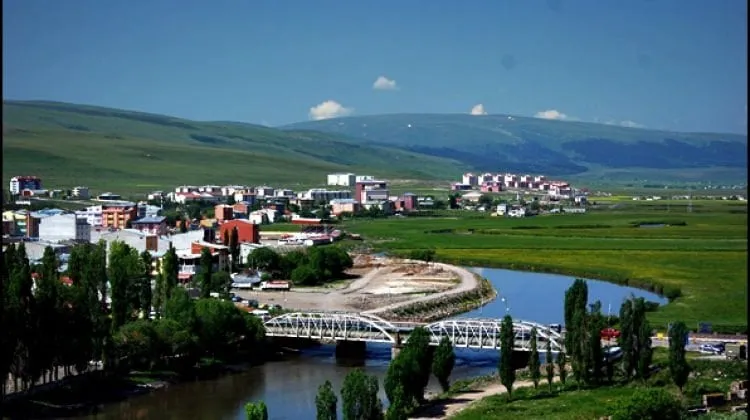
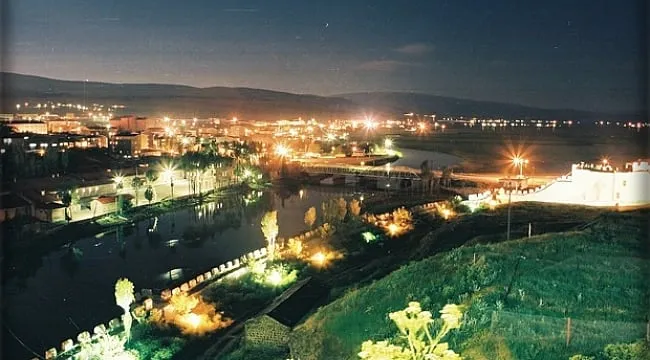
Ardahan, Türkiye's 75th province, was separated from Kars province by a law passed on 27 May 1992. Located in the Eastern Anatolia Region at an altitude of 1,829 metres, the city is surrounded by mountains on all four sides. Its population of 99,265 lives in the provincial centre and 5 districts, each with its own geography and climate.
With mountains, plateaus, valleys, plains, peaks over 3,000 metres and lakes, the province has a very rich geography, and partly because of its high altitude, winters are long and harsh. The Kura River, which runs through the middle of the city, and the famous Lake Çıldır in Çıldır district freeze in winter. Riding a horse-drawn sleigh on Lake Çıldır, which looks like a giant ice rink, is an unusual experience for winter visitors.
Ardahan's famous dishes and desserts
- Un çorbası (flour soup)
- Kesma aşı
- Höre aşı
- Keleçoş
- Cinar çorbası
- Kelemkeşir çorbası
- Puşruk aşı
- Ayran çorbası (yoghurt soup)
- Süt çorbası (milk soup)
- Evelik çorbası (sorrel soup)
- Pışırık aşı
- İşkembe çorbası (tripe soup)
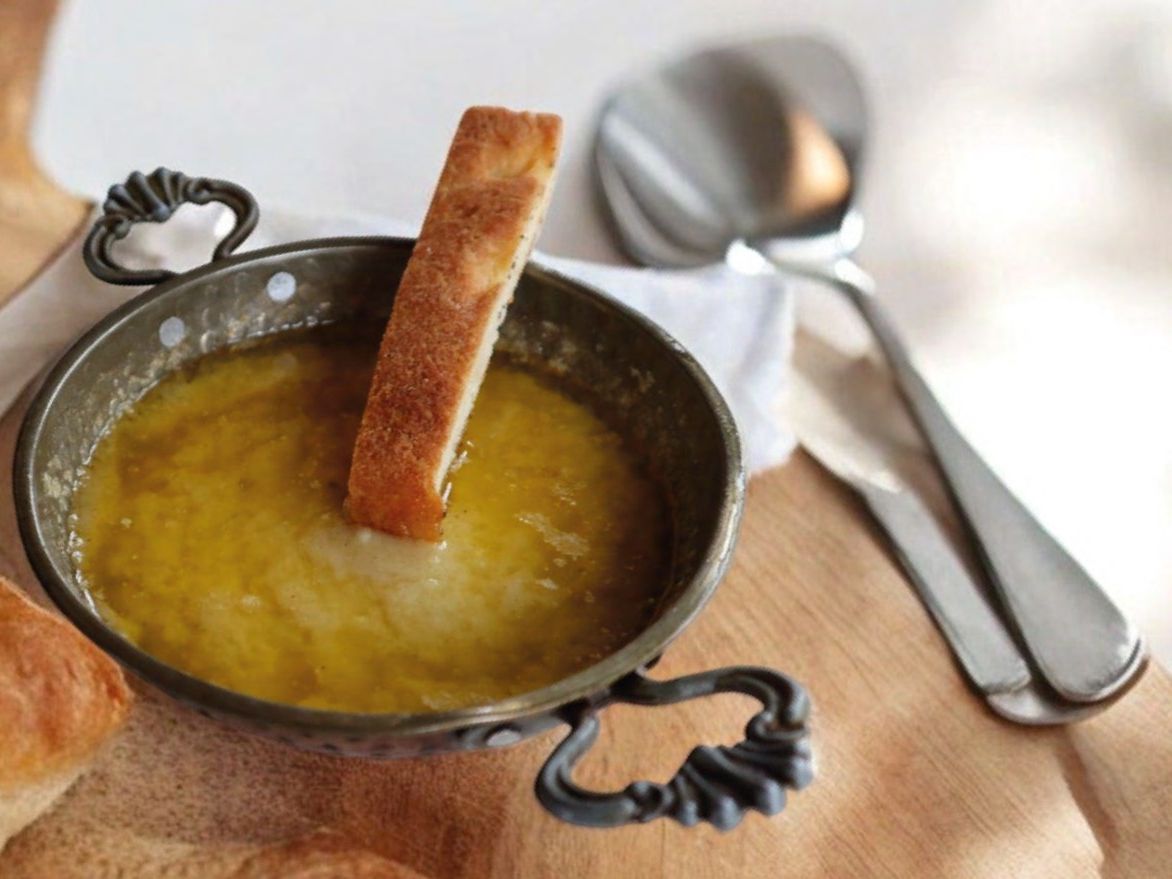
Ardahan-style peynir eritmesi (gorcola)
Local dishes of Ardahan
- Kaygana (omelette)
- Peynir eritme (melted cheese)
- Mısır papası (cornmeal porridge)
- Haşil
- Gaşo
- Könbe
- Sinor
- Bozbaş
- Lalanga
- Evelik sarması (stuffed sorrel leaves)
- Buglama
- Kelle paça
- Kuymak
- Hasuda
- Kurut
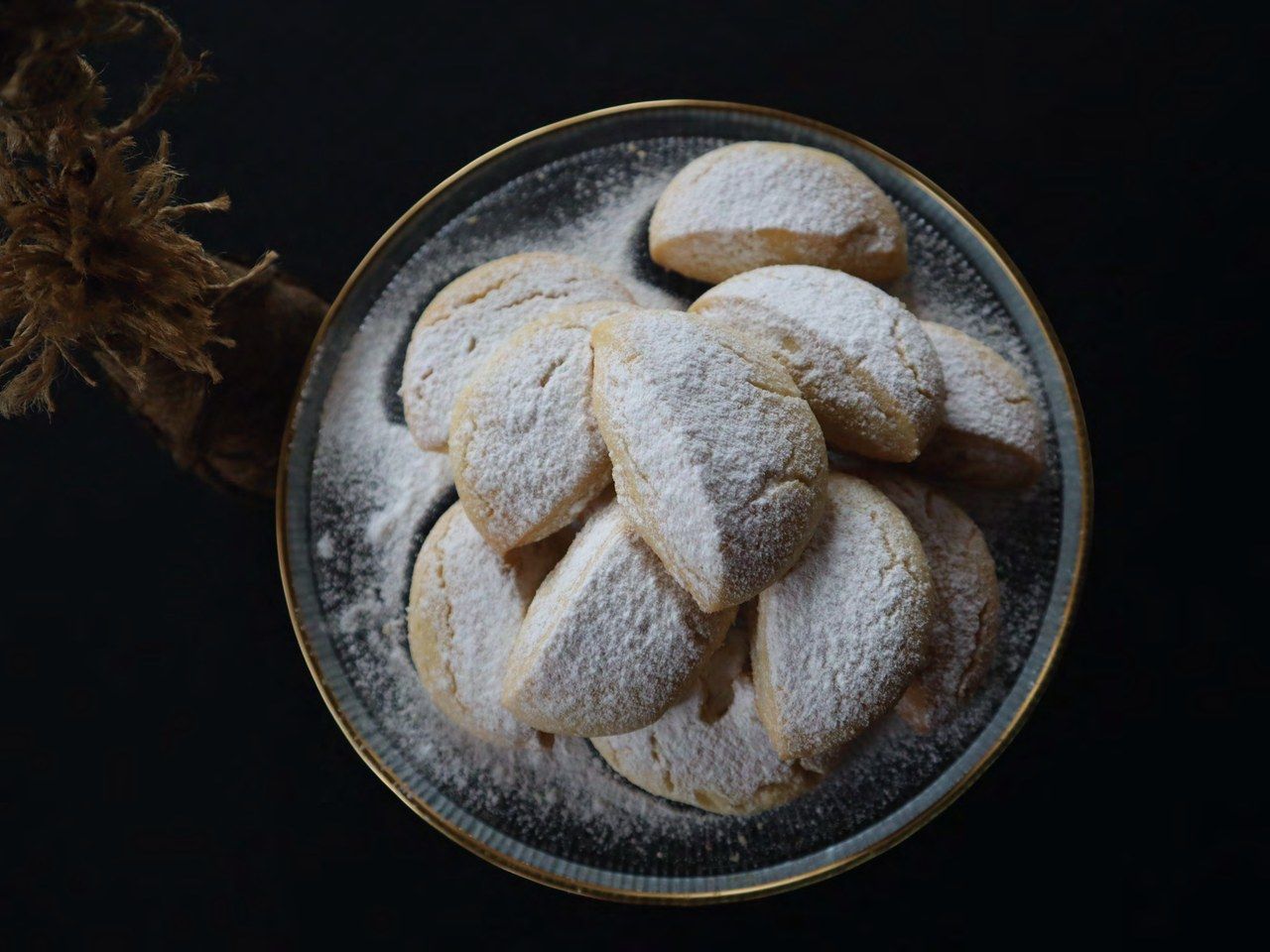
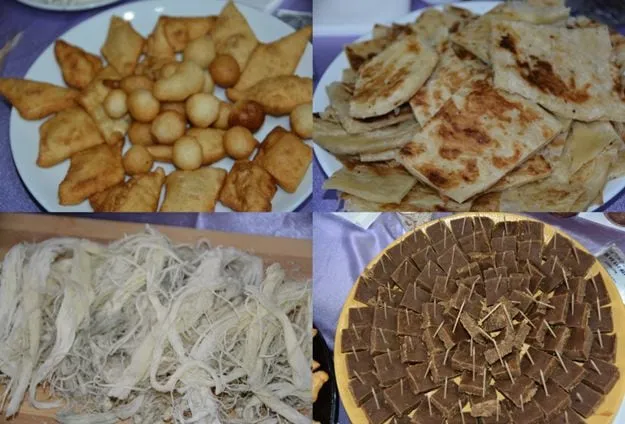
Ardahan şekerlemesi
Local desserts of Ardahan
- Lokma
- Un helvası (flour halva)
- Sütlaç (rice pudding)
- Şekerleme
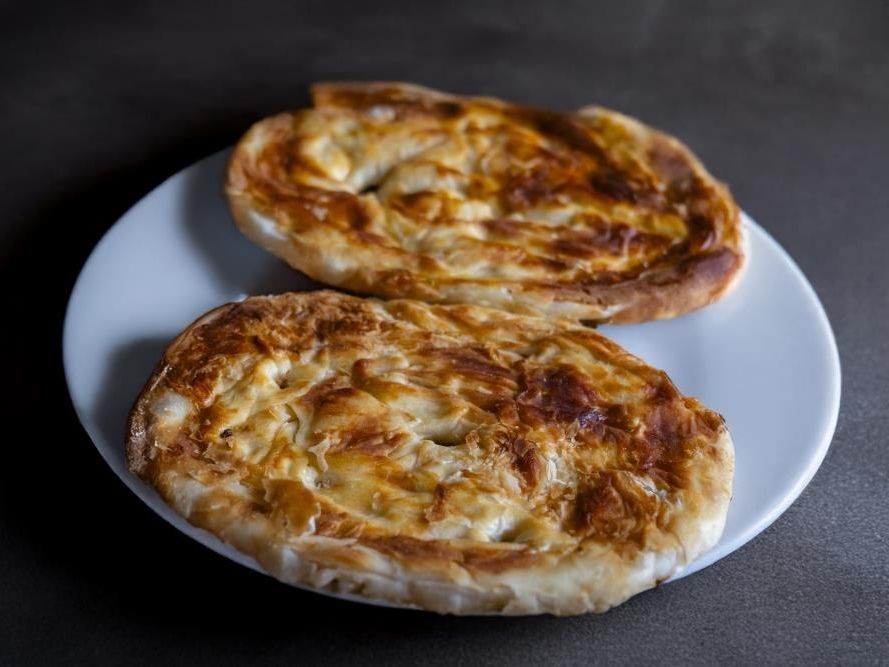
Feselli, one of Ardahan's local pastries
Local pastries of Ardahan
- Etli hengel
- Kayıtma
- Gevrek
- Lokum
- Bişi
- Feselli
- Kete
- Mafiş
- Kül pağaça
- Karnı çırık
- Pileki ekmek
- Gaçabur
- Erişte
- Kesme makarna
- Gagala
- Gözlük
- Katmer
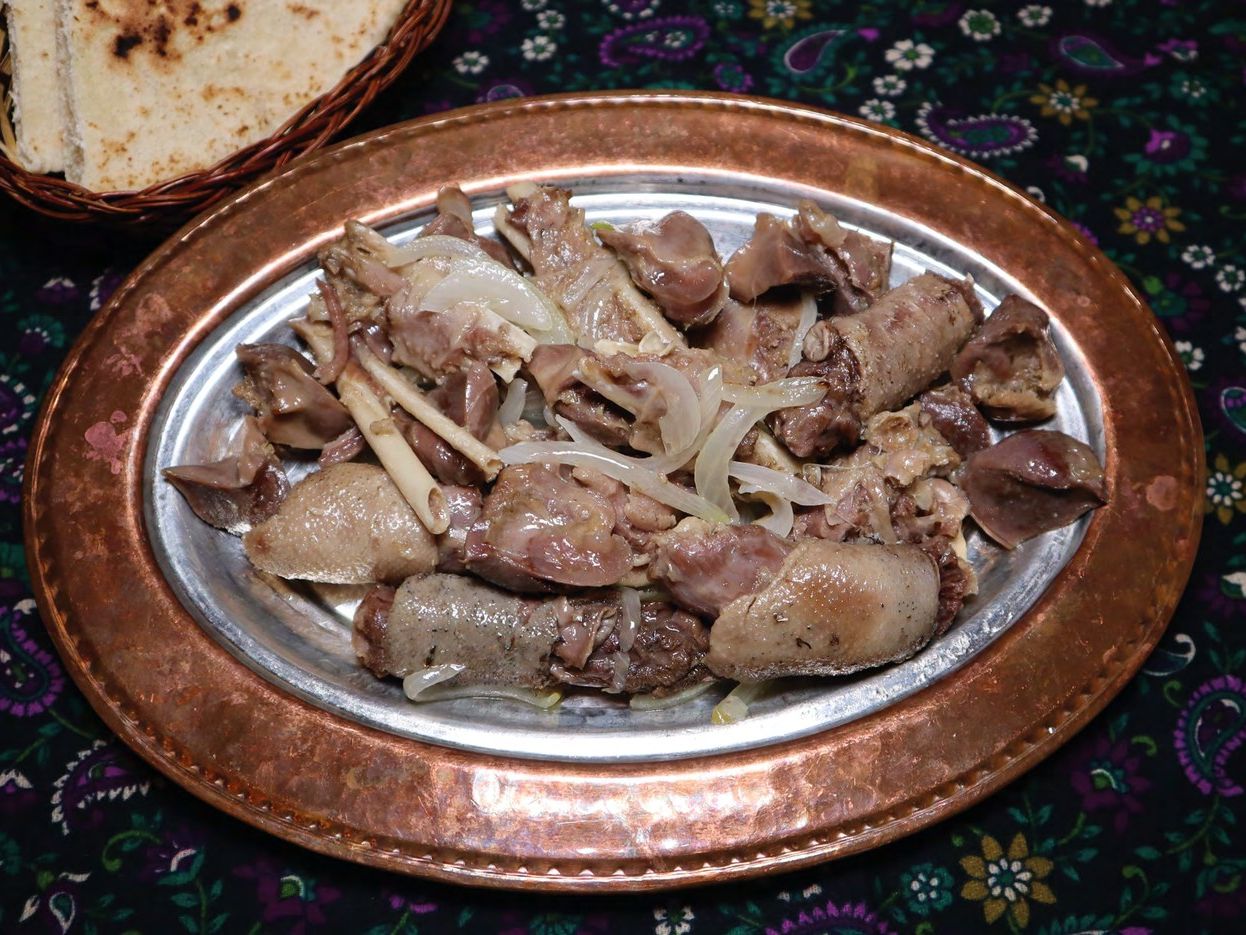
Gaçguç (goose offal) from Ardahan cuisine
Local kebabs of Ardahan
- Tandır kebap
- Kaçguç
- Sac altı kebap
- Tandırda kaz (tandoor-roast goose)
- Köz kebap
- Sac kebap
- Dolma kebap
- Dal kebap
- Dil kebap
- Mumbar kebap


Places to visit in Ardahan
Mevlit Efendi Mosque, central Ardahan
It stands in the Halil Efendi neighbourhood in the centre of Ardahan, about 150–200 m east of the castle. According to the inscription on its entrance, it was built in 1701. In recent years, however, the upper half of its walls and its roof have been renewed. Since you have come to Ardahan, don't leave without visiting the Mevlit Efendi Mosque.
Posof Central Mosque
According to the inscription on its minbar, the Posof central mosque was built in 1868–1883. It has a longitudinal rectangular plan and is built of cut stone, and its interior reflects Ottoman architecture. A date of 1771 written on a sarcophagus in the rectangular graveyard east of the mosque suggests that the mosque's history goes back further than the date on its minbar. We recommend you visit this historic building and take a photograph.
Derviş Bey Mosque
It was built on the plot next to the Brigade Command in Ardahan.
Above the main portal, in horizontal rectangular panels on both sides, the date AH 1285 / AD 1869 can be read. There is no biographical information about the identity of Derviş Bey, who gave the building its name. The panels on the right and left of the mosque bear the phrase “There is no higher honour than Islam” with the date 1285 below.
The mosque has a rectangular basic plan. The gallery in front of the entrance, with its supports and beams, divides the main space into two parts, so that it is covered inside by a wooden dome and outside by a pitched roof. The walls are 0.80 m thick, and the minaret, like the mosque, is built of regular cut stone. We recommend adding the Derviş Bey Mosque to your list of places to visit.
Ardahan Castle
Prehistoric research around Ardahan Castle has revealed a settlement from the Early Bronze Age (3500–2000 BC). Ardahan Castle was built in the mid-16th century, in the Ottoman period, on the orders of Süleyman the Magnificent, and has survived to the present day. Excavations at the castle, whose history goes back a very long way, show that the area came under the rule of various kingdoms.
It stands right on the left bank of the Kura River, which separates the Halil Efendi neighbourhood north of the city centre from the centre itself. The castle has a rectangular plan. Just above the entrance arch, its date of construction is given as 1544. The walls forming the rectangle are 745 m long and are reinforced throughout by many square-based and polygonal towers.
You can share a photograph taken at and around Ardahan Castle with your loved ones and catch their interest. And when you are at this historic site, you will feel as if you have stepped into history.
Savaşır (Cancak) Castle
It stands on a pointed hill surrounded by valleys on three sides, south-east of the village of Savaşır (Cancak) in Posof district.
Kinzi Castle
A castle about 30 km west of Ardahan, north of the village of Bağdeşe (Kinzodamal) and south-east of the Bülbülan highland pasture. We recommend visiting this castle, which blends into nature.
Sevimli Castle
It stands on a steep, peninsula-shaped hill in the Kura valley, about 500 m south of the village of Sevimli (Vel), some 18–20 km south-east of the centre of Hanak district.
Kalecik Castle
It was built on steep ground about 450–500 m south of the village of Kalecik in Göle district, where the valley formed by the stream coming from the village meets the Kura valley.
Şeytan Kalesi (Devil's Castle)
This castle near the village of Yıldırımtepe in Çıldır district is thought to have been built in the Middle Ages. It was built on very steep ground in the Karaçay valley, about 1.5 km north-east of Yıldırımtepe, which is 1 km from Çıldır.
Kurtkale
It is on the Georgian border, 1 km south of the township of Kurtkale, about 36 km north-east of the centre of Çıldır district. There is no certain information about the history of Kurtkale, which also gave its name to the nearby township, or about where its name comes from.
Kazan Kale
It stands about 12–13 km north-east of Ardahan, on the right of the Kura valley as the river flows, on a tongue-shaped rise bounding the valley. Its date is unknown, but there are traces of old settlement around it.
Altaş (Ur) Castle
It was built on a pointed hill east of the village of Altaş (Ur), at the 18th kilometre of the Ardahan–Hanak road. Historical sources give only its name and location, and its original date of construction is uncertain, but it appears to have existed since the 7th–8th centuries.
Kırnav Kale
It stands on the bank of the Hanak stream, on the Ardahan–Hanak road, about 400 m west of the village of Çayağzı, 5 km south of Hanak district. Its exact date of construction is also unknown, but it is notable that its surviving remains use the same walling technique as Ardahan Castle.
Akçakale island city remains
Akçakale Island in Lake Çıldır is a first-degree archaeological site as well as a place of natural beauty. The remains belong to an island city just west of the village of Akçakale, about 27 km south-east of the centre of Çıldır district.
Taşköprü inscriptions, Çıldır
An inscription on a large rock in the cliffs bounding the north of the village of Taşköprü, about 30 km south of the centre of Çıldır district. Thought to be the oldest inscription in the region, it is said to belong to the Urartian king Sarduri II.
Hamşioğlu Rasim Bey Mansion
The single-storey masonry building on the Ardahan–Göle road, on block 4, plot 1, covering a total area of 3,477 m², runs north–south. Its east façade is the main entrance front, with windows framed by pilasters and an entrance door. The building is now used as the service building of the Ardahan Provincial Health Directorate.
Dursun Soylu Mansion
Located in the Halil Efendi neighbourhood of central Ardahan, this building is one of the examples of civil architecture built at the end of the 19th century. The two-storey house is covered by a sloping pyramidal roof. The lower floor is closed and contains the WC sections. The main entrance is on the north, and the upper floor can also be reached by an external wooden staircase.
As in the region's other examples of civil architecture, the walls are thick and open to the outside with few windows: six on the upper floor, and on the lower floor three small slit windows on the south. The west front of the house has a small balcony resting on wooden supports. The lower floor is entered by the door on the east. The building is made entirely of regular stone blocks. Its doors, windows and walls are similar to examples of civil architecture in Sarıkamış, Kars, Gyumri and the Caucasian and Georgian regions.
Culture and arts in Ardahan
LOCAL FOLK DANCES
Almost the same dances are performed throughout Ardahan. The instruments are generally the davul and zurna, and in Caucasian dances the accordion and a drum called the nagara. The Ardahan area generally dances halay and bar-type dances. The social occasions on which they are danced include weddings, engagements, send-offs for conscripts, and occasions expressing feelings such as sorrow and joy. The main dances of our area are:
A. BAR DANCES B. SOLO DANCES
Ağır Bar Ondört
Sallama Şeyh Şamil
Temur Ağa Ay Gizi Bir Mezara Doldurur
Nare Beş Açılan
Lorke Karabat
Şeker Oğlan Hanım Yaylada
Sarı Seyran
Kaççıke
Tavuk Barı
Gazelo
Hoş Bilezik
Haran
Döne
Kıskanç
Kürdün Kızı
Ardahan'ın Yolları (Dümme)
Hafif Bar
Paşa Göçtü
THE ARDAHAN DIALECT
LEYAKIL DÜŞMEK: to be exhausted
ŞOGURT: drool
YEĞİN: hard-working, meticulous
ENDEZE OLMAK: to dawdle
TUSMAK: to cower
MURUSLARINI DÖKMEK: to pull a long face
YÜNGÜL: light
AĞZINI GÖZÜNÜ TUZ GİBİ YALAMAK: said of someone greatly missed
GOMBA DÖNMEK: to turn a somersault
GIGIL YÜZLÜ: said of someone with a small face
HERSLENMEK: to get angry
ABURSUZ: disgraceful
PÜRÇEK: lock of hair
GOLOP: wooden yoghurt pot
SİTİL: yoghurt pot
GAGAÇ: said of a thin person
BİTİG: puppy
CİRTAKOZ: mad
GANFET: boiled sweet
FARS: bad, disgraceful woman
ÇAĞILDAMAK: to laugh
CİCİP: sores at the corner of the mouth and on the face
TEŞT: basin
GEŞLENMEK: to freeze, to feel cold
SOYHA, ANDIR, MERET: said of ill-omened things
HINGILIM ATMAK: pointless moves and tasks
KÖÇMEK: to marry
DILDIBIL: stark naked
GURUĞ TAVUK: broody hen
HARO: larder, granary
OBBAZ: useless idler
SEĞİRTMEK: to hurry
PELLÜK: hopscotch
YAŞIK: wooden crate
GOPPAL: big nose
PORTLAK: bulging-eyed
VEDRA: bucket
BİBİ: paternal aunt
CUCUL: chick
DOY DOY: pigeon
PEŞ GÜN: dining spread
GUŞGANA: cooking pot
CİNCAR: stinging nettle
ZIRZA: latch lock
BİJLİ: pointed
PALAZ: cloth
HERZAL: wheelless handcart
ZAĞAR: small dog
İSTOL: low floor chair
GIJİK: curly hair
ÇİRNAĞ: nail
YEKTİ: orphan
MUÇURLAMAK: to crumple
ŞARILDAYAN: lightning
COPLANMAK: to swell
PEŞKİR: towel
GIDİK: kid (young goat)
GUDİK: small dog
KARTOPU: potato
BİŞKA: match
CAMUŞ: water buffalo
LAZUT: maize
BEDASIL: base-born
TEVÜR: kind, sort
GUNÇUL: tip
GULLEP: hinge
GODET: broom handle
GOTİK: buffalo calf
GAGAL: eye
SEKÜ: divan
FURĞUN: ox cart
KOR ARABA: solid-wheeled ox cart
GAŞGA: horse cart
İŞKAP: cupboard
CİCE: eldest sister
GİZLENGUGİ: hide-and-seek
BEYABUR: disgraceful
BAÇ ETMEK: to kiss
GIJGIRMAK: (of yoghurt) to sour
HARMUTLAMAK: to warm water
GİDİL: small
PİŞİK: cat
MOZİK: yearling calf
GARABAN: entrance of a village house
KERSEN: dough trough
GODA: big die
FANTİ: playing cards
HERG: ploughed field
HAROS: fallow field
PULUL: haystack
GALAMAK: to burn
GALAK: pile of dung cakes
KOTETE: stool
CEMSE: military convoy
KAVÇAL: long jaw
NİGART: hen's beak
TAR: hen roost
ÇİMMEK: to bathe
TEREK: shelf
GUZUK: hunchbacked
DILLO: flighty
ÇIKMAK: to tear
GATAKLAMAK: to chase away
MURUSLARINI DÖKME: to pull a long face
MÜRGÜLEMEK: to sleep
GAJ GÖZ: blue-grey eyes
CİNDAL: kitten
GORUĞÇU: field guard
LOBYE: beans
GIJO: pine cone
BED: ugly
CANCUR: plum
LIBBIZ: penniless, broke
KAYIŞ: belt
TELLÜK: woollen skullcap
MİNTAN: shirt
ÇENKÜRMEK: (of a small dog) to yap
GOCİK: coat
ŞOŞARTMAK: to exaggerate
ŞUŞLANMAK: to lie about too long
AĞBUN: manure
AKHORA: a place nearby
BADİYE: wide-mouthed bowl
BULUZ: dress
CİCLOBA: stye
ÇİNÇAVAT: miser
DEYHORA: pointer word for somewhere far
GÜZGİ: mirror
ĞUĞUN: crying
HELHEL: scatterbrained person
AGOZ: furrow left by the plough
JUJUN: pleasant itch
KERSEN: dough trough
KOLOPA: hollowed-out container
KÜSGİ: wooden pole
GARAVUL: watchman
LÖK: big
PÖRÇÜK: where the scythe blade is tied to its handle
SOKO: mushroom
SAKO: sleeveless jacket
ŞÜŞİT: funnel
ŞİNEL: overcoat
ŞÖHE: black bead
TAPUL, PULUL: bundle of hay
TAT: heel of a sock
TORHOLA: egg without a shell
TIĞ: heap of straw and grain
DINAZA: mockery
ÜLEŞMEK: to share out
YABA: five-pronged wooden pitchfork
ZAĞ: sharp, pointed
ZABUN: poor
ZANGAL: long footless sock
ZEDA: unploughed edge of a field
GUZUK: hunchbacked
ZURGANA: crooked-bodied
ZENNE: woman
ZUBUN: shirt
POCİLEMEK: to strike an axe on stone
MÜRGÜLEME: to doze off while sitting
TAĞAYİRLENME: to faint
CENÇİKLERİN GEVŞEDİ: you liked it
SINAMA: trying, testing
LOCAL LEGENDS
THE LEGEND OF THE UĞUZ STONE ON THE KURA
Between the village of Nekeleye in Ahıska and Hırtıs, on the Kura river coming from Ardahan, there is a cut stone called the Uğuz stone, as tall as two doors. Two brothers of the Uğuz people cut this stone, as big as a great rock, from a quarry and brought it here to build a bridge. After cutting the stone and setting it on the bank of the Kura, they went home for lunch. Meanwhile, a man who was small compared with the Uğuz came to their house as a guest. The Uğuz horse's nosebag held a somar (about 320–330 kg) of barley. Having filled the horse's nosebag, which to the Uğuz looked like a huge kilim, the small man, not strong enough to lift it, made the horse lower its head and easily slipped the barley-filled bag over it. Seeing this, the Uğuz mother said to her sons: "In the end, these people will take over the world and eat it up." Having seen with their own eyes, in the nosebag incident, how the small man achieved great things with his strength, the two Uğuz brothers gave up building the stone bridge they had wanted over the Kura. Later those tall, giant Uğuz died out over time because of their naivety and their lack of guile. The Uğuz rarely slept, they say, but when they did they slept for seven days without a break; the saying "he has lain down to an Uğuz's sleep" comes from this.
THE OLD CITY AT THE BOTTOM OF LAKE ÇILDIR
Long ago there was a city at the bottom of Lake Çıldır. Its lord lived at Akçakala. This city, built in a hollow, had a fountain with nine twist taps. The lord said, "Those who draw water from the fountain day and night must never forget to close it, or the city will flood." The men and women of the city obeyed this command. One day, as evening darkness fell, a girl filling water at the fountain was told the good news that her elder brother, who had been away for seven years, had come home. Filling water from one of the nine taps, the girl ran home in her joy and forgot to close the tap. That dark night, as water flooded the houses in the low ground, the place of the nine-tap fountain could no longer be seen. When those whose houses were a little higher realised what was happening, they fled uphill, holding their children by the hand, taking nothing with them. The next day only the dome of the church could be seen, and by evening that too was under water. Those who escaped the city alive came to the island of Akçakala. Lake Çıldır came into being from the water of that nine-tap fountain at its bottom. If the lake's outflow did not run from Taşbaşı (in the south) towards Zarşat, Akçakala island and the other villages would have been flooded too.
THE LEGEND OF THE UĞUZ MEADOW AND UĞUZ MOUNTAIN
The old people say that even before the Georgians, before the Cınıvız (Genoese-Romans) appeared, a people of very large build called the Uğuz (Oğuz) lived on Uğuz Mountain and the highland pastures around it. These Uğuz had a lord who owned the whole of Ardahan and Akhalkalaki, also called Cavk, and Zegan (the Ilgar and Cin Dağı areas of Posof and the foothills of the Arsiyan mountains on the Şavşat border). The winter quarters on and around Uğuz Mountain and on the Kura were this lord's private pasture. The other mountains and places mentioned were then all pine and forest. Every summer the lord had the Uğuz meadow beside Uğuz Mountain, from which 300 cartloads of hay were cut each year, mown by one Uğuz. The mower was a very big man who spent the summers here. This Uğuz would both mow and stack the 300 cartloads of hay from the meadow in a single day. One summer day, while he was mowing with his scythe, his sister brought him his lunch. Working away in the heat, the Uğuz, the steam of his sweat clouding his eyes, worked furiously in a thick patch of the meadow. He did not see his sister approaching with the saddlebag of lunch on her shoulder, and cut her in two along with the grass without even noticing. When he reached the end of the row and tried to strike the whetstone he took from his belt against his scythe, he saw that the scythe was red with blood. Lamenting, "Have I killed an animal?", he went straight back along the row, and what should he see but that he had cut his sister, who had brought his lunch, in two. In his fury he struck the whetstone on the ground, and half of the whetstone, made of white stone, stuck into the meadow; the part still above ground today is taller than a man. Beating his hands on the ground and dropping his scythe, he quickly joined the two halves of his sister and buried her at the foot of the whetstone. Then in his grief he climbed to the top of Uğuz Mountain and died there.
THE LEGEND OF THE BULLET SOLDIER
A heroic Mehmetçik (Turkish soldier) is on guard at the border post at Secede in Posof district. He hears sounds, and the enemy appears on the hill opposite. He fires his rifle so his comrades will hear, but before they arrive the enemy surrounds him. The Russians are met with a hail of bullets. This village came to be called "Kurşun Çavuş" (Bullet Sergeant).
THE LEGEND OF TEKÇAM (THE LONE PINE)
In the mountains of the village of Ovapınar, attached to our provincial centre, a forested area disappeared over time, but nobody touched one pine tree. Local people, who saw candles burning around the tree at night, believed the pine was sacred and came here to make wishes. One day, however, a man from one of the nearby villages decided to cut the tree down. He came to the tree and began chopping with his axe, and blood flowed from where the axe struck. Determined to cut the tree, the man did not give up; he felled it and took it home. That evening rain such as had never been seen fell on the area, and a flood swept through the man's village. The flood carried away only this man's house and family and harmed no one else. Today a fountain called "Tekçam" flows where the tree stood, and when there is no rain the local people come here to pray for rain.
THE HOCA
In the old days hocas (religious teachers) were not paid a salary. Three hocas were guests at a house, and supper was light. One of them got hungry after the night prayer and pretended to talk in his sleep:
"Three mullahs have come to the door, send a gift to your friend, let halva come for the night, topar laha," he said. The host replied:
"What you say is right, but we don't have that. Tuck your turban under your arm. Talk in your sleep, go on, talk in your sleep."
THE RAFTERS
A man on his deathbed called his children and said:
- When I die, cover my grave with old mertek (the timbers used to roof houses).
His children said the villagers would not approve and it would be a disgrace for them, but the man said that if they did not carry out his will he would not give them his blessing, and some time later he died. So his children carried out their father's will and covered the grave with old rafters.
Angels came to the buried man and said they would hold his first questioning. Ready for them, the man scolded the angels:
- What kind of business is this, brother, how many times do we have to give account? Don't you remember me? Can't you see these boards on top of me? he said, and sent the angels away.
BUJLANMA
A man whose mother fell ill took his very elderly mother to the doctor. Examining her, the doctor asked the old woman:
- What's the trouble, auntie?
The old woman said:
- My feet are bujlaniyir, son.
Understanding nothing of this local term, the doctor then asked her son, who said:
- What she means, doctor, is: my feet are gejerleniyir, I can't stand up straight.
Gejerlenme / bujlanma = numbness
FOLK SONGS
DİMME
On the roads of Ardahan
Roses bloom in its gardens
I loved such a sweetheart
When I was thirteen or fourteen. Alas, dimme dimme, coy love, dimme
I'm drunk already, don't you pour me wine. I saw Dimme by the stream
I had some good from her hand
I kissed twice, I loved once
And from her I saw faithfulness too. Alas, dimme dimme, coy love, dimme
I'm drunk already, don't you pour me wine. Light the samovar
Take the tongs and stir it
My love has gone off sulking with me
Make her make up with me. Alas, dimme dimme, coy love, dimme
I'm drunk already, don't you pour me wine. I set the samovar red-hot
I turned the sugar to honey
Thinking that love would come
I sacrificed a ram. Alas, dimme dimme, coy love, dimme
I'm drunk already, don't you pour me wine.
BU GELEN NAHIR MIDIR (IS THIS THE HERD COMING?)
Is this the herd coming, ay maral maral maral (doe)
Is it the grain being gathered, are you a girl or a bride, maral
They said your love is coming, ay maral maral maral
Is the stopping place near, are you a girl or a bride, maral
A doe roams on this mountain, ay maral maral maral
She combs her hair as she roams, are you a girl or a bride, maral
The mountain is ours, the doe is ours, ay maral maral maral
What is a hunter doing here, are you a girl or a bride, maral
GÖLELİ GELİN (THE BRIDE FROM GÖLE)
Tell me, what have you seen of Göle?
You have seen the height of sixty girls and brides
You have seen the sheep that strayed from the flock. Bride from Göle, bride with hennaed hands
Bride from Göle, graceful bride
Bride with kohl-lined brows and eyes, bride with all ten fingers hennaed
The mountains of Göle, with vineyards and oaks
Inside them grow roses and violets
Parting from one's love is a hard thing. Bride from Göle, graceful bride
Bride with kohl-lined brows and eyes, bride with all ten fingers hennaed
If I went among them, what would they say?
They mock the ones they don't love. Bride from Göle, graceful bride
Bride with kohl-lined brows and eyes. The mountains of Göle can't be crossed for snow
Its waters are so cold you can't drink a bowlful. Bride from Göle, graceful bride
Bride with all ten fingers hennaed.
ÇAYDA ÇINAR AĞACI (TELLO) (THE PLANE TREE BY THE STREAM)
A plane tree by the stream, tello
Two sisters walk as a pair, tello
The elder is so-so, tello
The younger is a cure for the soul, tello. Hop tello, dear tello, dear tello
You've set me on fire, beautiful dear tello. A fish swims sideways in the water, tello
Don't open my wound, blood will flow, tello
What can a doctor do for this, tello
Death has come, the soul is going, tello. Hop tello, dear tello, dear tello
You've set me on fire, beautiful dear tello. On the bank of the Arpa stream, tello
Its lantern flowed and went out, tello
I can't bear this sorrow alone, tello
Let's share it half and half, tello
Hop tello, dear tello, dear tello
You've set me on fire, beautiful dear tello
ARDAHAN
How shall I praise you, Ardahan?
Your flat plain is wide, I want to roam it
When spring comes, the meadows open up
Like a rose garden, all kinds of flowers bloom. Anatolia lives on your butter and cheese.
Your herds and sheep come flock by flock
The highland pastures are yours, they gladden the heart
Your girls and brides join the halay and dance. The dadaş sing until morning, the drummer plays
Your highland water flows cool, spreading joy
Nuri said these words this way.
He roamed mountain and corner and gladdened his heart.
TOYUĞUM (MY HEN)
My hen was white, my child
Her skin was full of fat, my child
This time yesterday she was alive, my child
Curse the one who caught my hen
Woe to the one who stole my hen. My hen was speckled
Her wings were feather by feather.
She wasn't a hen, she was an elephant.
Curse the one who caught my hen.
Woe to the one who stole my hen. Aunt Zübeyde went up on the roof
She looked right, she looked left
She caught the hen and threw it in the pot.
Curse the one who caught my hen.
Woe to the one who stole my hen.
LAMENTS
THE ARDAHAN LAMENT OF 1915
They scattered Ardahan
They took ten thousand gold pieces in cash
Some fled by night,
Some drank poison,
The delicate girls and brides,
Blizzards blocked their way,
Mosque and masjid filled with wailing
"Agop" and "İvan" slaughtered the people,
They killed all the men,
The roses that had bloomed withered
They summoned its beys
Ardahan burned for its sins
You burned in disgrace, Ardahan
The snowy mountains opened in the night
What days you have seen, Ardahan
Where is your merriment, Ardahan?
The Cossacks bent your back
Where are your girls and brides, Ardahan?
Home of orphans, Ardahan
A court was set up there,
Where are your rich, Ardahan?
Ardahan that loved its guests
You ache at the sight of the Cossacks,
What you have seen, Ardahan
You have been laid waste, Ardahan
Source: Ardahan Governor's Office
History of Ardahan
The province's history: The oldest written document of Ardahan's history is the conquest inscription that the Urartian king Sarduri II (753–735 BC) had carved on the cliff at the village of Taşköprü, south-west of Lake Çıldır. The first Turkish settlement in the area began in 720 BC with the arrival of the Cimmerians, ancestors of the Kipchaks. In AD 628 the Arda Turks, a branch of the Khazar Turks and the source of the name Ardahan, took the area. Conquered by Alp Arslan in 1069 and brought under Seljuk rule, Ardahan joined the Ottoman Empire in 1551. Located in the upper Kura basin, the Ardahan, Göle, Hanak and Çıldır area formed the Ottoman “ARDAHAN SANJAK” until the Russo-Turkish War of 1877, known as the 93 War. The term “sanjak” (liva) then corresponded to today's “province” (il, vilayet).
Ardahan, which suffered Russian occupation in 1828–1855, was ceded to Russia by the 1878 Treaty of Berlin, together with Kars and Batumi as the “Elviye-i Selâse” (the three provinces), in lieu of war reparations. During this period of captivity there were uprisings in Ardahan here and there, but they were bloodily suppressed. Ardahan was returned to the Ottomans by the Treaty of Brest-Litovsk signed in 1918, ending 40 years of Russian rule. The joy of the first liberation of April 1918 in the three sanjaks officially called the “Elviye-i Selâse” did not last more than six months: after our army withdrew under the Armistice of Mudros, signed on 30 October 1918, the area was occupied by Armenians and Georgians. Ardahan then joined the provisional government called the Milli Şura (National Council), set up in Kars on 5 November 1918 as our first Müdafaa-i Hukuk (Defence of Rights) organisation, and for six months fought the Armenians to the east and the Georgians to the north. The Milli Şura government rejected the terms of the Mudros Armistice, and the 1st Ardahan Congress (3–5 January 1919) and 2nd Ardahan Congress (7–9 January 1919) opened the road to liberation. Ardahan was liberated from enemy occupation on 23 February 1921 by our army under Kâzım Karabekir Pasha and Halit Pasha.
Made a mutasarrıflık (sub-province) on 7 July 1921, Ardahan became a district attached to Kars province by Law No. 877 in 1926. In response to public demand and in view of developments in the region following the dissolution of the USSR, it regained provincial status by Law No. 3806 of 27 May 1992.
Source: http://www.ardahan.bel.tr/sayfa/28/ardahan-tarihi.html
Getting to Ardahan
Ardahan can be reached by air or by road. The nearest airport is Kars Harakani Airport, 89 kilometres away. From there you can reach Ardahan by hiring a car or by going to the bus station and taking a bus. For those travelling by bus, many bus companies run services to Ardahan from big cities such as Istanbul, Ankara and İzmir. Istanbul to Ardahan is 1,456 kilometres (about 16 hours), Ankara to Ardahan 1,100 kilometres (about 13 hours) and İzmir to Ardahan 1,690 kilometres (about 19 hours). By road, Ardahan can also be reached from the Black Sea coast road via Artvin and Şavşat. By rail, the Doğu Express from Ankara takes you to Kars, from where you continue to Ardahan by road.
Districts of Ardahan
- Ardahan (provincial centre)
- Çıldır
- Damal
- Göle
- Hanak
- Posof
Economy of Ardahan
Ardahan's economy relies heavily on livestock. Most farms keep animals, mainly cattle, and the extensive pastures and highland meadows are the basis of this activity.
The cold climate limits crop production; farming focuses mainly on staple crops such as potatoes, wheat and barley.
Dairy products are among the region's best-known assets. Much of the cheese known as Kars kaşarı is produced in Ardahan, especially in Göle. Goose meat and organic dairy products also stand out. Beekeeping is practised, but honey yield per colony is below the Turkish average.
Industry and tourism are limited; because of the cold climate and unemployment, the region has long seen people move away.


Comments
Loading comments…