
Bilecik
- Marmara Region
About Bilecik
With an area of 4,307 square kilometres, Bilecik is one of Turkey's smallest provinces, and thanks to its special position in the south-east of the Marmara region it is set to become one of the fast-growing cities. Placed on the map like a gateway opening onto its neighbouring regions, Bilecik is also a transition point where landforms and climate change between regions. The city, whose earliest recorded names were Agrilion and Belekome, was known in antiquity as "the pass of the peaks" (akra-ilion).
Besides its geographical position, the city of Bilecik also holds a very special place in history. The city has hosted great civilisations since antiquity, and within its borders lie the Söğüt area, where the foundations of the Ottoman state were laid, and the Bozüyük district, where the Battles of İnönü were fought. These two historic events have earned Bilecik the name of the cradle of both the foundation and the liberation.
A city that has grown up around the Sakarya river, Bilecik's most striking natural beauties are its broad forests, picnic areas, ponds and streams. Among the crops grown on its fertile soil, wheat, pulses, barley, maize, sunflowers, onions, green peppers, tomatoes, aubergines, walnuts, grapes, quinces, cherries and watermelons stand out. It is the leading producer of pomegranates in its region. Hops, grown widely in the area, are used in the brewing industry.
Forestry, mining, marble, ceramics and woodworking are also well developed in Bilecik. The marble quarries and the industrial plants in the city centre and in the Bozüyük district play a big part in the development of Bilecik's economy.
Bilecik's famous dishes and desserts
| Quail |
Traditional ways of eating are still alive in Bilecik Province. Grains come first in the diet, and most of the province's own dishes are made with dough. Some local people bake their own bread. Pide, bükme and hodalak are breads baked in the oven.
A bread called kömme is also made by burying it in the glowing embers of a freshly died-down fire.
Local people also make foods such as pasta, tarhana, couscous and erişte (noodles) themselves. In Bilecik, urban eating habits are steadily spreading, but the traditional diet and local dishes still hold their weight. Büzme, mantı with chickpeas and chicken, keşkek, ovmaç soup, mantı with lentils, kesme hamur, yufka börek cooked on the saç, yağlı yufka, su böreği, partridge kebab güveç, quail with dried beans, couscous pilaf, piruhi, samsı, beet molasses, saç kebabı, köpük helvası, hoşmerim, kıtırcı helvası, karacaoğlu helvası, grape sucuk with walnuts, mantı and kavurma are the main dishes particular to Bilecik.
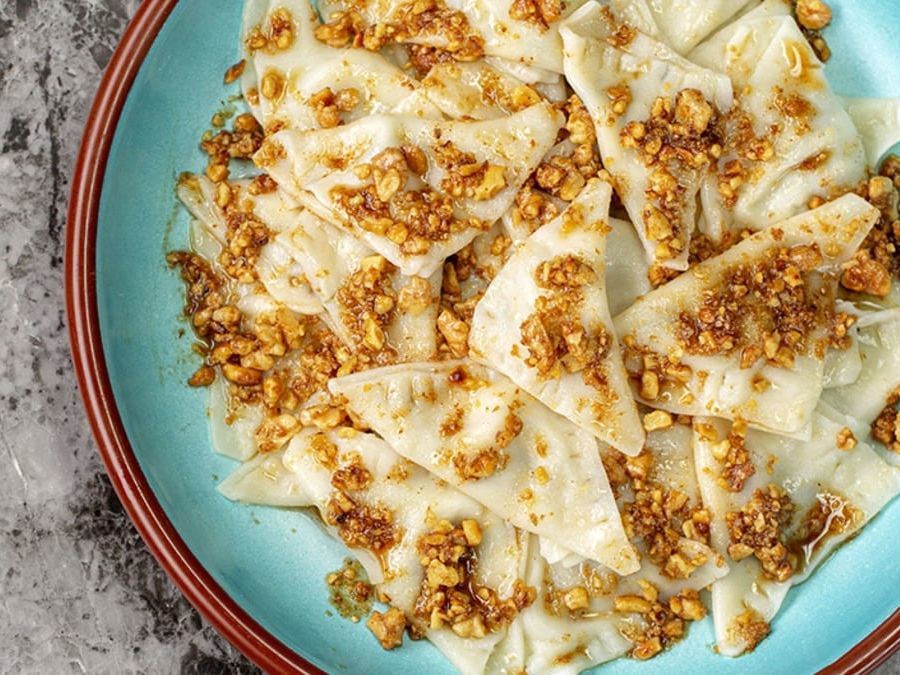
Piruhi
Small pieces cut from dough are filled with cheese and closed, then boiled and served with butter. It is especially associated with Bozüyük.
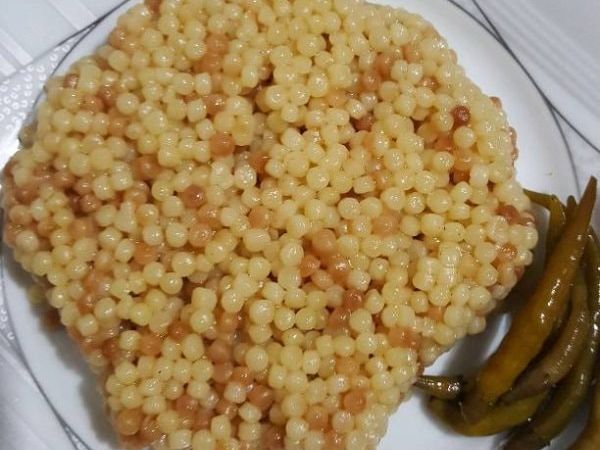
Kuskus Pilavı
A pilaf made with dough dried into small grains (couscous).
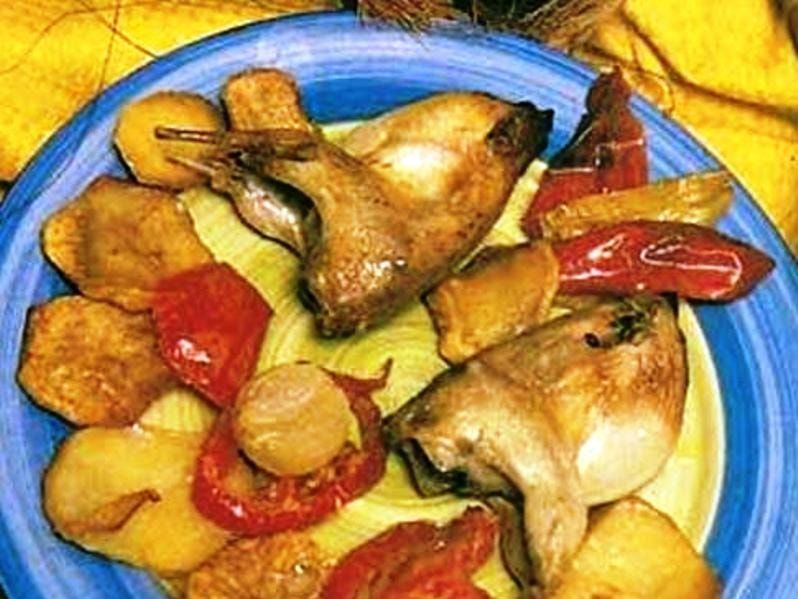
Bıldırcın Kebabı
A kebab made by cooking quails on a skewer or grill.
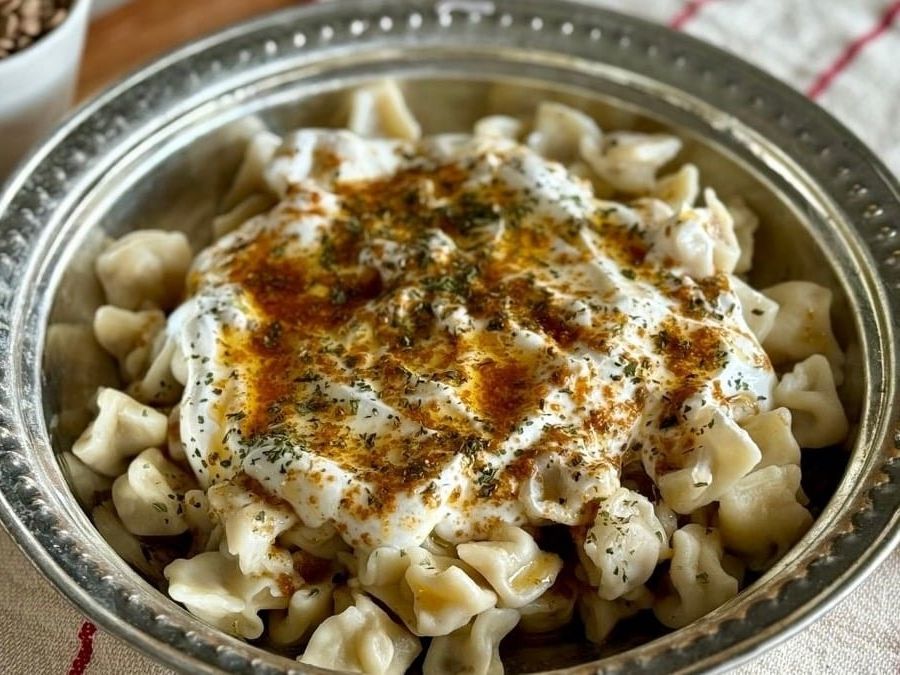
Mercimekli Mantı
Mantı dough filled with a lentil mixture instead of minced meat.
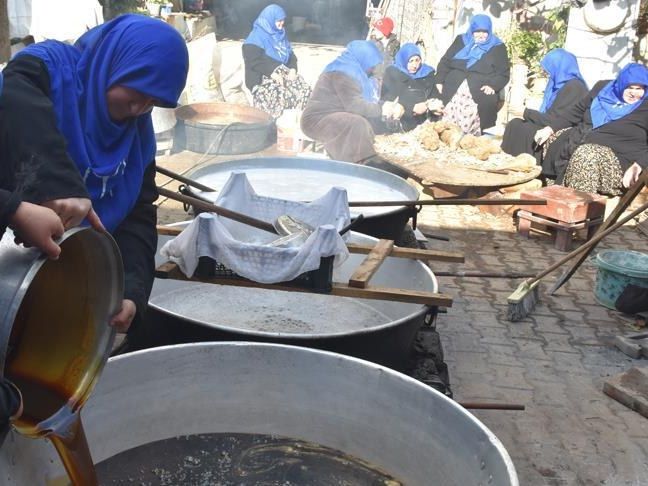
Sugar-beet molasses being prepared in Bilecik
Pancar Pekmezi
A molasses made by boiling down sugar-beet juice until thick.
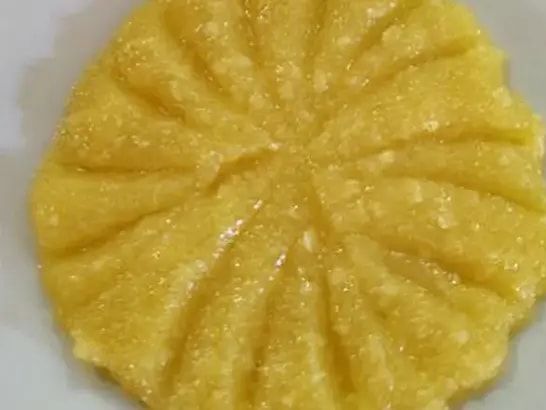
Höşmerim
A dessert without syrup, cooked with fresh cheese, flour and sugar.


Places to visit in Bilecik
Natural beauty of Bilecik
Bilecik has a very rich history. From the past to the present it has many castles, mosques, churches, archaeological sites, ancient cities and many other historic buildings. All of these historic sights of Bilecik deserve to be seen one by one, and we wish we could see them all. But apart from all this, Bilecik also has many natural beauties of its own, arising from its physical conditions, vegetation and climate. These are mostly plateaus, waterfalls, lakes, rivers, mountains and much more…
Kömürsu Yaylası, Bilecik

Kömürsu Yaylası is one of the natural beauties of the Bozüyük district of Bilecik. Lying 28 kilometres from the centre of Bozüyük, the plateau has many tree species such as fir, black pine, juniper, beech and poplar. Turning green when summer comes, the plateau also has many kinds of flowers. There are 4 or 5 springs on the plateau.
Kömürsu Yaylası, which is also important for winter tourism, covers about 90 hectares, about 39 hectares of which is open ground. The rest is covered in forest and has rough terrain. Its altitude is 1,700 metres.
Sofular Yaylası, Bilecik
Sofular Yaylası is one of the natural beauties of the Bozüyük district of Bilecik. Lying 25 kilometres from the centre of Bozüyük, Sofular Yaylası has tree species such as fir and pine.
At an altitude of about 1,600 metres, the plateau covers 104 hectares and is an important spot for tourism.
Kamçı Yaylası, Bilecik
Kamçı Yaylası is one of the natural beauties of the Pazaryeri district of Bilecik. Located in the district's Bozcaarmut village, Kamçı Yaylası is mostly covered in pine trees. It is generally used as a campsite or a place to rest. Bozcaarmut village, to which the plateau belongs, is 15 kilometres from Pazaryeri.
Selçik İçmeleri, Bilecik
Selçik İçmeleri (Selçik mineral springs) are one of the natural beauties of the Osmaneli district of Bilecik. Only 9 kilometres from the district centre, the springs can be reached by rail as well as by road. Flowing from 4 different fountains, the water is very rich in minerals. The water temperature is between 15 and 20 degrees.
The flow rate is 1 litre per second. The water is said to be good for stomach, liver, urinary tract, gall bladder and bowel complaints. It is also said to be effective in both dissolving and passing bladder and kidney stones.
Söğüt Çaltı Kaplıcası, Bilecik
Söğüt Çaltı Kaplıcası (Çaltı hot spring) is one of the natural beauties of the Söğüt district of Bilecik. The hot spring, in the district's Çaltı township, is 30 kilometres from the source. The bicarbonate water of Söğüt Çaltı Kaplıcası has a temperature of 38 degrees. With 5 litres of water flowing per second, the spring is used both for bathing and as drinking water. The complaints it is said to help include skin, stomach, rheumatism, gynaecological conditions and neuritis.
Historic places, mosques and tombs of Bilecik
Ertuğrul Gazi Türbesi: In Bilecik, famous for its tombs, you can first visit the Ertuğrul Gazi Türbesi (Tomb of Ertuğrul Gazi). Very close to the Söğüt district, the tomb was, according to the available information, built by Osman Bey. It was restored in the reign of Abdülhamid II.
Atatürk Köşkü: The Atatürk Köşkü (Atatürk Mansion) is one of the finest examples of civil architecture. It is 25 km from the Bozüyük district. On your holiday in Bilecik you can go to the Atatürk Köşkü, look around and have plenty of opportunity to rest there.
Çelebi Sultan Mehmet Camii: Standing firm since 1420, the Çelebi Sultan Mehmet Camii takes its name from its founder. The mosque, in the Söğüt district of Bilecik, has 12 domes. You can visit this historic mosque on your trip to Bilecik.
Kaymakam Çeşmesi: The Kaymakam Çeşmesi (District Governor's Fountain) is one of the works that bear witness to the city's history. It is in the Söğüt district and was built in 1919. It is also among the last examples of Ottoman architecture.

While visiting Bilecik's historic places, don't forget to explore its lovely plateaus. Uzunçam Yaylası, Pelit Özü Göleti, Kınık Şelalesi and Türbin Mesire Yeri make up the city's green spaces and offer visitors peaceful hours.
Museums of Bilecik
Söğüt Ertuğrul Gazi Museum
The Söğüt Museum in Bilecik is in Kayhan Mahallesi, on Ertuğrul Gazi Caddesi. The museum displays ethnographic and archaeological works. Before the museum was founded, research was carried out in the surrounding villages and objects were collected from local people for the exhibition. It has been open since 1981.
The Söğüt Museum has a single hall, and its architecture resembles a tent. Among the works on display are weighing instruments, archaeological finds and examples of Ottoman tiles, and of course ethnographic works can be seen too. If your travels take you to Bilecik, we strongly recommend visiting the Söğüt Museum. The Bilecik Museum can also be a trip where you see different archaeological works.
Bilecik Museum
Open since 2007, the Bilecik Museum is easy to reach because it is in the city centre. It displays ethnographic and archaeological works. The museum building is a registered historic building, built in the reign of Selim III. In its early years it was used as a police station and later as a prison; today it continues its life as a museum. The Bilecik Museum has a feature that sets it apart from other museums: it is not just a museum but also a place where scientific work can be done. Don't forget to visit the museum on your holiday in Bilecik.
Mosques and tombs of Bilecik
Çelebi Sultan Mehmet Camii
Standing firm since the 14th century, the Çelebi Sultan Mehmet Camii is in Bilecik, directly opposite the Hükümet Konağı (government house) in Söğüt. The Çelebi Sultan Mehmet Camii was built on a rectangular plan close to a square, and its minaret still keeps its original form. The mosque, which has been through many repairs up to the present, took its final appearance in the reign of Abdülhamid II. It is known to have had a large endowment in its early years. On the day you visit the Çelebi Sultan Mehmet Camii on your trip to Söğüt, you can also include the Ertuğrul Gazi Türbesi.
Orhan Gazi Camii
Orhan Gazi Camii (Bilecik): the Orhan Gazi Camii, in a steep-sided rocky valley about 500 m south of Bilecik, was built by Orhan Gazi in the early 14th century. The mosque was most probably built in 1331. It has a rectangular plan close to a square and is built of rough stone; part of the prayer hall is covered by a wooden roof and the middle by a dome. Because the dome is covered in lead, it is popularly known as the Kurşunlu Cami (Lead Mosque). On the right side of the north wall, a repair inscription was found beneath old layers of plaster:
"I planted this cypress so that it might stand, one day in the year 1229 (1813); whoever remembers me, may they grant a Fatiha to my soul. Ve inna el Gayüfül Haç İbrahim Bin Abdülselim." The domed prayer hall was extended with pointed arches to fit the four-iwan plan of the early Ottoman period; these arches also carry the weight of the dome. The mihrab is a simple niche. The mosque's former minarets are known from photographs taken in 1882. Only two round-bodied minarets rising on an irregular base have survived. The late-comers' portico was built recently and does not match the building.
Şeyh Edebali Türbesi
Şeyh Edebali, Osman Gazi's father-in-law and also his teacher, was an Ahi sheikh who specialised in hadith, Qur'anic exegesis and Islamic law. Living in the founding period of the Ottomans, Şeyh Edebali was born in Kırşehir. He began his education in his birthplace and continued it in Damascus. The Şeyh Edebali Türbesi (Tomb of Şeyh Edebali) has a very modest architecture. The sarcophagi of his daughter and wife are also inside the tomb. During your trip to Bilecik, don't forget to visit the Ertuğrul Gazi Türbesi and the Dursun Fakih Türbesi too.

Ertuğrul Gazi Türbesi
The tomb of Ertuğrul Gazi, in the Söğüt district of Bilecik, was first built as an open grave by his son Osman Bey. The grave of Ertuğrul Gazi, father of Osman Bey, founder of the Ottoman beylik, was later turned into a tomb by Mehmed I Çelebi. Although the present tomb was built in the late 13th century, its exact date is not known. After Mehmed I Çelebi, it was repaired and renewed by Mustafa III in 1757 and then by Abdülhamid II in 1886. While repairing the Ertuğrul Gazi Türbesi, Abdülhamid II also added a fountain next to it. When you visit the tomb of Ertuğrul Gazi, who died in 1281 at the age of 93, you will experience the Ottoman founding period and its centuries of history more than you would by reading about them in books. During your trip to Bilecik, don't forget to visit the Dursun Fakih Türbesi too.
Dursun Fakih Türbesi
Dursun Fakih, who lies in the Dursun Fakih Türbesi in the Söğüt district of Bilecik, was Şeyh Edebali's son-in-law. Also Osman Bey's brother-in-law (their wives were sisters), Dursun Fakih took part in battles and conquests with Osman Bey and was the first kadı (judge) of the Ottoman state. Known to have come from Karaman, Dursun Fakih's grave was turned into a tomb in Söğüt after his death. Spending time in these lands where the Ottoman state ruled and visiting the Dursun Fakih Türbesi will draw you into a mystical atmosphere.
Other historic places in Bilecik
İnönü Şehitliği
The İnönü Şehitliği (İnönü Martyrs' Cemetery), one of Bilecik's meaningful stops, is within the boundaries of Akpınar village in the Bozüyük district. On a front where the Battles of İnönü were fought, the cemetery has 844 graves, with Turkish flags at the foot of each one.

Construction of the cemetery began in 1930 and was completed under the leadership of the Ministry of National Defence. In the very centre of the cemetery stands a marble monument. You can add the İnönü Şehitliği to your Bilecik itinerary.
Metristepe Zafer Anıtı
The Metristepe Zafer Anıtı (Metristepe Victory Monument) in Bozüyük, Bilecik, was built in the area where the Battles of İnönü were won. Erected in memory of the soldiers who fell in the battles, the monument is 24 metres high and made of reinforced concrete. The reliefs on the Metristepe Zafer Anıtı give information about the units and commanders in the battle. Commemorations are held in front of the monument every year on 1 April.
Uzunçam Yaylası
Uzunçam Yaylası in Bilecik is 14 km from the Pazaryeri district. It is a spot where you can both picnic and explore nature. A word of warning: the road up to the plateau is very rough… You may struggle to drive up in your car. But when you reach Uzunçam Yaylası, a beautiful natural view will greet you. There are no toilets or picnic tables on the plateau, so it is best for day trips. Still, if you want to go and stay for a few days, you can camp. You should definitely see Uzunçam Yaylası on your trip to Bilecik, and of course you can also visit the city's historic sights. The Ertuğrul Gazi Türbesi, the Kaymakam Çeşmesi and the Çelebi Sultan Mehmet Camii are just a few of the buildings that shed light on the city's history.
Türbin Mesire Yeri
Türbin Mesire Yeri is one of Bilecik's picnic and recreation areas. It is also conveniently located, 7 km from the Bozüyük district. Full of greenery and with oxygen-rich air, Türbin Mesire Yeri is a place where you can picnic and enjoy nature. Work has recently been done in the area, and visitor numbers have risen as a result. While visiting the city's historic fabric, such as the Ertuğrul Gazi Türbesi, the Çelebi Sultan Mehmet Camii and the Kaymakam Çeşmesi, you can also discover its natural beauty.
Kaymakam Çeşmesi
The Kaymakam Çeşmesi, with its aesthetic appearance, is in Söğüt, Bilecik. It was built in 1914, and its founder was Sait Bey, who was then the kaymakam (district governor) of Söğüt. The Kaymakam Çeşmesi is in Neoclassical style. Its outer face is a fluted vase, with troughs built around it. The relief star motifs beside the troughs are among its eye-catching details. The fountain's inscriptions have survived, with a separate inscription on each face. On your holiday in Bilecik you can make a short trip to see the Kaymakam Çeşmesi. The Ertuğrul Gazi Türbesi and the Çelebi Sultan Mehmet Camii are among the other places you can visit.
Mehmet Paşa Kervansarayı
The caravanserai at Vezirhan, 16 km from Bilecik, was built by Grand Vizier Köprülü Mehmet Paşa. Although there is no inscription giving its construction date, it is thought to have been built in 1655.
The caravanserai has a rectangular plan measuring 101.52 × 27.21 m. The middle part of the three-section caravanserai differs somewhat from the two side parts. This section was reserved for the entrance and built of stone and brick. On either side of it are two equal rectangular sections where carts and horses were sheltered. Closed to the outside, supported by buttresses and looking like a castle, the caravanserai was covered by a wooden hipped roof sloping to both sides. A row of wooden columns and beams inside carried the roof. The roof remained intact until 1912, after which it collapsed and the caravanserai was left to its fate. Hearths were set into the walls on both sides inside the caravanserai.
Raised platforms were built along the sides, higher than the floor. In this way carts and horses were kept in the middle, and travellers were accommodated on the two sides. Small, loophole-like windows were opened above the hearths in the walls.
Culture and arts in Bilecik
Literature of Bilecik
Şeyh Edebalı
Edebalı was born in 1208 in the city of Merv in Khorasan. He was Osman Gazi's father-in-law and one of the first Ahi sheikhs of Anatolia. Having spent his childhood in Khorasan, Edebalı completed his education in Damascus, studying under the great scholars of the age, and settled in the village of İtburnu near Eskişehir. In the founding period, Ertuğrul Gazi and Osman Gazi received great help from the Ahis, and especially from Edebalı, an Ahi sheikh. After meeting him in Söğüt (1281), Osman Bey often visited Şeyh Edebalı's dervish lodge in Eskişehir and benefited from his views. After the conquest of Bilecik, Edebalı was also appointed kadı (judge) of Bilecik.
Dursun Fakıh
Born in Karaman, he was a student of Şeyh Edebalı. Dursun Fakıh studied Qur'anic exegesis, hadith and Islamic jurisprudence. He was a Turkish scholar who witnessed the founding of the Ottoman state. By marrying Şeyh Edebalı's daughter he became his son-in-law, and Osman Gazi's brother-in-law (their wives were sisters). After Karacahisar was conquered on 28 September 1299, he read the Friday sermon in Osman Gazi's name and led the Friday prayer. In this way he declared to the world both that Osman Gazi was a free and fully independent head of state and that the Ottoman state was independent. Dursun Fakıh was the first imam-preacher and the first kadı of the Ottoman state. He wrote a work called "Gazavetname". He was a great Turkish figure who served the formation of national unity and a united national culture in Anatolia. He died in 1327.
Legends and folk tales of Bilecik
The legend of Osman Gazi's dream
"A state born of a dream: the Ottomans." Osman Bey often visited Şeyh Edebalı and listened to his advice. One night, when he stayed as a guest, he had this dream: a moon rose from the sheikh's breast, came and entered his own breast. A tree grew from his chest. It became so great a tree that its branches covered the heavens and its roots the whole world. Its shade covered the entire face of the earth. People gathered in the shade of that tree. The tree shaded the great mountains and the rushing waters flowing from their foothills. Osman Bey told Şeyh Edebalı his dream. Edebalı interpreted it like this: "My son Osman, may sovereignty be blessed for you and your descendants; my daughter is now lawfully yours."
A Bilecik folk tale
Once upon a time there was a padishah and his two viziers. While travelling they came to a spring. At the spring a young girl sat doing embroidery on a frame. The padishah liked the girl very much. "Let's see," he said, "is she as clever as she is beautiful?"
He asked the girl:
-My child, what are you working on?
-I am doing frame embroidery, sir.
-What does your father do?
-He has gone to make the few into many.
-And your mother?
-She has gone to make one into two.
-Hmm… Your house is very nice, my dear child, but its chimney is crooked?
-Its chimney is crooked, but it blows the smoke straight, sir.
-Well, my girl! If I sent you two geese, would you pluck them?
-Gladly, sir… The padishah falls into thought. This girl is very clever, but what did she mean?… He calls his viziers and says: "You will find out the answers to these. If you don't, it will go very badly for you!" The viziers start brooding darkly… In the end:
"Oh, why are we brooding? Let's ask the girl; once she gets a purse of gold she'll sing like a nightingale," they say, and go to the girl.
"My girl, will you tell us the answers to these questions?"
"Of course, but I want a purse of gold." They give her a purse of gold… The girl speaks:
"My father is a farmer; that is what making the few into many means. My mother is a midwife; she delivers babies. She makes one into two. By saying 'your house is nice but its chimney is crooked', the padishah meant 'you are beautiful but your eyes are crossed'. And I said 'my eyes are crossed but I see well'. He asked, 'If I sent you two geese, would you pluck them?' and I said 'gladly'. You are the two geese, and I have plucked you."
Bilecik mani (folk quatrains)
Married women: – Kiraz dalın eğmeli, Girls: – Bir taş attım camiye
Kirazını yemeli, Yuvarladı karşıya
Şu yetişen kızlara; Zamane gelinleri
İç güveysi girmeli… Yarım çanak turşuya!…
(Married women: "Bend down the cherry branch, eat its cherries; these girls who are growing up should take a husband who moves in with them…" Girls: "I threw a stone at the mosque, it rolled across the way; the brides of today are worth half a bowl of pickles!…")
Married women: - Hoca geliyor hoca, Girls: – Aynaya bakamadım,
Ayağı koca koca Tokamı takamadım,
Kızları küçük sanmayın Küçükken gelin oldum;
Onlar istiyor koca… Kocama bakamadım…
(Married women: "Here comes the hoca, the hoca, with his great big feet; don't think the girls are little, they want a husband…" Girls: "I couldn't look in the mirror, I couldn't put on my hair clasp; I became a bride while still young and couldn't look after my husband…")
Married women: – Ocak başında fıstık, Girls: – Alvardan atlasana,
Lambayı yavaş kıstık, Ispanak toplasana,
Zamane gelinleri; Yenge sana ne dedik?
Taze kavrulmuş fıstık Ağzını toplasana!…
(Married women: "Pistachios by the hearth, we turned the lamp down slowly; the brides of today are freshly roasted pistachios." Girls: "Jump over the wall, pick some spinach; sister-in-law, what did we tell you? Mind your mouth!…")
Customs and traditions of Bilecik
Many customs and traditions have been abandoned because of modernisation. Superstitions are so few as to be almost non-existent. The father is the dominant figure in the family, and the mother and children respect him. People living in villages are more attached to customs and traditions. In the villages, sons usually stay in the family home when they marry, while in the district centres a separate home is set up. A religious marriage ceremony is held alongside the civil one. Locally woven clothes are no longer worn; ready-made clothing is more popular. Of the local garments, the yeldirme, kirlik, slippers, örtme (head cover), scarf and mahrama are still worn. On religious holidays, at weddings and on important days, the bindallı, şalvar, şıtari, elmasiye, cepken and zeybek costume are worn, and a poşu (head scarf) is tied.
Preparations that begin with a birth
From the start of her pregnancy, the mother-to-be begins "setting up a trousseau" for the baby. At the same time the bride's mother and the groom's mother knit clothes for their coming grandchild according to their means and have quilts sewn. The in-laws agree between them that one buys a cradle or cot and the other a pram. Along with the baby's things, the girl's mother also buys clothes for her daughter and son-in-law. A week before the birth, the bride decorates the bedroom, and the baby's cot is prepared and decorated. The birth is then awaited with excitement. In our area births take place at home or in hospital. The mother and baby brought home from hospital are put in the new mother's bed, decorated and prepared in advance.
Relatives, neighbours and friends who hear of the birth come to wish them well, bringing foods such as milk, rice pudding and börek and gifts for the baby. Visitors are offered lohusa şerbeti (new mother's sherbet) and cake. The baby is named on the first Friday after the birth. Between morning and noon, a relative recites the call to prayer and whispers the child's name into its ear three times, and in this way the child is named. When the baby is a week or 10 days old, a "baby mevlit" is held. The day before the mevlit, the mothers of the bride and groom bring the baby trousseaus they have made and display them on a table. At the mevlit, rose water is sprinkled on the guests. Before the end of the mevlit the baby is put in a blanket and the paternal and maternal grandmothers rock it; then the other guests rock the baby too. After the rocking, the guests are served cake and tea. When the baby is twenty days old (half of forty), it is taken out "kırk uçurmaya" (to see off the forty days). The bride, with her mother and other relatives, takes the baby on hand-kissing visits, starting with the paternal grandmother. It is customary in the houses visited to put an egg and sugar beside the baby. After the paternal grandmother, the maternal grandmother and other relatives are visited. Whoever sees the baby's first tooth buys it a gift such as underwear or a toy.
Circumcision tradition in Bilecik
Circumcision celebrations are held in the summer months, when schools are on holiday and the weather is fine. The usual age is primary school age; if the child has no younger brother, he is circumcised by the age of 10, and if he has one, they may wait until 12 for the brother to grow up. Families seldom circumcise very young children so that the child knows he has been circumcised. Some time before the circumcision, special clothes are bought for the boy: a suit, shirt, hat and cape. Invitations are printed and handed out. A few days before, the circumcision bed is prepared: carpets are nailed to the wall and ceiling, and the bed is decorated with lace-edged crêpe, crêpe paper, balloons and lanterns. Circumcision ceremonies are generally held on Saturdays and Sundays.
A henna night is held a few days before the ceremony. On the henna night the women celebrate among themselves, and henna is applied to the boy. Candles are lit in the henna mixed beforehand, and the tray is put in the boy's hands. The guests present pin money on the boy. The next day the boy is dressed, the guests arrive, and the boy and his friends are driven around in cars, sometimes on horseback. After the tour, the boy will not get off the horse or out of the car: he asks his elders for gifts and gets down only once he receives the gift he wants. A mevlit is recited at home and the boy is dressed in a circumcision gown. After the mevlit a prayer is said, and the circumcision is completed amid cries of "Allahu akbar". If only one boy is being circumcised, a rooster is also slaughtered. Once the circumcision is done, the guests wish the boy a speedy recovery and leave money and various gifts. Guests are served a meal or cake and soft drinks. Entertainment goes on until the evening so the boy does not get bored.
Asking for a bride and engagement in Bilecik
In our province, marriage, once arranged under family pressure, has gradually changed and now comes about after a young woman and man like each other and get to know one another. When the man's family believe their son can support a home, they ask whether there is someone he likes. If there is, that girl is asked for first. If not, the man's relatives go to see a girl they consider suitable. If they like her, they say they will trouble the family again; on the second visit they take sugar or chocolate as an "ağız tadı" (sweet token) and go to ask for the girl on the agreed day. One of the matchmakers asks for her, beginning with "By God's command and the Prophet's word". If the request is accepted, the sign is "if it is fate, it will be"; if not, it is turned down with various excuses.
On the Thursday or Sunday evening after the girl has been asked for and a positive answer received, her family's house is visited again. On this visit, called "mendil alma" (taking the handkerchief), the girl is given some money to spend on her trousseau and a promise ring is put on her finger. Then the engagement day is fixed. Some time before the engagement, the two families go shopping together for the clothes the bride and groom need. The day before the engagement, the clothes and dried fruit and nuts bought for it are brought to the girl's house. Two or three hours later the same day, the girl's side takes a bundle (bohça) to the boy's house, containing various gifts for the groom and his relatives. The engagement is held in a hall or at home. The engagement rings are put on by an elder of the family in front of the guests. After the boy's side puts on the girl the jewellery they have bought, such as bracelets, earrings, gold and a watch, the couple kiss the guests' hands. The newly engaged couple step out and dance the karşılama together. Then the men leave, leaving the women to celebrate among themselves. The gifts that arrived the day before the engagement are shown to the guests. The fruit and nuts that came with the gifts are eaten a day later at a party held by the girl's friends.
Wedding tradition in Bilecik
After the engagement, wedding preparations slowly begin. The girl completes whatever is missing from her trousseau. The boy's side buys household goods according to their means, and if the girl's side is well off, they buy a bedroom set. Once everything is ready, the wedding preparations begin. They go shopping and buy clothes such as a wedding dress and coat for the girl and a groom's suit for the boy. Wedding invitations are printed and handed out. Three or four days before the wedding, the boy's side goes to collect the trousseau. The trousseau is laid out in the bride's home by relatives of both the girl and the boy, and anyone who wishes can come and see it until the wedding. The day before the wedding, the girl is taken to the bride's bath (kız hamamı) with her friends, where they both celebrate and bathe. On the way back from the bath the girl is taken to the hairdresser to have her hair done and is dressed in the bindallı and şitari of the local costume. In the evening the invited guests arrive and there is a party; towards its end the henna is mixed, candles are lit, a red headscarf is laid over the bride's head, and henna is applied to her palm to the sound of hymns while she is made to cry.
After the henna is applied, the guests present pin money on the bride. After some more celebrating together, the henna night comes to an end. Around midnight, the girl's friends and relatives go singing folk songs to "haklamak" (tease and get the better of) the groom's relatives, and after a while they return to the girl's house. On the day the bride is fetched, she is prepared for the wedding. The boy's side comes to fetch the bride by bus and taxi. The bride kisses the hands of her mother, father and the relatives present, gets into the decorated bridal car and is taken to the wedding hall. The civil marriage is performed in front of the guests gathered in the hall. The women celebrate among themselves for two or three hours. At the end, the bride and groom are put in a car and taken home. After the evening prayer the groom is brought home amid cries of "Allahu akbar". A prayer is said in front of the house, and the groom is ushered in with thumps on the back. A few days after the wedding, the girl's family goes to the boy's house for a meal, and in this way the bond between the two families is strengthened.
Funeral customs in Bilecik
When a sick person's condition becomes serious, their relatives are informed. Before the last breath they are given Zamzam water to drink. The Qur'an is recited at their bedside. If they can speak, they are helped to say the Shahada. After death, the jaw is tied up with a muslin cloth passed under the chin and over the head. If the eyes are open they are closed. The big toes are tied together, a bed is laid on the floor, and the body, once undressed, is placed on it with the feet facing the qibla, and covered with a sheet. If the death happens at night, relatives keep watch until morning. The death is announced by the sela from the mosque. Meanwhile the washing, the shroud and the grave are prepared. The body is washed at home with soap and a washing loofah, then shrouded and placed in the coffin; a towel is tied to the head end of the coffin for a man, or a lace-edged headscarf for a woman. After a religious ceremony at the house, the congregation present carries the body to the mosque.
There it is laid on the musalla stone. If the funeral prayer is to follow one of the daily prayers, a few people are left to watch over the body. After the daily prayer, the funeral prayer is performed and the body is taken to the cemetery. It is lowered into the grave, dug beforehand, with the help of three relatives, and placed with its face turned towards the qibla. When the burial is finished, two wooden boards identifying the deceased are set at the foot and head of the grave. The Qur'an and prayers are recited. At the end of the religious ceremony, the imam stays at the graveside and recites the telkin prayer. The Qur'an is recited at the house of the deceased for seven days, and at the end a prayer is said together with a mevlit. Later, mevlits are held on the nights of the 40th and 52nd days, and sweets and rose water are handed out to guests.
Seeing off soldiers in Bilecik
Young men of military age start to gather 10–15 days before enlistment, once their call-up papers have been served. Every evening they meet at the house of one of the young men or one of their relatives and eat together. On the evening before the morning they leave for the army, each young man eats and sleeps in his own home, and the head of the household gives him advice. Early in the morning the young men gather in the village square and say goodbye to their relatives, who put money in their pockets as pocket money. Close friends put things like a baby's dummy in their pockets. In some villages, cries of "Allahu akbar" are raised as the soldiers are taken from the square to the bus. In some villages the send-off is held with drum and zurna, and the folk song "Hey garip yol göründü" ("Hey, poor soul, the road has appeared") is played and sung. Once he has said goodbye, the young man leaving for the army does not look back, and once he has boarded the car or train he does not get off, whatever happens. He does not take a step back; that is considered unworthy of a brave man.
Holiday traditions in Bilecik
The religious holidays are celebrated with much the same festivities and customs. Before the holiday there is joy and excitement in every home. The head of the household buys new clothes for everyone in the family, and the finest dishes are cooked. The head of the house sets aside a day to go to the market for all this. The day before the holiday, lokum and külçe pastries with butter, sesame, poppy seed and walnuts are baked in the ovens, and baklava, burma and kadayıf are prepared. Men do not go to work that day: the eve of the holiday is considered an unlucky day, and people stay off work so that there are no accidents and no blood is shed. It is believed that on the eve of Ramazan Bayramı even the wolves and the birds fast. On the eve of the holiday the women apply henna. In the morning the men go to the holiday prayer in their new clothes. After the prayer, holiday greetings are exchanged so that everyone who has fallen out may make up. The oldest man in the village stands at the head, and those younger than him kiss his hand.
They line up to have their hands kissed in turn, and this continues in a line, so that everyone exchanges holiday greetings with everyone else. The women get up early and fetch water from a fountain or well from which no water has yet been drawn that morning ("as Zamzam water"). The children gather near the place where the men exchange greetings. The eldest of the men begins handing out sweets to the children, followed by the other men in order of age. The sweet baskets are woven from corn husks by the children's mothers and grandmothers. After the sweets are handed out, the men go to the cemetery to visit the graves of their forebears. On Kurban Bayramı the sacrificial animals are slaughtered on returning from the cemetery, and the morning meal is made from the sacrificial meat. Holiday greetings within the family are exchanged on the way back. Then the hand-kissing visits begin, and the tables in the homes are never cleared. Every visitor is given a taste of sacrificial meat and lokum. There is a saying: "On the holiday a person has nine stomachs; he must eat at every house he visits." Young people ride swings and various games are played. The holiday is celebrated in joy, friendship, brotherhood and unity.
Music of Bilecik
Because of the area's location, the zeybek and spoon-dance (kaşık oyunu) types were widespread in Bilecik, and their influence can be seen in its folk songs and dance tunes. The karşılama is in nine beats, in the form 2+2+2+3. Tunes in 2, 4 and 9 beats are in the majority here. The nine-beat type of zeybek is also very common. Besides the 2+2+2+3 pattern there are also 3+2+2+2 patterns. There are also slow dance tunes in nine beats, single dance tunes in two beats, and spoon-dance tunes. Among the folk songs of Bilecik and its region collected so far, examples in 5, 6 and 10 beats have been found. Mixed and compound patterns are quite rare. Folk songs in the misket, kerem, kesik and garip modes are in the majority. The songs are generally played and sung with the bağlama family (cura, divan, bağlama), tef, spoons, cymbals, zurna, kaval, drum and darbuka. As in many parts of Anatolia, the clarinet is also found in the Bilecik area. Duelling songs (atışma), of which folk poetry has many examples, are also found here.
Local costume of Bilecik
Very little clothing is woven and worn in Bilecik today. In some villages it is still made on wooden hand looms. White woven cloth is also boiled in cauldrons with cress (tere otu) and dyed black, and men's potur (breeches), trousers and waistcoats are sewn from it. Women's and men's clothes vary according to when they are worn. Work clothes are almost the same in the Yörük and Manav villages. In the Manav villages, women wear drawers, an entari (long dress), a çember (headband) with a white örtme (head cover) over it, and on the back a black garment called a saya. Putting on the örtme and saya takes special skill. On the feet they wear knitted socks and rubber shoes (in earlier times çarık, rawhide sandals). Men wear trousers, a jacket, an entari, a knitted sheep's-wool jumper, a hat, wool socks and shoes. The same clothes are worn in the Yörük villages, but the women do not wear the saya; they just tie the örtme with a çeki and put on an apron. These clothes are worn summer and winter. The Manav women and men, and the Yörük men, call new versions of their work clothes yabanlık, urba or bayramlık (holiday best). Yörük women's clothes are very different. Underneath is the al göynek (red shift, worn by girls) or ak göynek (white shift, worn by married women); over this is the kutlu kumaş, and over that the üç etek (three-skirted robe). The dominant colour is red. Its hems and sides are embroidered and long, and it is open at the front.
A coarse woollen cloth woven in red is wrapped around the waist. It is about five metres long, with tasselled edges. With these tassels there is a knitted wool sash with blue beads hanging at the back. The coarse cloth and tassels keep the clothes in place. A silver belt is worn over them at the waist, with embroidered yağlık cloths hanging from its right and left edges. At the front there is an apron, which protects the clothes. On top is an embroidered sarkan (cepken) made of velvet, generally in red or its shades. There is also a bağır mendili (breast kerchief) tied at the neck, covering the parts left open by the shirt, the kutlu kumaş and the üç etek. The headdress catches the eye with its distinctive colour, features and way of tying. Called the saçaklı vala, it is red in the middle, with metal thread worked in the inner villages; green and blue dominate its edges. The edges of the vala are decorated with needle lace, beads and sequins, and hang down in triangles from the shoulders.
The braided hair is tied on top of the head. Over it is tied a çember embroidered with needle lace, beads and sequins (tied like a çeki). Under the vala is a fez holding the head gold, with the çember over it. On the feet are long patterned socks knitted with five needles, in a mix of red, green, white, navy and black, with a blue bead on each sock, and shoes over them. Underneath are netted drawers with a drawstring that do not cover the socks. These clothes are still alive and worn today. As jewellery, women wear head gold, a silver belt, blue-beaded charms in their braids, silver and gold bracelets, beşibiryerde (five-in-one gold coins), sarı lira gold coins and silver earrings. These are Bilecik's local costumes. Men wear a white göynek, closed at the front and put on over the head; over it a collarless göynek (entari); and over that an embroidered cepken with sleeves. Below, netted, embroidered drawstring breeches, full at the back, reach to the knees. A sash is wrapped around the waist, with tassels hanging at the side, which keeps it in place. On the feet are knitted wool socks reaching to the knees.
Handicrafts of Bilecik
Pottery (çömlekçilik), the making of earthenware goods that has gone on for about a hundred years in Kınık village in the Pazaryeri district, has grown steadily more widespread. At first only items such as water vessels, jugs and pitchers were made, but over time the range of products grew, and the number of workshops and people making pottery rose considerably. In the making process, the red clay from the Kınık village beds goes through various stages of processing and is then mixed to improve its quality, passed through a screw mixer and vacuumed. The clay, now ready to be shaped, is worked by hand and fired. The handicrafts made in Kınık village are in great demand, above all in big cities such as Istanbul, İzmir, Ankara and Bursa.
Meanings of words spoken in Bilecik Province
Words used locally:
- Gurlamak : To be well off.
- Beygir : Horse
- Canavar : Wolf
- Kelkeli : Turkey
- İreçber : Farmer
- Gayma : Money
- Nacak : Axe
- Cice : Grandmother
- Döngel : Medlar
- Yalak : Wooden water trough
- Sahan : Water vessel
- Çekel : Plough scraper
- Kukmiyav : Owl
- Kürde : Cotton-padded jacket worn by old women
- Gade : Sister-in-law (yenge)
- Tosbaha : Tortoise
- Esi : Log with a burnt end
- Santır : Someone who does things the wrong way round
- Böle : Maternal cousin (child of one's mother's sister)
- Çıkancı : Maternal cousin (child of one's mother's sister)
- Hayan : To say something unwelcome
- Sası dağarcığı : To say something unwelcome
- Meymenetsiz : Naughty
- Ozanlamak : To repeat insistently
- Saduna : Know-it-all
- Enki : The one in your hand
- Cibindirik : Red cloth laid over the bride's horse
- Kesmik : Unthreshed wheat (chaff and grain together)
- Zanır : Someone who behaves inappropriately
- Sayık : Someone who acts without thinking
History of Bilecik
History of Bilecik Province
The earliest known date for Bilecik, which has a long history, is the 3000s BC. Bilecik had an important place in the transition to the Bronze Age, since it is known that tin, needed for making bronze, was mined here. There are also Bronze Age archaeological sites and mounds (höyük). These archaeological sites and mounds are as follows:
- Yıllık Höyük in central Bilecik
- Çokçapınar Höyük in Dodurga, Bozüyük district
- Gavurtepe, and Oluklu Höyük in the Söğüt district
- Zemzemiye Köyü archaeological find site
Bilecik in antiquity
The province, whose political and cultural development runs parallel to that of Anatolia as a whole, lay within the Hittite sphere in the 2nd millennium BC and then within the Phrygian sphere from 1200 BC. During this period Bilecik became a fast-growing settlement, both because of the metal trade and because it was a crossing point between Thrace and Anatolia. In Phrygian times the Sakarya river, which brings life to the region, was known as Sangarios (the great river god). The region where Bilecik lies was called Phrygia Epiktetos, the land of the Thracian Bithynians.
Under the Persians, who invaded almost all of Anatolia in the 6th century BC, the region belonged to the Satrapy of Daskyleion. After the Persians were swept away, it lay within the borders of the Kingdom of Bithynia (280–74 BC), founded with its capital at Nicomedia (İzmit). Because of the kingdom it belonged to, Bilecik's life in these centuries is told within the general history of the Bithynia region.
King Nicomedes IV of Bithynia attached Bithynia to the Roman Empire in 74 BC in order to benefit from Rome's resources, and the region became Rome's Province of Asia. Important developments took place in the region under Domitian (AD 81–96), Emperor Trajan (AD 98–117) and Emperor Hadrian (AD 117–138), and some settlements were founded within the borders of Bilecik. The ancient cities founded were: in central Bilecik, at Beşiktaş to the south, Agrilion (Akra-ilion), meaning "the pass of the peaks"; Armenokastron at Pazaryeri; Chogeae around Medetli and Üyük Köyü; Midum (Modrene) between Selçik Köyü and Osmaneli; Tottain (Tataovion) and Attavion around Çay Köy and Himmetoğlu; Protunica around the villages of Nesimhocalar and Sarıhocalar; Leukai (Lefke) at the centre of the Osmaneli district; Dableis (Dablai) at Çay Köy; Tataion near Arıcaklar Köyü; and Emporion (Pazaryeri) around Gölpazarı.
When the Roman Empire was divided in two in AD 395, the Bithynia region and Bilecik remained within the Eastern Roman (Byzantine) Empire, and Bilecik became a tekfurluk (seat of a Byzantine lord). In this period, too, new settlements were founded or old ones grew and lived on. Belekome, Malagina and Mesonesos are the leading and frequently mentioned Byzantine settlements. Under the Abbasid Caliph Harun al-Rashid (in 797), Bilecik and the area around Söğüt were conquered and came under Abbasid rule, like the other towns of the Bithynia region. Although the city of Belekoma, protected by a castle, changed hands several times in history between the Byzantines and the Umayyads and between the Byzantines and the Abbasids, Byzantine lords kept their rule in the region. As a forward outpost of Byzantium, Bilecik was often targeted by Seljuk raids and was the scene of the Byzantine–Seljuk struggle between the 11th and 13th centuries.
Bilecik in the Ottoman period
After the Battle of Manzikert in 1071, Bilecik was conquered by the armies of the Seljuk Süleyman Şah I, son of Kutalmış, conqueror of Anatolia and founder of the Anatolian Turkish state; in the First Crusade it was retaken by Byzantium. Part of the Kayı, a branch of the Seljuks (an encampment of 400 tents), moved west under Ertuğrul Gazi and came to Söğüt and its surroundings.
Ottoman chronicles give the 1230s as the date when the Kayı settled in and around Söğüt. In 1231, when the Emperor of Nicaea violated the Seljuk border, the Seljuk Sultan Alaeddin Keykubad I organised a campaign against the Byzantines, and Ertuğrul Bey took part as an akıncı (raider). The battle between the Seljuk and Byzantine armies at Sultanönü ended in defeat for the Byzantine army, and the Karacadağ and Söğüt areas passed into the hands of the Great Seljuk State. Alaeddin Keykubad I made the tekfur of Belekoma (Bilecik) a tributary, and gave Söğüt as a domain and Domaniç as summer pasture to Ertuğrul Bey, who had distinguished himself in the battle. On Ertuğrul Gazi's death in 1281, the founding of the Söğüt frontier beylik under his son Osman Bey (1284) was a turning point for the history of both the region and the world.
Succeeding his father, Osman Bey took Hisarcık castle near İnegöl from the Byzantines in 1286, and in 1287 defeated the tekfur of İnegöl at İkizce (Erice) near Domaniç. The Seljuk Sultan Alaeddin Keykubad III, who had been following the battles of Osman Bey and his comrades-in-arms with the Byzantine tekfurs, came before Karacahisar with a large army, joined Osman Bey's forces and besieged this Byzantine-held castle. While the siege was under way the Seljuk Sultan turned back. Sending Osman Bey a banner, a horsetail standard, a flag and a horse with silver harness, he gave him this sanjak, which included Söğüt and Eskişehir. Osman Bey converted the Greek church at Karacahisar into a mosque and had the Friday sermon read in his own name for the first time (1289); these events are regarded as the first signs of the founding of the Ottoman state.
Bilecik, which at that time was not yet in Turkish hands and was a Byzantine town, was conquered by Osman Bey in 1299 with the capture of Belekoma castle and Yarhisar.
Bilecik remained under Ottoman rule until the time of Yıldırım Bayezid, but after Bayezid's defeat by Timur at the Battle of Ankara in 1402 it passed under Timur's rule for about 2 months and was retaken by Çelebi Sultan Mehmed. After this, Bilecik gradually developed under Ottoman rule, although the unsuitability of the site on which the town stands for settlement kept it from growing faster. Even so, Bilecik kept its importance as a key stopping and resting place on the road from Bursa and İznik to Eskişehir and inner Anatolia. Bilecik was founded beside the Istanbul–Baghdad railway, which links Thrace and the Marmara region with Central, Southern and South-Eastern Anatolia and the Near East. In Roman and Byzantine times the town centre is thought to have been a small place; it gained importance after it passed to the Turks. Being the first important castle conquered by Osman Gazi, and the presence of the Şeyh Edebali Türbesi here, increased interest in the town.
Bilecik during the War of Independence
The Treaty of Sèvres, whose outlines were agreed at the San Remo Conference on 24 April 1920, was given to the Ottoman government for examination on 11 May 1920. To make the treaty easier to accept and to enforce its terms, the Greek army, encouraged and supported by the Entente Powers, went on the offensive in Anatolia and Thrace on 23 June 1920. The main aim of this offensive, with the successive occupations of Bursa, Balıkesir, Uşak and Nazilli, was to ensure that Sèvres was implemented and to allow no change to the articles of the treaty.
The Şura-yı Saltanat (Crown Council), meeting under Sultan Vahdettin, decided on 22 July 1920 to ratify the treaty, considering "a weak existence preferable to annihilation". When Tevfik Paşa refused to sign this treaty, which carved up Turkish lands and was incompatible with national honour and dignity, Reşat Halis Bey, Hadi Paşa and Rıza Tevfik (Bölükbaşı) Bey, appointed by Damat Ferit Paşa, signed the Treaty of Sèvres on 10 August 1920. The great leader Atatürk and the Turkish nation never accepted the Treaty of Sèvres.
Indeed, guided by his idealist comrades, Atatürk had set up a modern parliament in Ankara, sidelining the sultan, and was advancing consciously towards freedom and independence. The decision was final: a life-and-death struggle would be launched against the enemy, the enemy would be driven out of the country, and a modern Turkish state would then be founded.
This determined movement in Anatolia caused great panic in the sultan's government in Istanbul. The Bab-ı Ali government tried to suppress the Kuva-i Milliye (national forces) movements but failed. Indeed, Damat Ferit Paşa's cabinet was forced to resign for this reason, and Tevfik Paşa formed the new government.
Bilecik in the Republican period
Having come out of the War of Independence badly wounded, Bilecik began the Republican period very weak because of the social and economic collapse the war brought.
The people of Bilecik took part in the War of Independence with everything they had and gave tens of thousands of their sons to both the militia forces and the regular army. Bilecik came out of the War of Independence burnt, destroyed and in complete ruins. The town's population, estimated at 12,000 in the 1920s, fell to 4,000 after the war.
Before the war Bilecik was the region's most important silk industry centre, with many silk-making workshops and factories producing silk velvet in the town. But all of these factories and workshops burned in the revenge fires set by the Greeks. Other factories and workplaces burning at the same time ruined the province's economy. Trying to heal its social and economic wounds in the Republican period, Bilecik first developed in agriculture, followed by industrial development from the 1970s.
Where does the name Bilecik come from?
Among the province's known old names are Agrilion and Belekome. In his book "Bithynia", Prof. Dr. Bilge UMAR gives the following explanation of the name Agrileion / Belo Kome / Bilecik: "We can see with complete confidence that the original form of the name Agrilion/Agrileion was Akr(a)-ilion. This means 'the pass of the peaks'. We know that the settlement ancestral to the town of Bilecik was called Belo Kome in the late Byzantine age. So there is no hesitation about the location of that kome (village); the village is mentioned in the work of the historian Pachymeres. But the name Belo has no meaning in that language. According to Ramsay (p.227 No.17), the name Belo Kome is the form of the Turkish name Bilecik adapted to Greek speech. Yet the word Bilecik has nothing to do with Turkish apart from the -cik suffix at the end; it has no meaning in Turkish. The name Bele Kome (read Vilo Komi) is given as Bele Kome in some of our reference sources, for example in the Bilecik entry of the (state-published) Türk Ansiklopedisi. It is natural for the name Bele (Vile) to become first Vile-cik and then Bilecik in Turkish speech. This name must have come from the Bithynian language, of Thracian origin, or from the Phrygian language (also of Thracian origin). Indeed, a castle built in the reign of Justinian (527–565) in the Byzantine Empire's province of Thrake (Thrace) bore the name Beledina."
Likewise A. Körte, who travelled in Anatolia, mentions a city called Agrilium built on Beşiktaş hill on the Selöz road, 2.5 km south-west of the town. Goltz, who also toured the area, mentions the necropolis (cemetery) on Beşiktaş hill and the ancient city to the left of the road. The few archaeological remains found on Beşiktaş hill (a monumental tomb, a tumulus, an aqueduct, a water channel), and especially a sarcophagus (the Beşiktaş Sarcophagus in the Koç Museum), are evidence of the city of Gülümbe Agrilium. In later periods we see Bilecik as a Byzantine town. Known as Belekoma in the Eastern Roman (Byzantine) period, the town grew up around the castle built on a rocky spur between the Hamsu and Tabakhane streams, east of present-day Bilecik.
There are also various stories told among the people about where the name Bilecik comes from. One goes like this: a community that came to Anatolia from the east was looking for a place to settle in the Bilecik area. While they were marking out the site of the town and digging its foundations, something curious happened: they saw that the tools they were using had been moved from where they had left them to somewhere else. When the same thing happened several times, one of the community's elders pointed to the spot where the tools were and said, "Had we known (bileydik), we would have laid the town's foundations here." According to the story, the word "Bileydik" changed over time and became Bilecik. According to a second story told by the elders of the area, before setting out to conquer the surrounding towns, Osman Bey would tell his warriors to "sharpen (bileylemek) their swords well". So Osman Gazi's word "bileyleme" changed over time and became Bilecik.
Getting to Bilecik
Bilecik can be reached by road or rail. For those travelling by bus, many bus companies run services to Bilecik from big cities such as Istanbul, Ankara and İzmir. Istanbul to Bilecik is 245 kilometres (about 3 hours), Ankara to Bilecik 316 kilometres (about 3.5 hours) and İzmir to Bilecik 432 kilometres (about 5 hours). Bilecik is on the Istanbul–Ankara railway line.
Districts of Bilecik
- Bozüyük
- Gölpazarı
- İnhisar
- Merkez (central district)
- Osmaneli
- Pazaryeri
- Söğüt
- Yenipazar
Economy of Bilecik
Marble and ceramics stand out in Bilecik's economy. The province is rich in marble, calcite and clay deposits; the main marble deposits are in the Bozüyük and Pazaryeri districts.
The metal, chemical, food and machinery industries also have a share in the province's economy; the organised industrial zone in Bozüyük is home to many firms.
Production was part of the region's identity in history too: the 1649 avarız tax registers show that the settlement grew through iron mining and silk weaving.


Comments
Loading comments…