
Burdur
- Mediterranean Region
About Burdur
Burdur, in the area known as the Lakes Region (Göller Yöresi) in the west of the Mediterranean Region, was once an important stopping place on the roads running from the Aegean Region to the Mediterranean coast. With better roads and a railway link in the Republican period, it still plays this role today. The city’s present name is thought to come from “Polydorion”, the name given to the area in antiquity. Sugar and rose-oil factories hold an important place in Burdur’s economy. Hand-woven carpets, the traditional crafts of leatherwork and coppersmithing, and lake tourism are also important sources of income. Settled since the Neolithic, Burdur and its surroundings are among Türkiye’s leading areas for archaeology and art history, thanks both to the finds and remains that have survived and to buildings from later centuries.
Burdur's famous dishes and desserts
Legend has it that Burdur’s name comes from the saying “Cennet buradadır, burada dur” (“Paradise is here, stop here”), which sprang from Greek mythology and was often repeated by the Turkmens who later migrated to the area. Over time “burada dur” gave the city its name, and Burdur emerged in all its beauty.
As you might guess, the history of this lovely city goes back a very long way. With every step you learn something new about its past, and at İnsuyu Cave, the ancient city of Kibyra or the Burdur Museum you come face to face with many works that are unique or rare in the world. And that is before we even mention its deep-rooted culture and natural beauty.
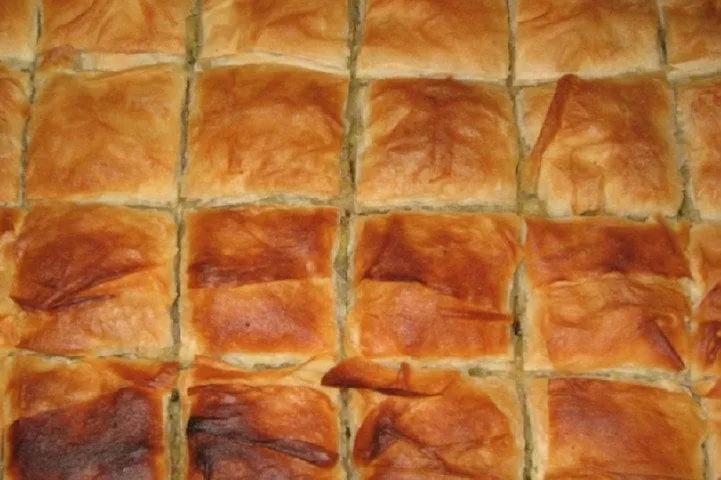
A labour of love: Gazel (Kazel) böreği
The dough of gazel börek, in which flour and starch share the lead roles, is carefully prepared and rolled out, and the filling is grated onion, potato and minced meat, never without parsley, salt and pepper. Brushed with fat and layered with the generous filling, the sheets of pastry take their place in a tray or round sini and are sent off on their delicious journey through the oven.
Cooked as in the old days over a charcoal brazier or over a wood fire in a large ground oven, it is even more delicious.
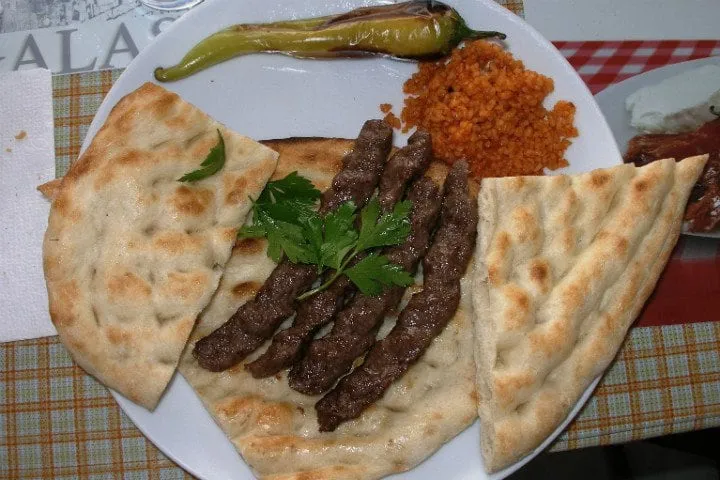
No spices needed: Burdur şiş
Burdur şiş stands apart from other shish kebabs in its simple beauty, because no spice but salt goes into it. Made complete by tail fat, Burdur şiş is eaten with plenty of pide bread.
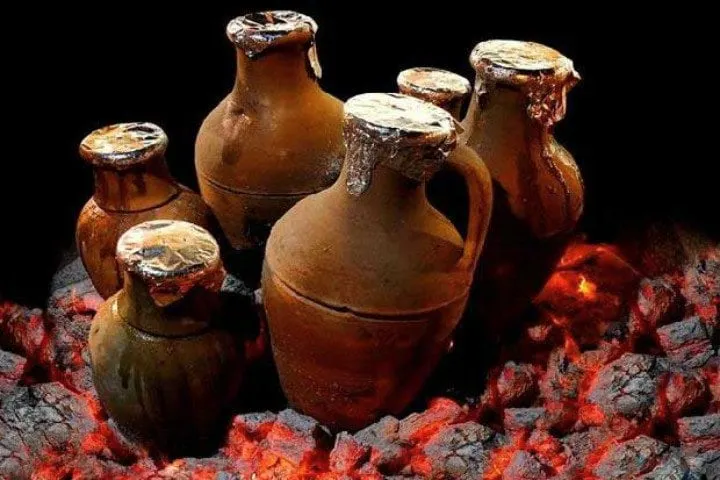
Don’t leave without trying it: Burdur-style testi kebabı
We know there are testi (clay-pot) kebabs from different regions, but we felt Burdur’s should not be missed. We loved the idea of fatty mutton ribs placed in narrow-necked clay pots and slowly cooked over charcoal.
So that the meat is not alone, you can add all sorts of vegetables, from potato to aubergine. What more could you want?
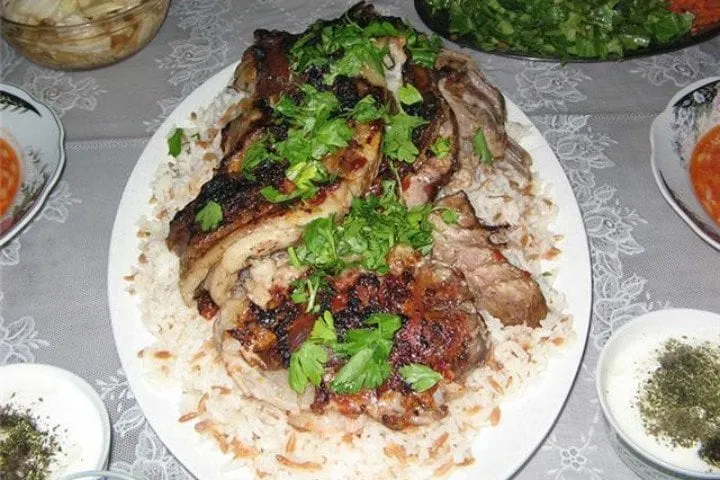
A feast in itself: Çekme
Made with lamb, and made best of all in Burdur, çekme is truly a feast dish. Once prepared mostly for special occasions such as weddings, this delicious dish is made by frying lamb nicely with tomato paste and setting it on top of a pilaf cooked with stock and plenty of butter. You will hardly find anything more filling.
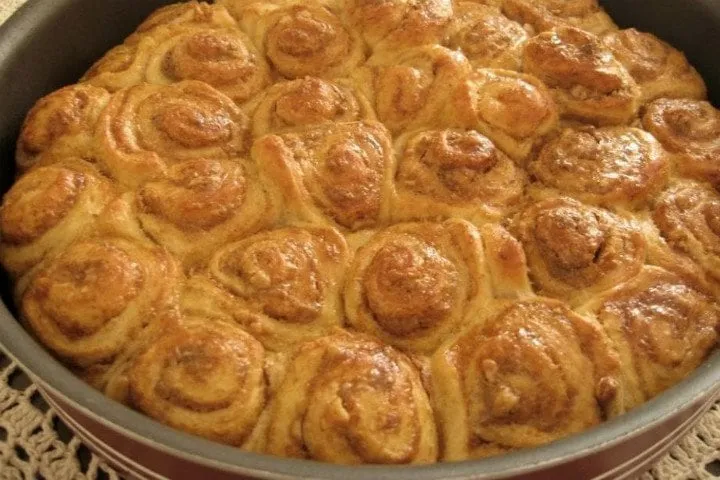
No one leaves hungry: Kömbe (çanak ekmeği)
Burdur-style kömbe, known locally as çanak ekmeği (“bowl bread”), is in fact a delicious pastry dish. The lovingly prepared dough is filled with tahini, walnuts, pekmez (grape molasses) or poppy-seed paste. It is ready once the dough is sealed and baked until golden all over, and it comes to the table with a wonderful aroma that proves its flavour.
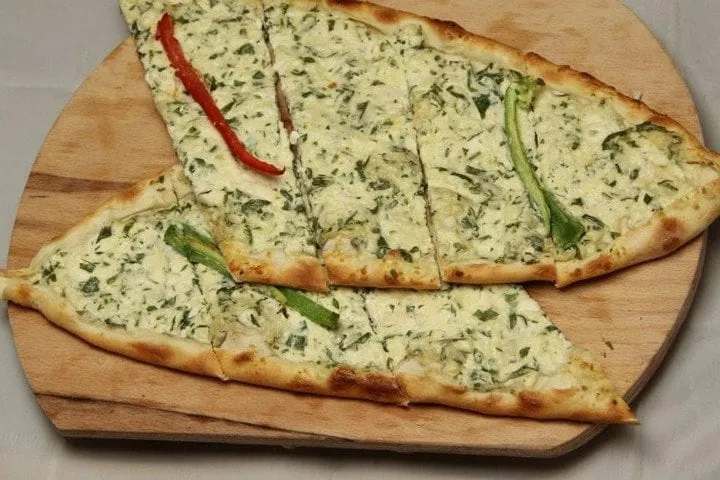
A special cheese: Burdur-style peynirli pide
This pide makes its difference by being made with kelle peyniri, a special kind of cheese. It is prepared by placing cheese and parsley on delicious pide dough, and you can enrich it with other ingredients if you like. You will find this pide everywhere when you visit Burdur, and you really must try it. It is so tasty that those who have eaten it already know what we mean. :)
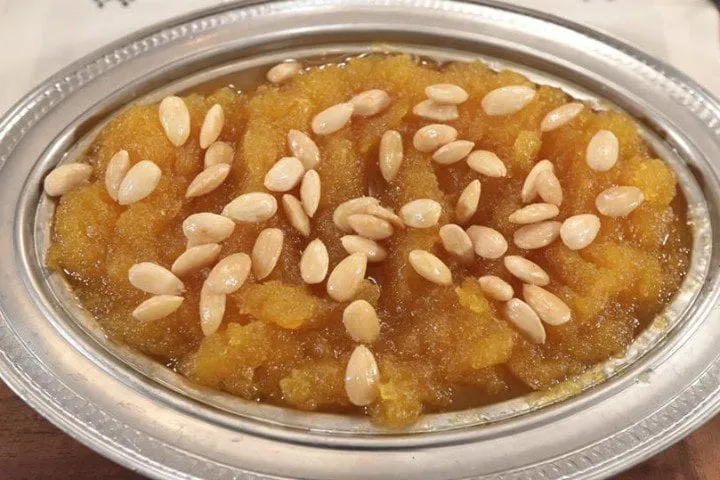
You’ve never seen pumpkin like this: Kabak helvası
Yellow pumpkins, which we mostly know as a vegetable for stuffing, appear as a dessert in this helva. Surprising as it may be, grated pumpkin cooked together with sugar and lemon juice makes a delicious sweet.
Topped with almonds, it is irresistible. It is even eaten like jam at breakfast.
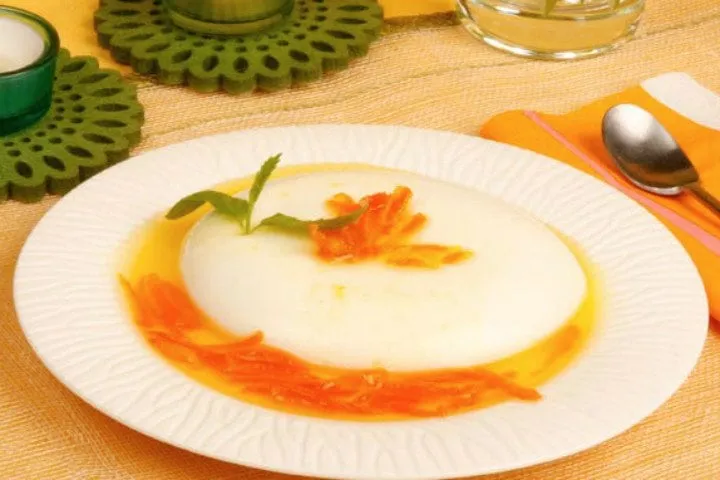
Makes you forget every other pudding: Burdur muhallebisi
Burdur muhallebisi has long been one of those recipes that make our mouths water just describing them. Made with rice flour and starch, the pudding goes up a level when it meets pounded mastic.
It isn’t eaten as soon as it has set in its dishes and cooled: it is turned out upside down onto another plate and covered with a syrup of sugar and water. You can crown this delicious pudding with jam if you like. It calls for spoonful after spoonful.
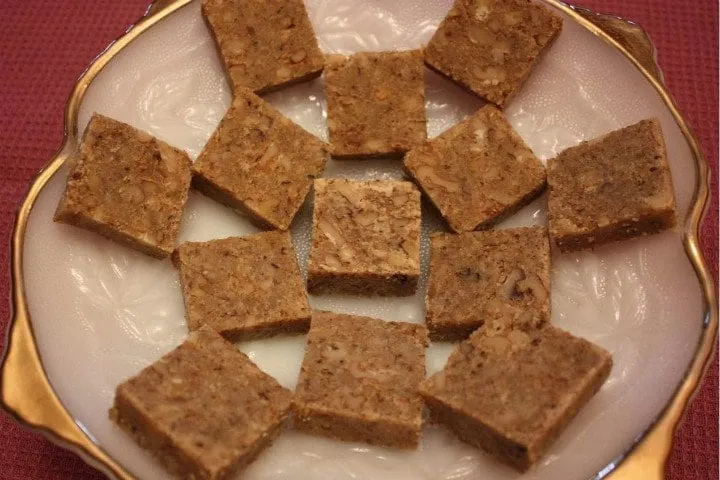
An ode to walnuts: Ceviz ezmesi
Walnut kernels and semolina come together to make this delicious helva. The pair, even better together, are blended nicely with the help of sugar and water. With icing sugar added to the recipe, the result is this delicious treat served in diamond-shaped slices.
The molasses version: Ceviz helvası
Ceviz helvası is made like ceviz ezmesi but with flour instead of semolina and pekmez instead of sugar and water. Be generous with the walnuts: a rich helva is the aim. It doesn’t have to be served in diamond slices like ceviz ezmesi, and this delicious sweet looks set to become one of your new favourites. :)
Few ingredients take skill: Kuymak (Guymak) tatlısı
Kuymak is a dessert made with sugar, water, starch and butter, and never without almonds. It is one of the sweetest proofs that cooking with few ingredients takes greater skill.
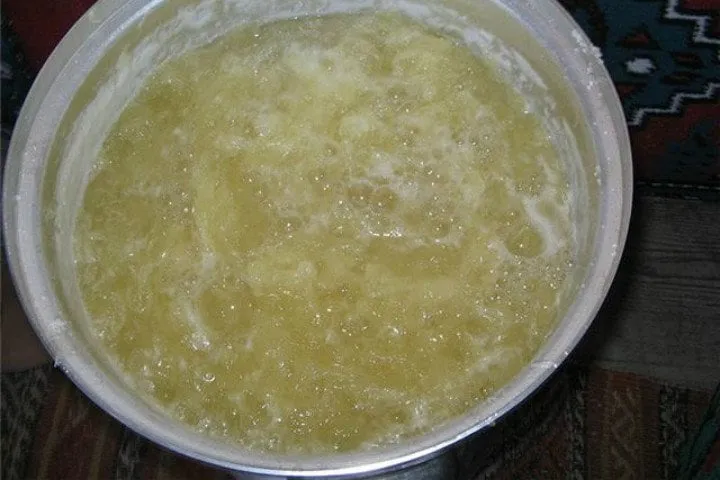
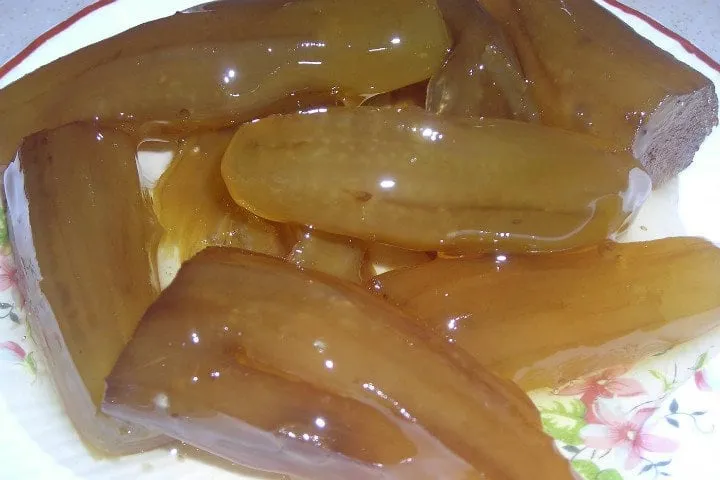
For those preparing for winter differently: Patlıcan reçeli (aubergine jam)
In these days when we carry on with our winter preparations without a break, boiling down tomato paste on one side and carefully spreading out noodles to dry in the last of the sun on the other, Burdur has also lent a hand for the long, cold winter days. You will love the taste of this delicious aubergine jam, and if you have never had it before, you will be hooked from the first bite.
Source: https://yemek.com/burdur-yemekleri/sayfa/12
Places to visit in Burdur
Historic monuments of Burdur
Ulu Cami (Great Mosque)
Standing on a hill in the Pazar neighbourhood in the city centre, the Great Mosque was built in 1294 by Felekeddin Dündar Bey.
İncirhan
İncirhan is in İncirdere village, 7 km west of the Bucak district. It was built in the 13th century by the Anatolian Seljuk sultan Gıyaseddin Keyhüsrev, son of Keykubad. The most striking feature of the han is its very large, plain entrance gate with an inscription.
Susuz Kervansaray (Susuz Caravanserai)
It is in Susuz village in the Bucak district, one of the caravanserais of the 13th-century Anatolian Seljuk period, and stands on the Silk Road. The most eye-catching part of this nearly square, rectangular han is the entrance gate on its west front.
Burdur’s mansions
The Taşoda, Çelikbaş, Baki Bey and Mısırlı mansions in the provincial centre, which reflect Ottoman civil architecture, are well worth seeing.
Taş Oda
It is in the Pazar neighbourhood of central Burdur and is an example of 17th-century Ottoman civil architecture. It was built by Emin Bey of the Kınalı tribe. The Ministry of Culture began restoration work in 1978 and completed it in 1988. The building has two storeys: the ground floor is built of stone, and the upper floor of mud brick and timber.
Bakibey Konağı (Koca Oda)
It is on Divanbaba Street in the Değirmenler neighbourhood of central Burdur, and is one of the finest examples of 17th-century Ottoman civil architecture. Its restoration was completed in 1988 after it was expropriated by the Ministry of Culture. The Bakibey Mansion is also known as Koca Oda (“the Great Room”). The oldest known title deed, from around the 1830s, is in the name of Reşit Bey. It is very likely, however, that the mansion was built in the time of Reşit Bey’s grandfather Ahmet Pasha or his father Çelik Mehmet Pasha.
Mısırlılar Evi (Mısırlılar House)
It stands on Oluklar Altı Street in central Burdur and is known as the Hinnaplı house. It was expropriated by the Ministry of Culture. A 19th-century building, it has two storeys of bağdadi (lath-and-plaster) construction on a stone foundation, and its roof is covered with traditional Turkish tiles. The ground floor has winter rooms and a pantry, and the upper floor has four rooms opening onto a long, narrow central hall (sofa). The ceilings are decorated with carved wood. Many windows with wooden shutters let in plenty of light.
Burdur’s national parks
Burdur – Sütçüler Sığla Forest Nature Conservation Area
It lies in the Mediterranean Region, within the boundaries of Kızıllı village in the Bucak district of Burdur province. The site covers 88.5 hectares and is 59 km from the Sütçüler district. The finest and most isolated stand of the sığla tree (Oriental sweetgum), a rare and endangered species, is found here. It is intended to be kept for future generations through scientific and educational use. Its plant species are the Oriental sweetgum (Liquidambar orientalis), Turkish red pine (Pinus brutia), Turkey oak (sığ saçlı meşe, given in the source as Quercus callis), alder (Alnus glutinosa) and Oriental plane (Platanus orientalis). The area is home to wild goats (Capra aegagrus), red squirrels (Sciurus vulgaris), various reptiles and amphibians, and many crabs.
Burdur’s caves
Sefer Yitiği Mağarası (Sefer Yitiği Cave)
It is right next to the İncirhan Caravanserai in İncirdere village, Bucak district. The newly discovered cave has unique stalactites and stalagmites.
İnsuyu Mağarası (İnsuyu Cave)
It is in Mandıra village, 900 m east of the road at kilometre 13 of the Burdur–Antalya highway. It is a horizontal, dry cave 597 m long in total. Thanks to its easy access, it was one of the first caves in Türkiye opened to tourism. Judging by how its stalactites and stalagmites, formed in many shapes from limestone deposits, took shape, the cave is thought to have formed thousands of years ago. In the winding passages that branch off in different directions inside the cave there are 9 lakes, large and small. A cool, clean current of air flows through the cave. Some of its waters are believed to be good for diabetes and stomach ailments. The Special Provincial Administration has built accommodation near the cave.
Burdur’s lakes and dams
Burdur Gölü (Lake Burdur)
It is 4 km from the city centre. Lake Burdur is a tectonic lake. It is home to 70% of the world’s endangered white-headed ducks. A refuge for endemic bird species, Lake Burdur is a wetland of international importance where 85 bird species live.
Salda Gölü (Lake Salda)
It is Türkiye’s cleanest and deepest lake. With its clean, clear water it is Burdur’s loveliest picnic and excursion spot.

Karacaören Barajı (Karacaören Dam)
The dam on the Aksu stream is 35 km from the Bucak district. Beyond meeting the region’s energy and irrigation needs, it attracts visitors as an excursion spot for its natural beauty.
Burdur’s museums and archaeological sites
Keraitae Archaeological Site
Keraitae is an ancient city in Burdur’s Bucak district. Located in Belören village in Bucak, it is close to other ancient cities: 11 kilometres from Sagalassos and 8–9 kilometres from Kremna. It is easy to reach by asphalt road from Bucak. Archaeological excavations at Keraitae have uncovered remains of the Roman and Hellenistic periods. Keraitae remains one of the places to see on a Burdur holiday; after it, don’t forget to visit Lake Salda too.
Burdur Arkeoloji Müzesi (Burdur Archaeological Museum)
First opened to visitors on 12 June 1969, the Burdur Archaeological Museum brings together a wealth of finds and is well worth seeing. With a collection of more than 60,000 pieces it is one of Türkiye’s outstanding museums, and with finds from the ancient city of Sagalassos and from Hacılar Höyük, as well as its sculptures, it has attracted interest not only in Türkiye but around the world. Most of the works excavated at the ancient city of Kremna are also exhibited here. The large and small Athena, Hygieia, Apollo, Heracles, Nemesis and Aphrodite statues are among its most striking pieces. A regular stop for historians and those with a special interest in historic remains, it is an important museum that presents a rich history. Setting out on a long, enjoyable and informative journey and witnessing the remains of different eras will make you very happy.
Burdur’s ancient cities
Sagalassos Antik Kenti (Ancient City of Sagalassos)
It is 30 km from Burdur and 7 km from Ağlasun. Its ruins still stand today, and the ancient city, excavated by a Belgian team, enjoyed its most brilliant period in the 2nd century AD.
Cremna Antik Kenti (Ancient City of Cremna)
It is in Çamlık village, 25 km east of the Bucak district, which is 45 km from Burdur. Cremna, which had its heyday in the 2nd century AD, is a Pisidian city. Roman-period buildings still stand. The acropolis (upper city) has a forum (square), a basilica (law court), a church, an exedra (arched structure) and a library building. Excavations in this building uncovered 9 marble statues of gods, which are exhibited in the Burdur Museum.
Kibyra Antik Kenti (Ancient City of Kibyra)
Built on three hills west of the Gölhisar district, 108 km from the provincial centre, the ancient city of Cibyra was the capital of the Tetrapolis formed by the union of the ancient cities of Oinoanda, Balboura and Bubon (İbecik). The main surviving structures at Cibyra are the stadium, the lower and upper agoras, the council chamber (bouleuterion), the theatre, the necropolises and the monumental aqueduct.
Kuruçay Höyüğü (Kuruçay Mound)
It is a prehistoric mound within the boundaries of Kuruçay village, 15 km from Burdur.
Culture and arts in Burdur
Folk songs of Burdur
- Onikidir Şu Burdur’un Dermeni (“Burdur has twelve mills”)
- Şu Çavdır’ın Hanları (“The inns of Çavdır”)
- Tekelioğlu
- Şişedeki Gülyağı (“The rose oil in the bottle”)
- Serenler
- Haymanalı
- Ispanaktan Evvel Çıkar Gerdeme
- Kezban Yenge
- Dolan Gel Sevdiğim (“Come round, my love”)
- Gaz Amat
- Eklemelidir Şu Burdur’un Dağları
- Dirmilcikten Gider Yaylanın Yolu (“The road to the highland pasture runs from Dirmil”)
- Ali Bey
- Denizin Dibinde Hatcam (“My Hatice at the bottom of the sea”)
- Ya da Geceleri Kalkar Ağlarım (“At night I rise and weep”)
- Sarı Zeybek
- Kahpe Gençlik de Geldi Geçti (“Faithless youth came and went”)
- Anne Buralar Nere (“Mother, where is this place?”)
- Şu Dirmil’in Çalgısı (“The music of Dirmil”)
- Koca Çamın Gürlemesi Dal İlen
- Tahtalıkta Galbır Var
- Çömlek Kırdıran Boğazı
Burdur manis (folk quatrains)
Ayna koydum çayıra,
Şavkı vurmuş bayıra,
Göğde Allah’ın yazdığına,
Yerde kimler ayıra.
I set a mirror on the meadow,
its gleam struck the hillside;
what God has written in heaven,
who on earth could part?
*****
Esmerim cizim cizim,
Süngüsü boydan uzun,
Selam söylen yüzbaşıya,
Yarim versin izin.
My dark one, slender as a line,
his bayonet longer than he is tall;
give my greetings to the captain,
let him give my love leave.
*****
Dambırımın ucu pekmez,
Çaların çanların ötmez,
Bekar gıza gücüm yetmez,
Ah bi dul garı dul garı.
The tip of my tambur is sweet as molasses,
the drums and bells won’t ring;
I’m no match for an unmarried girl,
ah, a widow, a widow for me.
*****
Ak kapı kara kapı,
Aktır bıllurun sapı,
Beni senden ayıran,
Sürünsün kapı kapı.
White door, black door,
white is the crystal’s handle;
may whoever parts me from you
drag from door to door.
*****
Kır atıma bindim geldim,
Çayırlarda indim geldim,
Ne zamandır görmedim,
Yarimi görmeye geldim.
I mounted my grey horse and came,
I dismounted in the meadows and came;
it has been so long since I saw her,
I came to see my love.
*****
Entarisi sarı aklı,
Deli gönül çok meraklı,
Ayşe gelin sorarsan,
Yeni gelmiş de, duvaklı.
Her dress is yellow and white,
the wild heart is so curious;
if you ask about bride Ayşe,
she has just come, still veiled.
*****
Ak taşı kaldır da gel,
Yılanı öldür de gel,
Sen beni seviyorsun,
Cüzdanı doldur da gel.
Lift the white stone and come,
kill the snake and come;
you say you love me,
fill your wallet and come.
History of Burdur
The history of Burdur province
With its long history, Burdur is one of our provinces in the Lakes Region of Türkiye’s Mediterranean Region. Home to many civilisations, Burdur has above all witnessed the passage of many peoples.
Burdur, where the Turks arrived after the Battle of Manzikert, was called Pisidia in the Greek period. Coming under the protection of the Anatolian Seljuk State, Burdur passed after the Seljuks to the Hamidid Beylik. Bayezid I added Burdur to the Ottoman lands in 1391, and after the proclamation of the Republic it has continued to the present day.
Burdur’s history
Burdur’s history reaches back to the Neolithic. Excavations by Prof. J. Mellaart at Hacılar in 1957–1960 revealed every detail of Neolithic culture. These finds go back to around 7000 BC. Neolithic culture was also found in excavations by Prof. Dr. Refik Duru at Kuruçay Höyük in 1978–1988 and at Höyücek Höyük in Bucak in 1989–1992. The most important feature of this age is that people had domesticated animals and learned to make pottery.
Terracotta figurines representing the MOTHER GODDESS, known as the first statuettes of Anatolia, and ornaments are the most important works of Neolithic Hacılar. The Chalcolithic Age is the period of 5400–3000 BC that followed the Neolithic. Its most important feature is that metal came into use alongside tools of stone, bone and wood. Metal chisels, arrowheads and other tools found at Kuruçay Höyük reflect the character of the age. Material supporting this age has also been recovered at Uğurlu Höyük, Kızılkaya Höyük, Karamanlı Çamur Höyük and Tefenni Beyköy Höyük. In the Early Bronze Age, dated to 3000–2000 BC, civilisation became more advanced and bronze tools replaced stone ones.
Another group reflecting the character of the age is the violin-shaped idols made of terracotta and marble. Early Bronze Age material has been widely found in our province at settlements such as Yassıgüme Höyük, Burdur Höyük, İncirdere Höyük and Tepecik Höyük. In antiquity our province lay in the ancient region of PISIDIA, which in today’s terms also included Isparta and Antalya provinces. This region remained in the dark until the middle of the Persian period and has not yet been fully illuminated. Around 2000 BC the region was the political centre of the ARZAWA confederation.
This continued, with various peoples settling, until 1000 BC. In the 8th century BC the western part of Pisidia came under Phrygian rule. The discovery of Phrygian pottery at the settlement at Lake Yarışlı supports this view. Between 696 and 676 BC we see the Lydians, who destroyed the Phrygian state, ruling the region. In 546 BC the Persians defeated the Lydians and took the region. In 334 BC Alexander the Great defeated the Persians on the banks of the Biga stream (the Granicus) and turned to Anatolia. He first took Bodrum, Miletus and Phaselis, then Perge, Side and Aspendos, and in 333 BC he also captured Sagalassos and Kremna. Alexander’s death in 323 BC led to the division of the empire.
In 321 BC the commander Antigonus took control of the region, but he lost his realm when he was defeated by the Seleucids at the Battle of Ipsus in 301 BC. After the Seleucids, the region came under the Kingdom of Pergamon and later Rome. This lasted until AD 395, when the Roman Empire was divided in two and the region came under Eastern Roman (Byzantine) rule. This continued until the end of the 11th century AD, from which time Turkish rule began. In the Roman period there was dense settlement throughout Pisidia. Many new cities were founded and old centres were rebuilt. The names of the known cities founded in antiquity in and around Burdur are as follows:
Milias (Melli), Kremna (Çamlık), Sagalassos (Ağlasun), Kreitai (Belören), Kretepolis (Kızılkaya), Kodrula (Kestel), Komama (Ürkütlü), Paleipolis (Akören), Lysinia (Karakent), Mallos (Karacaören), Olbasa (Belenli), Muatra (Bereket), Tymbrianosus (Düğer), Kibyra (Gölhisar), Boubon (İbecik), Panematrikhos (Boğazköy), Sia (Karaot), Balboura (Altınyayla).
Architectural remains of this period can be seen in almost all the ruins in our province. Various sculptures of the period are also exhibited in the Burdur Museum.
The arrival of the Turks in Burdur and after
After the Battle of Manzikert in 1071, the region came successively under the rule of the Seljuks, the Hamidids and the Ottomans. The Oghuz tribes spreading across Anatolia probably began to settle around 1075 in the region then called Pisidia and in Burdur, then called Polidia. Their first settlement was at Şekerpınarı–Hamam Bendi. Turkmens, most of them from the Kınalı tribe, began to found settlements in a community of at least 2,000 tents. At first they survived on their own, attached to no state and fighting their Byzantine neighbours.
The most important of these struggles was their defeat of the Byzantine army under Manuel Komnenos near Dinar. In particular, the defeat of this army on the Erle plain during the Crusades by the Seljuk rulers Mesud I and Kılıç Arslan II made Seljuk rule in the region easier. The Seljuk ruler İzzeddin Kılıç Arslan II brought the area as far as Denizli, Uluborlu, Burdur and Antalya, and its Turkmen tribes, under his rule, but he could not establish full authority over the Turkmen tribes. The region was taken again in 1219 and 1236 by Keykavus I and Alaeddin Keykubad. In this way the region came firmly under Seljuk rule. In 1257 the Seljuk State was divided among three brothers.
But when Alaeddin Keykubad II died, it was divided between İzzeddin II and Rukneddin Kılıç Arslan IV. In the war that broke out between the two brothers, Rukneddin was defeated and imprisoned in Burdur castle. In 1259 he left prison and took the Seljuk throne. Rukneddin Kılıç Arslan began to take revenge for what had happened while he was in prison, and unrest grew as a result. Meanwhile the revolts of Baba İlyas and Baba İshak also shook the state’s authority. Finally, in 1303, the Seljuk State came to a complete end. Taking advantage of this power vacuum, the “uç” (frontier) beys of the tribes and clans attached to the Seljuks began to set up governments of their own. After Antalya and Denizli came under Turkish rule, the tribes and clans that arrived in droves, above all the Kayı, Avşar, Bayındır, Büğdüz, Yazır, Yiva and others, reached a total of 200,000 tents.
Burdur became the centre of this Turkmen population. Hamit Bey, one of the commanders of Jalal al-Din Khwarazmshah and a member of the Yomut tribe, was the frontier bey of the region as far as Burdur and Çığralı under the Seljuks. The real founder of the Hamidid Beylik, which coincided with the decline of the Seljuks, was Felekeddin Dündar Bey, Hamit Bey’s grandson. A frontier bey, Dündar Bey declared his beylik in Burdur and, in honour of his grandfather, named it “Hamitoğulları” (the Hamidids). The Hamidids’ most brilliant period was the time of Dündar Bey. The beylik’s borders grew, and Antalya, Gölhisar and Korkuteli were added to it. Burdur became the most important centre of the period, and the arts, trade and transport developed. When the Ilkhanids came to Anatolia, the Hamidids, like the other beyliks, declared their allegiance to the chief vizier Emir Choban, and so weathered the Ilkhanid storm unharmed.
Emir Choban appointed his son Timurtash (Demirtaş) governor of Anatolia. Timurtash began to eliminate the Anatolian beyliks one by one, and he marched on the Hamidids too. He killed Dündar Bey in Antalya in 1323 and annexed the Hamidid lands, and Dündar Bey’s sons fled the country. This rule lasted until 1327. Disapproving of his son’s actions, Emir Choban came to Anatolia intending to do away with him. Timurtash fled to Egypt but was killed there.
Dündar Bey’s son Hızır Bey came to Eğirdir and established rule over part of the Hamidid lands. After Hızır Bey’s death he was succeeded by Dündar Bey’s other son, İshak Bey, who extended the borders of the beylik as far as Beyşehir and Akşehir. After İshak Bey died in 1335, he was succeeded by his son Muzafereddin Mustafa Bey, and he in turn by his son Hüsameddin İlyas Bey in 1349. İlyas Bey fought the Karamanids but lost his lands, and recovered them with the help of the Germiyanids. His successor, Kemaleddin Hüseyin Bey, was attacked by the Karamanids but was saved with the help of the Ottomans and the Germiyanids. Meanwhile the Ottoman State, founded by the Osmanoğulları and growing ever larger and stronger in the Söğüt area of Anatolia, was drawing attention. When the Ottoman sultan Murad Hüdavendigar fell at Kosovo, his son Bayezid I (Yıldırım) succeeded him. The Karamanids above all, and the other beyliks too, refused to recognise Bayezid’s rule. Bayezid crossed into Anatolia and eliminated these beyliks one by one.
He also abolished the Hamidid Beylik and attached it to Kütahya, the centre of the Anatolian Beylerbeylik. In this way the Hamidids and the other beyliks came to an end and Turkish unity was achieved in Anatolia. The last Hamidid bey, Mustafa Bey, son of Kemaleddin Hüseyin Bey, served as an Ottoman commander. So began Burdur’s Ottoman period. The Ottoman princes Bayezid I and Selim II served as beylerbey in Kütahya. The Şahkulu revolt broke out in the reign of Bayezid II. Şahkulu plundered Prince Korkut’s treasury on its way from Antalya to Manisa, raided Antalya, İstanos, Elmalı, Burdur and Keçiborlu, and killed their kadıs (judges) and many people. Şahkulu finally took refuge in Iran, and the danger was over.
Until the 16th century no important events took place in Burdur. In 1522 Burdur was the centre of the Tirkemiş district. In this period the city was more developed than before. Towards the end of the 16th century the city grew a little more and the economy revived, so the taxes paid increased. After the Tanzimat reforms of 1839, Burdur was separated from Kütahya province and attached to the Isparta kaymakamlık of Konya province. This dependence lasted until 1850. Later, led by Hacı İsmail Ağa of the Saden family, people worked for Burdur to become a sanjak, and in 1872 Burdur became a sanjak.
Burdur’s first sanjak bey was Mehmet İzzet Pasha. When the Ottoman State entered the First World War in 1914, mobilisation was declared throughout the country, and in the same year a severe earthquake struck Burdur, killing about 1,500 people and destroying the city’s important religious buildings. The two disasters came together, and the people of Burdur lived in these hard conditions for several years. Burdur became an independent mutasarrıflık (sub-province) in 1920, attached directly to the seat of government in Istanbul. After the First World War ended in defeat, the Italians landed troops at Antalya, came to Burdur and set up a command post. After the enemy was driven out of the country, Burdur took its place as a province of the new Republic of Türkiye in 1923.
Kuva-yi Milliye (the National Forces)
In the first days of the Armistice of Mudros, an important artillery and infantry ammunition depot of the 57th Division was in the village of Bademağacı in Antalya. When it became clear that the Italians, having occupied Antalya, would advance towards Burdur, the commander of the 57th Division, Colonel Şefik Bey (Aker), went to Bademağacı on 7 April 1919 and had the depot emptied. The ammunition and weapons there were taken further inland to Çeltikçi village in Burdur. These weapons were of great use during the resistance on the Nazilli front and in later battles. The Kuva-yi Milliye fighters of Burdur gave great help to Demirci Mehmet Efe’s resistance against the Greeks on the Nazilli front. Along with many volunteers, they sent weapons, ammunition, food and clothing to the front. Nearly 400 volunteers from Burdur lost their lives on the Nazilli front.
Although the Burdur Kuva-yi Milliye organisation worked independently for a long time, after the Sivas Congress it joined the Association for the Defence of the Rights of Anatolia and Rumelia. Well-known figures from Burdur took part in the Grand National Assembly that convened in 1920. The most famous of these deputies is the national poet Mehmet Akif Ersoy, author of the Turkish national anthem, the İstiklal Marşı.
Atatürk’s visit to Burdur
Atatürk, the great Turk and founder of the Republic of Türkiye, first honoured Burdur with a visit on 6 March 1930, after a trip to Isparta. On the morning of 6 March 1930 he was met at Baladız by the notables of Burdur and came to Burdur by car, accompanied by Prof. Afet İnan and the deputies of Burdur, Isparta and Antalya. At Çatalpınar, then the entrance to the city, the whole of Burdur welcomed him with enthusiastic cheers. The same day, at around 16:00, Atatürk and his party reached Antalya. Three days later, on 9 March 1930, he came back to Burdur by the same road; again the people welcomed him with enthusiastic cheers and hosted him for a day.
The earthquake in Burdur during the First World War
When the Ottoman State entered the First World War in 1914, mobilisation was declared throughout the country, and in the same year a severe earthquake struck Burdur, killing about 4,000 people and destroying the city’s important religious buildings.
Where does the name of Burdur province come from?
Burdur lies in the Lakes Region in the western part of the Mediterranean Region. Various views have been put forward about the origin of its name. The first is that the word “Polydorion” later became “Polydor”, and from there Burdur. The second is that it derives from Limobria, meaning “lake city”, the old name of the Burdur area being Limobrama, and later changed into Burdur. However, it is not known whether there was any city on the site of Burdur in antiquity, so it is not known exactly when these two names were used. The third and most plausible view is that members of the Kınalı clan, one of the Turkmen tribes that founded the city of Burdur, found this place while looking for somewhere to settle and, struck by the beauty of the area, said “Cennet buradadır” (“Paradise is here”); over time a syllable dropped out of “Burada dur” (“stop here”) and it became Burdur.
Getting to Burdur
Burdur can be reached by road, rail and air. Lying on the Istanbul–Ankara–Antalya highway, Burdur is reachable by road from the Marmara, Aegean, Central Anatolia and Mediterranean regions.
Burdur is connected by rail to Istanbul, İzmit, Eskişehir, Ankara, Kütahya, Balıkesir, İzmir, Manisa, Denizli and Konya, with regular train services in summer and winter. Air access to Burdur is through Isparta Süleyman Demirel Airport, about 25 kilometres from the city.
Districts of Burdur
- Ağlasun
- Altınyayla (Dirmil)
- Bucak
- Çavdır
- Çeltikçi
- Gölhisar
- Karamanlı
- Kemer
- Merkez (central district)
- Tefenni
- Yeşilova
Economy of Burdur
Burdur’s economy is based on farming and livestock. Besides grain, sugar beet, aniseed, grapes and vegetables are grown, and oil-bearing roses are produced around the central district and Ağlasun. Together with Isparta, it stands out in Türkiye’s rose-oil production.
Thanks to its extensive pastures, raising sheep, goats and cattle is widespread, and a large part of the province is forested. The province has a sugar factory and agriculture-based businesses, and there are chromium deposits around Tefenni and Yeşilova.


Comments
Loading comments…