
Malatya
- Eastern Anatolia Region
About Malatya
Because of its geographical position, Malatya has been home to many civilisations throughout history. Founded on historic caravan routes, the Silk Road and the Royal Road, the city's first settlements go back to the Neolithic. Declared a province on 20 April 1924, after the proclamation of the Republic, Malatya is today a province in the Eastern Anatolia Region. According to TÜİK's 2016 data it was Türkiye's 27th most populous province with 781,305 people; at the end of 2025 its population was 755,854, ranking 29th. Malatya province has 13 districts and municipalities. Of the city's population, 304,397 live in Battalgazi district, known as Old Malatya, and 304,269 in the other central district, Yeşilyurt. The rest of the population is spread across the province's other 11 districts, led by Darende, Doğanşehir and Akçadağ. These districts have 717 neighbourhoods in all.
Malatya's famous dishes and desserts
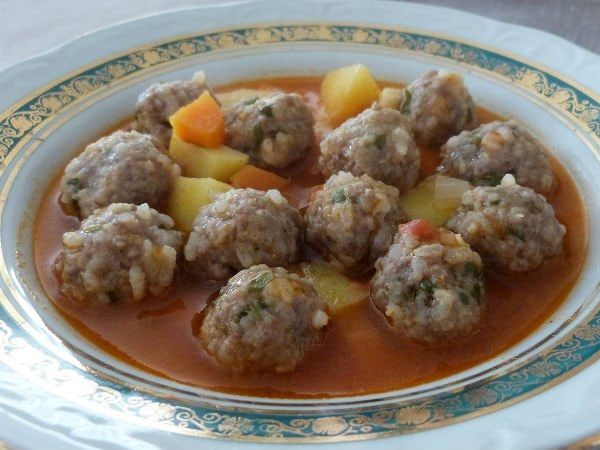
Gırık
A dish in broth made with butter, minced meat and bulgur.
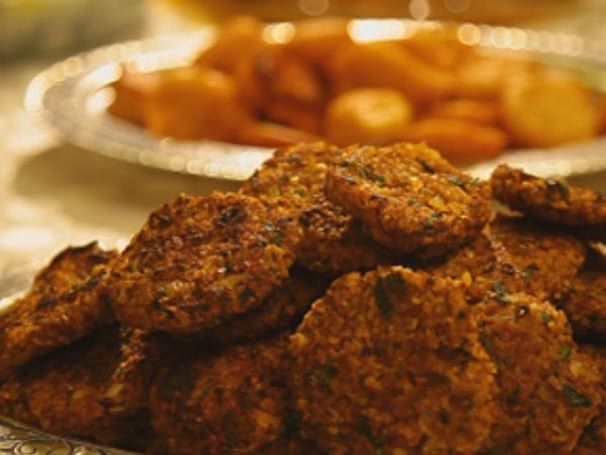
Banık (bulgur köfte)
A köfte made with minced lamb and veal and two kinds of bulgur.
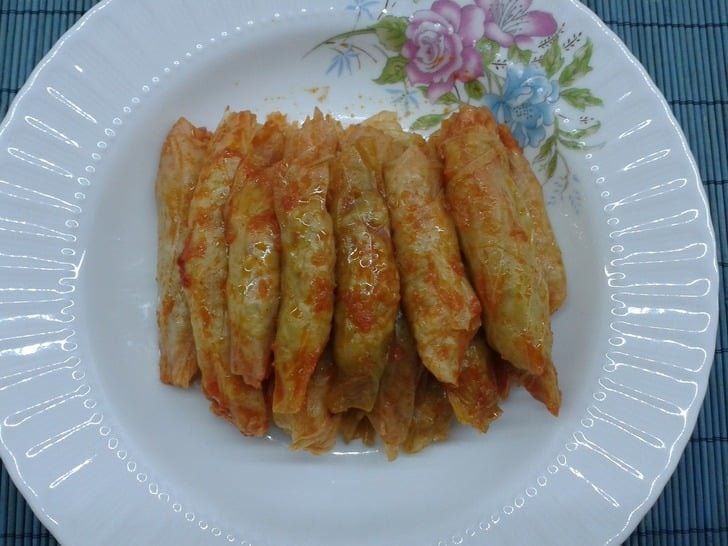
Lahana köftesi (cabbage köfte)
A filling of coarse bulgur and an equal amount of minced meat is wrapped in cabbage leaves; because of the high proportion of meat it is called köfte.
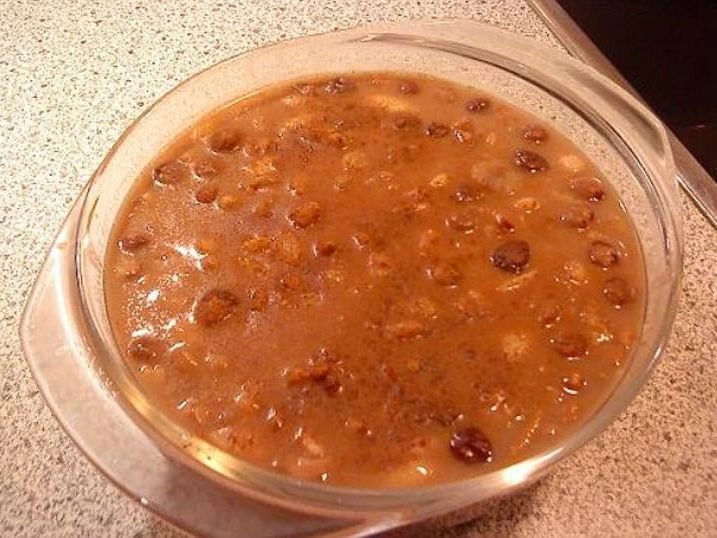
Kara çorba
A nourishing soup made with Malatya's black chickpeas.
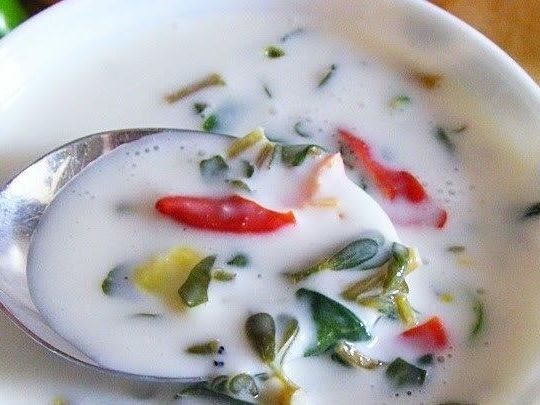
Acılı ayran (spicy ayran)
An ayran made with yoghurt, purslane (pirpirim) and hot red pepper; locally it is also called “yandım çavuş ayranı”. Malatya Pirpirimli Acılı Ayran is registered with a geographical indication.
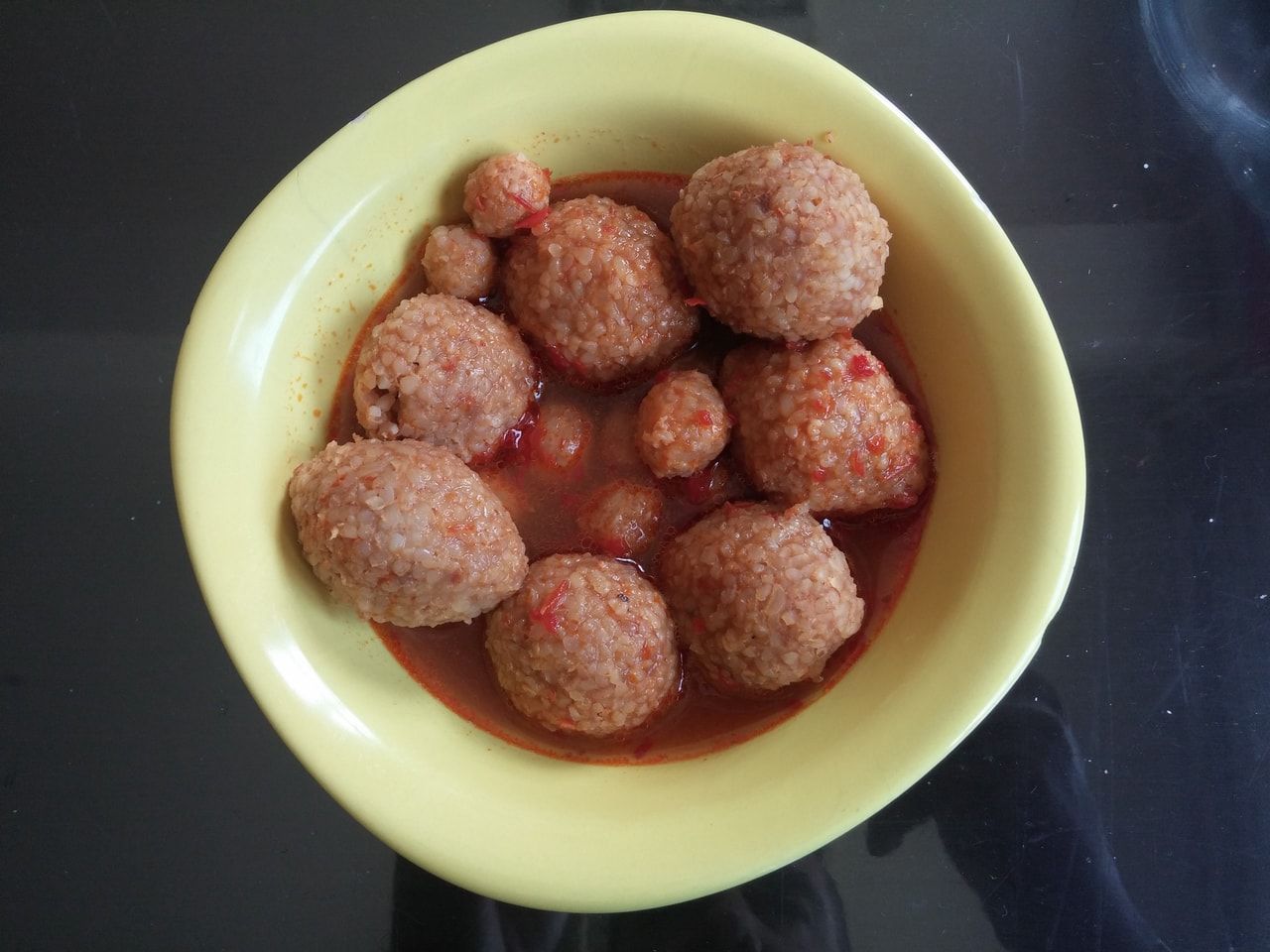
Analı kızlı
Large stuffed köfte called “ana” (mother) and small köfte called “kız” (daughter) are cooked together in a broth. Malatya Analı Kızlı Köfte is registered with a geographical indication.
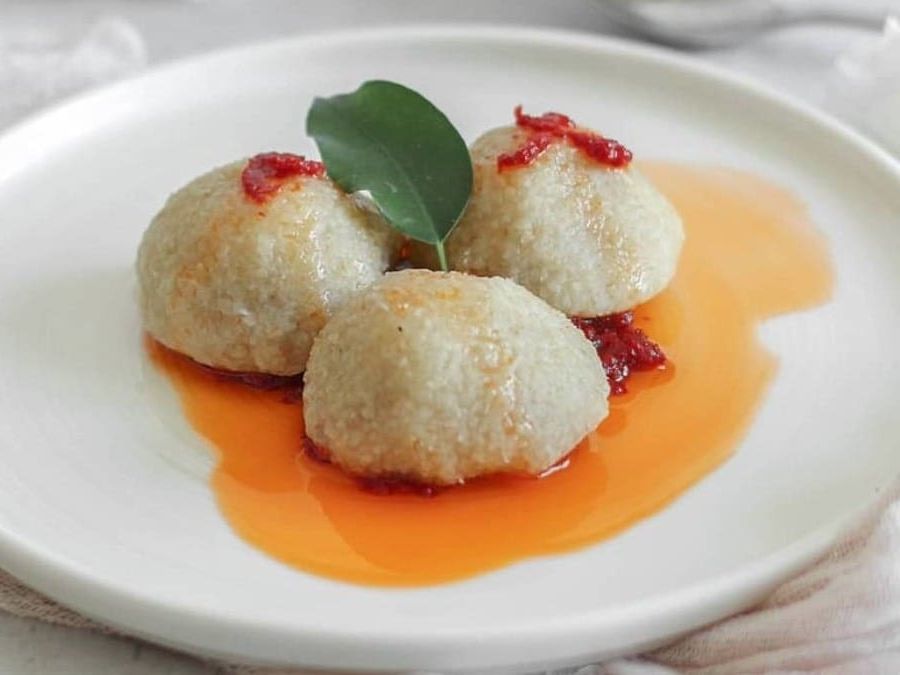
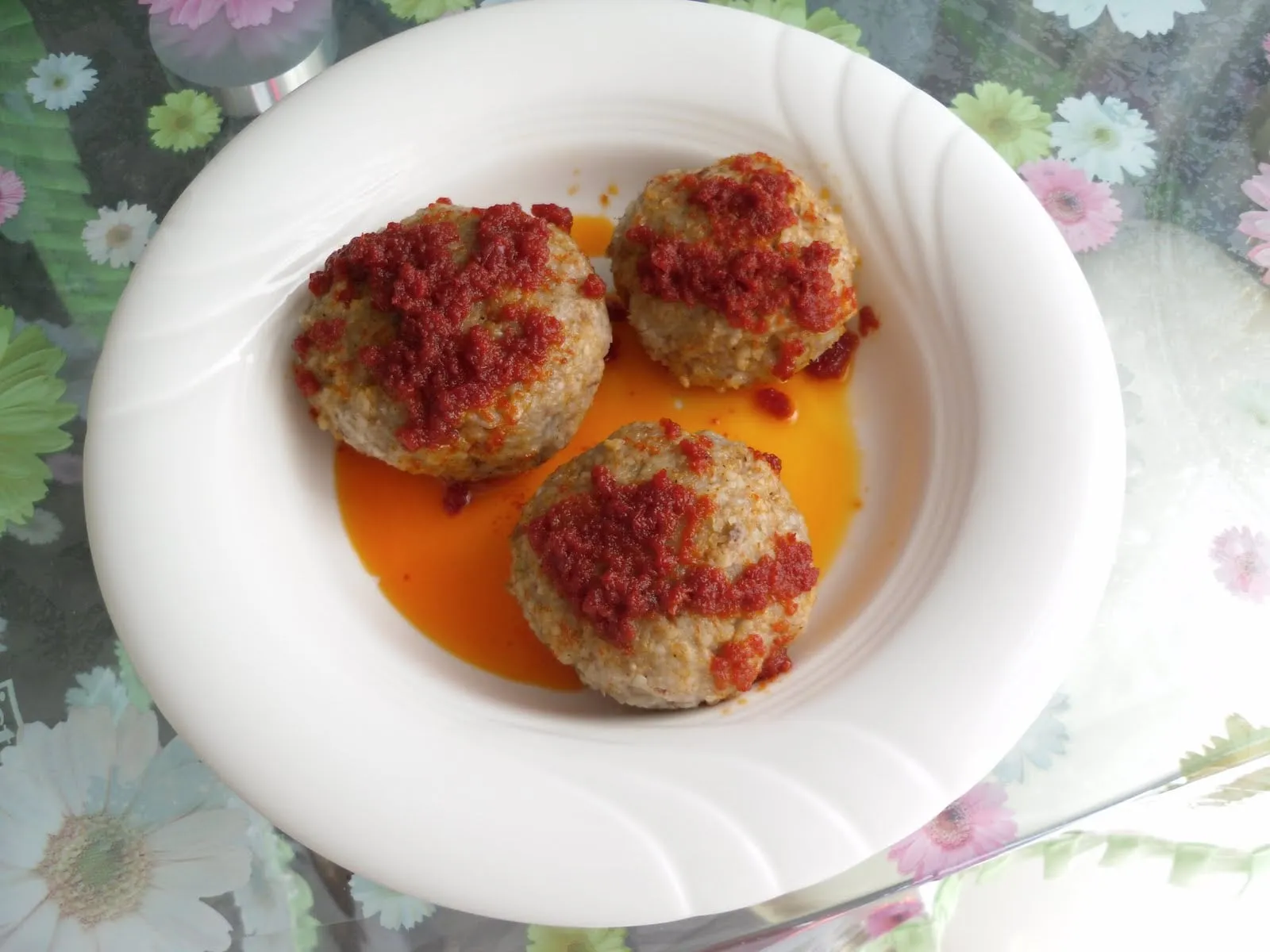
İçli köfte
A bulgur shell is filled with minced meat; the köfte are boiled in salted water rather than fried, and melted butter is poured over them. Malatya İçli Köftesi and the Polat İçli Köftesi of Doğanşehir are registered with geographical indications.
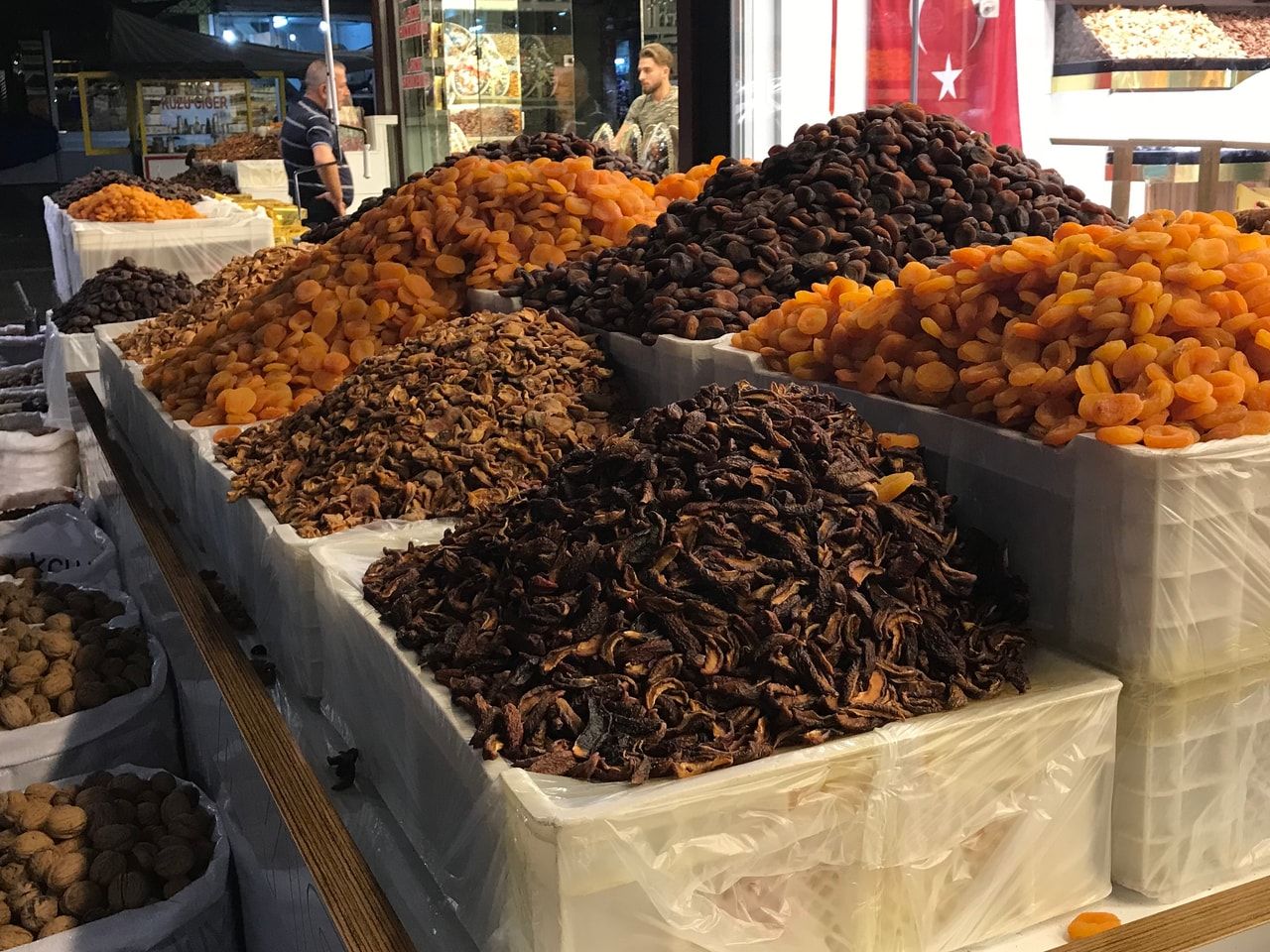
Kayısı (apricots)
Malatya is Türkiye's best-known apricot region; the fruit is eaten fresh and dried and is also used in desserts and savoury dishes.
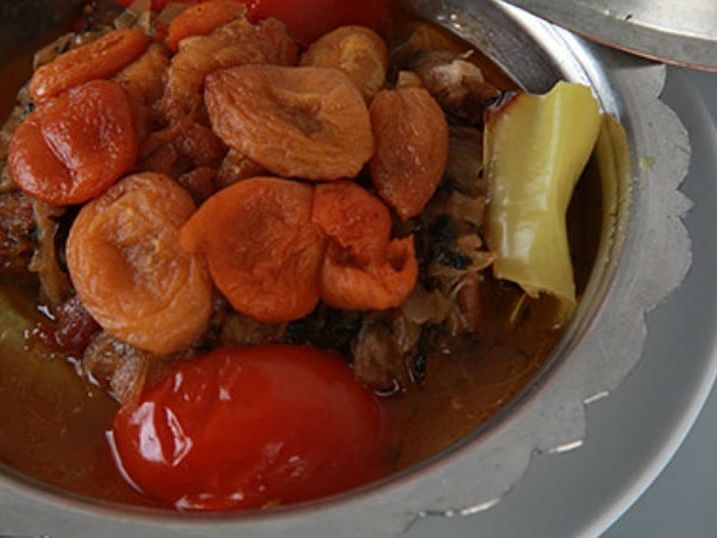
Kayısılı kavurma (lamb with apricots)
Lamb fried and cooked with apricots, onion, garlic and mint.
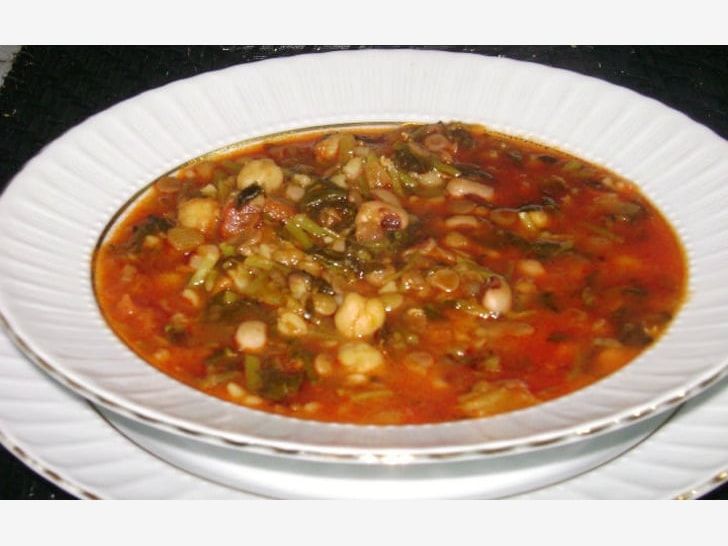
Pimpirim çorbası
Fresh purslane (pimpirim) cooked together with pulses.
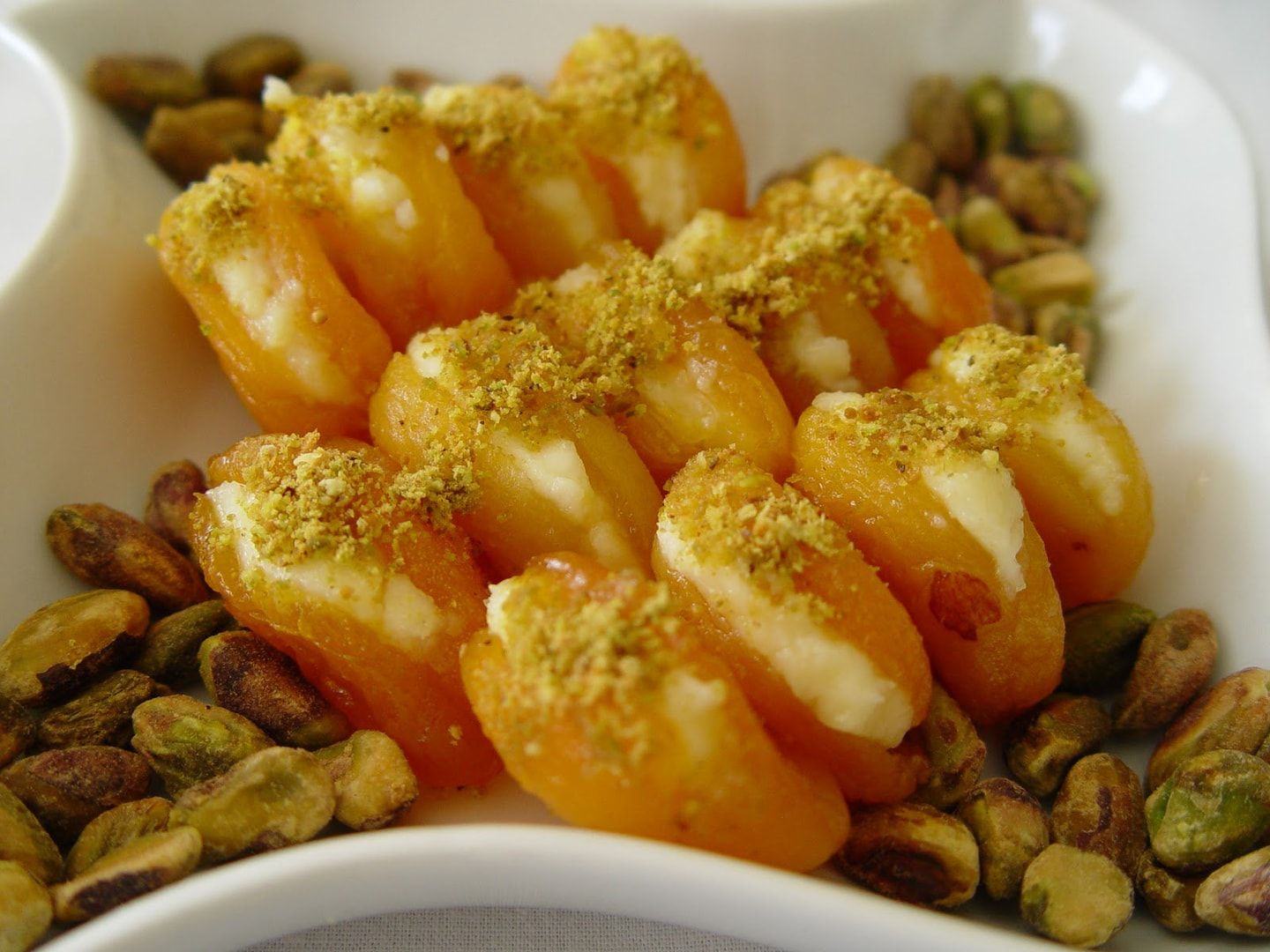
Kayısı tatlısı (apricot dessert)
Made by cooking dried apricots with sugar and filling them with kaymak (clotted cream).
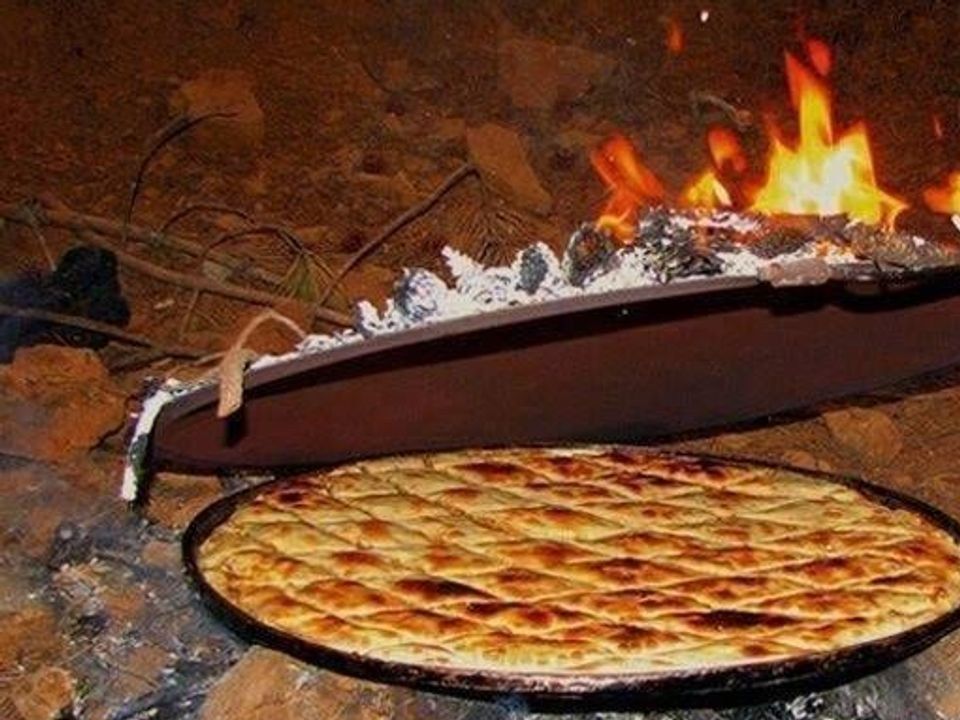
Akçadağ kömbesi baking over a wood fire
Malatya kömbesi
Fried meat or minced meat is placed between two sheets rolled from brown wholemeal flour and baked on a copper sac over a wood fire. Akçadağ Kömbesi, also made at Hıdırellez, is registered with a geographical indication.


Places to visit in Malatya
Yusuf Ziya Paşa Bedesten
The Yusuf Ziya Paşa Bedesten (covered market) in Malatya's Darende district has classic Ottoman covered-market architecture.
Standing inside the cemetery in the Zaviye neighbourhood, the bedesten is rectangular and was built of rubble and cut stone: cut stone on the inner walls and rubble stone in the roofing.
Cleaning work was carried out at the bedesten in 1997 and restoration in 2005.
Easy to reach, the bedesten is a historic building that everyone who finds themselves in Darende should see.
Yusuf Ziya Paşa Mosque
The Yusuf Ziya Paşa Mosque in Malatya is on Mücelli Street. As it is in the provincial centre, it is easy to reach.
According to its inscription, the mosque was built in 1793 by Yusuf Ziya Pasha, after whom it is named. It was built of rubble and cut stone on a rectangular plan, and its minaret was added in later years.
After the Yusuf Ziya Paşa Mosque, which you can add to your Malatya list, you can also visit Arapgir Castle, Malatya Castle and the Melik Sunullah Mosque.
Arapgir Castle
Arapgir Castle is one of the buildings that reveal Malatya's history. It is in Arapgir district, whose name it shares.
Not much is known about Arapgir Castle. Thought to have been built in the 14th century, only wall remains have survived. It was built of rubble stone and was of strategic importance in its time.
You can add Arapgir Castle to your Malatya list.
Melik Sunullah Mosque
The Melik Sunullah Mosque, one of Malatya's places of worship, stands west of the Malatya Ulu Camii (Great Mosque).
The mosque is also known as Vaiz Baba and Koca Vaiz. Although it has moved away from its original architecture, its minaret still keeps its original form; cut stone and brick were used in building it.
According to the inscription on its minaret, it is dated to 1393. The Melik Sunullah Mosque and its tomb are today among Malatya's most popular sights.
Malatya Castle
Malatya Castle, being close to the provincial centre, is among the easiest places to visit in the city.
The castle is 11 kilometres from the provincial centre, within Battalgazi district. Construction began in AD 79 but could not be finished for a long time. Begun by Titus Livius, the castle was completed in the reign of the Byzantine emperor Justinian.
The castle fell into ruin over time and was repaired in the Danishmendid period. Very few remains survive today.
You can include the Old Malatya Castle among the places to visit on your Malatya trip.
Malatya Museum
Archaeological excavations in Malatya, a city with a deep-rooted history, have brought many historic works to light. Finds especially from Arslantepe and Gelinciktepe were first sent to the Museum of Anatolian Civilisations in Ankara.
Because excavations in the city continued, a museum was planned for the works unearthed in 1931–1937. First, in 1971, a building in İnönü Park was turned into a museum. In 1979 the museum opened in its new building on Kernek Square. The Malatya Museum displays more than 15,000 works from the Neolithic, Chalcolithic, Bronze Age, Hittite, Urartian, Roman, Byzantine, Seljuk and Ottoman periods. Sword and spearheads, human burials, seal impressions and royal tombs are among its important pieces. We recommend visiting the museum to see a rich collection that sheds light on Malatya's deep-rooted history.
Silahtar Mustafa Paşa Caravanserai
The Silahtar Mustafa Paşa Caravanserai, a typical Ottoman caravanserai, was built in the reign of Murad IV by Silahtar Mustafa Pasha of Bosnia. Named after its builder, it is in Malatya's Battalgazi district, in the Alacakapı neighbourhood.
Evliya Çelebi mentions the caravanserai in his Seyahatname (Book of Travels), describing its architectural splendour in these words: “The most splendid of the caravanserais is the han of Silahtar Mustafa Pasha, the favourite of Sultan Murad Han; with 170 cells and a Timurid gate, it is a peerless han with domes and an arcade. Over its gate, the last line of the chronogram reads: ‘This new han has become a resting place beyond compare.’” Research by experts has shown that the outer parts of the caravanserai were used as shops. Twelve rooms were designed and set aside for guests, and the caravanserai has a pool and 2 innkeeper's rooms.
Used mostly for trade, the Silahtar Mustafa Paşa Caravanserai is still visited by tourists today for its architecture and solidity. After visiting it on your Malatya trip, you can add the Beşkonaklar Ethnography Museum, the Levent Valley, Arslantepe Mound, the Karakaya Dam Lake and Günpınar Waterfall to your stops.
Levent Valley
The Levent Valley is part of Malatya's natural beauty. As you discover its caves, curious landforms and deep drops, you will be amazed and have a great time.
Surface surveys have been carried out in the valley, in Akçadağ district, and have shown that the reliefs in the area belong to the Late Hittite period. In the Levent Valley you can go trekking and take part in motor sports.
You can be one of the first to discover this little-known corner of Türkiye. You won't be able to put your camera down throughout your visit, because every spot offers a different shot. Taking on a different beauty in every season, the Levent Valley dresses in pastel colours in autumn and greets you with white snow decorating its hilltops in winter. On your Malatya trip you can also visit the Karakaya Dam Lake, the Beşkonaklar Ethnography Museum, the Battalgazi Ulu Camii and Günpınar Waterfall.
Arslantepe Mound
Arslantepe Mound, one of Türkiye's largest mounds, is in Orduzu, Malatya, west of the Karakaya Dam Lake.
The first archaeological excavations here were begun in 1932 by French archaeologists. In 1961, archaeologists from Italy and Rome's La Sapienza University continued the excavations, which pushed Arslantepe's history back to earlier periods. Two lions and a statue of a king that were unearthed are displayed in the Museum of Anatolian Civilisations in Ankara. Besides these statues, a mud-brick palace, seal impressions, high-quality metalwork and a temple from 3600–3500 BC have been uncovered.
If you are planning a trip to Malatya, you should definitely visit Arslantepe Mound. The site is now an open-air museum and is ready to take you on a journey through history. You can add the Battalgazi Ulu Camii and Günpınar Waterfall to your days in Malatya.
Beşkonaklar Ethnography Museum
The recently opened Beşkonaklar Ethnography Museum is in the centre of Malatya.
On Sinema Street, the museum displays objects used by local people in the past and traditional costumes on mannequins. Pocket watches, rings, prayer beads, weights and measures, cauldrons, trays, lighters and lamps are among the other pieces on show. When you enter, the wooden stairs invite you upstairs. You can visit this museum of the city's traditional objects on your Malatya trip, and also add the Battalgazi Ulu Camii, the Karakaya Dam Lake and Günpınar Waterfall, among the city's historic and natural beauties, to your stops.
Battalgazi Ulu Camii (Great Mosque)
The Battalgazi Ulu Camii in Malatya was built in the reign of Alaeddin Keykubad I. Built in the 1220s, its architect was Yakub bin Ebubekir; its calligraphy was done by Ahmed bin Yakub, and its stonework was overseen by Master Hüsrev el-Benna.
The mosque is known to have changed a great deal from its original form through renovations and additions after its first years. It is among the places you can visit on your Malatya trip. Important as the city's only religious building reflecting Seljuk architecture, it was repaired by the Mamluks in 1515, the Ottomans in 1649 and the General Directorate of Foundations in 1903–1966. After the Battalgazi Ulu Camii, with its deep-rooted past, you can visit the Karakaya Dam Lake and Günpınar Waterfall.
Karakaya Dam Lake
Karakaya Dam, Türkiye's second largest dam after the Atatürk Dam, is within Malatya's provincial borders.
The Karakaya Dam Lake formed by the dam was recently declared a Culture and Tourism Conservation and Development Zone. There are tourist facilities around the lake, and work has also been done to run a ferry service. Türkiye's longest railway bridge also crosses the reservoir.
Thanks to this work, important steps have been taken towards making it a major tourist destination. If you are planning a trip to Malatya, you can stay at one of the hotels near the Karakaya Dam Lake and spend a few days in the area. Don't forget to visit Günpınar Waterfall too and discover the city's lesser-known places.
Günpınar Waterfall
Günpınar Waterfall in Malatya's Darende district is among nature's most unique faces, both for the splendour of its water falling from a height and for the trees around it.
Formed by the Günpınar stream, the waterfall is flooded with visitors throughout the year. The sight of droplets of water sliding over the rocks offers a beauty worth seeing.
After Günpınar Waterfall, one of the must-sees of your Malatya trip, you can also visit Sulu Mağara (the Wet Cave) and enjoy some of nature's most beautiful spots to the full.
Source: http://www.gezilebilecekyerler.com/malatyada-gezilecek-yerler/
Culture and arts in Malatya
FOLK DANCES
Malatya lies in the halay region, but dances other than the halay are also found. Cultural exchange with other provinces has increased the variety of dances: for example, the delilo is danced in Elazığ, the beşayak in Adıyaman and the papuri in Bitlis.
Halays are danced to the davul (drum) and zurna (shawm). Locally, leading a halay is called "Dillân Çekme". The dancer leading the halay, which is danced by five people, is called the "halay başı" and the dancer at the end the "Pöççü"; both hold a handkerchief.
The instruments played are above all the davul, zurna and kaval (flute), as well as the bağlama, cümbüş and darbuka; in Arapgir district the clarinet is more common. Besides the halays there are semahs, danced in a group and ceremonial in character. In and around Malatya the Hızır Semahı, Bozok Semahı, Demdem Semahı, Arguvan Semahı and Kırat Semahı are danced. The folk song known as the henna song, "Yüksek Ayvanlarda Bülbüller Öter" (Nightingales sing on the high verandas), is danced by girls and women while henna is applied.
The costumes in Malatya's dances do not fully reflect the region, and different costumes are found from district to district. In folk dances men generally wear a white embroidered "papak" (cap) called "küm", though sometimes they dance bareheaded.
Women wear on their heads a fez called "küllük", edged with gold coins, with a "pusu" over the fez and a dolak or printed scarf on top. They wear "şalvar" (baggy trousers), an "üç etek" (three-skirted robe) and over it an apron called bernavile. A white and red handkerchief is pinned to the edge of the coloured sash wound around the waist, and on the feet are embroidered socks and black yemeni slippers.
The main dances are:
Ağırlama (Grani, Ağır, Ağır Malatya) / Alkışta (Arkuşta, Yarkutta, Halkuşta, Harkuşta) / Aşırma Halayı / Arapgir Halayı / Bapuri (Papuri, Papori, Pagpuri) / Berde / Başayak Halayı / Çarşı Su Halayı / Cezayir
Oyunu / Çeçer / Dillan / Değirmenci Halayı / Delilo Halayı / Gelin Halayı (Yüksek Ayvanlarda Bülbüller Öter) / Gerzani Halayı / Gezinti / Güvenk (Kevenk) / Güzeller (Nâri) / Hem Hime (Hımhime) / Heyhat / Hoplama / Halayı / Hoşgeldin / Karahisar Halayı / Keçike (Koçike), Keçikey, Lorke (Lorki) Halayı / Kemaliye Tamzarası / Kırıkhan / Kol
TRADITIONAL DRESS
In cultural life, dress has been shaped by features particular to the region. Men's dress changed with the Republican period, while women's dress developed slowly, keeping pace with changes in the social structure. Cotton and woollen weaves predominate in traditional dress. "Arapgir Kemhası" woven on home looms, and şalvar cloth, aba and shirt cloth woven on culfa (weaver's) looms were the main materials of dress. The thick peştemal and çinko peştemal woven in places closest to the provincial centre, such as Yukarı Banazı, Yakınca (Kilayik), Gündüzbey, Barguzu and Yeşilyurt (Çırmıhtı), were used in women's dress until around 1975, and continue to a small extent today. In short, local weaves, striped linen and goat-hair fabrics were used in traditional dress. Finely woven peştemal cloth called çinko, akkaralı and checked alaca çarşafs (wraps), çıbın of flannel and linen silk, and "Bervanik" as a peştemal were widely worn. Embroidered (nakışlı) socks complete the outfit. Today, clothing reflects everyday modern dress.
a) Traditional men's dress:
Şalvar, a shirt, a waistcoat, a sash, embroidered socks and black yemeni slippers make up men's dress in the region.
b) Women's dress:
On their heads, women wear a felt "fez" called "küllük", held under the chin by a strap called "sakındırak"; the top of the fez, fastened with string, is called the "tepelik". On it is placed a thin embroidered plate of silver or copper, and sometimes a row of gold coins is strung along the front of the tepelik. Over the tepelik a printed scarf or a black, white and purple "poşu" is set on a thin hoop and tied at the back. Over the küllük they wear an "izar" of fine white muslin measuring 1–1.5 metres, with the part at the back left long so it falls below the waist.
TRADITIONAL HANDICRAFTS
The region's handicrafts were still thriving until 25–30 years ago, but technological change and changing needs have caused them to be forgotten, even to disappear. Carpets, kilims and saddlebags are still woven, especially in villages that raise sheep and goats. Culfa weaving and çarpana (tablet) weaving, once common in some villages, have lost their character. Coppersmithing continues on a limited scale, while trades such as wood carving, cartwright work, packsaddle making and yemeni making have died out; only in packsaddle making are a few masters trying to carry on. In jewellery, the bracelets known as Aleppo work and Damascus work and the twisted pearl necklaces called hap, once important, have lost their importance. As for woodwork, carved wooden decoration and other woodwork were widely used in Malatya's mansions: three-compartment "ambar" (granaries) for storing grain, wire-mesh food cupboards, hollow güğüm used as churns, troughs, spinning wheels, winnowing machines, spoons, the pitchforks used in winnowing, carved wooden coffee and grain mortars and hearth hoods. Today these have lost their importance.
The Coppersmiths' Market, which once served a wide function, has turned to making souvenirs. Today porcelain, steel, aluminium and glass have replaced copper.
Until quite recent years, teşt (basins), cauldrons (don kazanı, bulgur kazanı, kuşgana, cıngırlı kazan), sitil (buckets), sini (large trays, medium trays, trays), bowls of various sizes, sehen (plates), ewers and eleğeni were made. They were decorated with Seljuk and Ottoman ornament and with stylised flowers and motifs of deer, roe deer and birds. Pottery included water jugs of fired reddish clay, wide pans and pots. This craft has also completely lost its function today.
Cloth and fabric printing with wooden blocks, such as çit printing, curtains, tablecloths and printed scarves (yazma), kept its importance in Malatya and Arapgir district until recent years.
Today, tablecloth printing and the making of "bervanik", used as aprons/peştemal especially by older women and by women in folk-dance groups and which efforts are being made to popularise as clothing, are carried on by one master. Developments in weaving present a broad picture. Alongside carpets, kilim and cicim weaving have declined. Culfa-type weaves have lost their importance, though runners and table covers are still made on these looms in small numbers. In Yeşilyurt district, the weaves known as "cırmıktı", woven on hand looms in past years, are used for rough clothing and floor coverings.
In Arapgir district, "Manusa weaving" was once a broad field of work: up to 1,100 flat and jacquard looms met the fabric needs of the area, and their products were taken to many parts of Anatolia and by caravan to Aleppo for sale.
Among Malatya's woven products, the carpets of Ören, Kürecik, Dirican, Parçikan, Başören and Sinan village are famous. Malatya kilims are distinguished by borders of castle-tower motifs framing the rectangular field, with hexagonal and octagonal medallions in the centre. Bird and camel-neck, scorpion-foot, ram's-horn and geometric motifs are found. Besides red, black, brown, beige, navy and white are often used. Locally the kilims are called "Yedi dağ çiçeği" (seven mountain flowers). Dirican kilims are known as "Dirican gözü ak kilimi" and "sık kilim". In sıklı kilims the field is divided into rectangles, each called a sık. In Sinan kilims the border is a diamond and the main pattern is the rose.
In Malatya, cicim is woven on horizontal looms and used for rugs, sacks, saddlebags, bags and shepherds' bags.
Malatya is also a city famous for its carpets; the carpets of Ören, Başören, Dirican, Parçikan and Kürecik in particular have made their name. Today carpets woven on looms set up in villages by the Public Education Centre with state support are developing widely. The region's famous Ören carpets have borders and medallions in the centre. The most common ornaments are ram's horns, dragon claws, stylised flowers and plant shoots, in white, black, red and navy; some have cotton warps. Carpets and products woven with this technique, such as side rugs, floor rugs, divan rugs, prayer rugs, carpet cushions, bags and saddlebags, have created a wide range of uses. Malatya carpets have about 700 knots per dm². Some have plain fringes and some braided. In the past the wool was dyed entirely with natural root dyes, but this has declined and ready-made dyes have taken their place.
VERNACULAR ARCHITECTURE
After mud brick, wood is the material most used in Malatya houses. The beams binding the walls, inner and outer joinery, floors, windows, doors, stairs and cupboards are all of wood. Iron was used only for grilles on doors, windows and the vents above doors.
The large houses of Malatya, generally called konak, have a "selamlık" (reception section).
It is entered through the wide street door. This section is the house's guest room and is large.
Today traditional Malatya houses are disappearing fast. The mansions are scattered, especially the "Beşkonaklar" on Sinema Street and in other neighbourhoods; among the districts, this character has been preserved to a small extent in Yeşilyurt and Arapgir.
Source: http://www.malatyatecde.net/sayfa_oku.asp?id=52
History of Malatya
Malatya, the Land of Apricots, which has held an important place in the pages of history for its natural, historical and cultural abundance, lies in the Upper Euphrates Basin of the Eastern Anatolia Region. The ranges forming the high western part of the South-eastern Taurus cover a wide area in the south of the province, and north of them stretches the Malatya plain, which the Tohma river divides in two. The Euphrates, Tohma, Söğütlü, Sultansuyu, Beylerderesi, Derme Suyu, Kuru Çay, Sürgü and Şiro Çayı are Malatya's main rivers. Plateaus and plains cover much of the province; the main plains are Malatya, Doğanşehir, İzollu, Akçadağ, Yazıhan, Mandıra, Distrik, Erkenek, Mığdı, Sürgü and Çaplı.
Its position at the crossroads of routes for trade and cultural exchange between three continents has increased Malatya's historical and cultural importance. This has made Malatya important in every period of history and always drawn attention to it. Called "Melitae" in the Kültepe documents, "Maldia" in Hittite documents, "Meliddu, Melide, Melid, Milidia" in Assyrian documents, "Melitea" in Urartian sources, "Melitene" in Roman and Byzantine sources and "Malatiyye" in Arabic sources, the city was named "Malatya" by the Turks. The Czech scholar Bedřich Hrozný, who contributed greatly to deciphering Hittite, said the city's name meant "honey and fruit garden" in Hittite. In Hittite hieroglyphic texts, Malatya is represented by a calf's head or a bull's foot.
Malatya's history goes back to the Hittites. A Hittite palace from the 8th century BC was found at Aslantepe Mound, 4 km from the central district. After the Hittites, the region was ruled by the Kingdom of Carchemish, of Hittite origin, the Mitanni, the Hurrians, the Semitic Babylonians, the Assyrians, the Medes, the Persians in the 6th century BC, and later the Kingdom of Commagene, the Kingdom of Pontus, the Parthians, the Sasanians and the Romans. When the Roman Empire split in two in AD 395, Malatya fell to the Eastern Roman Empire (Byzantium), which made it a provincial capital. After Islamic armies under Habib ibn Maslama conquered Malatya, the city was a frontier city of the Islamic state for 79 years, in 655–712 and 735–757. The Byzantines, taking advantage of internal strife in the Islamic state, occupied Malatya, but after the Battle of Malazgirt (Manzikert) in 1071 the Seljuks conquered it in 1085. For 40 years, from 1135 to 1175, Malatya was the capital of the Danishmendids, who were subject to the Seljuks. After the Seljuks the city passed to the Ilkhanids and then to the Mamluks, and when Sultan Selim I (Yavuz) ended the Mamluk state in 1516, Malatya definitively joined the Ottoman state.
In the Ottoman period Malatya was one of the five sanjaks of the Dulkadir beylerbeylik (province) centred on Maraş; in the mid-18th century, because of internal revolts, it was separated from Kahramanmaraş and attached to the province of Diyarbakır. After a quiet period up to the Tanzimat, Malatya became the centre of one of the three sanjaks of the province of Mamuretülaziz. By the beginning of the First World War it had become one of the larger central cities of Central Anatolia, and in the Republican period it became a province. The arrival of the railway in Malatya in 1931 and the city's rail link to Sivas in 1937 paved the way for its development.
The economy of our Malatya, the Capital of Apricots, keeps growing, and our province continues to shine as an ever more attractive and liveable city, with positive developments in many fields, above all tourism, health, industry and education.
Source: http://www.malatya.gov.tr/malatya-tarihi1
Getting to Malatya
Because of the rugged terrain of the region, Malatya was known until recently as a province that was hard to reach. Today, however, it is very easy to get to Malatya by road, air and rail.
Services run from many of Türkiye's major cities to the Intercity Bus Terminal, 5 kilometres from the centre of Malatya. From the terminal to the city centre there are municipal buses, minibuses and taxis.
On major highways, Malatya can be reached from Istanbul via Ankara and Kayseri. From İzmir the route is via Afyonkarahisar, Konya and Kayseri. Malatya is linked to Kayseri by the D300, to Adıyaman by the D850, to Sivas by the D875 and to Kahramanmaraş by the D330.
The city's air connections are via Erhaç Airport in Akçadağ district, 30 kilometres from central Malatya. Several private airlines run daily scheduled flights to Erhaç from Istanbul and Ankara all year round. Erhaç, which also has flights to İzmir and Antalya in summer, has an international terminal from which, in certain seasons, there are direct flights from some European cities, above all Frankfurt in Germany. Havaş shuttle buses run from the airport to the city centre.
It is also possible to reach Malatya by train from neighbouring provinces and from Ankara: Malatya lies on the routes of the Güney Kurtalan Express, Van Gölü Express and Fırat Express.
Districts of Malatya
- Akçadağ
- Arapkir (Arapgir)
- Arguvan
- Battalgazi
- Darende
- Doğanşehir
- Doğanyol
- Hekimhan
- Kale
- Kuluncak
- Merkez (central district)
- Pütürge (Pötürge)
- Yazıhan
- Yeşilyurt
Economy of Malatya
Malatya is known as the centre of Türkiye's dried apricot production and exports. Most of the dried apricots produced in the country are grown here, which is why the city is called the 'Land of Apricots'.
Besides apricots, industry, health, education and agriculture make Malatya one of the region's important centres.
According to the 2024 data on the page, the province's nominal gross domestic product is 156.4 billion lira, or 210,748 lira per head.


Comments
Loading comments…