
Mardin
- Southeastern Anatolia Region
About Mardin
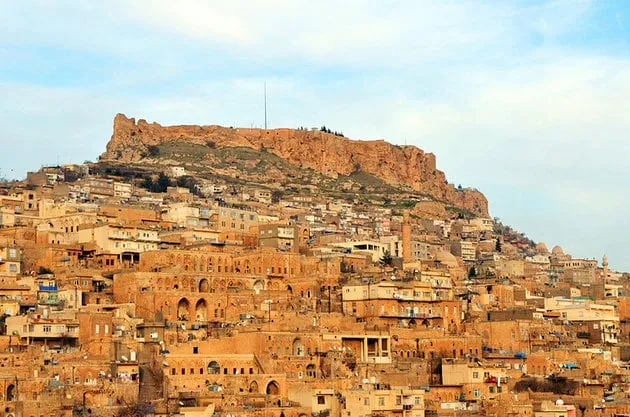
Mardin, a metropolitan province in southeastern Türkiye, has a population of 779,738. The city is built on a rocky hill near the Tigris River. Most of its people work in farming and livestock, and tourism also contributes to the economy. Mardin's society is richly diverse: Kurds, Syriacs, Christians, Jews, Yazidis, Arabs, Armenians and Turks live here.
Mardin's famous dishes and desserts
Stuffed tripe: Kibbe
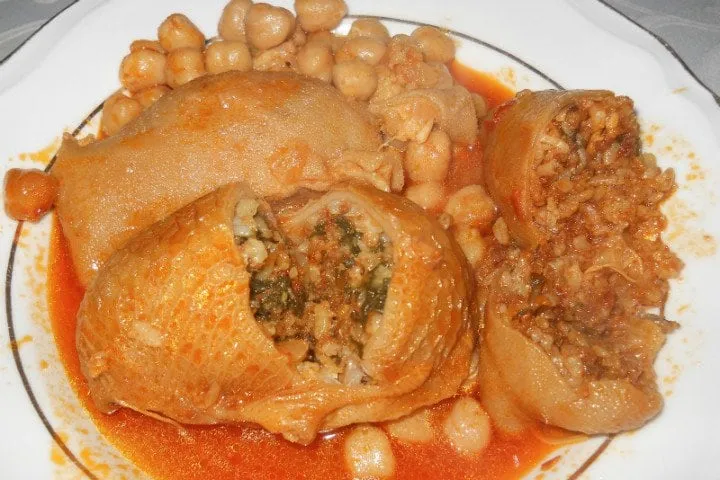
Known to some as kibbe and to others as kibe, this dish is actually a kind of stuffed tripe.
Made with lamb or kid tripe, it takes a lot of care. The tripe is filled with meat, rice, mint, allspice and, if you like, chickpeas, and few dishes are as filling.
Mardin-style stuffed meatballs: İrok
İrok is a recipe where the beauty of içli köfte (bulgur shells stuffed with spiced meat) is crowned with spices. Painstakingly prepared, the köfte are then fried and become a feast for the palate.
Leaving Mardin without trying them might be your biggest mistake, so add them to your list right away. :)
If there's a fried one, there's a boiled one: İkbebet
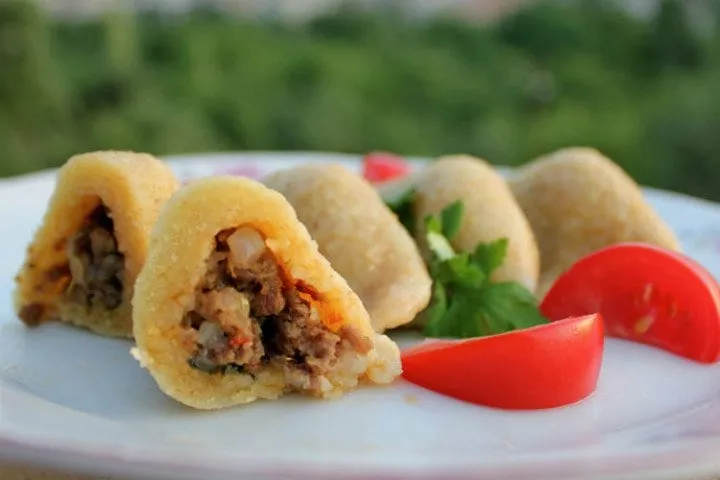
We called irok Mardin's içli köfte, but you can't skip ikbebet either. If you prefer something healthier than fried food, or think the boiled version is better, be sure to try ikbebet, Mardin's special boiled stuffed köfte.
Its taste will stay with you, and wherever else you eat it, it won't be as good as in Mardin.
The smell alone will make you hungry: Soğan kebabı
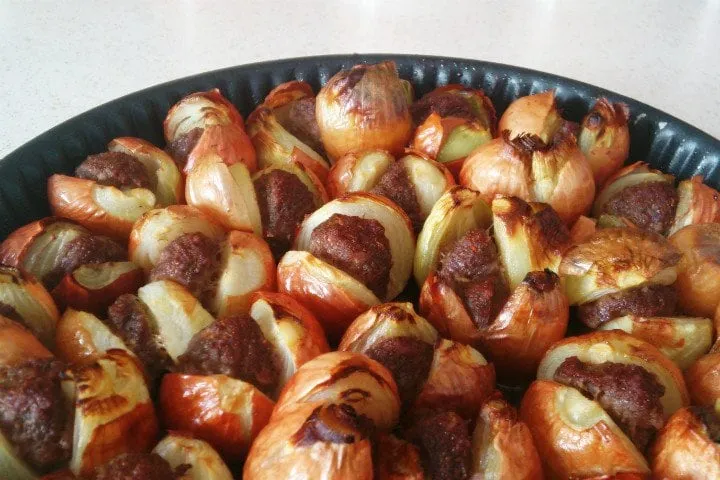
Onion kebab brings together onions, a carefully made minced-meat filling and a tomato-paste sauce.
Walnut-sized portions of the filling are stuffed into onion halves, coated in the sauce and sent into the oven, and soon the whole house smells wonderful. Then comes the feast, and then happiness.
A feast in itself: Kaburga dolması
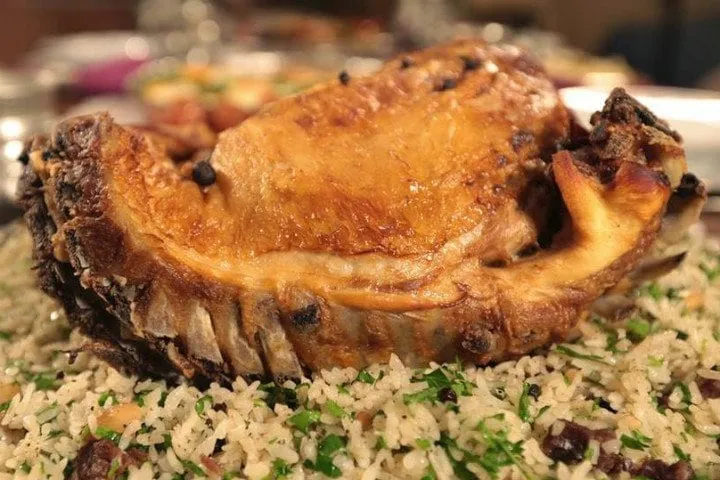
Sometimes a single dish is enough to lay a banquet, and in Mardin cooking that dish, we think, is kaburga dolması, stuffed lamb ribs. A whole huge rack of ribs is used, filled with diced beef, rice and all kinds of spices.
Just when you think that's it, out comes a separately cooked pilaf with everything from parsley and pine nuts to almonds and currants. In short, one kaburga dolması feeds a table however crowded.
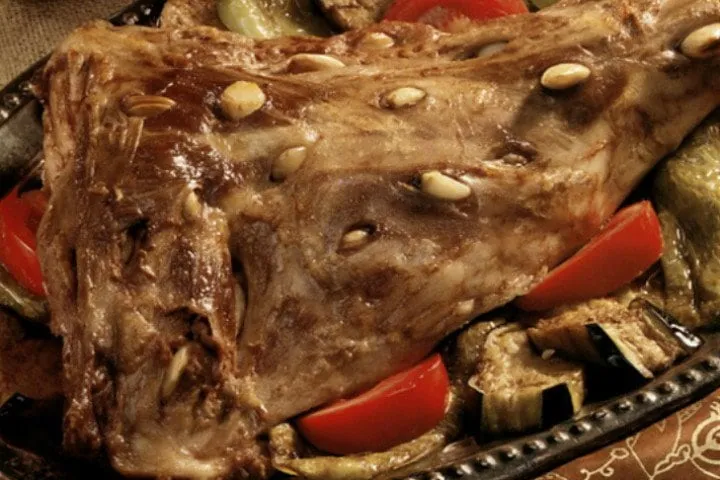
Mardin is determined to fill you with meat: Dobo
You've probably noticed already, but we'll say it anyway: Mardin cooking is a delicious cuisine full of meat dishes.
Dobo is one of the city's most traditional and tasty dishes. Made with a whole shoulder of lamb, one dobo easily feeds several people. Wonderful.
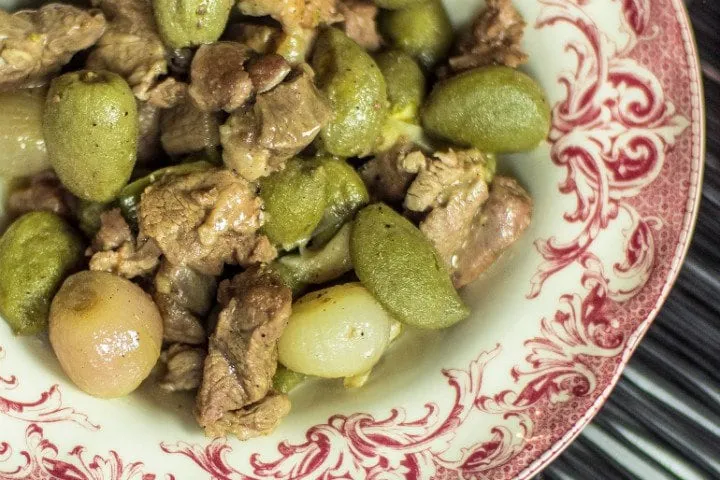
Very different, very special: Firkiye
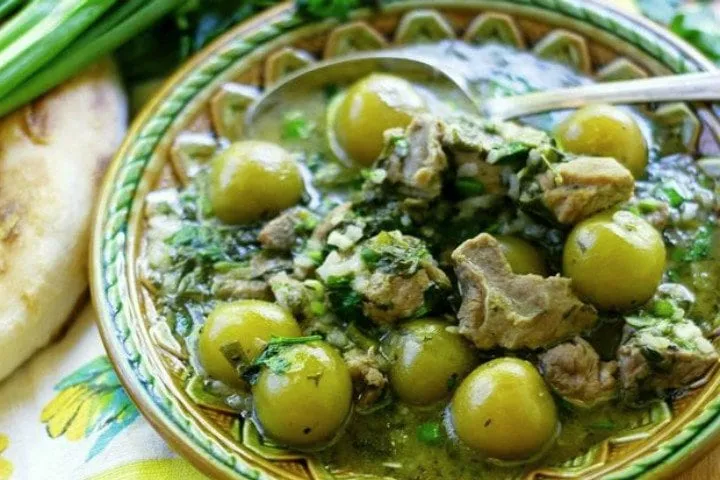
One of the city's most distinctive recipes, firkiye combines diced lamb with green almonds (çağla). It is usually eaten with a squeeze of lemon and a sprinkling of finely chopped parsley. Delicious.
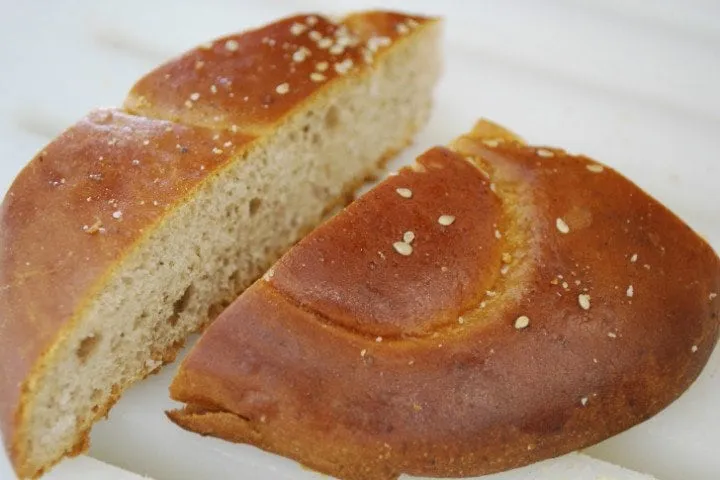
You must try Mardin's bread too: Kiliçe
Kiliçe, kliçe or Mardin çöreği: whatever you call it, this sweet bread brings basic ingredients such as flour, sugar and milk together with mahlab, cinnamon, anise and fennel. You may wonder about the mix, but the first bite wins you over.
Delicious every way: Sembusek
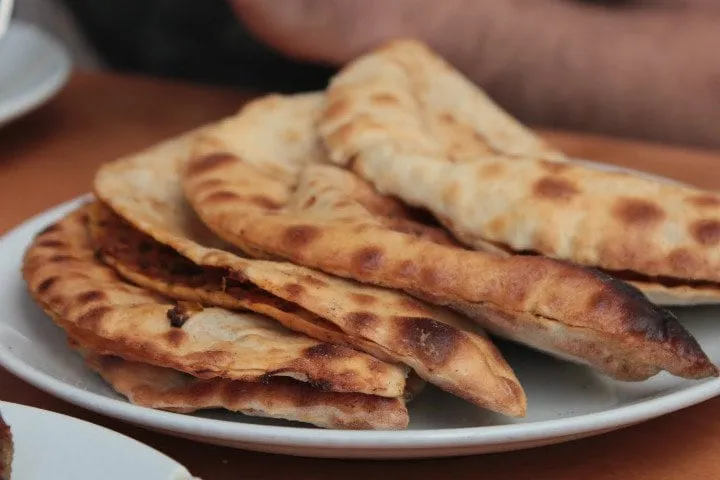
Think of sembusek as a closed lahmacun or pide, a combination of meat and dough. It can be made at home on a griddle (sac) or sent to the bakery's oven. It is so good that you keep eating even when you're full.
Plums make a fine stew too: Alluciye
Diced lamb again takes the lead in this recipe, this time with green plums. The dish draws everyone's attention as soon as it reaches the table, and the surprise turns to delight with the first forkful.
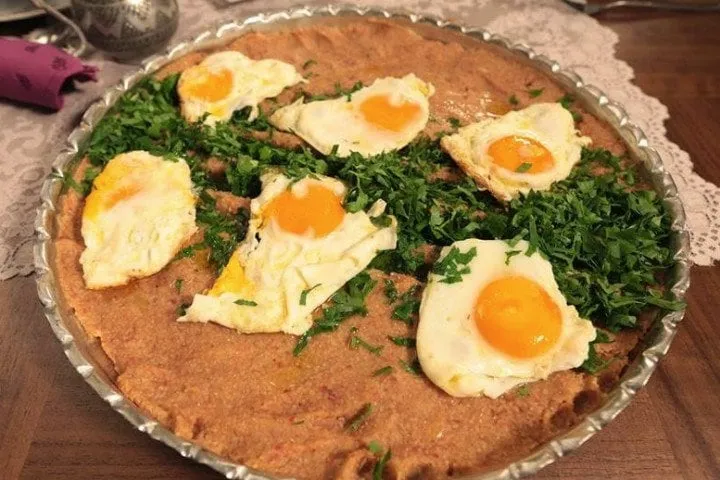
And just look at it: Accin
We admit it: we could go on forever about Mardin's cuisine. But we can't skip this famous dish. Look at how beautiful it is; you could gaze at it for hours. And it's packed with beef, bulgur, all kinds of spices and egg. What more could you want?
A sweet made of molasses: Harire
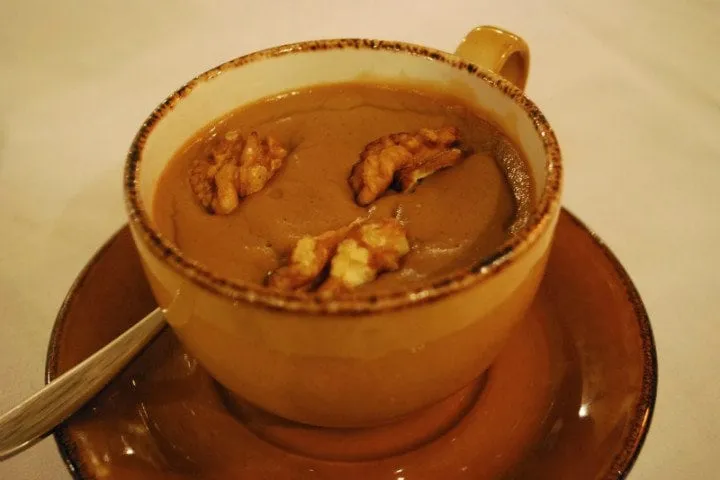
Harire is made with simple ingredients that go well together: grape molasses (pekmez), flour, sugar and cinnamon. Topped generously with walnuts, one bowl could keep you going all day, and it tastes so good you'll eat it by the spoonful.
Not just sweet but filling: Zingil
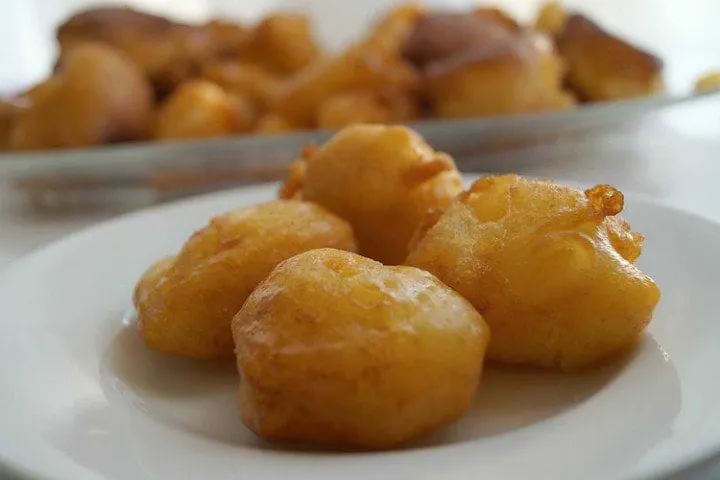
Similar to lokma, zingil is a fried dough sweet: the batter is dropped into hot oil, fried golden and then soaked in syrup. If you find yourself in Mardin, it's one of the first things you shouldn't leave without trying. Take our word for it.
Did someone say strong coffee? Mırra
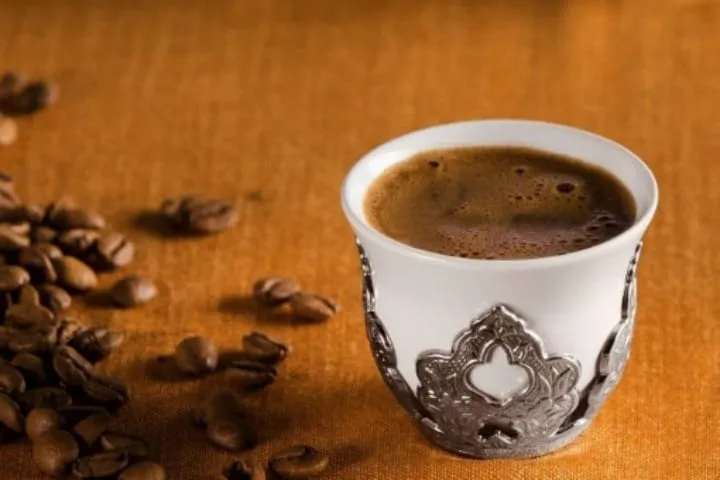
If the coffee you drink feels too weak, or you sometimes wish for something really strong, you haven't met Mardin's legendary coffee, mırra.
Brewed several times over, it is so strong that it is served in small cups without handles, even smaller than a Turkish coffee cup. Even that little amount is more than enough to wake you up.
Source (in Turkish): https://yemek.com/mardin-yemekleri/sayfa/12
Places to visit in Mardin
1. Dara ruins
The ruins of Dara lie southeast of Mardin, 30 kilometres from Nusaybin, in the village of Oğuz on the Mardin–Nusaybin road. They are among Mardin's biggest draws for visitors.
2. Altunboğa Medrese
The Altunboğa Medrese can go on your list of places to stop in Mardin. Because it has no inscription, there is no firm evidence of when it was built, but some sources say it was built by Altunboğa, vizier of Melik Mansur.
3. Deyrulzafaran Monastery
The history of Deyrulzafaran Monastery is thought to go back to the founding of Mardin. Its ceiling in particular will catch your eye: the stones are laid in rows and lock together in geometric shapes with no mortar between them.
4. Savurkapı Medrese

One of the buildings that shed light on Mardin's history, the Savurkapı Medrese stands next to the Bab es-Sur Mosque in the central district, so it is easy to reach. Its inscription has not survived and there is no certain date for its construction; it is thought to date from the Artuqid period.
5. Sabancı City Museum
In central Mardin stands the Sabancı City Museum, named after the well-known businessman Sakıp Sabancı.
Opened in 2009 in the city centre, with easy access to the sights nearby, it also houses the Dilek Sabancı Art Gallery.
The museum tells the story of the city's urban development and culture.
6. Mardin Castle
Mardin Castle, which even has songs written about it, should be at the top of your list.
Still standing to show off its history, the castle will take your breath away from a distance, and as you get closer you will admire both its structure and the view it offers.
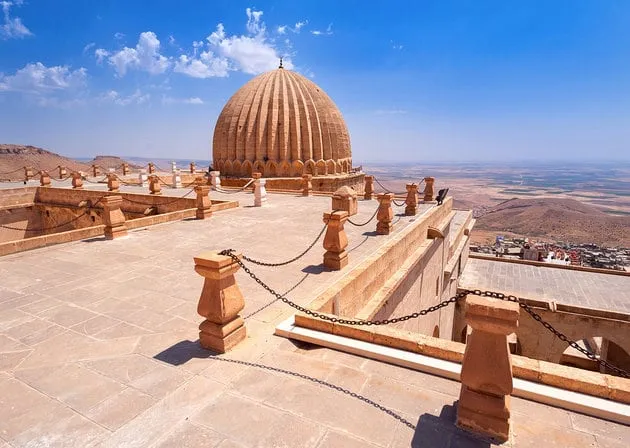
7. Great Mosque of Mardin
There is no record of who built the mosque or in what year; according to the date on its door it was built in 1190. Its appearance and architecture enchant visitors. One of its two minarets collapsed, some say after a lightning strike, others after an earthquake. The mosque's most important feature is that it serves all four major schools of Islamic law, and the names of ten Companions of the Prophet are written on its minaret.
8. Mor Gabriel Monastery
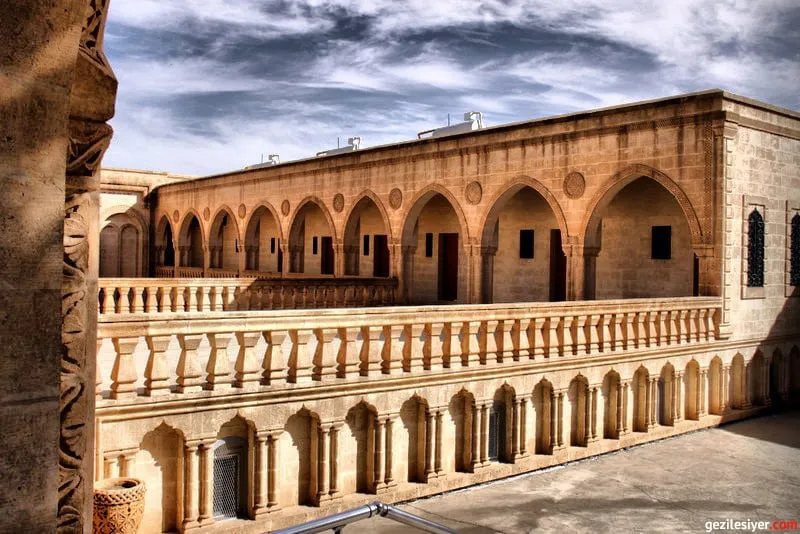
Mor Gabriel Monastery is 23 kilometres from Midyat and belongs to the Syriac community. It is also known as Deyrulumur Monastery.
9. Gelüşke Han
Walking through the Gelüşke Han, with its historic fabric and carved stones, is like travelling deep into the past. Every corner of Mardin has an atmosphere of its own, and this historic inn suits it perfectly.
10. Kasımiye Medrese
Every corner of Mardin is history, and there are so many places to see. The Kasımiye Medrese is one of them. Its most striking feature is the courtyard with pools that symbolise life: the first pool, where the water starts, stands for infancy, the second for childhood, the third, long and narrow, for youth, the fourth, short one for old age, and the pool the water finally falls into for the Day of Judgement. Its architecture is very impressive.
Source (in Turkish): https://www.gezilesiyer.com/mardinde-gezilecek-en-guzel-10-yer.html
Culture and arts in Mardin
Mardin lies on the Silk Road; the province has five inns and a caravanserai. Its mosques, tombs, churches and monasteries show how different faiths have lived side by side in the same city. The “Mardin Cultural Landscape” is on the World Heritage Tentative List.
The city's name is written Mâridîn in Arabic, Marde in Syriac and Mêrdîn in Kurdish, a small sign of its multilingual past.
A biennial has been held since 2010, as well as the International Mardin Film Festival. The Mardin Museum and the Sakıp Sabancı Mardin City Museum are open to visitors.
Local crafts include telkari (silver filigree), stone carving, copperwork, wood carving, pack-saddle making, herbal soap making and home winemaking.
History of Mardin
Mardin's history goes back a very long way. Stones found in excavations at Hırbe Helale date from the Palaeolithic. Around 2000 BC the area was under Assyrian rule, later passing to the Hittites and Urartians.
The castle was taken by the Muslim armies in 640, came under the Seljuks in 1085 and the Artuqid principality in 1103. In 1260 Yaşmut, son of the Ilkhanid ruler Hülegü, besieged the city for eight months. In the following centuries the Kara Koyunlu, the Ak Koyunlu and, in 1507, Shah Ismail ruled the city.
The castle was taken by Ottoman forces in 1517. A metropolitan municipality was created in 2012 and the central district was renamed Artuklu.
Getting to Mardin
You can reach Mardin by air and by road. Since Mardin is far from most big cities, flying is more convenient than driving.
By air:
Mardin Airport, 20 km from the city centre, has direct or connecting flights from many cities. From the airport you can reach the centre by shuttle, minibus or taxi. Flights take 1.5 hours from Istanbul, 1 hour 40 minutes from İzmir and 1 hour from Ankara.
By road:
You can reach Mardin by bus or by car. Because of the distance from big cities the road is less popular, but it can be a pleasant journey. The city is on the E-90 highway, the logistics route between the Middle East and Europe, so it is easy to drive to. Direct or connecting buses also run from many Turkish cities.
Districts of Mardin
- Dargeçit
- Derik
- Kızıltepe
- Mazıdağı
- Central district
- Midyat (Estel)
- Nusaybin
- Ömerli
- Savur
- Yeşilli
Economy of Mardin
According to 2001 figures, Mardin's economy is based on farming, livestock and trade, with farming and livestock making up 66.8 percent of economic activity. After farming, public services are the most important sector.
The province has the Mardin Free Zone and the Mardin Organised Industrial Zone. Because the Southeastern Anatolia Project (GAP) has not been completed, agriculture-based industry has not been able to develop. Although there is potential for cultural and religious tourism, tourism does not yet play a large part in the economy.



Comments
Loading comments…