
Nevşehir
The enchanting heart of Cappadocia
- Central Anatolia Region
About Nevşehir
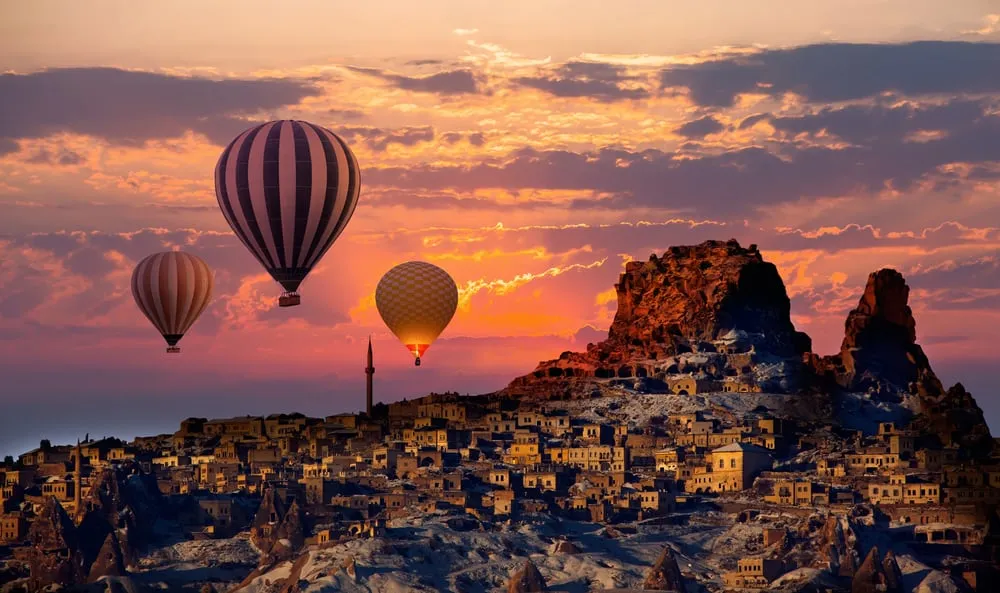
Nevşehir, a village known as Muşkara in the Ottoman period, took its present name, meaning "new city" in Ottoman Turkish, in the 18th century. Also called Anatolia's fairy-tale city, it is like a gateway to another world, with its history and its distinctive landscape. Naturally, the first area that comes to mind with Nevşehir is Cappadocia. Its name comes from the ancient Kingdom of Cappadocia. That in turn is a variant of the name Katpatuka, which according to tradition means "land of beautiful horses". This is why the area we will try to describe is also known in Turkish as the Land of Beautiful Horses.
In this region, which became an important centre of Christianity after the Hittites, houses were carved into the rocks, churches were created by working the hard stone, and pictures were painted on stone walls. It became an important place of retreat and refuge for Christians fleeing Roman persecution. Although the geographical region properly called Cappadocia covers a much larger and wider area than the place we are talking about, today we use the name for an area within Nevşehir province. This area is in effect a district that gives life to Nevşehir. Geologically, we can describe it as masses of rock formed over the years as rain and wind eroded the soft layers made by the tuffs of the 3 large volcanoes around it. But the simple sentence you have just read actually covers an event that began 60 million years ago and hard rocks that took 60 million years to reach their present form.
Nevşehir's famous dishes and desserts
A meal in Nevşehir usually starts with soup: tarhana, kesme, milk soup and düğün çorbası (wedding soup), made with fine bulgur, onion and tomato paste, are among local favourites.
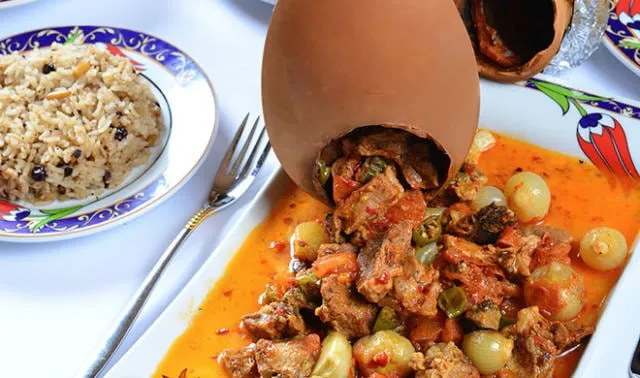
The province's best-known dish is testi kebabı, in which mutton or beef is cooked for a long time in an earthenware jug. Ağpakla, the local name for dried white beans, is cooked in a clay pot with meat on the bone; katma aşı, soğanlama, dıvıl and stuffed quince are also particular to Nevşehir cooking. Breads such as sızgıt, kömbe and kışlık ekmek and desserts such as bulama, dolaz and aside are the other famous items on the table.
Places to visit in Nevşehir
Göreme Open-Air Museum: Göreme Open-Air Museum is one of the most important tourist sites in the region. It lies within the boundaries of Göreme, 2 kilometres from the town centre. The museum, which carries traces of the past into the present, sits at the head of a valley formed by natural processes. Göreme Open-Air Museum was built by St Basil, Archbishop of Kayseri. The museum, where education continued for about 1,000 years, includes chapels, a refectory, churches, a kitchen and a monastery.
Among the important historic buildings you will see in the museum, which will take you out of the present and on a journey into the past, are the Elmalı Church, the Yılanlı Church, St Barbara, the Monastery and the Chapel of St Basil.
Hacı Bektaş-ı Veli Museum: Among the most visited places in Nevşehir's Hacıbektaş district is the Hacı Bektaş Veli Museum, opened in 1964 in the Hacı Bektaş Veli Complex. The museum, made up of three courtyards, opened as an Ethnography Museum.
Derinkuyu Underground City: Derinkuyu Underground City, which adds so much to Cappadocia's character, is one of the places visitors to the region most want to see first and are most curious about. At 85 metres deep, it is one of the deepest and largest settlements of its kind. It has eight floors and contains stables, a kitchen, a school and a refectory. The moment you step inside, your link with the world will be cut and you will take a short journey back to earlier times.
Temenni Hill: Temenni Hill is one of the best places to take in the beauty of Ürgüp in the mystical atmosphere of Cappadocia. Fairy chimneys, castles, mosques, churches and natural scenery somehow look even more beautiful from here. Leaving all the bustle behind and watching the region's enchanting beauty from the very top will lift your spirits. Here you can eat delicious gözleme and drink a hot glass of tea with the view of Temenni Hill.
Kaymaklı Underground City: Kaymaklı Underground City, in the town of Kaymaklı, is 20 kilometres from Nevşehir. It has 8 floors, and the Roman and Byzantine periods had a great influence on its expansion. Here, all the rooms are connected to one another along a corridor.
Ihlara Valley: Surrounded by trees that reach for the sky, Ihlara Valley is one of the most beautiful and special natural sights in the Cappadocia region. The valley, as pretty as a postcard and showing nature's finest colours, combines with the view of the Melendiz Stream to offer visitors a unique beauty. Before you enter the valley, which is a long walking trail, a detailed map describing it will greet you at the start of the path. If you have never been, you will be amazed when you see the churches in the valley. Although there are more than a hundred churches, only a few can be visited.
Paşabağ Monks' Valley: Cappadocia's Paşabağ Monks' Valley is one of the most magical and impressive places in the region. It is as if it were left over from centuries ago and time had stopped here. Paşabağ lies on the Avanos–Göreme road, very close to Cappadocia's Zelve Valley. Here you can see interesting examples of fairy chimneys, large and small, which look like a gift of the universe. In the past, monks and clergy used the Paşabağ Valley to withdraw into seclusion in rooms they carved into the rock.
Zelve Ruins: The Zelve Ruins, made up of three valleys, are one of the most striking places in Nevşehir. Fairy chimneys are concentrated in this area, which is 5 kilometres from Avanos. The area was both a settlement and a religious centre for Christians, especially in the 9th to 13th centuries.
Belisırma Village: Belisırma is a village surrounded by Cappadocia's natural beauty. Visited by crowds of Turkish and foreign tourists all year round, the village lies in the middle of Ihlara Valley, and the Melendiz Stream beside it completes its beauty. Of the 14 churches open to visitors in Ihlara Valley, which Mother Nature created with such care, 7 are in Belisırma. The Direkli Church, the Bezirhane Church and the Ala Church are just a few of them. Belisırma, a very charming village, has many restaurants. In these charming restaurants you can try fish and local dishes.
Tokalı Church
The Tokalı Church in Göreme, one of Cappadocia's favourite historic sites, delights its visitors with its religious scenes, as if they were watching a short film.
Dated to the 10th century, the Tokalı Church is known as the largest rock-cut church in the region. It has 4 parts: the old church, the church beneath the old church, the new church and the chapel.
The Tokalı Church should be one of your first stops on a trip to Nevşehir and Göreme. It is a place to enjoy for its frescoes and its architecture. Scenes such as Christ's Descent into Hell, the Killing of Zechariah, Christ Meeting John the Baptist, the Healing of the Blind Man and the Ascension of Christ adorn the church's walls. Here you will feel as if you were in the Sistine Chapel in the Vatican.
Cappadocia Culture Centre
The Cappadocia Culture Centre, which was run as a hotel in 1954 and, after a long break, restored and turned into a museum, is in the town of Ortahisar.
Opened in 2002, the culture centre uses figures to show the traditional ways of life of the local people. There are sections on the custom of asking for a bride's hand, pekmez (grape molasses) making, carpet and kilim weaving, fabric printing techniques, the henna-night ceremony, the bride's room and the village guest room. The Cappadocia Culture Centre has 12 rooms, and the building, used as a museum, draws great interest from Turkish and foreign tourists throughout the year. On the days of your Nevşehir holiday when you travel through Cappadocia's history, you should be sure to visit the Cappadocia Culture Centre too. The Fırkatan Church, the Üzümlü Church and the Hallaç Monastery in Ortahisar are among the places we recommend you see.
Fırkatan Church
The Fırkatan Church, also known as the Aynalı Church, is 1 kilometre from the town of Ortahisar. It is 500 metres from Göreme. The church's architecture differs from that of the other churches in the region.
Inside there are secret passages, a kitchen, food stores, places where people took refuge in times of danger and secret tunnels leading to them. There are not many paintings apart from some geometric shapes painted in red. Because the Fırkatan Church is close to the Cappadocia Courthouse, it is thought that judges or people of that rank lived in this building. A witness to Cappadocia's history, the Fırkatan Church is visited by many tourists during the year. Cappadocia, where you will travel through history, will also make your head spin with its natural beauty, and you will never forget it. You can also include the Üzümlü Church and the Hallaç Monastery in your visits.
Üzümlü Church
The building, called the Üzümlü (Grape) Church because of the bunches of grapes painted inside it, is in the Kızılçukur Valley near the town of Ortahisar in Cappadocia. It is 3 kilometres from Ortahisar and is thought to have been built in the 10th century.
Inside the Üzümlü Church there are fish symbols, palms, vines and frescoes from before Iconoclasm. The Üzüm Church, which we recommend you visit on your Cappadocia holiday, has two naves and is covered by a vault. There are also religious symbols in this building. After visiting the Üzümlü Church in Nevşehir-Cappadocia, you can spend enjoyable days visiting other spots that reveal the region's rich history. The Hallaç Monastery, the Güvercinlik Valley and İshak Castle are just a few of the places you should visit.
Hallaç Monastery
The Hallaç Monastery is one of the spots in Ortahisar, Cappadocia, that tourists visit. Built on a large rock mass, the monastery has withstood natural forces for centuries but has now slowly begun to collapse. Even so, it attracts great interest from tourists.
It is 1 kilometre from Ortahisar and takes its name from the Hallaç Stream beside it. The Hallaç Monastery is also a church and is a building with no other example in Cappadocia. It is known to have been built in the 11th century and is thought to have been a monastery for the sick. Be sure to include the Hallaç Monastery in your Cappadocia holiday. The Güvercinlik Valley, the Yılanlı Church and Belisırma Village are just a few of the places to see in Cappadocia. Do not let your camera out of your sight during your holiday.
İshak Castle
İshak Castle is one of the important buildings of the historic Cappadocia region. It stands opposite Ortahisar Castle, and it is said that a tunnel connects Ortahisar Castle in Cappadocia with İshak Castle. It is known that in times of war people used this tunnel to reach their places of worship and their homes. This information has not, of course, been confirmed.
İshak Castle was used by people for defence and as living space. The castle, in Ortahisar, welcomes many tourists during the year. Offering an enjoyable trip because it is close to other historic sites and natural sights, İshak Castle awaits you in all its splendour. On your Cappadocia holiday you can visit the Ortahisar Ethnography Museum and the Cappadocia Ethnography Museum and take short journeys into history.
Yılanlı Church
The Yılanlı Church in the Ihlara Valley in Nevşehir-Cappadocia is one of the buildings that have survived to the present day.
The icons in the two-part Yılanlı Church are still well preserved. The Yılanlı Church, among the places you can go in the Ihlara Valley with its poetic beauty, is covered by a barrel vault. Inside its north walls are the graves of monks.
It is called the Yılanlı (Snake) Church because of the frescoes on its west wall of four sinful women attacked by snakes. There will be many places to see on your Cappadocia trip. Belisırma Village, Özkonak Underground City, the Saklı Church, the Karanlık Church and the Ayvasil Church are among the places we suggest you put on your list. An impressive historic building set in natural beauty, the Yılanlı Church is also one of the stops on your trip that will make a lasting impression. For easy travel on your Cappadocia trip, you can choose Cappadocia Airport.
Belisırma Village
Belisırma, a village among the natural beauties of Nevşehir-Cappadocia, is an area visited by many tourists during the year.
However old and ruined the village may look from across the way, it has many remains that are all historic monuments.
Belisırma Village, in the middle of the Ihlara Valley, makes a magnificent sight with the Melendiz Stream beside it. There are many restaurants in the village, where you can try fish and local dishes and add unforgettable pleasures to your time there.
Of the 14 churches open to visitors in the Ihlara Valley, 7 are in Belisırma Village. The Batkın Church, the Direkli Church, the Bezirhane Church and the Ala Church are some of them. Belisırma, a short summary of the region, is one of the first places to stop for those who want to see an Anatolian village. The village, which we recommend you include in your Cappadocia trip, awaits you with all its beauty. Temenni Hill, the Yılanlı Church, Derinkuyu Underground City and the El Nazar Church are among the places you can visit in Cappadocia. To reach your Cappadocia holiday, which will win your admiration, you can choose Cappadocia Airport.
Temenni Hill
In Cappadocia, a unique region, at every step you discover the beauty of historic sites in a mystical atmosphere. Underground cities, ruins, mosques, churches, natural beauty…
In Cappadocia, home to many civilisations through its history, the Ihlara Valley, the Saklı Church, Belisırma Village, Derinkuyu Underground City, Kaymaklı Underground City and the Hacı Bektaş Veli Museum are among the first places you should see. We recommend that you also include Temenni Hill in your Cappadocia trip, whose beauties are too many to count.
You should have a drink on Temenni Hill, which reveals the view of Ürgüp, and enjoy the region. It will be a truly unique feeling for you. You can reach Temenni Hill, from which you can see the surroundings almost as far as Kayseri, in 10 minutes through the back streets. And while you spend your best moments here, do not forget to take photos. Temenni Hill, a viewpoint, is ready to show you all of Ürgüp's beauty. During your holiday you can make short visits to the region's sights and have enjoyable days. For your journey you can choose Cappadocia Airport.
Damat İbrahim Pasha Complex
Nevşehir is an important city for tourism. Nevşehir, which tells its history through Özkonak Underground City, the Zelve Ruins, Kaymaklı Underground City and its Saklı Church, wraps all its historic buildings in a warm, motherly embrace. Each of the buildings tells a different story, and each forms a piece of its own history.
One building that forms part of Nevşehir's history is the Damat İbrahim Pasha Complex. Located in the city centre, the Damat İbrahim Pasha Complex was built between 1726 and 1727. It was built by Damat İbrahim Pasha of Nevşehir and has survived to the present day. The complex includes a mosque, a madrasa, a soup kitchen (imaret), a hamam, a primary school (sıbyan mektebi), two fountains and a caravanserai. The complex's madrasa is used as a library today. You can add the Damat İbrahim Pasha Complex to your Nevşehir trip and visit its parts one by one. Nevşehir, which bears the traces of a deep history, is ready to introduce every one of its remains to you.
Özkonak Underground City
Özkonak Underground City is one of the places to see in Nevşehir-Cappadocia. It is 14 kilometres from Avanos and has a different structure from the Kaymaklı and Derinkuyu underground cities in the same region.
Its rooms are neatly carved, and there are long holes on every floor for communication. These holes were also used for ventilation. Özkonak Underground City is one of the sights most worth seeing in Nevşehir's historic atmosphere. It is a regular stop for Turkish and foreign tourists who want to explore Nevşehir, and it has a great many visitors during the year.
Zelve Ruins
The Zelve Ruins are one of the most enjoyable voyages of discovery in Nevşehir. The ruins, which you reach after an adventurous climb, are in fact very easy to get to.
Zelve, which you can reach by municipal bus or by car, is made up of three valleys. It is also one of the places with the greatest concentration of Cappadocia's fairy chimneys. The fairy chimneys at Zelve, only 5 kilometres from Avanos, have pointed tips and wide bodies. The area was both a settlement and a religious centre for Christians, especially in the 9th to 13th centuries. On your Nevşehir trip, where you will have the chance to see the Hacı Bektaş Veli Museum, Özkonak Underground City, Kaymaklı Underground City, the Damat İbrahim Pasha Complex, Tatlarin Underground City and all the other beauties, you should be sure to visit the Zelve Ruins too.
Hacı Bektaş Veli Museum
The Hacı Bektaş Veli Museum, among the most visited places in Nevşehir, was opened in 1964 in the Hacı Bektaş Veli Complex.
The museum, made up of three courtyards, opened as an Ethnography Museum. In the first courtyard are the Üçler Fountain and, no longer surviving, the bakehouse, the stable, the toilets and the laundry. In the second courtyard are the Lion Fountain, the Baba Pavilion, the Tekke Mosque, the pool, the guest house (mihman evi), the meydanevi (assembly hall) and the Dedebaba Pavilion. In the third courtyard are the Atatürk Corner, the pirevi, the Tomb of Balım Sultan and the treasury.
The Hacı Bektaş Veli Museum is just one of the places you should visit on your Nevşehir tour. After it, you can visit Kaymaklı Underground City, the Zelve Ruins, the El Nazar Church, Tatlarin Underground City and Mazı Underground City.
Kaymaklı Underground City
Kaymaklı Underground City, 20 kilometres from Nevşehir, is perhaps one of the most striking of the historic remains.
This underground city in the town of Kaymaklı, which bears the same name, has 8 floors.
The Roman and Byzantine periods had a great influence on its expansion. In Kaymaklı Underground City all the rooms are connected to one another along a corridor.
After visiting Kaymaklı Underground City, which is important for tourism, do not forget to visit the Damat İbrahim Pasha Complex, Mazı Underground City, the Ayvasil Church, the Zelve Ruins, Özkonak Underground City and other historic sites.
El Nazar Church
The El Nazar Church, which stands out among Nevşehir's historic remains, is known to have been built in the 10th century.
The church, in the central district, was built on a T plan. It is architecturally attractive, and the arms of its cross are covered by barrel vaults. The church's floor in particular has been damaged, but it is still well worth seeing.
Scenes from the Gospels are depicted on the walls of the El Nazar Church. The scenes are arranged in chronological order. You can also visit Mazı Underground City, Belisırma Village, Özkonak Underground City, the Ayvasil Church, the Temenni Monumental Tomb in Ürgüp and the Taşkın Pasha Mosque in Ürgüp. Start your enjoyable journey at the first opportunity.
Tatlarin Underground City
With Mazı Underground City, the Zelve Ruins, Derinkuyu Underground City, the Ayvasil Church, the Temenni Monumental Tomb in Ürgüp, Özkonak Underground City and its other historic remains, Nevşehir is one of the leading places for historic sightseeing.
One of Nevşehir's historic remains is Tatlarin Underground City. The underground city, which opened its doors to visitors in 1991, lies 10 kilometres north of Acıgöl. According to the information put forward, it is said to have been a monastery with military and religious purposes rather than a civilian settlement.
Three skeletons were found in the parts built as a dungeon. In addition, to the right of the dungeon there is a kitchen, and at the second entrance a stable, a food cupboard and five storerooms. Do not forget your camera on your visit to Tatlarin Underground City, because you will want to capture those moments.
Mazı Underground City
Nevşehir, the homeland of history, has brought together many historic remains with its natural beauty.
Mazı Underground City, in Ürgüp, is one of the first stops for those who want to make a different kind of trip. Dating from the early Roman period, the underground city is a unique place where you can see tombs from both the Roman and the Byzantine periods.
Set on a steep slope, Mazı Underground City has four separate entrances. The main entrance looks like an irregular corridor. The stable opposite this entrance is the first detail that catches the eye. There is also a church inside the city, and although the church is in a separate area, it keeps its mystical atmosphere.
Stepping into a different world goes through Ürgüp. Mazı Underground City, with its enchanting atmosphere, will take you on a journey to other times. Do not forget to visit the Ayvasil Church, the Temenni Monumental Tomb in Ürgüp, Kadıkalesi in Ürgüp and the Taşkın Pasha Mosque in Ürgüp as well.
Saklı Church
This historic building in Nevşehir, called the Saklı (Hidden) Church because it was discovered very late, has the real name Aya Lonnes. The church, near the El Nazar Chapel, has three apses.
Its flat ceiling is decorated with crosses and geometric patterns. It has been suggested that it was built in the 11th century.
The paintings, which are among the church's important decorations, were made directly on the bedrock. The Saklı Church in Göreme, Nevşehir, will amaze you with its interesting structure, its unusual decorations and the vividness of its colours. If you are planning a historic trip, you can turn your route towards this church that stayed hidden for years. After it, you can visit Tatlarin Underground City, Kaymaklı Underground City, Özkonak Underground City, the Zelve Ruins and the El Nazar Church.
Karanlık Church
The Karanlık (Dark) Church, which is still important in the Cappadocia region but does not get great crowds of visitors, is known to have been built in the early 12th century.
It has rich decoration, and the colours of its frescoes are as vivid as on the first day… The interior is enchanting… Cappadocia has drawn a great deal of attention because of its deep-rooted history and still welcomes guests in every season of the year.
The Karanlık Church will certainly catch your attention during your trip. Derinkuyu Underground City, the Ayvasil Church and other historic works are waiting to welcome you. Each is a different history, each a different living space with different architecture… There is a lot to see and be amazed by. Don't put it off: make your Cappadocia trip happen.
Ayvasil Church
The Ayvasil Church, in Nevşehir's Cappadocia district, is a rock-cut church.
Little is known about when this church, which has a long history, was built. In 1905 it was renovated and new wall paintings were made.
Inside, with this renewal, it feels as if the people who lived here left only yesterday… Do not go without knowing where it is, because it is a little hard to find. Even though it is currently locked, you can visit it accompanied by the guards. The Ayvasil Church, one of the historic treasures of the Cappadocia region, is a historic building that has kept its importance to this day and still sees plenty of visitors. When you visit this church with its charming architecture, you will also have the chance to spend an enjoyable time.
Derinkuyu Underground City
Derinkuyu Underground City, one of the enchanting historic places of Cappadocia in Nevşehir's districts, is one of the largest and deepest settlements of its kind.
This eight-storey wonderland has refectories, a kitchen and stables. It is 85 metres deep, and there is also a missionary school found nowhere else. Cappadocia attracts many tourists for its historic places and has magnificent places to visit. When your visit to Derinkuyu Underground City, one of these, is over, you can visit the other historic places under the spell of the city. You can also visit the remarkable Ihlara Valley in the Cappadocia region on the same day. If a comfortable journey is what you prefer, Cappadocia Airport will get you to Cappadocia safely.
Damsa Dam, Ürgüp
Damsa Dam is 17 km from Ürgüp. Mustafapaşa, formerly called Sinasos, which you pass on the way to the dam, is one of the foremost villages to see in Ürgüp.
Damsa Dam is suitable for picnics by the lake and for fishing. After the fairy chimneys, churches and other historic buildings, this dam offers peace with its natural beauty.
Temenni Monumental Tomb, Ürgüp
The Temenni Monumental Tomb was built in 1288 for Kılıçarslan. The tomb stands at the highest point of Kadıkalesi in the centre of Ürgüp.
The tomb is reached through a 700 m long tunnel. Part of this tunnel is currently open to visitors.
The tomb is important because, at a later period, it was the richest library in Anatolia.
Kadıkalesi, Ürgüp
In the past, Kadıkalesi was a building where the women and children living in the town took refuge in times of war. There is even a passage from the castle to the Damsa Stream, which flows below the hill.
The castle is still partly standing. I recommend you see it on your Ürgüp trip.
Taşkın Pasha Mosque, Ürgüp
Built in the Karamanid period, the mosque is in the village of Damsa in Ürgüp.
The mosque's walnut-wood mihrab is on display in the Ankara Ethnography Museum. On the site where the mosque was built there is also a madrasa of the same name.
Church of St Theodore, Ürgüp
The church, in the village of Yeşilöz in Ürgüp, was built on a T plan, with a dome over the centre. A staircase leads up to the gallery above. With this layout, the church differs from the other churches of Cappadocia.
The frescoes, which appear to be the work of three different artists, have survived partly intact to the present day.
Fıratkan, Ürgüp
On the Ürgüp–Göreme road, this is a two-storey building that brings together living spaces such as a church, a refectory, a dormitory and a kitchen.
It is worth seeing for its interesting structure.
Sarıhan Caravanserai, Ürgüp
Built in 1217 by Alaeddin Keykubad, the caravanserai stands midway along the Kayseri–Ürgüp–Aksaray roads.
The caravanserai, which takes its name from the yellow stone used in its construction, has been restored and is a fine example of Seljuk architecture.
Kızılçukur, Ürgüp
Kızılçukur, within the boundaries of Ürgüp, is one of the best places to watch the sunset in Cappadocia. If you are in Göreme near sunset on your Cappadocia trip, I recommend you watch the sun go down from this valley.
The sight of the sun and the fairy chimneys as the sun sets makes beautiful views worth seeing. The valley is on the Göreme–Çavuşin road.
Pink Valley, Ürgüp
The valley, on the Ürgüp–Avanos road, is especially rich in fairy chimneys. The valley, where the fairy chimneys take on different shapes, is worth seeing.
The valley is good for walking.
Valleys of Ürgüp
Ürgüp is the most developed settlement in the region, where you can see some of the finest examples of fairy chimneys in Cappadocia.
The valleys for walking within Ürgüp's boundaries are the Pancarlık, Üzengi and Keşlik valleys.
Zemi Valley
The Zemi Valley starts from the area of the Göreme Open-Air Museum and ends at Kermil Hill.
Like the other valleys, it is very rich in vegetation. On your valley walk you can visit the Sarnıç, Saklı, Görkündere and El Nazar churches.
Bağlıdere Love Valley, Göreme
The Bağlıdere Valley, also called Love Valley, is a 4,900 m valley that starts from Örencik on the Göreme–Uçhisar road and ends on the Göreme–Avanos road.
The valley is very good for walking. Its vegetation and fairy chimneys are worth seeing.
Güllüdere Valley
The Güllüdere Valley lies between Çavuşin and Göreme.
The valley is good for walking. The remains of churches, monasteries and living spaces in the valley are well worth seeing. Its volcanic rock made it possible to use this valley for shelter.
A wonderful valley for those who enjoy walking and exploring on a Göreme trip.
Güvercinlik Valley
Cappadocia, which welcomes many tourists into its magical world of historic and natural beauty, offers never-before-seen beauty from a different period at every step. Churches, underground cities, ruins, mosques, monumental tombs…
If you are planning a holiday in Cappadocia, we can tell you that you will never be bored for a moment and that enjoyable days of new discoveries await you. There will be many places we suggest you include in your holiday. One of them is the Güvercinlik (Pigeon) Valley… The Güvercinlik Valley in Göreme enchants everyone who sees it with its thousand and one shades of green. It is 4,100 metres long and one of the places in Nevşehir people are most curious about. You can see many pigeons here. Local people built many dovecotes in this valley for the pigeons, and the valley takes its name from them. While walking the Güvercinlik Valley, do not forget to visit the waterfall inside it. The waterfall, which many people do not know about, is 10–15 metres high and still happily plays the role of the valley's little daughter. After visiting the Güvercinlik Valley, one of Cappadocia's tourist spots, the Yılanlı Church, Belisırma Village, Özkonak Underground City, Derinkuyu Underground City and the Ayvasil Church are among the places we suggest you see.
Valleys of Göreme
The valleys in Göreme, one of Cappadocia's most important tourist areas, are the Zemi Valley, the Meskendir Valley, the Güvercinlik Valley, the Güllüdere Valley, the Bağlıdere Valley and the Kızılçukur Valley. Bringing together many beauties, from walking trails and rock-cut churches to unusual landforms and all kinds of fruit trees, the valleys are ideal places to see fairy chimney formations. Besides capped, conical, pointed, mushroom-shaped or columnar fairy chimneys, each valley has its own colour and vegetation.
You can explore these valleys on footpaths and enjoy a pleasant walk.
Churches of Göreme
The churches in Göreme, 10 km from Nevşehir and surrounded by valleys, are the Durmuş Kadir Church, the El Nazar Church, the Yusuf Koç Church, the Sarnıç Church, the Karabulut Church, the Karşı Bucak Church, the Saklı Church, the Meryem Ana (Virgin Mary) Church, the Kılıçlar Church, the Yamalı Church and the Eğritaş Church.
There are many historic churches you can visit on your Göreme trip.
Ortahisar Castle, Cappadocia
The date of the castle in Ortahisar, between Göreme and Ürgüp, is not known exactly, but it is thought to have been built in the Byzantine period.
Built for both shelter and strategic purposes given its location and its height of 80 m, the castle's interconnected corridors, rooms and tunnels are well worth seeing.
When you reach the top of the castle, the view in front of you is beautiful enough to take away all your tiredness.
To reach Ortahisar, 3 km from Göreme, you can use the minibuses that leave from Ürgüp and Göreme.
Cappadocia Ethnography Museum
Opened in 2004 in Ortahisar, Cappadocia, the museum presents Cappadocia's way of life and its objects from the past to the present.
Ihlara Valley, Cappadocia
Have you ever walked in the Ihlara Valley? One of Cappadocia's most famous walking areas, the Ihlara Valley combines with the view of the Melendiz Stream to take on a unique beauty and, with its dazzling nature, draws in everyone who goes there. Because the walking trail is very long, you may be a little hesitant about setting out. But after your first step the valley will draw you into its depths anyway.
Before you set out on your valley walk, a detailed map describing the valley will greet you at the start of the path. If you have never been, you will be amazed when you see the churches in the valley. Although there are more than a hundred churches, only a few can be visited. But seeing them and living those moments will do you a lot of good. And when you see the stairs used to go down into and climb out of the valley, you will find that they add an aesthetic touch to it. Going down is easy and climbing out is hard, but it will be a trip you will never forget.
Underground Cities of Cappadocia
The underground cities are among Cappadocia's most fascinating historic sights that must be seen.
In the landscape of Cappadocia, shaped over a formation process lasting millions of years, the tuff rock is easy to carve, and it is known that people created these cities for shelter, storage and, above all, defence.
The most important of the underground cities developed in the Roman and Byzantine periods are the Derinkuyu, Kaymaklı, Özkonak, Mazı, Özlüce and Tatlarin underground cities.
As for the structure and uses of the underground cities, they were used above all in the Byzantine period for protection from the raids of the Muslim Arabs. Derinkuyu Underground City, the largest, could shelter 20,000 people. This gives an idea of how complex the structures are.
In the multi-storey underground cities, the first floor was generally used to shelter animals, with long stays in mind, while the other floors held living units such as food stores, a church, a kitchen and a tandır oven.
Because the main purpose of the underground cities was defence, between each floor there are rolling stones with a hole in the middle that act as doors and are moved with a piece of wood fitted into the hole. Through this hole it was also possible to see uninvited guests and drive them away with weapons such as spears. Also for defence, the tunnels used to pass between floors are low and only wide enough for one person.
One of the things people most wonder about the underground cities is lighting. Small niches were carved in the tunnels and other parts, where linseed oil was poured and lit for light.
Even when you go down to the lowest floors of the underground cities, the air you breathe hardly changes. The living spaces were carved around a main ventilation shaft, and the ventilation system works wonderfully.
Çavuşin Church, Cappadocia
Among the many historic buildings in Cappadocia, the Çavuşin Church is important as the oldest known church in Cappadocia.
The church, on the Göreme–Avanos road, can be visited with a Museum Card or a single-use ticket bought at the museum entrance. The church and its interior have come down to the present day well preserved.
I recommend you visit this church of great historic importance on your Cappadocia trip.
Üzengi Valley, Cappadocia
The Üzengi Valley has some of the most enjoyable walking trails in Cappadocia. Lying between Ortahisar and Ürgüp, the valley has both historic and natural beauty.
On your walk in the Üzengi Valley, churches, natural springs, the Üzengi Stream, plenty of interesting dovecotes, old villages and more are among the other beauties you will see.
If you want to explore on foot in nature during your Cappadocia holiday, this valley is just right for you.
Dervent Imagination Valley, Cappadocia
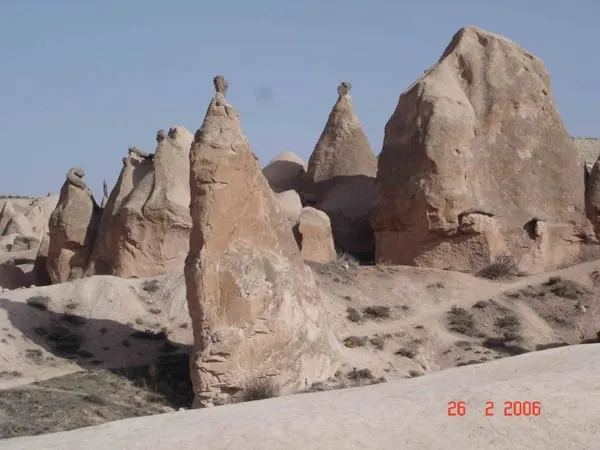
The Devrent Valley in Avanos, also called the Valley of Imagination (Hayal Vadisi), is a valley that always draws attention in Cappadocia with its curious shapes, where people stop and gaze.
Once you visit the valley, shaped into different forms by water and wind, it is not hard to guess why its second name is the Valley of Imagination.
Depending on your imagination, you may see its differently shaped forms as all kinds of things.
Paşabağ Monks' Valley, Cappadocia
The Paşabağ Monks' Valley is on the Göreme–Avanos road, very close to the Zelve Valley. It is a place where you can often see interesting examples of capped fairy chimneys, large and small.
This visually rich valley, which tourists coming to Cappadocia always visit as part of their tour programmes, has two names. Monks and clergy used the Paşabağ Valley, also called the Monks' Valley, to withdraw into seclusion in rooms they carved into the rock.
Coming to this area, you can see the loveliest examples of capped fairy chimneys and also visit the Zelve Valley close by, which was used as a living space for many years.
Zelve Valley, Cappadocia
The Zelve Valley is Cappadocia's oldest settlement. The valley, where people lived until recent times, is the place in Cappadocia used longest as a living space. It is important as the place where Christianity first began to spread. Turned into an open-air museum in 1967, the Zelve Valley is on the Avanos–Göreme road.
In the valley, the Geyikli (Deer) Church, the Monastery, the Baptist Church, the Direkli Church, the Balıklı (Fish) Church, the Üzümlü (Grape) Church, the Mill, the dovecotes, the Mosque and the Tunnel are the places to see.
The Zelve Valley, spread across three valleys, is a place where you will see many of the finest examples of fairy chimneys.
Pancarlık Church Valley
The Pancarlık Church Valley is within the boundaries of Ortahisar, south of Ortahisar, in the valley on the Ürgüp–Mustafapaşa road. The Pancarlık Church is one of the historic rock-cut churches of Cappadocia.
A monastery, a chapel and dovecotes are among the structures you can see on your visit to the church.
Uçhisar Castle
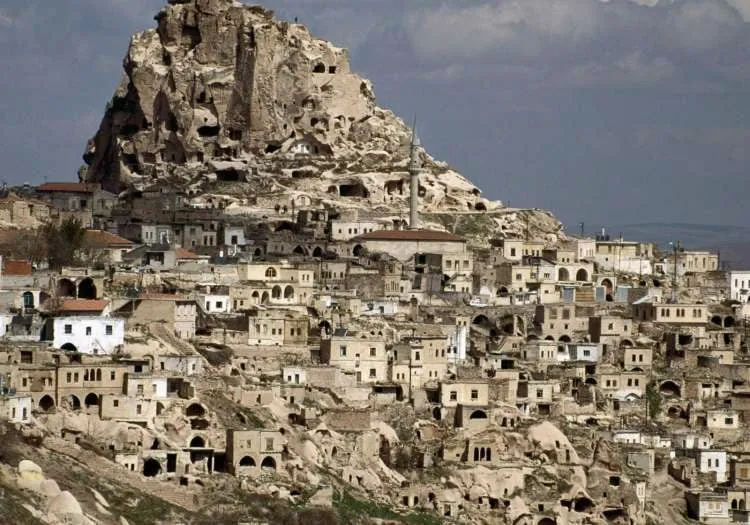
Uçhisar is the part of Cappadocia with the most beautiful views. Watching these beauties from the very top of the castle is a feeling all of its own.
Uçhisar Castle is the highest point in Cappadocia. From the strategically important castle, Ortahisar, Göreme and Avanos can easily be seen. Until recently the castle was used by people as housing.
You climb the castle through tunnels and well-made stairs. On the way up you take short breaks to enjoy the different beauties at every level. A surprise awaits you at the top of the castle: there are Byzantine graves at the summit.
Göreme Open-Air Museum
The Göreme Open-Air Museum is in Göreme, one of the most important tourist sites in the Cappadocia region. The museum, about 2 km from Göreme, sits at the head of a valley formed by natural processes.
The museum was built by St Basil, Archbishop of Kayseri. The museum, where education continued for about 1,000 years, is a complex that also includes living spaces such as churches, a monastery, chapels, a refectory and a kitchen.
You can enter the Göreme Open-Air Museum with a Museum Card or a single-use ticket from the booth at the museum entrance. If you are staying in Göreme, you can walk to the museum in a short time. If you are coming by car from further away, such as Ürgüp or Uçhisar, there is a large car park.
The historic buildings you will see in the museum are: the nuns' convent and living quarters, the monks' monastery and living quarters, the Chapel of St Basil, the Elmalı Church, the Church of St Barbara, the Yılanlı Church, the monastery teachers' refectory, the Karanlık Church, the Chapel of St Catherine, the Çarıklı Church, the monastery students' refectory and the Chapel with Skeletons.
Ortahisar Ethnography Museum
Opened to visitors in 2004, the Ortahisar Ethnography Museum is a private ethnographic museum displaying the Cappadocian way of life.
Rock Houses of Cappadocia
Cappadocia took on its present appearance through processes lasting millions of years, and these processes are still going on.
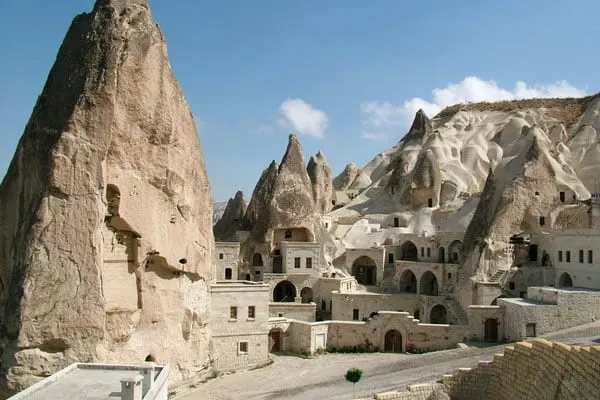
People, too, carved the rocks to build houses and other structures to meet their need for shelter in this unique landscape.
Cappadocian houses were generally built on valley slopes. Besides carving, the houses were built with stone quarried in the area, which is soft and easy to work when first extracted. The stone hardens quickly once it is exposed to the air. Because stone is so plentiful, a craftsmanship and architecture particular to the area developed.
The houses consist of a central hall (sofa) with rooms around it. The doors are made of wood, with arched tops. The houses have rooms, a kitchen, a storeroom, a tandır, a pantry and a wine cellar. Fireplaces, stone stairs, decorative niches, divans (sedir), local carpets, earthenware jugs and pots are among the things found inside the houses.
Fairy Chimneys of Cappadocia
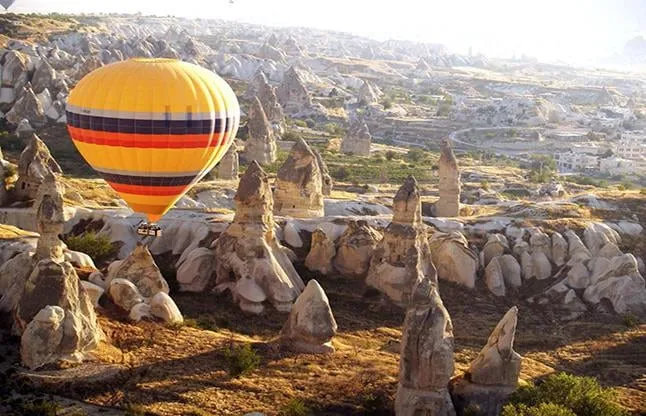
Cappadocia, famous for its fairy chimneys, is a world-famous holiday destination with both natural and historic beauty.
As for how these curious formations came about: millions of years ago the Cappadocia region was an inland sea. Magma, seeking a way out through movements of the earth's crust, came to the surface through the volcanoes of Mount Erciyes, Mount Hasan and Güllüdağ, dried up the sea in the Cappadocia region, and lava began to fill the resulting basin. This was repeated many times and went on until the volcanoes became inactive.
After the volcanoes, rivers flowing through these lava deposits formed deep valleys. The winds also joined in, creating a wave-like appearance in the valleys formed by the rivers. In some places the wind made pieces break away from the main mass.
Capped fairy chimneys took on their present capped shape in places where the upper layer is hard and the lower layer softer. The hard upper layer presses on an area the size of itself and also hardens the layer below. As a result, the part beneath the stone becomes more resistant to the wind and takes on its present shape.
Elmalı Church
The Elmalı (Apple) Church has nine domes, four columns and three apses. Although its main entrance is on the south side, the church can be entered through a tunnel opening from the north. It is thought to have been built between the mid-11th and the early 12th century.
Ürgüp Museum
The Ürgüp Museum, opened to visitors in 1971, displays ethnographic and archaeological artefacts from prehistoric times to the Ottoman period.
Source: http://www.gezilebilecekyerler.com/nevsehirde-gezilecek-yerler/
Culture and arts in Nevşehir
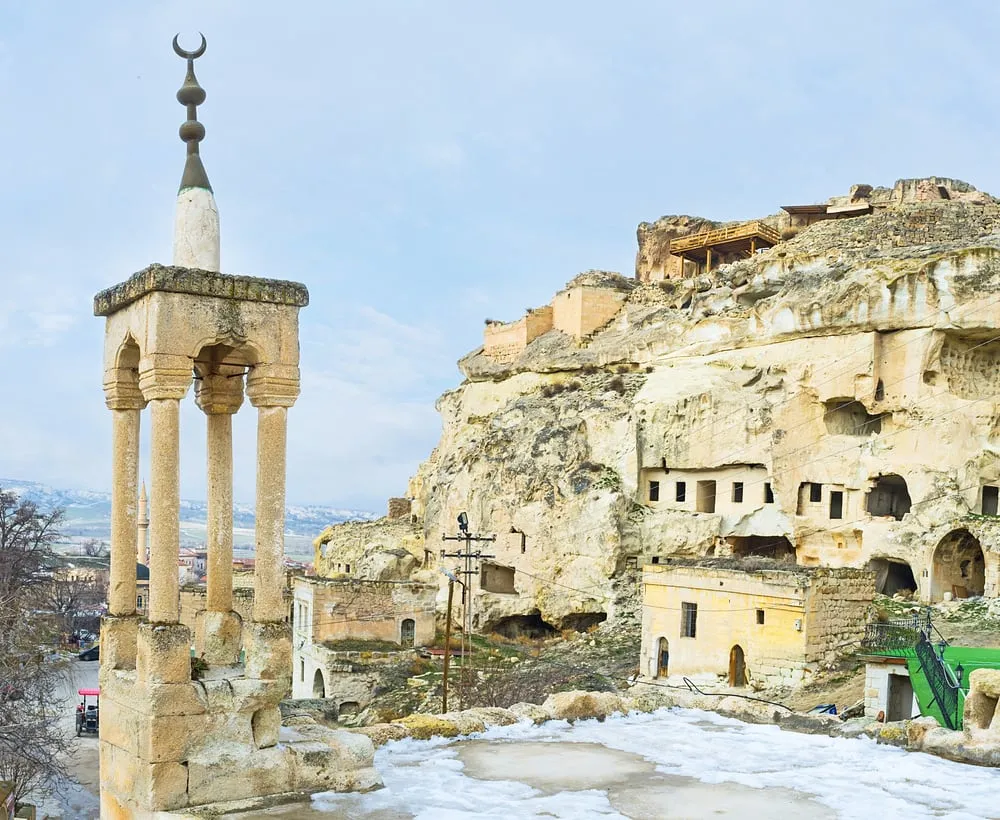
The Kayaşehir (rock city) quarter of Nevşehir covers an area of about 437,400 square metres. The rock-cut hillside settlement around the castle includes a monastery going back to the 6th century and a Byzantine rock church dated 1215–1217.
The Kaya Mosque, the Kara Mosque and the Damat İbrahim Pasha Complex are among the city's important buildings. In the Hacıbektaş district are the Tomb and Museum of Hacı Bektaş-ı Veli, and in Avanos you can visit the Suspension Bridge and the Hair Museum.
History of Nevşehir
Nevşehir's ancient name is Nissa; it was also known as Neapolis, meaning "New City" in Greek. Conquered in the Seljuk period, it took the name Muşkara and was attached to Ürgüp as a small village of 18 houses.
In the Ottoman period Muşkara began to be called Nevşehir. Grand Vizier Damat İbrahim Pasha, who was born here, had a soup kitchen, a mosque, a madrasa, a hamam and a fountain built. Nevşehir, which was a district of Niğde, became a province on 20 July 1954.
Getting to Nevşehir
Nevşehir, one of Türkiye's popular tourist regions, is very easy to reach from all over the world. Within Türkiye, though, the easiest way is the Istanbul–Nevşehir flights. Tuzköy Airport is 30 kilometres from the centre of the region. Because many places are very close to one another, you can reach anywhere in Nevşehir in a 20–30 minute drive from the airport. If you want more options, Kayseri Airport is 100 km from central Nevşehir. This airport is busier than Tuzköy Airport, and you can easily find flights to Kayseri Airport with more airlines. From there it is about 45 minutes to central Nevşehir. And if you are staying at a hotel, many hotels in Nevşehir offer their guests airport transfers from both Kayseri Airport and Tuzköy Airport.
Another way is by road. There are good roads between Nevşehir and many cities. If you want to have the advantage of a car within Nevşehir and to stop at more places to visit along the way, the road may be the better choice. The distance between Ankara and Nevşehir is about 280 kilometres. For those coming from Istanbul, too, the road goes via Ankara. You can make the Ankara–Nevşehir journey, which takes about 3–3.5 hours, on two different routes. The route via the Konya road is a little longer than the Samsun road and is mostly used by heavy vehicles, so the Samsun road is more often preferred.
The more economical option is the bus. The journey from Ankara, which takes about 3.5 hours, runs alongside a view of Lake Tuz. There are buses to Nevşehir from almost every part of the country, not just Ankara, so the bus is also a popular way to travel.
For travellers who want to add to the adventure of the journey, another way to reach Nevşehir is by rail. Although passengers cannot go by train all the way to the centre, they can get off the train at Kayseri and find buses to Nevşehir at any time of day.
Districts of Nevşehir
- Acıgöl
- Avanos
- Derinkuyu
- Gülşehir
- Hacıbektaş
- Kozaklı
- Merkez (central district)
- Ürgüp
Economy of Nevşehir
Nevşehir's economy rests largely on agriculture; 75 per cent of the working population is in farming. In potato production Nevşehir ranks third in Türkiye, after Niğde and İzmir.
In fruit growing, viticulture stands out; besides grapes, apples, apricots and walnuts are also grown. Tourism has grown rapidly in recent years, and Cappadocia's fairy chimneys attract millions of tourists a year.



Comments
Loading comments…