
Yalova
- Marmara Region
About Yalova
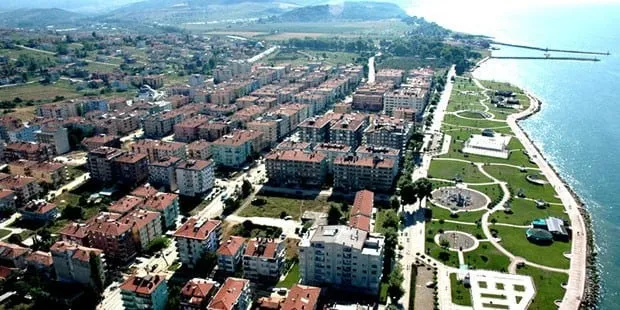
Yalova is a city on the eastern shore of the Sea of Marmara. With a population of around 127,000, the city takes its name from a combination of the words 'yalı' (shore) and 'ova' (plain). Yalova, the province with the smallest surface area in Türkiye, also stands out for its modern way of life. Badly damaged in the 1999 Marmara Earthquake, the city healed its wounds in the years that followed and became an important tourism centre.
Yalova's famous dishes and desserts
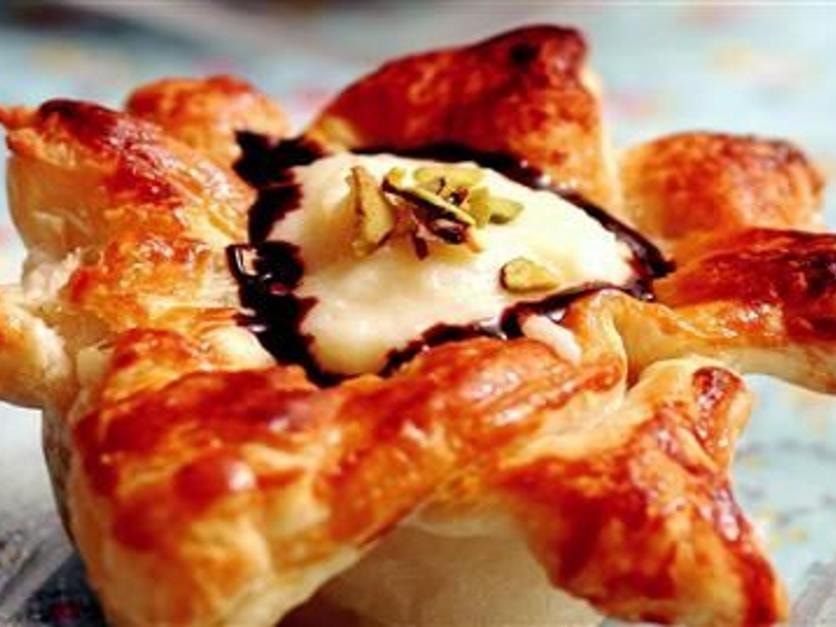
Milföylü Yalova kebabı (Yalova kebab in puff pastry)
Yalova's best-known dish: meat cooked in a seasoned tomato sauce is paired with puff pastry.
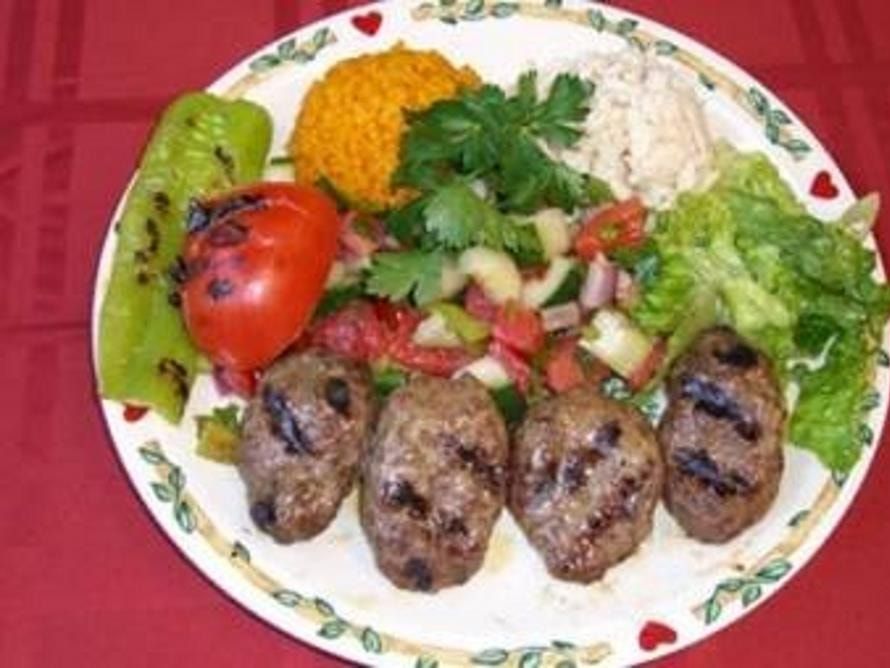
Yalova köftesi (Yalova meatballs)
Said to be the city's own; the meatballs are filled with cream.
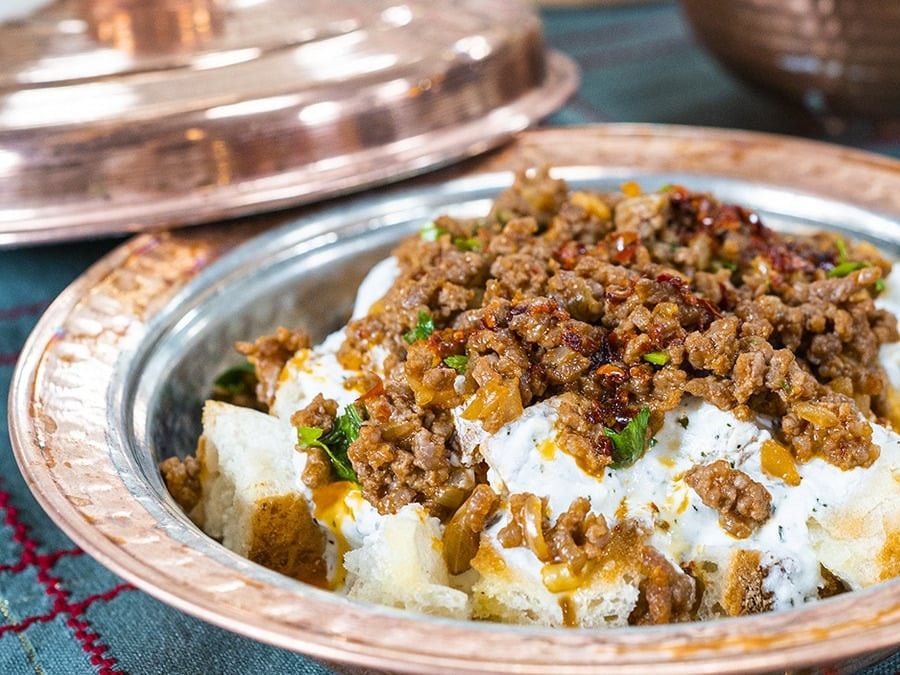
Papara
Made at home to use up stale bread; usually served with a tomato sauce, sometimes with yoghurt.


Places to visit in Yalova
Hot springs: Yalova is famous for its hot springs, whose reputation reaches beyond Türkiye's borders. If you too want to shake off the year's tiredness, find healing and rest, Yalova's hot springs are at your service all year round. You can stay at the Armutlu hot springs and Yalova's thermal hotels.
Natural beauty: Yalova and its surroundings also stand out for the natural beauty Mother Nature has lovingly created. With lush forests, deep-blue sea, waterfalls, summer pastures and olive groves, it enchants you, especially in spring, as if it had leapt out of a famous painter's canvas. Erikli Waterfall, Sudüşen Waterfall and the Delmece Plateau are among the top sights in Yalova.
Historic monuments: Yalova is not especially rich in historic monuments, but we recommend seeing the Kara Kilise (Black Church), the Open-Air Museum and the Yürüyen Köşk (Walking Mansion).
Beaches: Many holidaymakers prefer the colourful beaches of Çınarcık, Yalova's especially charming district. Also known as the Bodrum of the Marmara and in great demand in the sweltering summer months, Çınarcık's beaches will come to your rescue.
Places to visit in Yalova – historic sites
Üvezpınar
Üvezpınar, 11 km above Termal, the district famous for its hot springs, wins over everyone who sees it with its lush vegetation.
At the foot of the Samanlı Mountains, with a magnificent panoramic view, Üvezpınar is one of the best places for anyone seeking peace amid natural beauty.
One of Üvezpınar's sights most worth seeing is without doubt Sudüşen Waterfall, 6 km away. At Sudüşen Waterfall, where you will find dozens of shades of green together, you can picnic or enjoy a swim.
If you find yourself in Yalova, please don't forget to add Üvezpınar to your list. We wish you a good holiday.
Karaca Arboretum
Karaca Arboretum in Yalova, home to many plant species, draws interest from botanists in particular, but it is also one of the places that manage to catch the attention of tourists coming to the city.
Karaca Arboretum is in the village of Samanlı on the Yalova–Termal road, about 5–6 kilometres from the city centre… Covering a total area of 135,000 square metres, the arboretum is surrounded by iris gardens, plant gardens, bonsai collections and rose gardens… There are also 5,000 woody plants.
Inside Karaca Arboretum, founded by Hayrettin Karaca, there is also a summer house belonging to Hayrettin Karaca.
Yürüyen Köşk (Walking Mansion)
Yalova's Yürüyen Köşk is famous for the story of its construction. It was begun at Atatürk's request.
Visiting the site of the mansion while it was being built, Atatürk saw a gardener trying to cut the branches of a plane tree. He called the gardener over and asked why he was doing it. Surprised by the answer that the branches had to be cut because they pressed against the mansion's walls, Atatürk said that it was not the tree that should be cut but the mansion that should be moved.
Atatürk's request was passed on to the Istanbul Municipality. An engineer, Ali Galip Alnar, then went to the mansion in Yalova with his technical staff and began work. Work started in 1930: the earth around the mansion was carefully dug away down to its foundations, and railway rails brought from Istanbul were laid with great care. The mansion was then slid about 4.80 metres. That is the story of the Walking Mansion…
Although the house Atatürk had built is known today as the Yalova Atatürk Mansion, it became famous as the Walking Mansion because of this event in its history.
Kara Kilise (Black Church)
The Kara Kilise, originally a Roman water structure and converted into a church in the Byzantine period, is in Yalova's Çiftlikköy district.
The building, in the Sahil neighbourhood, is 3 kilometres from the city centre. Unlike other churches it is oriented differently, along a north–south axis.
Parts of an ancient harbour and aqueduct can also be seen in the area.
Delmece Plateau
The Delmece Plateau in Yalova's Çınarcık district welcomes many visitors amid the scent of chestnut and linden trees.
The Delmece Plateau is an important holiday area for tourism. Nearby are Erikli Waterfall, the Yalova City Forest and Büyük Dipsiz Göl (the Great Bottomless Lake). Within the plateau there is also a drinking-water spring known for its healing water. The Delmece Plateau is a place where you can spend your summer holiday in peace, and as it is close to Istanbul you can spend your weekends here too. Exploring the area by bike on natural cycling trails among cool waters and plenty of greenery will be one of the things that bring you peace. You can also include Sudüşen Waterfall and the Armutlu hot springs in Yalova in your holiday.
Sudüşen Waterfall
Sudüşen Waterfall, one of Yalova's treasures, is within the Termal district.
In the middle of natural beauty, it is a very appealing place to spend enjoyable time with only the people who matter to you. In the picnic areas it offers its visitors, as you snack amid green nature to the gentle murmur of the waterfall, you will notice your soul resting too.
Planning a day trip and giving yourself just one day off will do you a lot of good. It is also worth switching your phone off, so that no one interrupts your happy moments while you spend time in wonderful nature and take lots of photos. The Delmece Plateau and the Armutlu hot springs are also among the places in Yalova worth seeing and experiencing.
Armutlu Hot Springs
The Armutlu hot springs, in Yalova's Termal district, which is rich in hot springs, have been in use since the 6th century.
Coming down to us from Antiquity, these springs have been known by the names Therma, Pythia and Pythion. The Armutlu hot springs also open the doors to a fantastical world: according to mythology, Hades, god of the underworld, lived in this area.
It is a place worth seeing for its natural beauty and its services, and its relaxing waters will put you in fine spirits. Considered important for health, the spring water is known to be good for the gall bladder, skin, intestines, rheumatism, liver, heart, blood vessels, women's illnesses and psychological complaints. Lying between the villages of Gökçedere and Üvezpınar in the Termal district, the Armutlu hot springs open the door to a comfortable holiday.
Erikli Waterfall
Erikli Waterfall, the best-known waterfall in the Marmara region, lies beyond the Erikli Plateau of the same name. This spot is called the Twin Waterfalls (Çifte Şelaleler) because there are two waterfalls.
On your visit you will first see the lower waterfall. It is hard to see it from below, because to go down you have to cross a steep slope. It looks very impressive from above too, and will satisfy you with its view before you even go down.
As you carry on, you will be able to see the upper waterfall 10–15 metres further on. This waterfall will wrap you in its spellbinding effect. The fast-flowing water crashing down from above turns into an incredible view right here. The only sound you hear comes from the waterfall, as if it were speaking to you. You can also camp at Erikli Waterfall, which is inside the Yalova City Forest. If you want to get away from the city crowds, Erikli Waterfall is waiting to be your guide. The Armutlu hot springs and the Delmece Plateau are among the places to discover in the area.
Source: http://www.gezilebilecekyerler.com/yalovada-gezilecek-yerler/
Culture and arts in Yalova
Yalova's cultural fabric was shaped by migration. People who came in the Caucasian migrations, after the Ottoman–Russian War of 1877–78 (the “93 War”), in the Balkan Wars and in the 1924 population exchange founded the province's villages or brought them back to life. In Circassian villages such as Tevfikiye in Altınova, and in villages where Laz people from Batumi live, traditions and cuisine are still kept alive today.
Atatürk loved Yalova and often stayed in the city. The Yürüyen Köşk (Walking Mansion) inside the former Millet Çiftliği was built in 1929; so that a branch of the plane tree beside it would not be cut, Atatürk asked for the mansion to be slid 4.80 metres on rails. The mansion was restored and opened as a museum in 2006. The Atatürk Mansion in Termal can also be visited as a museum.
History of Yalova
Settlement in the area is thought to have begun in the Neolithic (8000–5500 BC). Although there is no firm information on Yalova's founding, it is thought to have been established as a settlement by the Bithynians, who crossed from Thrace into Asia Minor in the 7th century BC and founded a kingdom east of the Sea of Marmara. When the Bithynians settled on the eastern shores of the Sea of Marmara, the Yalova area became part of the Kingdom of Bithynia. A map showing Bithynia and the other ancient regions of Anatolia appears in Figure 1. As the map shows, today's Yalova, Bursa, Bilecik, Kocaeli, Sakarya, Düzce, Bolu, Zonguldak, Bartın, Karabük and the Asian side of Istanbul were among the lands of the Kingdom of Bithynia in the 6th century BC.
Figure 1: Ancient regions of Anatolia
Source: www.arkeolojidunyasi.com
Between 377 and 327 BC the Bithynians defeated Calas, the commander Alexander the Great had appointed to Bithynia, and drove them out of their lands. In the time of Prusias I, who reigned from 230 to 182 BC, Kios (Gemlik), Myrleia (Mudanya) and the Yalova area were given as a gift to King Philip V of Macedon. The Carthaginian commander Hannibal, fleeing the Roman Empire, took refuge with King Prusias I of Bithynia. Hannibal founded the city of Prusa ad Olympum (Bursa) as a gift to Prusias I. Yalova and its surroundings came under Roman rule in 74 BC and, when the Roman Empire split in two in AD 395, remained within the Eastern Roman, that is the Byzantine, Empire.
Today's Yalova hot springs hold an important place in history. On the outer walls of the Kurşunlu Hamam in the Termal district, thought to have come into being through an earthquake around 1200 BC, are reliefs of Heracles (Hercules), god of strength, Asclepius, god of health, and the Nymphs, spirits of hot water and health. Termal is known to have been very famous in the Byzantine period as a place where emperors rested and took cures. After the Byzantines, the Yalova area came under Seljuk rule and was burned and destroyed during the Crusades. In Evliya Çelebi's Book of Travels Yalova is called Kara Yalovaç, and in Katip Çelebi it is called Yalakabad and Yalıova. We also see that the name Yalova was given in those times. These names were also confirmed in the 19th century by the famous historian Hammer, who stayed in the area for forty days to study it.
The Yalova area, where peoples from the Phrygians and Bithynians to the Seljuks and Byzantines lived, was conquered in 1326 by the Ottoman commander Gazi Abdurrahman and became an eternal Turkish homeland. A map showing the lands of the Ottoman Beylik in the time of Osman Gazi, in 1323, appears in Figure 2.
Figure 2: The Ottoman Beylik in 1323
Source: www.tarihvemedeniyet.org
The map in Figure 3 shows the territory the Ottoman Beylik gained between 1323 and 1362. As the map shows, in the time of Orhan Gazi, between 1323 and 1362, the Ottoman Beylik roughly tripled the lands it ruled, and the Yalova area was brought within its borders.
Figure 3: The Ottoman Beylik in 1362
Source: www.tarihvemedeniyet.org
Old state yearbooks (salname) show that around 1530 Yalova was a town (Yalak-Abad) attached to the province (liva) of İzmit. Yalova was a kaza (sub-district) of the central sanjak of Bursa in 1867, and in 1901 it was attached to the independent sanjak of İzmit. Occupied by Greek troops during the War of Independence, Yalova was freed from enemy occupation on 19 July 1921 after a great struggle. On 2 June 1929, under a law passed at Atatürk's request, it was made a district and attached to Istanbul province. Atatürk, the great leader and founder of our Republic, came to Yalova for the first time after the War of Independence on 19 August 1929 and had Termal rebuilt. Atatürk was the first guest of the Termal Hotel, opened on 22 January 1938, and stayed in Yalova for 9 days. During the building of the Millet Çiftliği (National Farm) in 1929, when the second floor was reached, Atatürk saw that the tree to the west was going to be cut down, so he had the building's foundation moved a little to the east, sliding the building and saving the tree. That is why the mansion is called the Walking Mansion (Yürüyen Köşk). Yalova, which Atatürk called the “pioneer of liberation” and “my city”, became almost a summer capital, and again at Atatürk's request it was made one of Istanbul's districts in 1930; in 1995 it was separated from Istanbul and made a province. The town of Armutlu, attached to Bursa's Gemlik district, and the town of Altınova, attached to Kocaeli's Karamürsel district, were made districts and brought within the province's borders.
Getting to Yalova
Visitors who want to go to Yalova can travel by road, by sea or by air. Neighbouring large cities, Yalova is easy to reach from anywhere in the country.
By road:
Visitors coming by road can arrive by private car or by coach. Yalova is close to major road junctions, so by car you can get there quickly by following the right routes. For those coming by coach, there are direct services to Yalova from many cities. Yalova Bus Station is very close to the city centre, and you can reach the centre from the station by minibus (dolmuş).
By sea:
Sea services to central Yalova run only from Istanbul and Bursa. You can reach Yalova by fast ferry (deniz otobüsü) from Istanbul's Kartal, Bostancı and Pendik districts. Fast ferries from Kadıköy go to Yalova's Armutlu district. You can also reach Armutlu by fast ferry from Mudanya and Güzelyalı in Bursa.
By air:
Yalova has no airport. However, you can reach the city quickly using the airports of neighbouring provinces. After landing at the airports in Istanbul and Kocaeli, you can continue to Yalova by road or by sea.
Districts of Yalova
- Yalova (provincial centre)
- Altınova
- Armutlu
- Çınarcık
- Çiftlikköy
- Termal
Economy of Yalova
The sectors that have stood out in Yalova's economy in recent years are chemical products manufacturing (carbon fibre), shipbuilding, health tourism (medical, thermal, elderly and disabled tourism), ornamental plant production and kiwi growing. Greenhouse growing and ornamental plant production have a high share of the economic input from agricultural production.
The province follows a planned industrialisation model that gives priority to environmentally friendly industrial investment with a high capacity for skilled employment, focused on domestic manufacturing and creating added value. With the completion of the specialised organised industrial zones (OSB) whose investment work is under way, namely the Mould Manufacturing OSB, the Yalova Composites and Chemicals OSB, the Vehicle Parts OSB, the Ship Supply Industry OSB, the İMES Machinery OSB, the Eurasia Clothing OSB and the Yalova Floriculture Agriculture-Based OSB, investment of about $1 billion will come to life.
Yalova is a strategic centre for carbon fibre and acrylic fibre production. The world's largest privately owned integrated acrylic fibre plant under one roof is in the province, with a 17% share of the world market.
Carbon fibre, the raw material of the future, produced at only 8 locations in the world apart from Türkiye, is also produced in the province following R&D work.
Greenhouse growing and ornamental plant production have a small share in terms of area but a high share of the economic input from agricultural production. Ornamental plants are grown on about 49,000 decares across Türkiye, and on about 3,000 decares in the province.
The province produces a total of 173 million flowers, with an economic value of 400 million TL. In this field the province ranks 3rd in Türkiye, after Antalya and İzmir. The production is not only sold on the domestic market but also exported.
ECONOMIC DEVELOPMENTSA total of 12,497 people are employed in the province's ship and yacht building sector. Yalova's share of Türkiye's total ship and yacht exports rose from 2.7% in 2011 to 10.6% in 2012, 21.7% in 2015 and 34% in 2016, and was 25.6% in 2017. In 2017, $342.8 million of ships and yachts were exported.
According to Yalova Customs Directorate data, the province's exports in 2016 were $505.4 million and its imports $427.2 million. In 2017 total exports were $626.1 million and total imports $621.8 million. (When the exports of the AKKÖK Group and the İpek Kâğıt Yalova factory are included, the province's exports in 2017 are calculated at about $900 million.) The main exports are ships, acrylic fibre, tow, tops and flower bulbs. The top three export markets are Norway, Iran and Iraq. The main imports are chemicals, yarn, fibre, machinery, live indoor and outdoor plants, flower bulbs and cut flowers. The top three import sources are the Netherlands, the United Kingdom and Germany.
When the Kapaklı Fishing Shelter Project, costing 51.3 million TL and under construction in the village of Kapaklı in the province's Armutlu district, comes into service in 2019, fishing, one of the area's important sources of income, will develop and economic life will pick up.
Construction of the Ro-Ro Terminal in the town of Taşköprü in the province's Çiftlikköy district began in 2016, and the first ship carrying an export cargo sailed on 4 October 2017. The Ministry of the Interior declared the terminal a Temporary Sea Border Gate, and our Customs Directorate has also moved there.
The Ro-Ro Terminal covers a total area of 80 decares. It runs 10 sailings a week, counting both directions, to the Italian port of Trieste, with a total of 2,400 vehicles coming in and going out. Sailings to the Romanian port of Constanța will also begin in the coming months.
Within the terminal, an industrial product analysis laboratory has been set up on an area of 1,000 m² at a cost of €3.5 million. A laboratory to work on animal and plant food products will also open in the coming days. The total cost of the laboratory is €4.5 million.
Given its technological infrastructure, the Ro-Ro Terminal is currently the most modern port in our country.
With the Ro-Ro Terminal in service, it is expected that the province's export figures will rise significantly and that most of the goods of exporting companies in various Anatolian provinces, above all Istanbul, Bursa and Kocaeli, will be shipped abroad from this location.
The Yalova İMES Machinery OSB, registered and announced by the Ministry of Science, Industry and Technology, has been officially established. The OSB will help greatly reduce unemployment in Yalova. High value-added products will be made at the İMES Machinery OSB, which will provide employment for about 15,000 people on an area of 4.64 million m².
The Yalova Eurasia Clothing OSB, registered and announced by the Ministry of Science, Industry and Technology, has been officially established. Through public–private cooperation, the OSB in Çiftlikköy was expected to provide employment for 8,500 people with investment of about 2.5 billion TL on an area of 2.3 million m². Under the 2017 plan, construction of the first factories was to begin in the first quarter of 2018; the OSB was promoted for its proximity to logistics facilities such as the port, the Ro-Ro terminal and customs.
The estimated investment cost of the Yalova Ship Supply Industry OSB is 245.2 million TL. Because land prices are high, expropriation work is continuing. On completion, exports are expected to rise by $200 million and 10,000 new jobs to be created. Project work is being carried out on an area of 1.42 million m².
The Yalova Composites and Chemicals OSB (YALKİM) has met the requirements for an improved OSB and gained legal personality as a specialised OSB. Its estimated investment cost is 223.7 million TL. The OSB is expected to increase exports by $200 million a year and create 7,000 new jobs. Project work is being carried out on an area of 1.13 million m².
Expropriation work for the Yalova Mould Manufacturing OSB is continuing. Its estimated investment cost is 12.2 million TL, and it is expected to create 5,000 new jobs. Project work is being carried out on an area of 0.34 million m².
The estimated investment cost of the Vehicle Parts OSB is $300 million. The OSB is expected to increase exports by $300 million a year and create 7,000 new jobs. Project work is being carried out on an area of 1.55 million m².
The Yalova Floriculture Agriculture-Based OSB operates on an area of 1.05 million m². The OSB will significantly increase the province's ornamental plant production capacity.
Source: http://www.yalova.gov.tr/genel-ekonomik-durum


Comments
Loading comments…