
Kırşehir
- Central Anatolia Region
About Kırşehir
Kırşehir is a province in Central Anatolia whose history reaches back to the Hittite period. Known as Justinianopolis in the reign of Emperor Justinian I (527–568), the town was named ‘Kır şehri’ (“city of the steppe”) by the Turks because it rose in the middle of boundless open country. Over time Kır şehri became Kırşehir in everyday speech, but local people, especially in the villages, still call it Kır şehri.
Kırşehir covers 6,750 square kilometres and, according to the latest count, has a population of 225,500. Lying in the north of the Cappadocia region together with Kayseri and Nevşehir, Kırşehir is a gateway to Cappadocia, the tourist paradise also known as the Land of Beautiful Horses.
Home to many states over thousands of years, Kırşehir has cold, wet winters and hot, dry summers, so visitors flock here especially in spring. The city mostly has a steppe landscape, with poplar groves and orchards here and there on valley floors and in well-watered areas.
With the number of tourists rising, hotel options have grown in both number and quality in recent years, making Kırşehir one of the attractions of Central Anatolia.
Kırşehir is a tourist favourite for its history, its hot springs, the folk poets, minstrels (âşıks) and writers raised on this land who shaped Türkiye’s cultural fabric, and Hacı Bektaş Veli, whose name is closely tied to Kırşehir. The Ahi brotherhood (Ahilik), which played a major role in Anatolia’s commercial and economic life for centuries, was founded in Kırşehir in the 13th century. A guild organisation, Ahilik was founded on honesty, mutual help and respect.
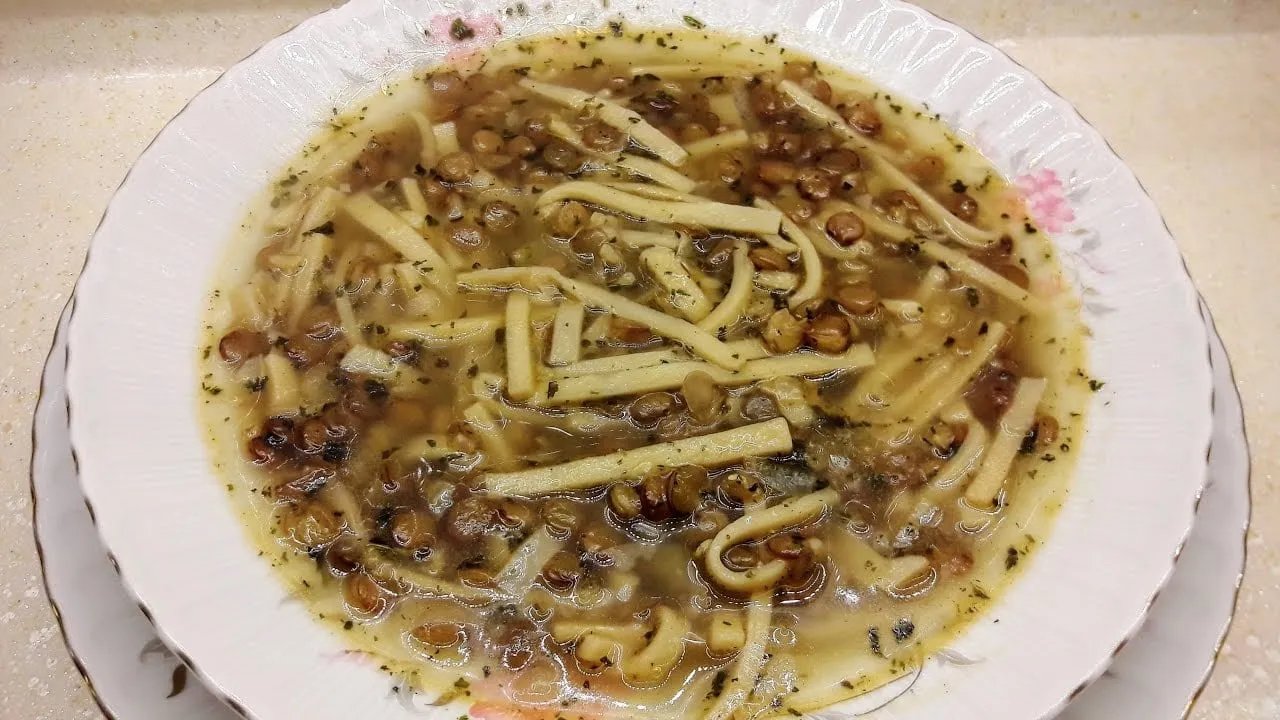
Kırşehir's famous dishes and desserts
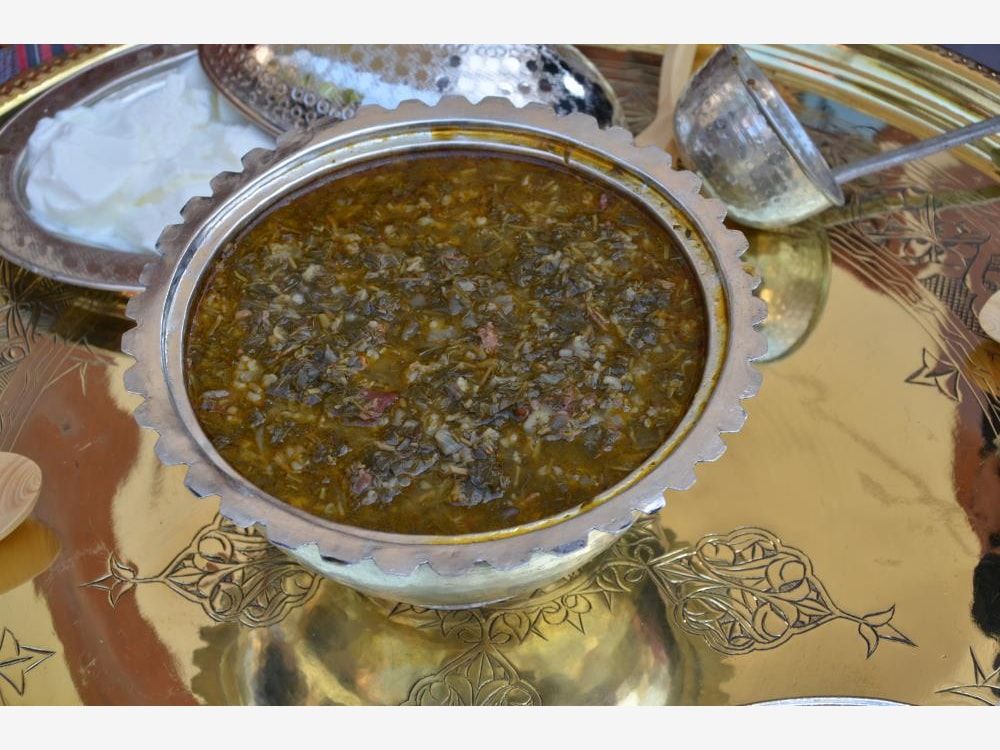
Madımak
Also called madımak, this herb grows wild in Central Anatolia and is cooked by sautéing it with onion, bulgur and, if you like, minced meat.

Places to visit in Kırşehir
Aşık Paşa Türbesi (Tomb of Aşık Paşa)
Standing on a high hill in the centre of Kırşehir, the Tomb of Aşık Paşa is dated to the 14th century.
The tomb belongs to the folk poet Aşık Paşa. Although its inscription has not survived, it is known to have been built by Aşık Paşa’s nephew, the Eretnid vizier Köse Peygamber Alaaddin Ali Şah.
The Tomb of Aşık Paşa was repaired by Bayezid II in 1481. The most recent restoration was carried out in 1935 by the General Directorate of Foundations.
The tomb has a square plan. Its entrance section is rectangular, and the tomb is covered by a dome.
Kesikköprü Kervansarayı (Kesikköprü Caravanserai)
Thought to have been built in 1206, the Kesikköprü Caravanserai stands in Kesikköprü village, which shares its name, in Kırşehir’s central district.
Although it is claimed to date from 1206, its inscription states that it was built in 1248 by Nureddin Cebrail bin Cacabey. Cut stone was used in its construction.
The entrance gate on the south side of the caravanserai has a depressed arch and is decorated with geometric motifs. Geometric motifs can also be seen at the other corners of the building. The Kesikköprü Caravanserai, which had fallen into ruin, has recently been restored by the General Directorate of Foundations. Because it lies in Kırşehir’s central district and is easy to reach, it is a good addition to your itinerary.
Seyfe Gölü Kuş Cenneti (Lake Seyfe Bird Sanctuary)
Lake Seyfe, one of Kırşehir’s natural beauties, is 35 kilometres from the provincial centre and easy for visitors to reach.
With 187 bird species, the historic Silk Road and its endemic plants, Lake Seyfe is among nature’s finest places and has been designated a first-degree natural protected site (I. Derece Doğal SİT Alanı). In this nature conservation area you can picnic and go on a photo safari. Lake Seyfe National Park is also much visited for biological research.
Lying on the borders of Mucur and Boztepe, the site is 16 kilometres from Mucur, which is also the nearest road access. When you visit the Lake Seyfe Bird Sanctuary, remember that historic remains await you here too.
Kalehöyük Arkeoloji Müzesi (Kalehöyük Archaeological Museum)
The Kalehöyük Archaeological Museum, attached to the Kırşehir Museum Directorate in 2009, is in the town of Çağırkan in the Kaman district.
The museum was established under the Cultural Heritage Protection Programme led by the Government of Japan. It is an unusual museum: it was shaped to look like a mound (höyük), so that visitors can see excavation methods and view the finds in the mound itself. Besides the exhibition hall, the museum has a library and an audiovisual corner. Offering a wide-ranging visit, it is one of the first places people coming to Kırşehir go to see.
If you ever find yourself in Kırşehir, we recommend a visit to the Kalehöyük Archaeological Museum. The Mucur Underground City should also be on your list.
Kırşehir Müzesi (Kırşehir Museum)
Museum work began in 1936 for the many remains uncovered by archaeological excavations in Kırşehir, whose history goes back to around 3000 BC.
The artefacts were first gathered in the Alaaddin Mosque, and later, in 1980, an Antiquities Commission was set up. In 1985 they were exhibited in the Provincial Culture and Tourism Directorate building in the city centre. After long preparations, the Kırşehir Museum opened in 1996 and continues to welcome visitors all year round with its rich collection. The upper floor is devoted to ethnography and the lower floor to archaeology, and the museum holds many important finds. You should definitely visit it on your trip to Kırşehir.
Mucur Yeraltı Şehri (Mucur Underground City)
The Mucur Underground City, in Kırşehir’s Mucur district, is known to have been built in the Roman period so that people could shelter from war and raids.
It was carved out of soft rock and is about 7–8 metres deep. With its extensive layout, this underground city has great potential for visitors.
Its 42 rooms, the tunnels dug to connect them, stables for sheep and goats, places of worship, rolling stone doors and ventilation shafts show how elaborate the underground city is. If you want to witness a different world, the Mucur Underground City is ready to take you to another time.
Source: http://www.gezilebilecekyerler.com/kirsehirde-gezilecek-yerler/
Culture and arts in Kırşehir
Kırşehir is known as a city of culture and the arts in the middle of the Anatolian steppe. It is known as the place where the Ahi tradition (Ahilik) was born and spread; the Tomb of Ahi Evran is one of the city’s symbols.
The 13th-century poet Âşık Paşa championed the Turkish language and wrote poems in Turkish; his tomb is in Kırşehir. The name of Caca Bey, a scholar of astronomy, Islamic law and Sufism, lives on in the city’s Caca Bey Mosque and Madrasa.
In 2019 Kırşehir became the first Turkish city to join the UNESCO Creative Cities Network in the field of music.
History of Kırşehir
THE HISTORY OF KIRŞEHİR
1 – Kırşehir in Prehistory (Bronze Age, 3000–2000 BC)
Archaeological excavations in and around Kırşehir show that in prehistoric times the area was shaped above all by the Bronze Age. In 1943, five or six layers of the Early Bronze Age were identified in the excavations at Hashöyük. In these layers, stone and mud-brick foundations, fragments of black pottery, pots and bowls were found. These remains show that the Early Bronze Age (3500–2000 BC) was lived in the region. The excavations begun at Hashöyük and at the Castle in the city centre, and those at the town of Çağırkan in Kaman, may also yield new information.
The history of Kalehöyük near Çağırkan is thought to reach back to 1750–600 BC. The 25-metre-high mound, the two large storage jars recovered from it and the other finds shed light on the prehistory of the area. Some scholars have sought the origins of Kırşehir in its position as a stopping and settlement place in the middle of an old and busy highway that crossed Anatolia from north-west to south-east in antiquity, on important roads from Asia to Europe, and close to the Cappadocia region.
2 – The Hittite Period (1850–1200 BC)
Because Kırşehir lies within the bend of the Kızılırmak, where the Hittites settled, the Hittite period was certainly widespread here. Excavations at Kalehöyük revealed that the lowest layer of the settlement belongs to the Hittite period. Remains and artefacts of the early and late Hittite periods came to light, including wall foundations thought to belong to official or palace buildings, seals, jewellery, ceramic kitchenware and a fragment of a cuneiform tablet from the Hittite era.
About 10 km north-east of Sevdiğin village in Kırşehir, an inscribed stone block naming a Hittite prince was found. The block is thought to be a road marker, with a Hittite road passing nearby.
An inscription known as the “Mal kayası” (Mal rock), an important document for the Hittite history of Kırşehir, has been found. Prof. Dr. H. Th. Bossert studied it and explained that it was a road sign. That the Mal rock inscription is a road sign, and that Kırşehir lay on the road running south from Hattusa, shows that the province was an important centre in the Hittite period. Another important work from the Hittite period is the Hittite altar known as the Öküz taşı (“Ox Stone”). Made of basalt, the altar has a square prism-shaped body with an offering basin on top and two ox heads.
In the 1950 survey at Merkez Kalehöyük, Hittite pottery fragments were found. Inhabited by the Hittites from the 1600s to the 1200s BC, the area then came under Phrygian rule until 675 BC.
3 – The Phrygian Period
As the Hittites weakened and lost their power, the Phrygians took control of the area. Extending their borders as far as the Kızılırmak and Lake Tuz, the Phrygians spread from 1200 BC over a wide area, above all western and central Anatolia.
When the Cimmerians defeated the Phrygians, the Lydians seized the western parts of Anatolia but could not advance as far as Kırşehir. Kırşehir then came under the rule of the Medes in the 7th century BC and later the Persians.
4 – The Persian Period (546–332 BC)
The Median state was destroyed by the Persians in 550 BC, after which Anatolia came under Persian rule. Kırşehir lay in the west of the region the Persians called Katpatuka (Cappadocia), the “Land of Beautiful Horses”. The Persians ruled the area through taxation. Crushed under heavy taxes, the local people were forced to build various fortresses. Kırşehir did not do so, because its land was so barren. The Persians were defeated by the army of Alexander the Great in 334 BC, and the Macedonians took Kırşehir. After the local people rose up, Ariarathes declared his independence as king of Cappadocia in 332 BC.
5 – The Kingdom of Cappadocia (333 BC – AD 18)
The Kingdom of Cappadocia (Kappadokia) was founded in 333 BC. Under this kingdom Kırşehir and its surroundings suffered heavy pressure. The periods of the commanders Eumenes and Antipater were spent in wars because of their wish to seize the Cappadocia region. Ariarathes died. Ariarathes II, who defeated the army of Alexander the Great, managed to gain control of the north of Kırşehir. Later these lands were invaded by Galatian (Celtic) groups from central Europe (220–163 BC). At the end of the 2nd century BC, King Mithridates of Pontus took control of the area. At this time the area was known as “Aquaesaravenea”.
It came under Roman rule in 85 BC. The Cappadocia region was annexed to Rome by the Roman emperor Tiberius in 18 BC, and Tiberius made it a province. Coins of the Cappadocian kings have been found within Kırşehir’s borders.
6 – The Roman Period (AD 18–395)
After Cappadocia became a Roman province, Christianity began to spread rapidly in the region (3rd century). In response, there was a great struggle between the Christians and the pagan priests supported by the Roman emperor.
For this reason, many underground cities were made in the Cappadocia region in the 3rd and 4th centuries by Christians seeking shelter and protection. Our province has ten underground cities from this period, such as the Mucur underground city, the Dulkadirli İnli Murat underground city, the Aşıkpaşa underground city and the Kümbet Altı underground city. Kırşehir remained under Rome until 395. Roman pottery fragments and coins of the period have been found in some of the province’s mounds.
7 – The Byzantine Period (395–1071)
Known in the Byzantine period as Makissos and later as Justinianopolis, Kırşehir was, according to the historian Procopius who lived in the same century, rebuilt by Justinian and raised to the status of a city. Because economic life was livelier in Mazaka (Kayseri), the people of Kırşehir migrated there. In AD 605 the Sasanian state of Iran invaded Kırşehir. Until 626 the region was shaken by Sasanian and Byzantine raids. In 647 Muawiya, the Umayyad governor of Damascus, occupied the area around Kayseri and Kırşehir.
The Üçayak Church near Taburoğlu village in central Kırşehir, the church at Temirli in Kaman, the rock churches in the villages of Aksaklı and Aflak in Mucur, the Derefakılı churches, and the Mucur Monastery and Keşiş Sarayı (“Monk’s Palace”) are architectural remains of the Byzantine period. Byzantine oil lamps, jewellery and blue and yellow glazed ceramics have also been found around Kırşehir.
8 – The Anatolian Seljuk Period (1071–1308)
The Turkish armies that defeated Byzantium in 1071 and made Anatolia a Turkish homeland spread deep into Anatolia and founded the Anatolian Seljuk State. In 1075 Süleyman Şah, son of Kutalmış, added Kırşehir to his lands. The Oghuz tribes who came to Anatolia and Kırşehir generally gave the places they settled the names of their tribes, clans and places, as well as personal names. Today the names of the Oghuz tribes “Çepni, Bayındır, Buğduz (Büğdüz), Kargın, Yazır, Kınık, Avşar”, along with clan and other Turkish names, live on as town and village names in Kırşehir.
During the Crusades, the lands of central Anatolia were lost. The Danishmendids took Kırşehir in 1120, and at that time Kırşehir was called “Gülşehir”. In 1174 Kılıç Arslan brought Kırşehir back into the Seljuk State. When Kılıç Arslan II, following Turkish custom, divided the state’s lands among his eleven sons in 1186, Kırşehir fell to Muhiddin Mesud. His brother Rukneddin Arslan, after taking Konya, also brought Ankara and Kırşehir under his control (1203). In 1220 Alaeddin Keykubad ended the Kemah branch of the Mengujekids and gave Kırşehir as a timar to Muzaffer Muhammed of the Mengujek dynasty, because he had handed over Şebinkarahisar without bloodshed. In this period Kırşehir was rebuilt and became a city of culture.
During the Mongol invasion, Kırşehir served as the summer and winter pasture of the Mongol armies. In the period after Kırşehir was given to Muzaffer Muhammed, when the Turkmen tribes gathered around Baba İshak took up arms, the Seljuk Sultan Gıyaseddin Keyhüsrev II called on an army of 60,000 for help. The Seljuk army defeated the Turkmens and their leader Baba İshak on the Malya plain in Kırşehir (1240).
After the Battle of Kösedağ in 1243, the Mongols took firm control of Anatolia. Sultan Keyhüsrev II sent Şemseddin İsfahani as envoy to the Mongol ruler Batu Khan, and because he secured an agreement, he was made governor and subaşı (military governor) of Kırşehir. Under Kılıç Arslan IV, Nureddin son of Caca became subaşı of Kırşehir in 1262. Under him the province flourished and became prosperous. Nureddin Caca Bey valued security and peace. He founded the Cacabey Madrasa and its complex in the city. In 1277 the Mamluk Sultan Baybars came to Anatolia and defeated the Mongols at Elbistan; part of the Seljuk army joined the Mamluks during this battle. Cacabey and his brother were taken prisoner by Baybars, the Mamluk Sultan of Egypt. When Baybars freed the prisoners, Cacabey returned to Kırşehir.
Cacabey was much loved in Anatolia for protecting the Turkish people, for his high morals and for being true to his word. He spoke pure Turkish and led the spread of Turkish culture and works in Kırşehir and Anatolia. Cacabey met the other great Turkish figures who lived in Anatolia in the 13th century, Hacı Bektaş Veli and Mevlana Celaleddin Rumi, and even won their praise.
The Cacabey Madrasa, which Nureddin Cacabey founded in Kırşehir in 1272, immortalised his name. The madrasa was also an observatory. In Seljuk times the Kırşehir Cacabey observatory was as important as Ulugh Beg’s observatory in western Turkestan. Used as a mosque today, the madrasa has columns at its outer corners that have been likened to spacecraft. Teaching at the Cacabey Madrasa was entirely in Turkish. At a time when the Turkish language was in danger of dissolving into Persian culture, Cacabey kept Turkishness alive as a saviour. For this reason scholars and poets such as Ahi Evran, Aşıkpaşa, Hacı Bektaş Veli and Ahmet Gülşehri wrote their works in pure Turkish. Cacabey therefore holds a great place in Turkish history. Cacabey fell as a martyr in a clash with the Byzantine lords (tekfurs) (1301). His tomb is beside the Cacabey Madrasa.
When Mesud II came to the head of the Seljuks, the Ilkhanid commander Baiju Noyan was acting independently in Anatolia. An army of 300,000 defeated Baiju Noyan on the Malya plain. After this, Kırşehir and its surroundings were burned and destroyed. The country was divided into four, and Kırşehir and its area were left to Şerafettin Osman. The local people were crushed by heavy taxes in this period. In 1317 Timurtash, brother of the Ilkhanid ruler, restored order in Anatolia and declared his independence in 1322. When Anatolia fell into turmoil, Timurtash took refuge with the Mamluks.
9 – The Beylik Period
Kırşehir came under the rule of the Eretnid Beylik in 1365. In 1381, when the Samağar, a Tatar tribe living around Kırşehir, claimed that the Turkmens had attacked their pastures, Kadı Burhaneddin sent an army under Emir Pir Ali and Seyyid Hüssam to punish the Turkmens. In 1389 Mürüvvet Bey seized Kırşehir and gave it to Kadı Burhaneddin. In 1389 Bayezid I (Yıldırım) marched against Kadı Burhaneddin and Candaroğlu Süleyman Pasha, who had formed an alliance against him. Not wishing to fight, Kadı Burhaneddin withdrew to the Kırşehir area. At the suggestion of Adil Şah, governor of Kırşehir, he had the city walls repaired.
When Timur came to Anatolia in 1394, the Karamanids, who supported him, attacked and plundered Kırşehir. After Timur withdrew in 1396, Kadı Burhaneddin marched on the Karamanids and punished them. When Kadı Burhaneddin was killed, the people of Kırşehir handed the city to Bayezid I. Around this time Kara Yusuf, the Kara Koyunlu ruler who had taken refuge with Bayezid, fearing he would be handed over to Timur, plundered Kırşehir and its surroundings. When Timur defeated Bayezid at the Battle of Ankara in 1402, Kırşehir was given to the Karamanids.
During the Ottoman Interregnum (1402–1413), Karamanoğlu Mehmet Bey asked Çelebi Mehmet for help. They met at Cemele Castle, in today’s town of Çayağzı. Attacked and plundered by the Karamanids and the Dulkadirids, and gradually losing its former vitality, Kırşehir was finally attached to the Ottomans in the reign of Murad II (1402–1451).
10 – The Ottoman Period
After Ottoman rule was firmly established in Anatolia, that is, after Mehmed the Conqueror united the Turks of Anatolia, no notable events occurred in Kırşehir until the end of the 19th century apart from the Celali revolts.
The Ahi brotherhood played a large role in the founding of the Ottoman State, and Hacı Bektaş Veli’s influence is seen in the founding of the regular army, the Janissary Corps. The Janissaries regarded Hacı Bektaş as their “Pir” (patron saint). In his Seyahatname, Katip Çelebi writes that Kırşehir was built on a plain with fine air and had a castle.
In 1527 Kalender Çelebi, a descendant of Hacı Bektaş Veli, rebelled in the Ankara–Kayseri area. When the revolt grew, Suleiman the Magnificent sent an army under Grand Vizier İbrahim Pasha to the Kırşehir area in 1528.
In the 1560s Anatolia went through another period of severe unrest. Suleiman ordered Memiş Bey, the bey of Kırşehir, to punish the bandits called Hakibe Sührap who were robbing the people by force. Yet the situation, namely that taxes were being collected from the people by force, is clear from the letters the kadı (judge) of Kırşehir sent to Istanbul. In 1580 some madrasa students in Kırşehir are seen to have risen up. The decree issued to punish these students suited some people, and certain officials, seizing the opportunity, began to oppress the people. In 1584 the men of Şehzade Mehmet, governor of Egypt, sent to suppress this revolt, formed a gang, raided villages in Kırşehir, killed innocent people and seized their goods and money.
In 1604–1605 a bandit named Hızır overran and plundered the sanjaks of Niğde and Kırşehir with a force of 500–600 men. After he was killed, his successor Bıyık Ali continued his oppression in the region until Kuyucu Murat Pasha’s campaign to suppress the Celali revolts. Meymun, brother of the famous Celali Tavıl Ahmet Pasha, also plundered Kırşehir and its surroundings with a force of some 7,000 men gathered around him. Kuyucu Ahmet Pasha defeated Meymun and his men and killed them (1607).
The gradual weakening of state authority gave rise to the “ayan” (provincial notables). The ayan were influential in and around Kırşehir as well, among them the Çapanoğulları. The state, for its part, had to ask the ayan for help in keeping order and raising troops. When Pazvantoğlu Osman, ayan of Vidin, rebelled at the end of 1797, the state asked Çapanoğlu Süleyman Bey for help, and he raised troops from Kırşehir and its area. In return for Çapanoğlu Süleyman Bey sending troops during the preparations in 1799 to drive the French out of Egypt and to the Ottoman–Russian war that began in 1866, Mahmud II gave Süleyman Bey the governorship (mütesellimlik) of the sanjak of Şarkikarahisar in 1808, of Kayseri in 1810 and of Kırşehir in 1811.
By the mid-19th century Kırşehir had lost its importance and become a small stopping place on trade routes. Its population at the time was about 3,500. Towards the end of the century, the population of the town, then a sanjak centre attached to Ankara province, is given as 8,462. The Kırşehir kaza was the central kaza, with 185 villages. In this period Kırşehir had 4 madrasas, 1 idadi (high school), 1 rüşdiye (middle school), 2 ibtidaiye (primary schools), 25 sıbyan (elementary) schools in the neighbourhoods and villages, and 1 Armenian school. There were 1,603 houses, 10 inns, 600 shops, 6 coffeehouses, 25 mosques, 19 masjids, 1 church, 1 barracks, 1 depot and 1 armoury. The idadi school is recorded as having been built and opened in 1889 and altered in 1903.
In the early Ottoman period Kırşehir was a sanjak of the Karaman eyalet. It became a sanjak in 1867. In 1902 Kırşehir, a sanjak attached to Ankara, is seen to have had the districts of Avanos, Keskin and Çiçekdağı.
Kırşehir suffered a great famine in 1874. The newspaper Basiret, published in Istanbul on 15 May 1874, wrote on the basis of letters sent from Kırşehir that villagers were forced to eat animals that had died of hunger, tree bark and couch grass.
11 – Kırşehir in Modern History
Kırşehir became an independent mutasarrıflık (sub-province) in 1921. In the Republican period it became a provincial centre. In 1924 Avanos, Çiçekdağı, Hacıbektaş and Mucur were attached to Kırşehir. When Kaman also became a district in 1944, Kırşehir had five districts.
Law No. 6429 of 20 July 1954 made Nevşehir a province and Kırşehir a district attached to it. Çiçekdağı was attached to Yozgat, Kaman to Ankara, and Hacıbektaş, Avanos and Mucur to Nevşehir. With Law No. 7001 of 1 July 1957, Kırşehir became a province again. Under this new arrangement Çiçekdağı, Kaman and Mucur were attached to Kırşehir, while Hacıbektaş and Avanos stayed in Nevşehir. Akpınar (1987), Akçakent (1990) and Boztepe (1990) became Kırşehir’s new districts. Kırşehir now has seven districts.
Source: http://www.kirsehir.gov.tr/tarih
Getting to Kırşehir
Kırşehir lies on the Ankara–Kayseri D-765 state highway, and there are bus services from many provinces, Ankara and Istanbul above all. The city has no airport yet, but air travel is possible through airports in nearby provinces. Nevşehir Tuzköy Airport is 80 km from the centre of Kırşehir, and shuttle services carry passengers to Kırşehir. Kırşehir can also be reached by a 3-hour journey from Ankara Esenboğa Airport. Those who prefer to travel via Kayseri can reach Kırşehir with a road journey of about 2 hours. The bus station is about 2 km from the city centre and is served by municipal buses, dolmuş minibuses and taxis.
Districts of Kırşehir
- Kırşehir (provincial centre)
- Akçakent
- Akpınar
- Boztepe
- Çiçekdağı
- Kaman
- Mucur
Economy of Kırşehir
Industry makes a limited contribution to the province’s total output and employment. With a 12.4% share, industry ranks fifth within provincial gross domestic product (2001). In 2001 figures, the province’s GDP made up 1.14% of the output of the Central Anatolia Region and 1.2 per thousand of national output.
In terms of employment, according to the Turkish Statistical Institute, industry’s share was 5.2% in 1980, 4.5% in 1985, 6% in 1990 and 5.9% in 2000.
From the beginning of the Republic until the 1970s, industry did not develop. In this period the province had a few businesses processing agricultural products (wheat). In the 1964 industrial census, the province’s only public enterprise was the Kırşehir wine factory.
Between 1960 and 1970, people leaving to work abroad and investments made with the capital they generated brought relative vitality to the economy. In this period industrial plants based on natural resources and agriculture were set up. Some of the workers’ companies were İşçi Emeği Yem ve Bulgur Fabrikası (a feed and bulgur factory), Meytaş, Türktur Turizm ve İnşaat and Kimsaş A.Ş.
From 1973 to 1981 Kırşehir was among the provinces given priority for development, and industry revived in this period.
From the second half of the 1970s, Petlas Lastik Sanayi A.Ş. and Çemaş Döküm Sanayi A.Ş. were founded.
PETLAS: the factory was founded on 19.08.1976, its foundation stone was laid on 21.01.1977 and the first production took place on 08.09.1988. The first aircraft tyre was produced in 1992. Offered for block sale in 1993, the business was ordered closed on 05.04.1994 and was privatised by the Privatization Administration in 1997.
The first and only tyre factory in Türkiye able to produce military aircraft tyres, PETLAS makes outer tyres and inner tubes for all kinds of land vehicles.
On a 2,000,000 m² site with 144,000 m² of covered space, the factory produces tyres for vehicles of many kinds, from passenger cars to off-road service vehicles.
Sold in more than 50 countries, above all in Europe, Petlas, in line with its vision, competes in world markets with the research and development, technology, production, management and marketing approach an international brand requires, and its market share grows every day.
Founded in 1976 to meet the cement industry’s need for grinding media, Çemaş Döküm Sanayi A.Ş. began operating with the production of grinding balls and cylpebs, and from 1994 added cast parts for the automotive and machinery industries to its activities.
Today Çemaş meets almost all the demand of the Turkish cement industry and exports 50% of its grinding media output to the cement and mining industries of Europe, the Middle East and North Africa. Since 2004 ÇEMAŞ has also produced cast parts for the household appliance sector.
After the province was removed from priority-development status in 1981, investment in the province stopped. After that date, private enterprises built small flour and feed mills, mostly geared to the food sector.
In the mid-1990s industrial investment in the province rose significantly. The decision in 1993 to establish the Kırşehir Organised Industrial Zone and the inclusion of the province in the Priority Development Areas (KÖY) scheme on 22.07.1997 were important factors in the growth of industrial investment.
The foundation stone of the sugar factory, the only state investment in the province, was laid in 1970, and it went into production in the 2001 campaign season. It operates on 1,131,443 m² of open and 29,564 m² of covered space and has a production capacity of 3,000 tonnes a day.
The Kırşehir Sugar Factory employs 536 people: 6 civil servants, 66 contract staff, 115 permanent, 168 non-cadre continuous and 181 temporary workers.
Sugar beet was grown on a total of 91,653 hectares in 203 villages in Kırşehir and neighbouring provinces, and a total of 154,799,673.53 YTL (new Turkish lira) was paid to the region over 4 years.
Source: https://www.kirsehirtso.org.tr/KIR%C5%9EEH%C4%B0R/K%C4%B1r%C5%9FehirinEkonomikYap%C4%B1s%C4%B1/tabid/2975/Default.aspx



Comments
Loading comments…